
3285 items
3285 items
img
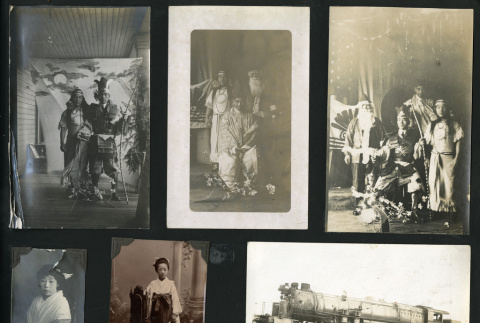
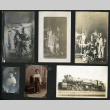
Portraits of Japanese family (ddr-csujad-25-17)
A page from an album containing Japanese family photographs. Six photographs are pasted on the page. The photographs appear to have been taken in the early 1900s in Washington. Include portraits of Japanese men in costume and Japanese woman in kimono. Also include a photograph of steam locomotive 2022. See this object in the California State …
img
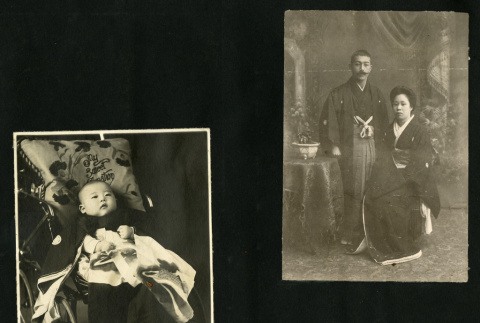
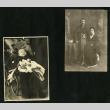
Japanese family (ddr-csujad-25-34)
A page from an album containing Japanese family photographs. Two photographs are pasted on the page. Those photographs appear to be taken in Washington in the early 1900s. Include a portrait of a Japanese man and woman in kimono and a Japanese infant dressed for a Japanese traditional ceremony for newborns. See this object in the …
img
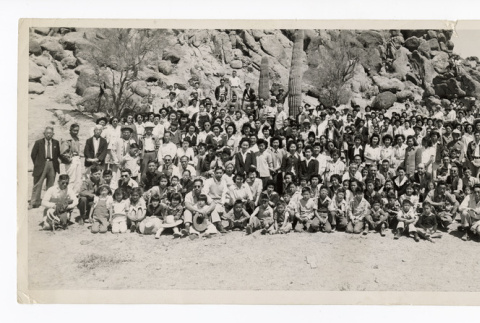
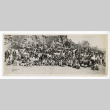
Gila River Co-op workers' picnic (ddr-csujad-42-232)
A group photo of the Gila River Co-op workers. It was taken during the picnic. The handwritten note on the back side reads: Gila Co-op workers picnic, April 15, 1945. Stamped on the back side: Photographed by Kunkle and Wilcox 331 W. Washington St. Ph. 3-4563, Phoenix Arizona. See this object in the California State Universities …
img
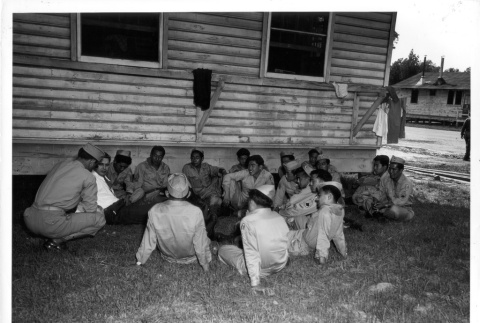
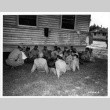
Nisei soldiers (ddr-densho-114-59)
Original caption: Preparations are being made for a parade to be held in Washington D.C., on July 15, 1946 by the 442nd Combat Team (Japanese-American troops), temporarily stationed at Fort Belvoir, Virginia. 7-6-46. Mr. Bill Davenport of 1569 Ethel Avenue, Lincoln Park, Michigan, former company commander in the 442nd Infantry, who was discharged last month, is …
img
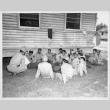
442nd Regimental Combat Team parade (ddr-densho-114-184)
Original caption: Preparations are being made for a parade to be held in Washington, D.C., on July 15, 1946 by the 442nd Combat Team (Japanese-American troops), temporarily stationed at Fort Belvoir, Virginia. 7-6-46. Mr. Bill Davenport of 1569 Ethel Avenue, Lincoln Park, Michigan, former company commander in the 442nd Infantry, who was discharged last month, is …
doc
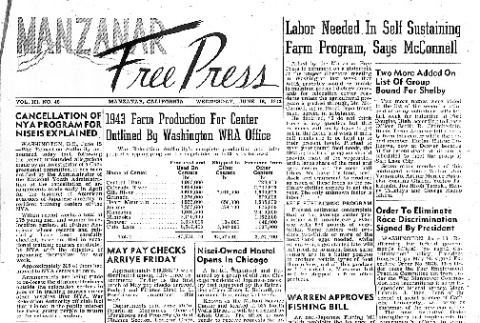
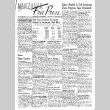
Manzanar Free Press Vol. III No. 48 (June 16, 1943) (ddr-densho-125-140)
Selected article titles: "Cancellation of NYA Program for Niseis Explained" (p. 1), "1943 Farm Production for Center Outlined by Washington WRA Office" (p. 1), "Packages Under Army Inspection" (p. 1), "Nisei-Owned Hostel Opens in Chicago" (p. 1), "Rise in Patients Reported by Clinic" (p. 1), "Labor Needed in Self Sustaining Farm Program, Says McConnell" (p. 1), …
doc
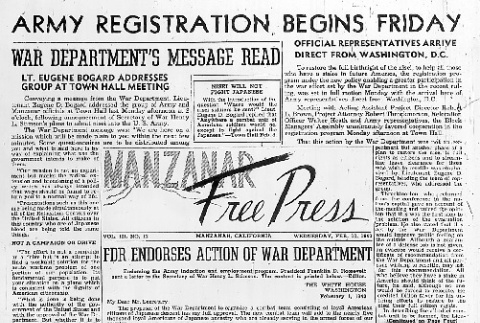
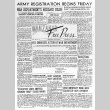
Manzanar Free Press Vol. III No. 12 (February 10, 1943) (ddr-densho-125-103)
Selected article titles: "Army Registration Begins Friday. Official Representatives Arrive Direct From Washington, D.C." (p. 1), "War Department's Message Read. Lt. Eugene Bogard Addresses Group at Town Hall Meeting" (p. 1), "Nisei Will Not Fight Japanese" (p. 1), "'Relocation Takes Another Meaning Today' States Brown" (p. 1), "FDR Endorses Action of War Department" (p. 1), "Army …
doc
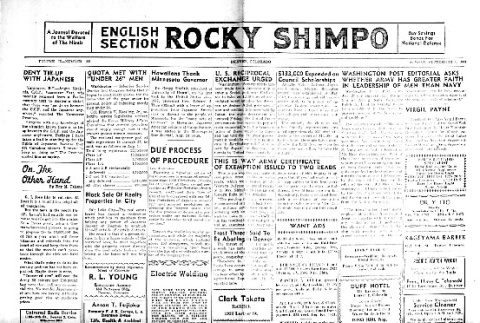
Rocky Shimpo Vol. 11, No. 106 (September 4, 1944) (ddr-densho-148-41)
Selected article titles: "Deny Tie-up With Japanese"; "On the Other Hand"; "Quota Met With "Under 26" Men"; "Block Sale of Realty Properties in City"; "Hawaiians Thank Minnesota Governor"; "Due Process of Procedure"; "U.S. Reciprocal Exchange Urged"; "$133,000 Expended on Council Scholarships"; "This is Way Army Certificate of Exemption Issued to Two Reads"; "Frost Threat Said to …
doc
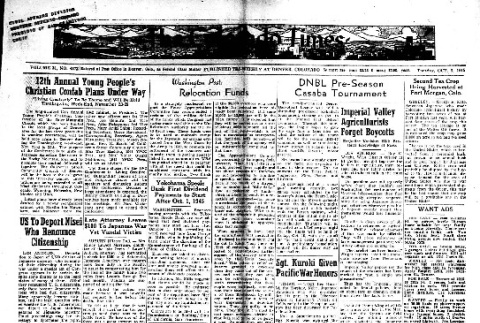
Colorado Times Vol. 31, No. 4372 (October 9, 1945) (ddr-densho-150-83)
Selected article titles: "12th Annual Young People's Christian Confab Plans Under Way"; "U.S. to Deport Nisei Who Renounce Citizenship"; "Late Attorney Leaves $100 to Japanese War Vet Vandal Victim"; "'Old Buyers' Can Still Evict on One Month's Notice to OPA"; "Washington Post: Relocation Funds"; "Yokohama Specie Bank First Dividend Payments to Start After Oct. 1, 1945"; …

doc
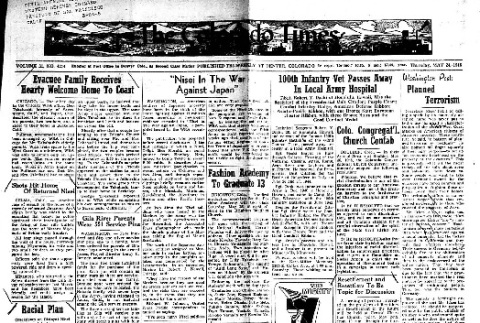
Colorado Times Vol. 31, No. 4314 (May 24, 1945) (ddr-densho-150-28)
Selected article titles: "Evacuee Family Receives Hearty Welcome Home to Coast"; "Shots Hit Home of Returned Nisei"; "Racial Plan"; "Gila River Parents Wear 551 Service Pins"; "Native Sons Ask Army to Ban Japanese Return"; "'Nisei in the War Against Japan'"; "Nisei to Get Aid"; "Fashion Academy to Graduate 13"; "WRA Plans Drive for Hiring of Nisei"; …
img
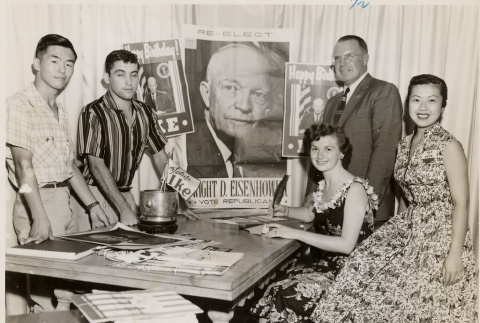
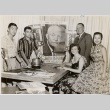
A Honolulu attorney and young members of Eisenhower's reelection campaign (ddr-njpa-2-517)
Caption on reverse: "Harold Kay Mum on T. H. Governorship Honolulu attorney Harold T. Kay, one of the reported candidates for the Hawaii governorship, is going back to Washington for conferences within the next few weeks. Kay yesterday declined to discuss the governorship, saying his meetings will concern the National Citizens for Eisenhower group. He was …
img
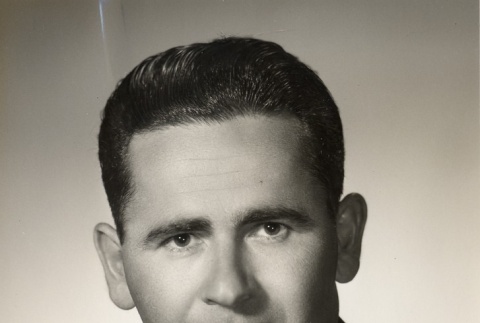
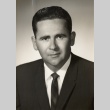
Portrait and bio of Permanente Cement plant manager (ddr-njpa-2-1171)
Text on reverse: "TO: HAWAII TIMES (WITH PIC), June 27, 1960. James F. Smithson has been appointed manager of Permanente Cement Company's new $13,500,000 cement producing plant at Waianae, Oahu, Hawaii, it was announced today by J.M. Garoutte, operations vice president. For the past three years, Smithson has served as process engineer at Permanente's Northern California …
img
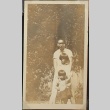
Nisei brother and sisters (ddr-densho-259-476)
Caption by Homer Yasui: "Kay, Michi and Yuka [Yasui], Third Street home In this photo, the white patches in front of Kay's ears on both sides are bandages. Earlier that summer, in June, 1930, he had gone to some sort of a military camp. It was called C.M.T.C., Camp Hurlburt, Vancouver Barracks, Washington...while there Kay developed …
doc
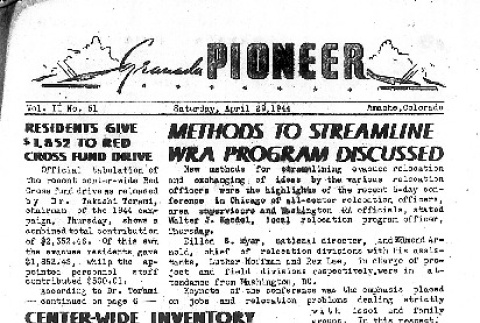
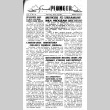
Granada Pioneer Vol. II No. 51 (April 29, 1944) (ddr-densho-147-164)
Selected article titles: "Center-wide Inventory Creates Terrific Ordeal" (p. 1), "Methods to Streamline WRA Program Discussed" (p. 1), "Washington Ruling Bans All Private Center Enterprises" (p. 1), "No Apartment Switching After May 15 Ordered" (p. 1), "Tule-Bound Center Residents Interviewed" (p. 3), "Friend of Japanese Americans Arrives Here for Third Visit" (p. 4), "Paper Editorializes Conditions …
doc
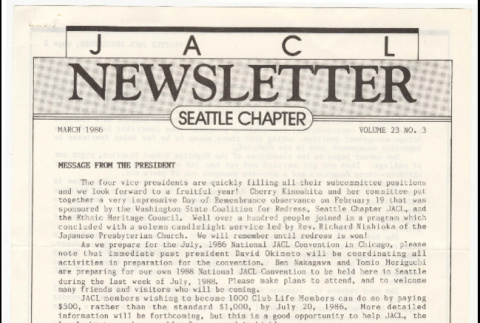
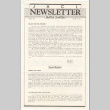
Seattle Chapter, JACL Reporter, Vol. 23, No. 3, March 1986 (ddr-sjacl-1-350)
Newsletter covering the following topics: 1986 President, Bob Sato; Washington State Redress Bill passes 82-15 in House and 45-1 in the Senate. Allows Seattle School Board to disburse $5,000 to each of the 27 school clerks who resigned. Rep Gary Locke given credit along with Jim McDermott, Phil Talmadge, and George Fleming and JACLers Cherry Kinoshita, …
doc
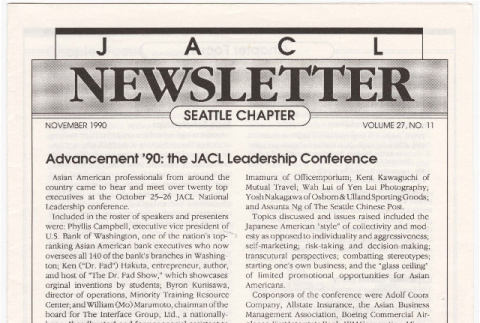
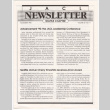
Seattle Chapter, JACL Reporter, Vol. 27, No. 11, November 1990 (ddr-sjacl-1-391)
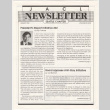
Newsletter covering the following topics: Advancement ?90: the JACL Leadership Conference, October 25-26th JACL National Leadership conference. Speakers included over 20 top executives; Cherry Kinoshita receives the ACLU William O. Douglas award, the Washington ACLU?s highest honor; Chapter Christmas party at the Bush. $16; NWAAT JACL benefit of ?The Wash? nets $700 for Chapter; board Profile: …
doc
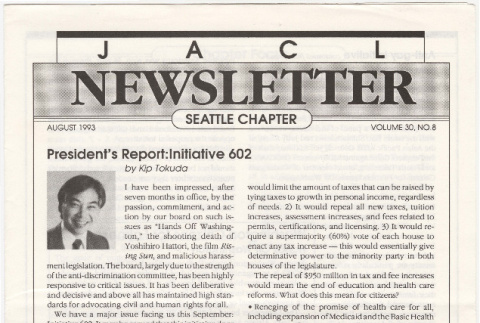
Seattle Chapter, JACL Reporter, Vol. 30, No. 8, August 1993 (ddr-sjacl-1-414)
Newsletter covering the following topics: Kip Tokuda lauds Chapter for quick action on in support of Hands Off Washington, investigating the shooting death of Yoshihiro Hattori, and the stereotyping in the film Rising Sun, and opposing Initiative 602 that limit taxes to growth in personal income; Board unanimously opposed anti-gay discrimination bill, like Measure 9, narrowly …
img
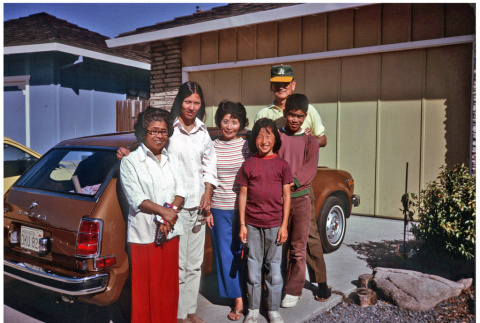
Family picture in front of car and house (ddr-densho-494-25)
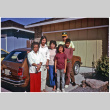
Photograph Caption on webpage: "Pictures from the later life of Meriko Maida, 1973-2012 / From Richmond to Sacramento / Meriko lived for many years in Richmond, California with her younger sister Junko and brother-in-law Shoichi Kimura. She later lived in various configurations with her other sister, Asako Tokuno. On some occasions, she visited both Seattle and …
vh
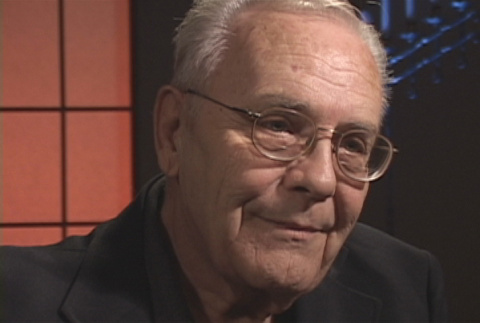
Chester Earls Interview (ddr-one-7-11)
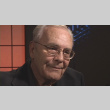
White male. Born in Spokane, Washington. Served as pastor of the First Methodist Church in Portland, Oregon, with a mainly Japanese American congregation, for thirteen years in the 1960s and '70s.
(This material is based upon work assisted by a grant from the Department of the Interior, National Park Service. Any opinions, finding, and conclusions or …
vh
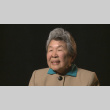
Stanley N. Shikuma Interview I (ddr-densho-1000-517)
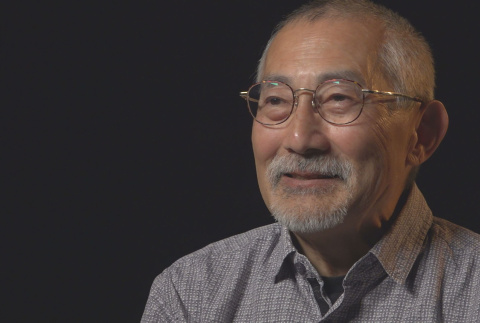
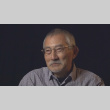
Sansei male. Born December 2, 1953, in Brogan, Oregon. Grew up primarily in the Watsonville, California, area, where parents ran a farm. Exposed at an early age to activism and organized labor. Attended Stanford University and then moved to Seattle, Washington, and earned a nursing credential. Has joined and led several prominent Seattle-area taiko (Japanese drum) …
vh
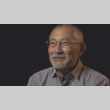
Shyoko Hiraga Interview (ddr-densho-1000-413)
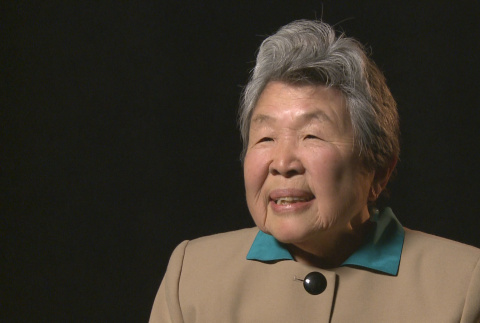
Nisei female. Born 1927 in Denver, Colorado. Grew up in Denver, where father was a tailor, then established a newspaper, the Rocky Nippon. During World War II, father was removed as editor of the newspaper, arrested by the FBI, and interned in a Department of Justice camp. James Omura took over as head of the …
vh
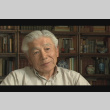
Stanley N. Shikuma Interview II (ddr-densho-1000-520)
Sansei male. Born December 2, 1953, in Brogan, Oregon. Grew up primarily in the Watsonville, California, area, where parents ran a farm. Exposed at an early age to activism and organized labor. Attended Stanford University and then moved to Seattle, Washington, and earned a nursing credential. Has joined and led several prominent Seattle-area taiko (Japanese drum) …
vh
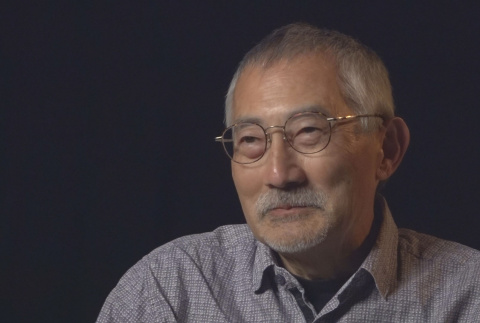
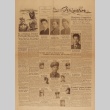
Bill Takemoto Interview (ddr-densho-1001-31)
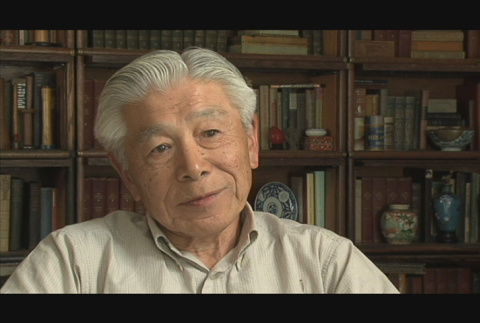
Nisei male. Born and raised on Bainbridge Island, Washington. During World War II, removed to the Manzanar concentration camp, California. After the war, joined the Air Force and eventually returned to Bainbridge Island.
(This material is based upon work assisted by a grant from the Department of the Interior, National Park Service. Any opinions, finding, and …
doc
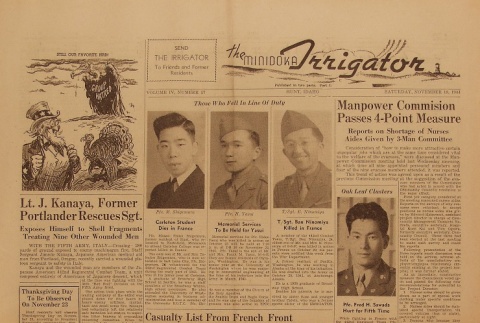
Minidoka Irrigator Vol. IV No. 37 (November 18, 1944) (ddr-densho-119-113)
Selected article titles: "Lt. J. Kanaya, Former Portlander Rescues Sgt. Exposes Himself to Shell Fragments Treating Nine Other Wounded Men" (p. 1), "Those Who Fell in Line of Duty" (p. 1), "Four Former Hunt Men Reported Wounded" (p. 1), "Wounded Veteran of Italian Campaign Refused Service" (p. 1), "P.I. Interprets Hosokawa Story in Ht. Mt. Sentinel" …
Collection
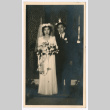
Ai Chih and Ryo (Morikawa) Tsai Family Collection (ddr-densho-446)
The Ai Chih and Ryo (Morikawa) Tsai Collection consists of materials compiled by Rev. Ai Chih Tsai and his wife, Ryo (Morikawa) Tsai, along with other documents pertaining to the Tsai and Morikawa families. Contained are correspondence, photographs, narratives, and other documents depicting the Tsai family’s experiences prior to, during, and immediately following World War II. …