
1552 items
1552 items
img
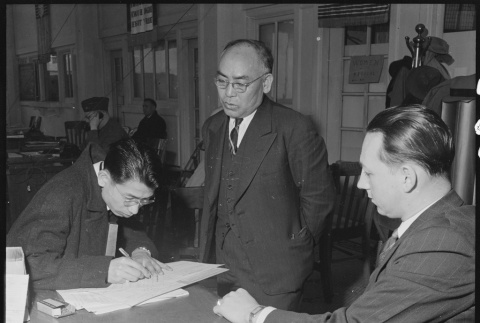
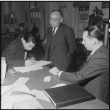
Mass removal registration (ddr-densho-151-79)
Original WRA caption: San Francisco, California. Father and son register for evacuation of persons of Japanese ancestry. Evacuees will be housed in War Relocation Authority centers for the duration.
img
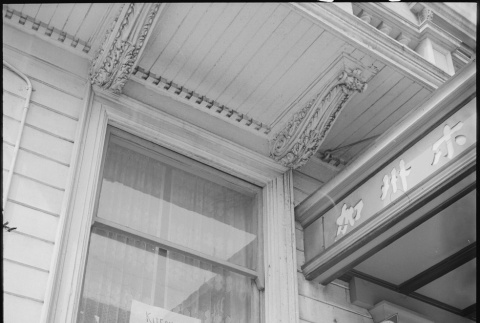
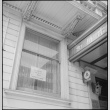
Sign advertising free kittens (ddr-densho-151-62)
Original WRA caption: A home is sought for kittens as owners prepare to evacuate. Evacuees of Japanese ancestry will be housed in War Relocation Authority centers for the duration.
img
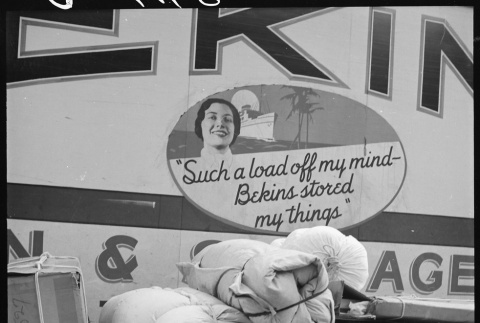
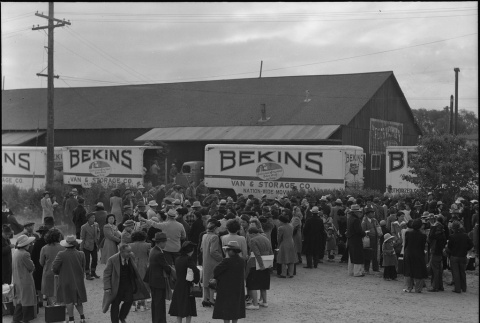
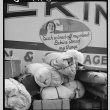
Baggage of Japanese Americans next to bus (ddr-densho-151-166)
Original caption: Hayward, California. Baggage of evacuees of Japanese ancestry ready to be loaded on moving van. Evacuees will be housed in War Relocation Authority centers for the duration.
img
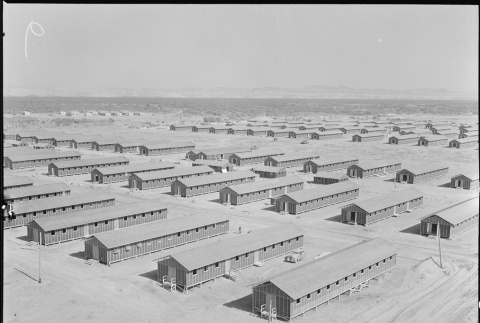
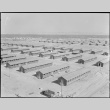
Poston concentration camp (ddr-densho-37-476)
Original WRA caption: Poston, Arizona. Living quarters of evacuees of Japanese ancestry at this War Relocation Authority center as seen from the top of water tower facing south west.
img
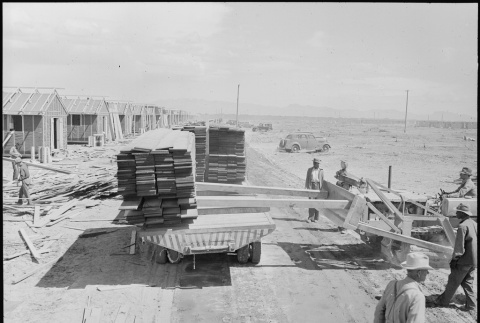
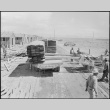
Japanese Americans unloading lumber for barrack construction (ddr-densho-37-858)
Original WRA caption: Poston, Arizona. Unloading lumber with bulldozer in the construction of barracks for evacuees of Japanese ancestry who will spend the duration in War Relocation Authority centers.
doc
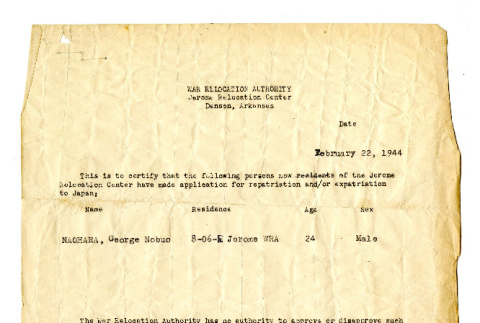
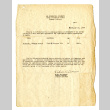
Letter from Robert A. Allison, Project Director, Jerome Relocation Center, War Relocation Authority, February 22, 1944 (ddr-csujad-38-562)
A letter from Robert A. Allison, Project Director of the Jerome camp in Arkansas. It certifies that George Nobuo Naohara has made an application for repatriation/expatriation. It also states that WRA is not authorized to approve or disapprove his application. See this object in the California State Universities Japanese American Digitization project site: nao_05_13_014
doc
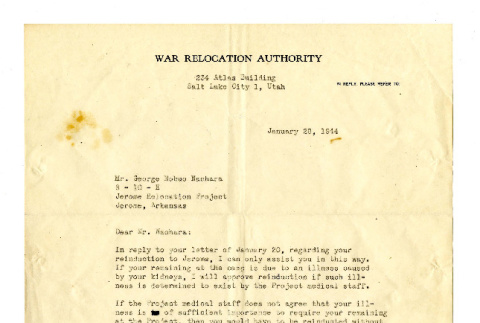
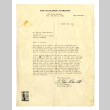
Letter from A. Clair Barret, Relocation Officer, War Relocation Authority to George Naohara, January 28, 1944 (ddr-csujad-38-561)
A letter from A. Clair Barret, Relocation Officer, War Relocation Authority to George Nobuo Naohara, an incarceree at the Jerome camp in Arkansas. It warns that his re-induction in the Jerome camp has not been approved yet and he will forfeit his right to take indefinite leave. See this object in the California State Universities Japanese …
img
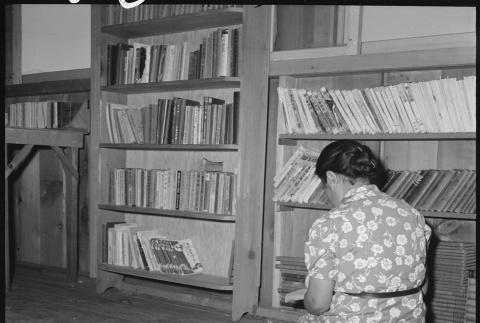
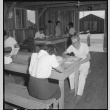
Library (ddr-densho-151-434)
Original caption: Manzanar Relocation Center, Manzanar, California. One of the barrack buildings houses the library for evacuees at this War Relocation Authority center. The librarian is a college graduate of Japanese ancestry who employs modern methods in library procedure.
img
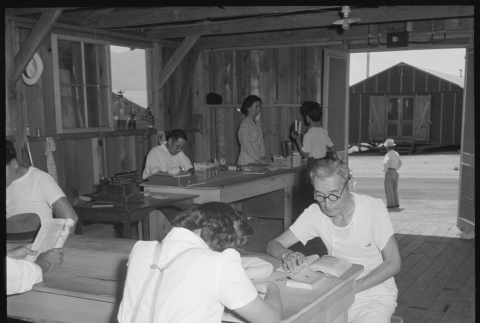
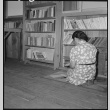
Japanese American reading in library (ddr-densho-151-436)
Original caption: Manzanar Relocation Center, Manzanar, California. A corner in the library at this War Relocation Authority center for evacuees of Japanese ancestry. This section contains books in the Japanese lanuage, most of which are translations of English classics.
img
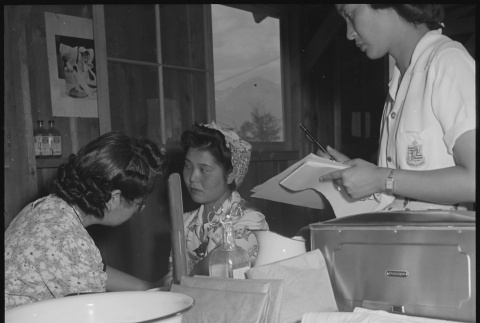
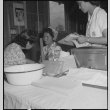
Pregnant Japanese American visiting doctor (ddr-densho-151-418)
Original caption: Manzanar Relocation Center, Manzanar, California. Young expectant mother (center) receives check-up from her doctor (left) in the medical clinic, now housed in a temporary building, at this War Relocation Authority Center for evacuees of Japanese ancestry.
img
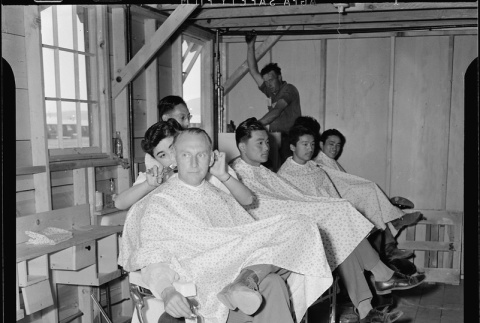
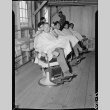
Barber shop (ddr-densho-37-384)
Original WRA caption: Tule Lake Relocation Center, Newell, California. Motimer Cooke, Supervisor of Community Enterprises, enjoys the first hair-cut given in the barber shop at this War Relocation Authority center. Frances Imura, evacuee from Sacramento is the barber.
img
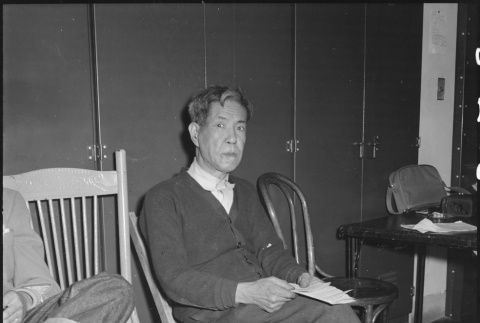
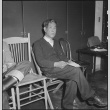
Issei man registering for mass removal (ddr-densho-151-135)
Original caption: Hayward, California. A farmer of Japanese ancestry appears at Wartime Civil Control Administration station prepratory to evacuation. Evacuees will be housed in War Relocation Authority centers for duration.
img
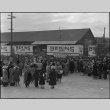
Moving vans being packed with baggage (ddr-densho-151-203)
Original caption: Centerville, California. Awaiting evacuation bus, while personal effects are packed aboard moving vans. Evacuees of Japanese ancestry will be housed in War Relocation Authority centers for the duration.
img
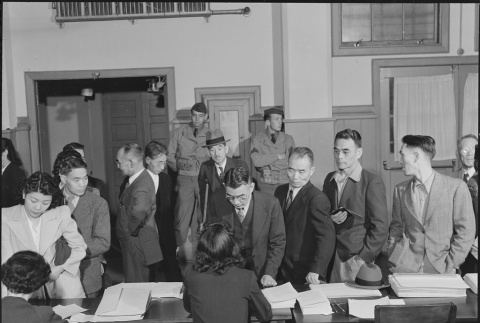
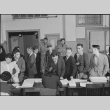
Japanese Americans registering for mass removal (ddr-densho-151-134)
Original caption: San Francisco, California. The residents of Japanese appear at 2031 Bush Street, for information on evacuation. Evacuees will be housed in War Relocation Authority centers for the duration.
img
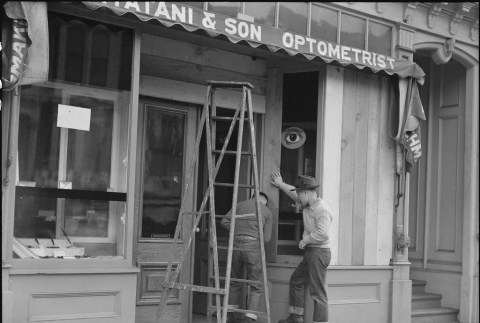
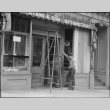
Japanese Americans boarding up their store (ddr-densho-151-234)
Original caption: San Francisco, California. Owners of Japanese ancestry board up windows of their stores prior to evacuation. Evacuees will be housed in War Relocation Authority centers for the duration.
img
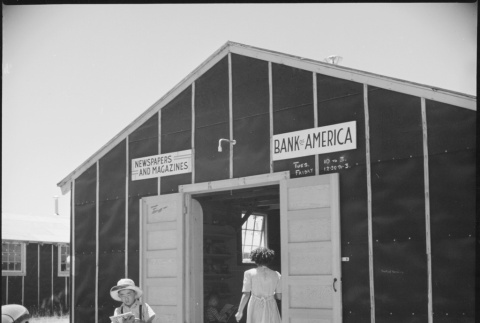
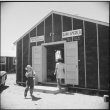
Bank and newsstand (ddr-densho-37-361)
Original WRA caption: A view of the bank and newsstand at this War Relocation Authority center for evacuees of Japanese ancestry. The bank is open on Tuesdays and Fridays only.
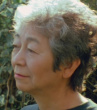
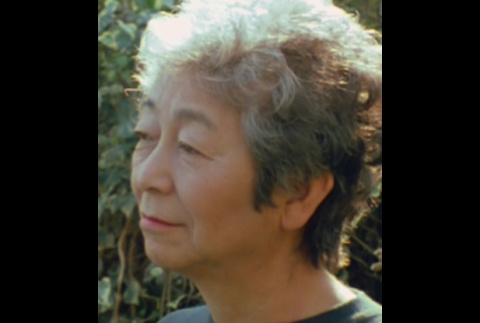
Narrator Nikki Bridges
Nisei female. Born February 2, 1911, and grew up in California. During World War II, removed to the Poston (Colorado River) concentration camp, Arizona. After leaving camp, worked in the War Relocation Authority office in San Francisco.
doc
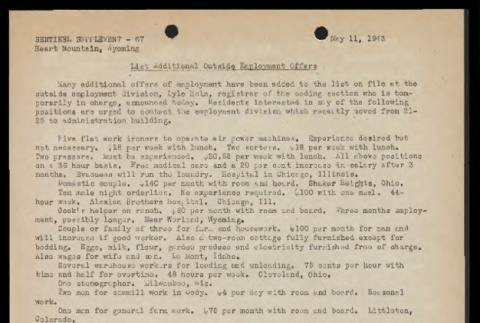
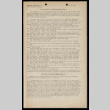
Sentinel supplement, series 67 (May 11, 1943) (ddr-csujad-55-1053)
News bulletin for incarcerees covering announcements, events, programs, policies, recreational activities, and jobs at Heart Mountain incarceration camp. Current issue includes information on employment, civil service examination, training courses, and sports briefs. See this object in the California State Universities Japanese American Digitization project site: sac_jaac_1055
doc
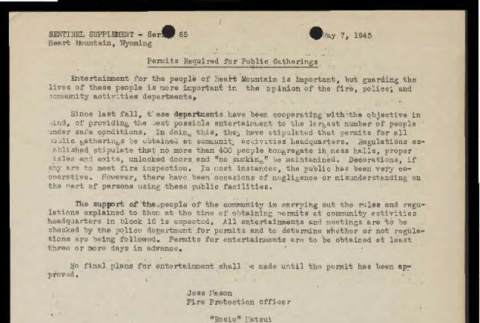
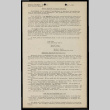
Sentinel supplement, series 65 (May 7, 1943) (ddr-csujad-55-1052)
News bulletin for incarcerees covering announcements, events, programs, policies, recreational activities, and jobs at Heart Mountain incarceration camp. Current issue includes information on employment, public gathering permits; fundraising for the Hirabayashi case, sick leave, victory gardens, clothing allowances, dry cleaning, and lost-and-found. See this object in the California State Universities Japanese American Digitization project site: sac_jaac_1054
doc
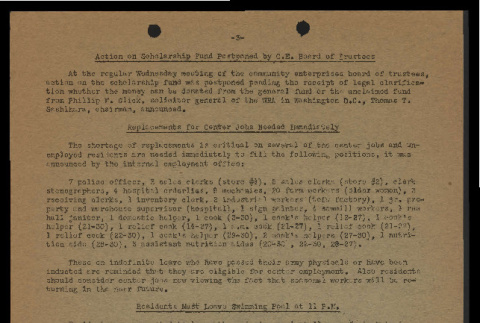
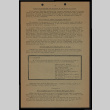
Sentinel supplement, series 224, (August 17, 1944) (ddr-csujad-55-1631)
News bulletin published at Heart Mountain incarceration camp covering administrative announcements, events, vital statistics, and other necessary information concerning daily life in the camp. Current issue includes information on jobs, scholarship fund, and swimming pool hours. Includes page 3 only. See this object in the California State Universities Japanese American Digitization project site: sac_jaac_1633
doc
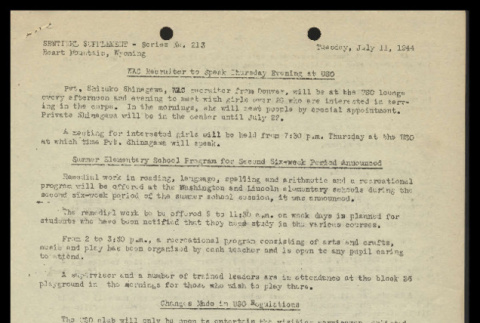
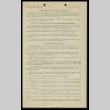
Sentinel supplement, series 213 (July 11, 1944) (ddr-csujad-55-1624)
News bulletin published at Heart Mountain incarceration camp covering administrative announcements, events, vital statistics, and other necessary information concerning daily life in the camp. Current issue includes information on WAC recruitment, summer school, USO regulations, funeral services, and employment. Includes text in Japanese. See this object in the California State Universities Japanese American Digitization project site: …
doc
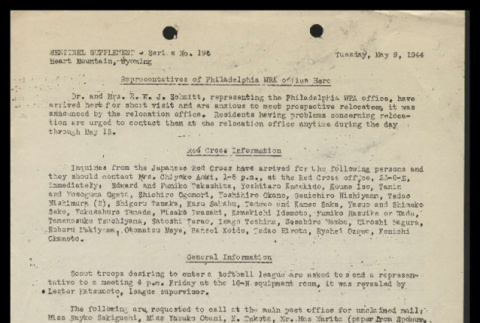
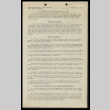
Sentinel supplement, series 196 (May 9, 1944) (ddr-csujad-55-1605)
News bulletin published at Heart Mountain incarceration camp covering administrative announcements, events, vital statistics, and other necessary information concerning daily life in the camp. Current issue includes information on Red Cross messages, Army processing team, employment, animal regulations, and general information. See this object in the California State Universities Japanese American Digitization project site: sac_jaac_1607
doc
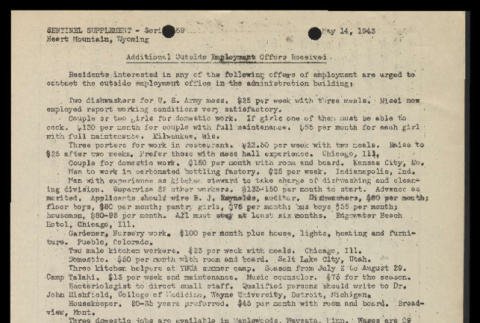
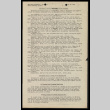
Sentinel supplement, series 69 (May 14, 1943) (ddr-csujad-55-1055)
News bulletin for incarcerees covering announcements, events, programs, policies, recreational activities, and jobs at Heart Mountain incarceration camp. Current issue includes information on jobs and farming. Includes section in Japanese. See this object in the California State Universities Japanese American Digitization project site: sac_jaac_1057
doc
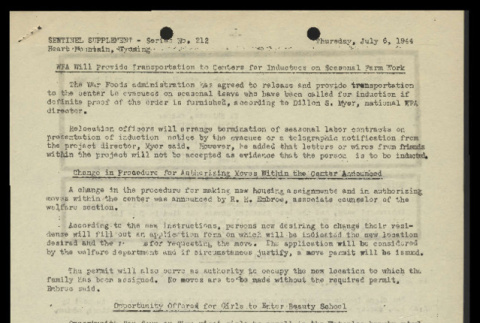
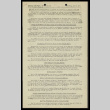
Sentinel supplement, series 212 (July 6, 1944) (ddr-csujad-55-1623)
News bulletin published at Heart Mountain incarceration camp covering administrative announcements, events, vital statistics, and other necessary information concerning daily life in the camp. Current issue includes information on transportation for seasonal farm work, procedure for moving within center, beauty school, funeral services, employment, and general information. See this object in the California State Universities Japanese …
doc
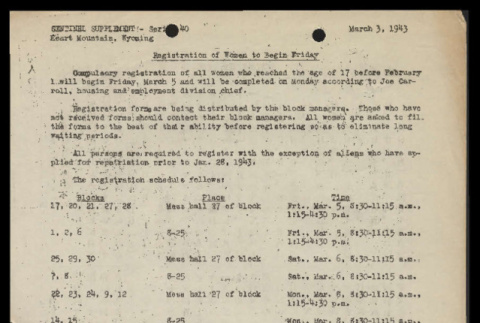
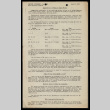
Sentinel supplement, series 40 (March 3, 1943) (ddr-csujad-55-1035)
News bulletin for incarcerees covering announcements, events, programs, policies, recreational activities, and jobs at Heart Mountain incarceration camp. Current issue includes information on registration ("loyalty questionnaire") for female incarcerees, range firing schedule, a farewell dinner for Dr. Kinoshita, and the YWCA schedule. Includes section in Japanese. See this object in the California State Universities Japanese American …