
82 items


82 items
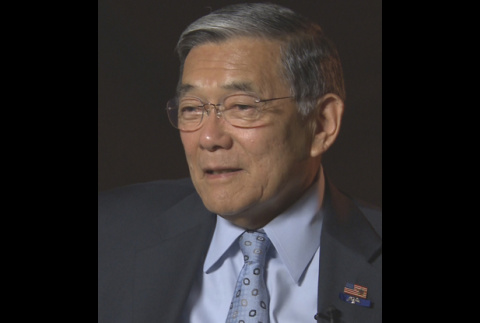
Narrator Norman Mineta
Nisei male. Born November 12, 1931, in San Jose, California. During World War II, removed to Heart Mountain concentration camp, Wyoming. Graduated from the University of California at Berkeley, and served in the military as an intelligence officer in Japan and Korea. Served on the San Jose City Council from 1967 to 1971, and as mayor …
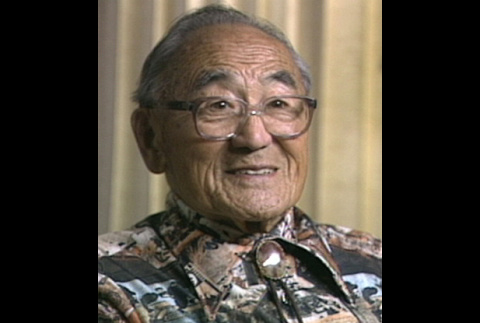
Narrator Dave Tatsuno
Nisei male. Born March 31, 1913, in San Francisco, California. Spent difficult childhood years in San Francisco under care of a guardian while family lived in Japan. Graduated with a degree in business administration from the University of California at Berkeley before World War II. Removed to Tanforan Assembly Center, California, and then to Topaz concentration …
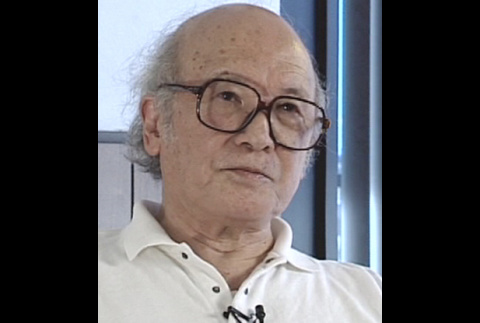
Narrator Minoru Kiyota
Kibei male, born October 12, 1923, in Seattle, Washington. Raised primarily in San Francisco, California, spending four years in Hiratsuka, Japan. Was incarcerated with his family at Topaz concentration camp, Utah. Refused to sign the so-called "loyalty questionnaire," and as a consequence was moved to Tule Lake Segregation Center, California. In Tule, he renounced his U.S. …
Narrator Ryo Imamura
Sansei male, born April 28, 1944, in the Gila River concentration camp, Arizona. His father was the late Rev. Kanmo Imamura, a former Bishop of Hawaii and a minister for the Hawaii Kyodan and the Buddhist Churches of America (BCA). His mother Jane Imamura composed many of the children's gathas sung in the Dharma Schools. Both …
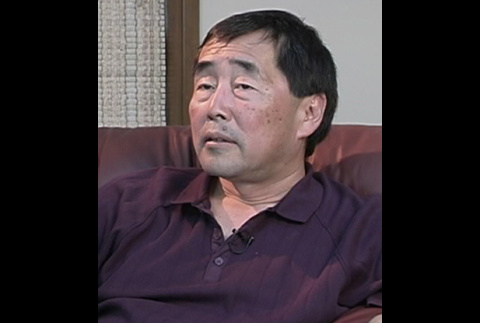
Narrator Dale Minami
Sansei male. Born in Los Angeles, California on October 13, 1946, and grew up in Gardena, California. Received B.A. in Political Science from University of Southern California, graduated magna cum laude and Phi Beta Kappa in 1968. Received J.D., 1971, from Boalt Hall School of Law, University of California. Mr. Minami was a co-founder of the …

av
Bitter Memories: Tule Lake (ddr-densho-1024-12)
Early film that provides an overview of the wartime forced removal and incarceration of Japanese Americans on the West Coast produced by the University of California, Berkeley in 1975. Bitter Memory tells the story through narration and interviews with former inmates accompanied by archival footage from Office of War Information/War Relocation Authority (WRA) films and WRA …

vh
Donald K. Tamaki Interview (ddr-densho-1021-10)
Born in 1951, Donald K. Tamaki spent his formative years in the era of the African American and Asian American civil rights movements. He studied at the Asian American Studies program at University of California, Berkeley, and became a lawyer inspired by the significant social and political changes of the 1970s. In the early 1980s, he …