
2184 items


2184 items
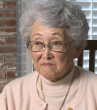
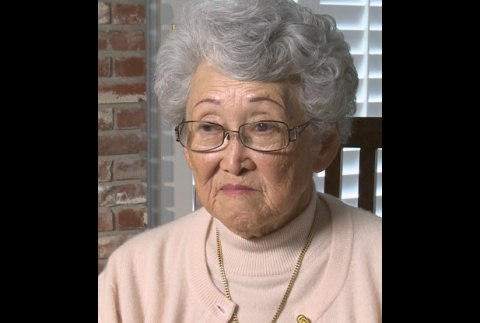
Narrator Kiyo Nikaido Morimoto
Nisei female. Born November 30, 1919, in Walnut Grove, California. Paternal grandparents immigrated to the United States with father. Grew up in the Madera, California, area, and was married with a child by the time World War II broke out in 1941. During the war, removed to the Fresno Assembly Center, California, and the Jerome concentration …
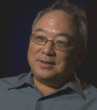
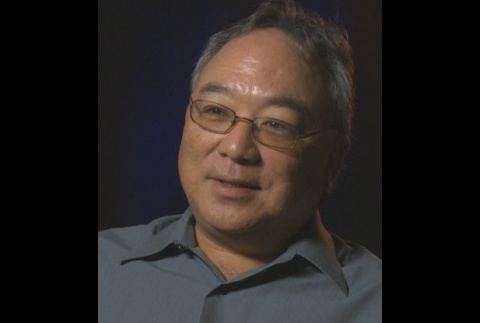
Narrator Eric K. Yamamoto
Sansei male. Born 1952 in Honolulu, Hawaii. Attended law school at UC Berkeley, California and became involved with the Asian Law Caucus. After graduating, returned to Hawaii. In the 1980s, left job in Hawaii and moved to the Bay Area to become a member of the pro bono legal team for Korematsu v. United States, a …
doc
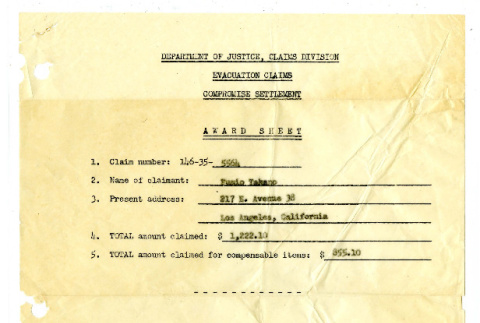
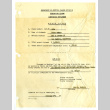
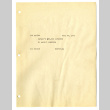
Evacuation claims compromise settlement award sheet (ddr-csujad-42-140)
A carbon copy of an award sheet issued by Holmes Baldridge, Assistant Attorney General, Claims Division, Department of Justice, and signed by John A, Jenkins, Attorney. 641.33 dollars were awarded for Fumio Fred Takano's claim. See this object in the California State Universities Japanese American Digitization project site: tak_01_75_001
doc
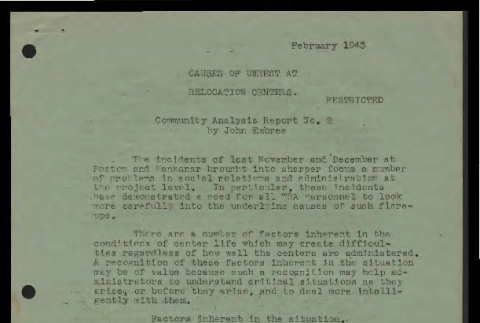
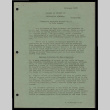
Community analysis report, no. 2 (February 1943) (ddr-csujad-55-1656)
Report, "Causes of unrest at relocation centers," discussing factors contributing to the strikes and unrest at Poston and Manzanar incarceration camps. Covers living conditions, cultural issues, security, administration, authority, labor, and other issues. See this object in the California State Universities Japanese American Digitization project site: sac_jaac_1658
doc
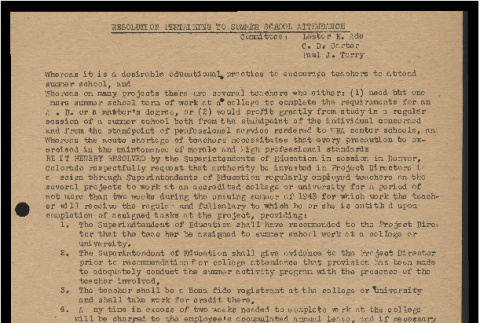
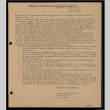
Resolution pertaining to summer school attendance (ddr-csujad-55-1733)
Resolution regarding summer school attendance for teachers at Poston incarceration camp. See this object in the California State Universities Japanese American Digitization project site: sac_jaac_1735

doc
Letter to Daniel Inouye from Mr. and Mrs. M. Katayama (ddr-densho-510-43)
Includes copy of letter to Wilson from Mr. and Mrs. M. Katayama. (ddr-densho-510-42)

doc
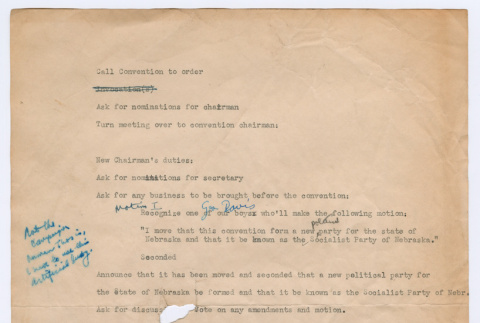
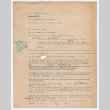
Itinerary and notes (ddr-densho-468-220)
Itinerary and notes for Nebraskans for Norman Thomas convention meeting
doc
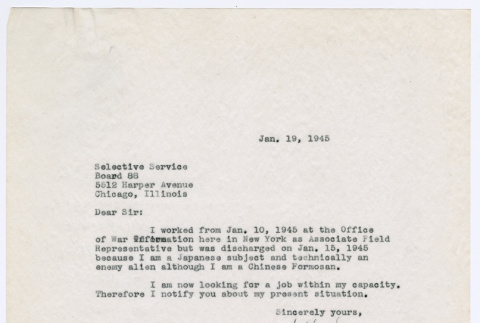
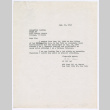
Letter from Ai Chih Tsai to Selective Service Board 88 (ddr-densho-446-152)
I was discharged from Office of War Intelligence due to "enemy alien" status.
doc
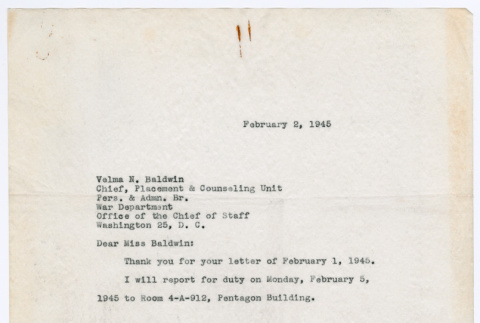
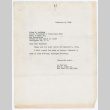
Letter from Ai Chih Tsai to Velma N. Baldwin (ddr-densho-446-106)
Thank you for letter. Tsai will report for duty as instructed.
doc
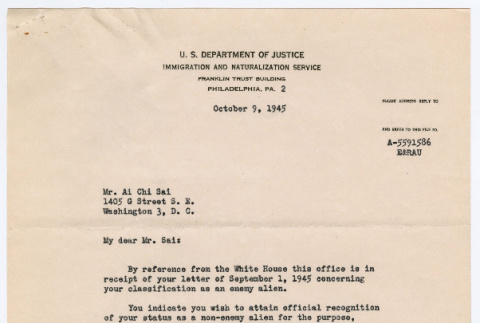
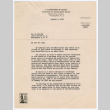
Letter from A. C. Devaney to Ai Chih Tsai (ddr-densho-446-127)
Response to Tsai's letter to the White House. Immigration and Naturalization Service does not amend registration records. In regards to deportation concerns, Tsai has been granted extension of visa until September 1, 1946. American consulate in Formosa has jurisdiction to approve non-enemy status when the consulate is reopened. The Chinese government has jurisdiction to approve registration …
doc
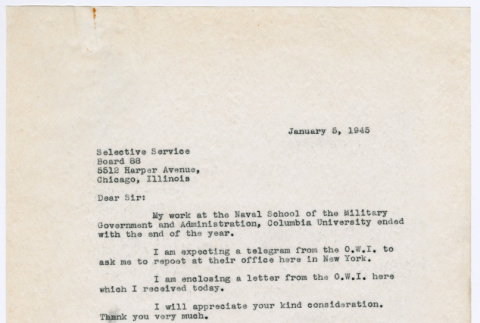
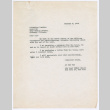
Letter from Ai Chih Tsai to Selective Service Board 88 (ddr-densho-446-147)
Expecting an offer of employment from the Office of War Intelligence
doc
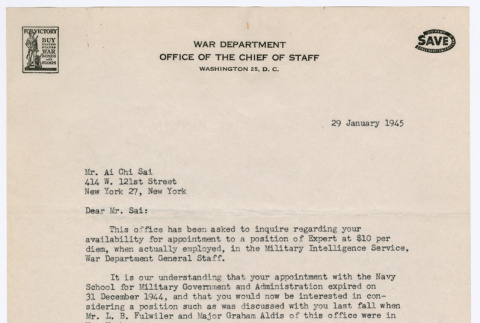
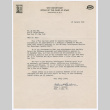
Letter from Velma N. Baldwin to Ai Chih Tsai (ddr-densho-446-102)
Offering position of Expert at $10/day while employed by Military Intelligence Service of the War Dept. with explanation that "work would be of an extremely confidential nature"
doc
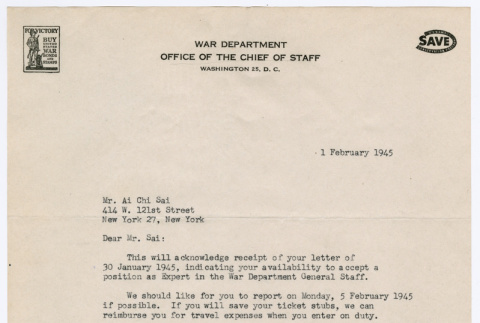
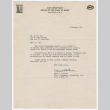
Letter from Velma N. Baldwin to Ai Chih Tsai (ddr-densho-446-105)
Instructions to report to Pentagon Building on February 5, 1945
doc
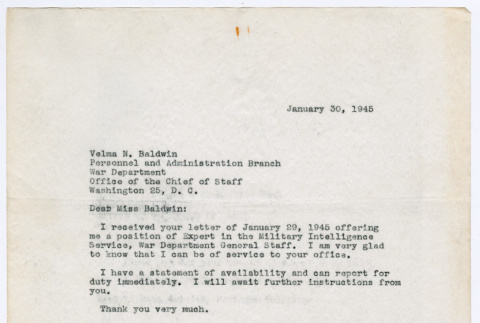
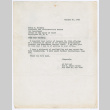
Letter from Ai Chih Tsai to Velma N. Baldwin (ddr-densho-446-104)
Tsai is ready to report for duty immediately
img
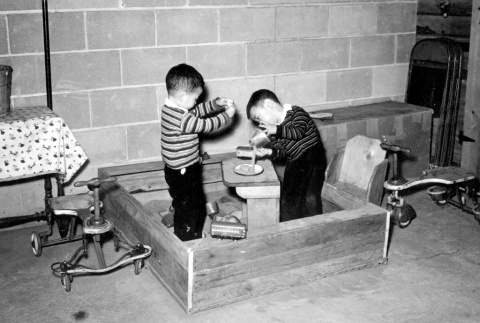
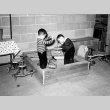
WRA resettlement image (ddr-densho-7-13)
Original WRA caption: One corner in the basement of the home of the Kanekos and the Isodas has been turned into the kiddies' playroom for the two young sons of these families. In this box of play sand, Robin Isoda is pouring out a cup of make-believe coffee for his cousin, Wayne Kaneko. Both youngsters are …
doc
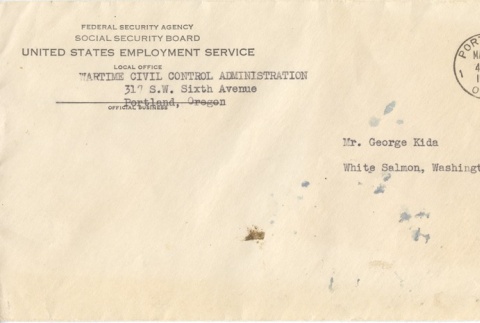
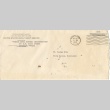
Letter to George Kida from Major E.A. Steuding (ddr-one-3-16)
Letter and envelope to George Kida from Major E. A. Steuding, the acting Provost Marshal for the State of the Oregon, informing George that his request for more information about the date of evacuation and the possibility of re-settlement in his letter written on May 19, 1942 could not be could not be answered by the …
doc
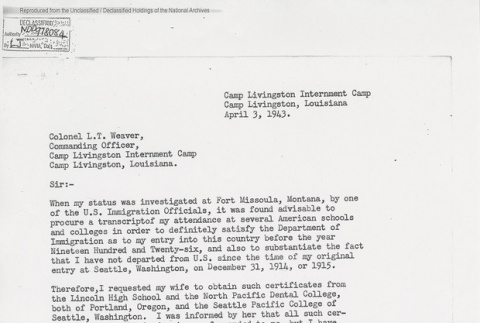
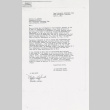
Letter from Keizaburo Koyama to Colonel L. T. Weaver, Commanding Officer of the Camp Livingston Internment Camp in Louisiana, requesting copies of his educational certificates (ddr-one-5-200)
Photocopy of a declassified typed letter from Keizaburo Koyama to Colonel L. T. Weaver, Commanding Officer of the Camp Livingston Internment Camp. Dr. Koyama was advised at his Fort Missoula Hearing by U.S. Immigration officials to obtain his official educational attendance records. He sent this request to his wife who had the records forwarded to Camp …
img
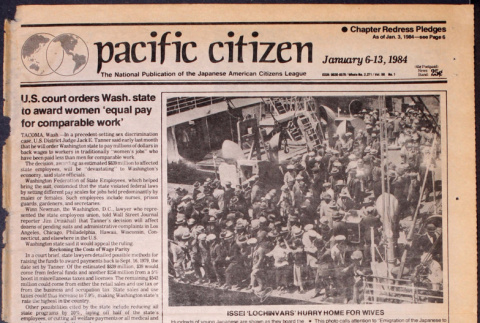
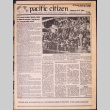
Pacific Citizen, Vol. 98, No. 1 (January 6-13, 1984) (ddr-pc-56-1)
Special New Year's edition. Selected article titles: "U.S. Court orders Wash. State to award women 'equal pay for comparable work'" (p. 1, Sec. A-1), "Vietnam vets held for burning Buddhist shrine" (p. 1, Sec. A-1), "Idaho Farm Bureau state board names first Nikkei director" (p. 2, Sec. A-2), "Amerika Monogatari: Widening the Gap between Nihonjin and …
doc
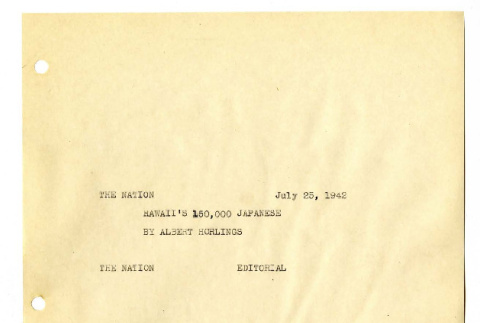
Hawaii's 150,00 Japanese (ddr-csujad-19-84)
An article from "The nation," vol. 155, no. 4 (July 25, 1942). It is written by Albert Horlings and describes the historic gamble by the United States government in Hawaii by trusting the loyalty of 150,000 Japanese Americans and Japanese, 40,000 of whom were aliens and and majority of those who cannot read or speak English. …
img
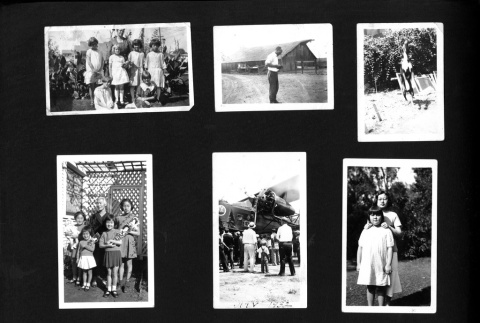
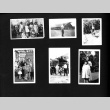
Japanese family, female children (ddr-csujad-25-300)
A page from a photo album including Japanese family photographs. Six photographs are pasted on the page. Includes: Japanese or Japanese American female children along with Caucasian female children. In one of the photographs, Japanese female children pose holding "hagoita." Another photograph captures a United States Army Air Corps aircraft taken in July 1932, most likely …
doc
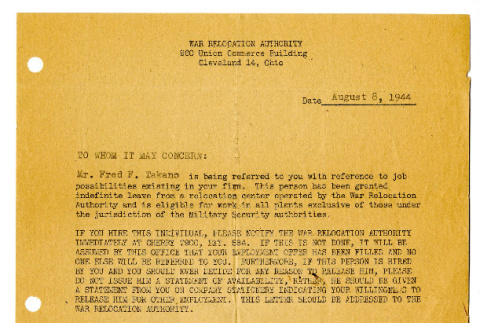
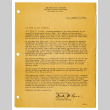
Letter from Fred W. Ross, Relocation Officer, War Relocation Authority, August 8, 1944 (ddr-csujad-42-105)
A letter from Fred W. Ross, Relocation Officer, War Relocation Authority, United States Department of the Interior, to the employer who is hiring Fumio Fred Takano. It confirms that Fumio has been granted indefinite leave from the camp and is eligible for work. It also includes the requirements in hiring/releasing him and describes the resettlement program. …
img
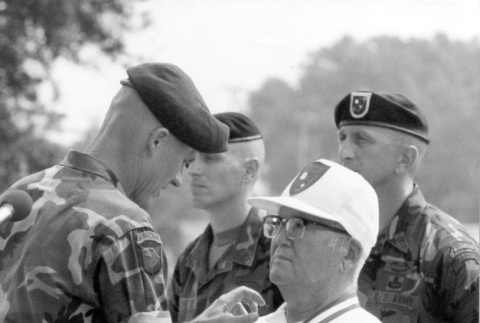
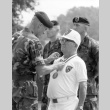
Ranger Hall of Fame medallion presentation (ddr-densho-107-31)
Colonel David Grange presents the Ranger Hall of Fame medallion to Ranger Roy Matsumoto at Ranger Field, Fort Benning, Georgia. Front (L to R): Col. David L. Grange, CO 75th Ranger Regiment and Retired Army Master Sgt Roy H. Matsumoto. Back (L to R): CSM Jesse G. Laye and Col. Michael V. Church CO Ranger Training …
doc
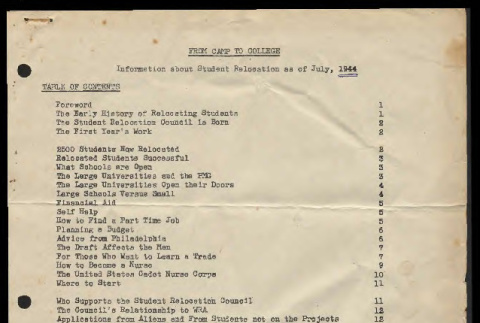
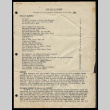
From camp to college: information about student relocation as of July, 1944 (ddr-csujad-55-1823)
Report on the relocation of students at incarceration camps. Covers the history of relocating students, the student relocation council, student success, schools, large universities and the PMG, financial aid, part-time jobs, budget, the draft, trade schools, nursing, the United States cadet nurse corps, student relocation council and the WRA, applications from aliens, high school undergraduates, travel, …
doc
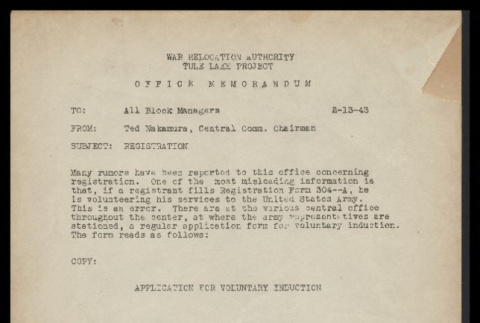
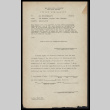
Memo from Ted Nakamura, Central Comm. Chairman, to all block managers, DSS form 165, February 13, 1943 (ddr-csujad-55-188)
Memorandum of understanding from Ted Nakamura to Block Managers at Tule Lake regarding registration form WRA 304a (also known as the "loyalty questionnaire") and whether or not an individual is volunteering his services for the United States Army when filling out the form. Memo also includes a copy of the Application for Voluntary Induction, DSS Form …