
1019 items








1019 items

img
The Downbeats (ddr-densho-298-45)
Caption in album: "'Downbeats' - 1942. Front row: Piano (?); Richey, guitar; Al Nitta, tenor sax; George Nakao, alto sax; Tosh Makishima, 3rd sax."


img
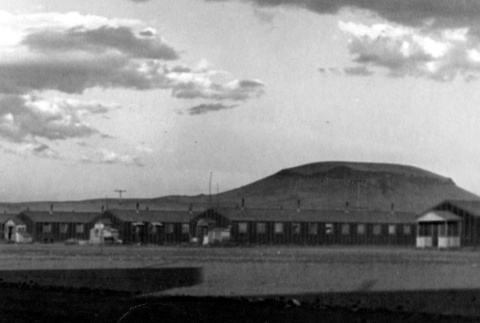
Exterior of barracks (ddr-densho-35-5)
These barracks housed Japanese Americans during World War II. There were approximately twelve barracks to a block and six apartments per barracks. Each apartment was 100 x 20 feet and housed one family. The exterior of these barracks have remained virtually untouched since World War II.


img
Japanese American and friend sifting for shells (ddr-densho-2-59)
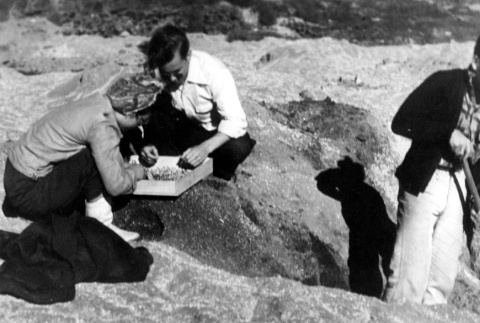
Patsy Yorita (left) and Neal Frost, (son of a teacher at the Tule Lake concentration camp), sift dirt for shells. The shells were used by people in the camp to make jewelry. Tule Lake was drained in the early 1900s. The camp was located on the old lake bed, where people found shells for making jewelry …

img
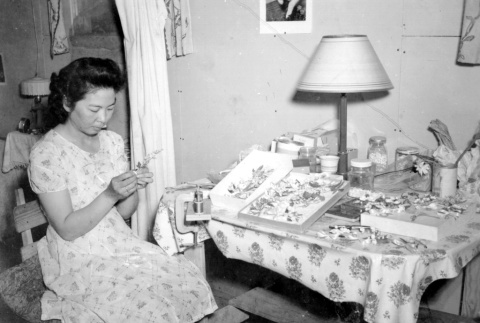
Japanese American making jewelry (ddr-densho-2-61)
Peggie Yorita makes jewelry from shells found at the Tule Lake concentration camp. Tule Lake was drained in the early 1900s. The camp was located on the old lake bed, where people found shells for making jewelry to sell to camp personnel. Shells were scarce, and digging became competitive. To beat the rush, some peopel got …
img
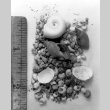
Shells used for jewelry making (ddr-densho-2-51)
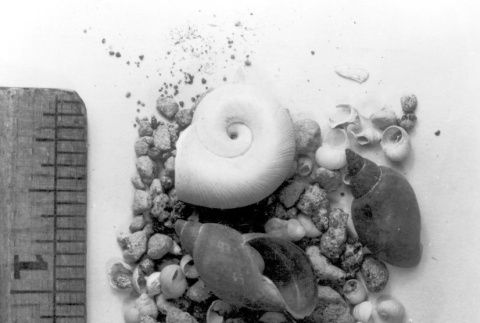
Japanese Americans at the Tule Lake concentration camp enjoyed making jewelry from shells, such as the ones shown here, which were found within the confines of the camp. These shells have not yet been bleached. Tule Lake was drained in the early 1900s. The camp was located on the old lake bed, where people found shells …
img
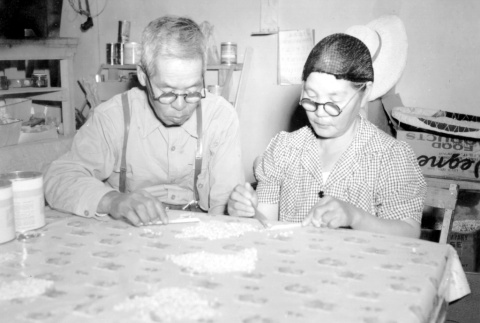
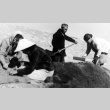
Japanese Americans digging for shells (ddr-densho-2-48)
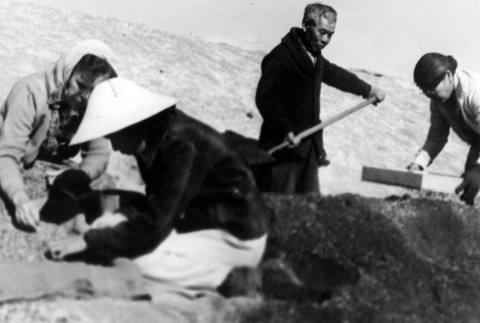
Left to right: Peggie Yorita, Margaret Frost (wife of one of the camp's teachers), Kumataro Nishimura, and his wife, Kadju, dig and sift for shells at the Tule Lake concentration camp. Kumataro made the sieve by hand from scrap lumber and wire from a door screen. The shells were bleached and used for jewelry-making, which was …

img
Incarceree performing in camp parade (ddr-densho-2-23)
Patsy Yorita performing a flag salute at the Tule Lake concentration camp at the Independence Day parade.

img
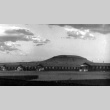
Tule Lake concentration camp (ddr-densho-2-33)
View of the Tule Lake concentration camp barracks. A rock formation that the inmates called "Castle Rock" can be seen in the background. After obtaining permission to go through the gates, people could climb to the top of the formation.
img
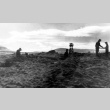
Japanese Americans digging for shells (ddr-densho-2-47)
These individuals are digging for shells to make jewelry, which was a popular pastime for many Japanese Americans in camp. Left to right: Kumataro Nishimura, Kadju Nishimura, Jimmie Yorita, Neal Frost (son of one of the teachers at Tule Lake), and Patsy Yorita. Tule Lake was drained in the early 1900s. The camp was located on …
img
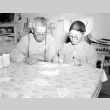
Japanese Americans preparing shells for jewelry making (ddr-densho-2-50)
Kumataro (left) and Kadju Nishimura measure and separate shells to be used in jewelry-making. The Nishimuras woke up at the crack of dawn and dug waist-deep holes to find the shells. The shells were then bleached white and later painted. Tule Lake was drained in the early 1900s. The camp was located on the old lake …
img
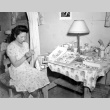
Japanese American making shell jewelry (ddr-densho-2-58)
Peggie Yorita making jewelry from shells found within the confines of the Tule Lake concentration camp. Making jewelry was a popular pastime for the Japanese Americans. Tule Lake was drained in the early 1900s. The camp was located on the old lake bed. As a result, shells were available for people to fashion into jewelry for …
img
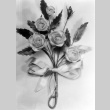
Jewelry made in camp (ddr-densho-2-49)
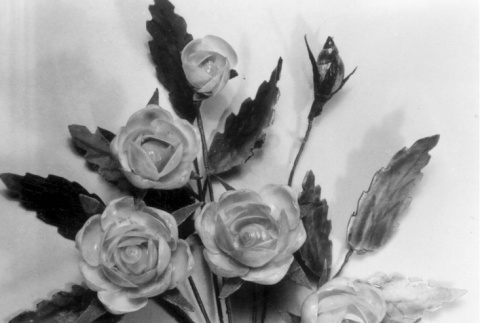
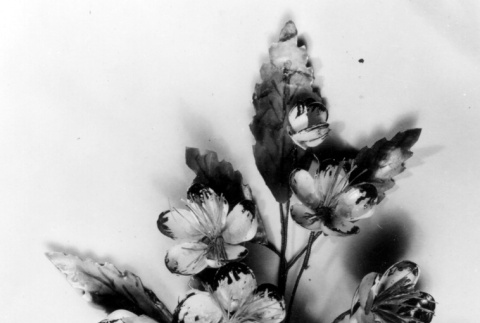
This corsage pin was made by Peggie Yorita, a Japanese American at the Tule Lake concentration camp. The flowers and leaves are composed of shells found at the camp. Tule Lake was drained in the early 1900s. The camp was located on the old lake bed, where people found shells for making jewelry to sell to …
img
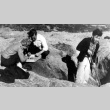
Japanese American and friend digging for shells (ddr-densho-2-60)
Jimmie Yorita (right) digs for shells used by people in camp to make jewelry. His sister, Patsy (left), and Neal Frost, son of one of the camp's teachers, sift the dirt. Tule Lake was drained in the early 1900s. The camp was located on the old lake bed, where camp inmates found shells for making jewelry …
img
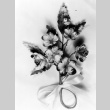
Corsage made of shells (ddr-densho-2-4)
This corsage pin was made by a Japanese American in camp. The flower petals and leaves are made from various types of shells found at the camp. She used toothbrush bristles dipped in cornmeal for stamens and wound the stems by hand with fine green thread. Wire from screen windows was used to put the pin …

doc
Tulean Dispatch Vol. III No. 12 (July 30, 1942) (ddr-densho-65-7)
Selected article titles: "Average Age 32: One Third of City Population Employed" (p. 1), "2000 to Attend High School" (p. 1), "Tuleans Face Third Blackout" (p. 1), "Tails Wag in Tule" (p. 1), "Council: Food Supply Assured" (p. 1), "Another Canteen Open: Store Open at Night" (p. 1), "Ward IV List of Leaders" (p. 2), "Census …

doc
Tulean Dispatch Vol. 6 No. 35 (August 26, 1943) (ddr-densho-65-286)
Selected article titles: "More Chicks Added Here" (p. 1), "Reeders Here This Friday" (p. 1), "Spanish Vice-Consul Visits: Message For Nationals" (p. 1), "No Nite Hours At Placement" (p. 1), "Nisei Feted at Kansas City" (p. 1), "Bids Now on Sale For Scholarship Fund Dance" (p. 1), "Meeting For Farmers Called" (p. 1), "Ozaki Compares: Minidoka …

doc
Information Bulletin #7 (June 6, 1942) (ddr-densho-65-306)
Selected article titles: "Inoculations Underway. Important: To Avoid Smallpox and Typhoid" (p. 1), "Welcome Dance Tonight in #720. Talent Revue. New Colonists All Invited -- No Adm Charged" (p. 1), "Cooperation for Self-Satisfaction" (p. 2), "Managers Chosen. All Office Will be In -- 07 Apt. 0" (p. 3), "Classes in Woodwork to Start" (p. 3), "Hospital …

doc
Tulean Dispatch Vol. 5 No. 43 (May 10, 1943) (ddr-densho-65-223)
Selected article titles: "Resettlers Scored Who Leave Jobs On Outside Too Soon" (p. 1), "Minimum Wage Scale Set For Sugar Beet Workers" (p. 1), "Project Evacuee Workers to be Reduced" (p. 1), "Gifted Tulean: A Man With a Winning Hand is Oliver K. Noji" (p. 2), "Roving Reporter: Advantages of Married Life, Bachelorhood Given" (p. 2), …

doc
Tulean Dispatch Supplement (1943) (ddr-densho-65-277)
Selected article titles: "Best's Report on Segregation Progress" (p. 1), "Facts About Granada WRA Center" (p. 4).