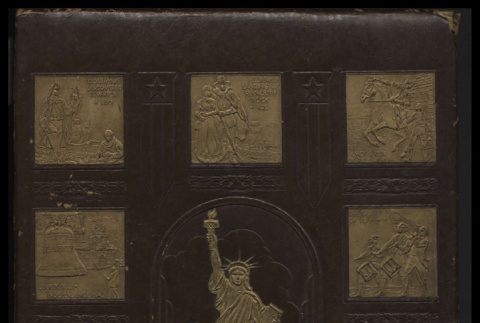
Scrapbook containing programs, invitations, notes, ephemera, greeting cards, administrative documents, postcards, clippings, tickets, and sewing patterns documenting Masako Adachi's day-to-day activities at Tule Lake incarceration camp. See this object in the California State Universities Japanese American Digitization project site: sac_jaac_1953
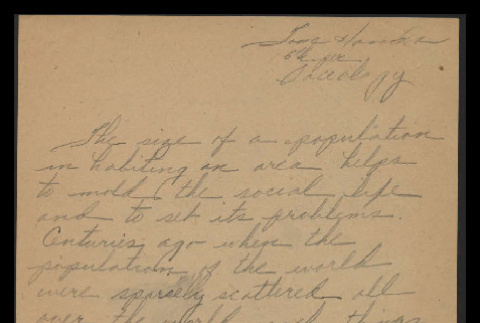
Sociology essay by Tom Honda for a class assignment at Tri-State High School at Tule Lake incarceration camp. Covers population size as it relates to social problems. See this object in the California State Universities Japanese American Digitization project site: sac_jaac_1926
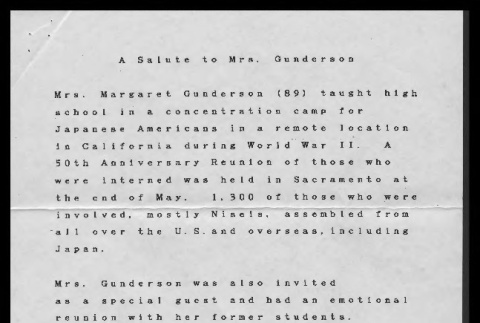
Essay describing a 50 year reunion event in Sacramento for former incarcerees including recognition of Margaret Gunderson, a teacher at the Tule Lake incarceration camp. See this object in the California State Universities Japanese American Digitization project site: sac_jaac_0261
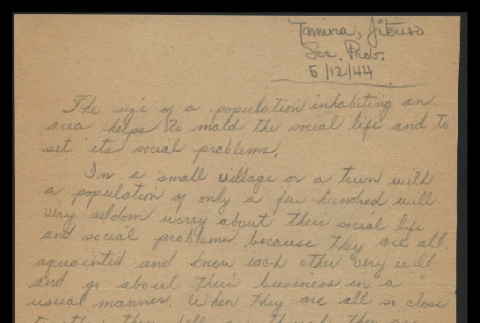
Sociology essay by Jitsuso Tamura for a class assignment at Tri-State High School at Tule Lake incarceration camp. Covers how population influences social life and problems. See this object in the California State Universities Japanese American Digitization project site: sac_jaac_1931
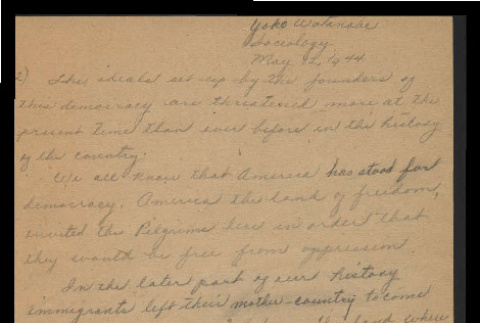
Sociology essay written by Yoko Watanabe for a class assignment at Tri-State High School at Tule Lake incarceration camp. Covers racial issues and democracy. See this object in the California State Universities Japanese American Digitization project site: sac_jaac_1919
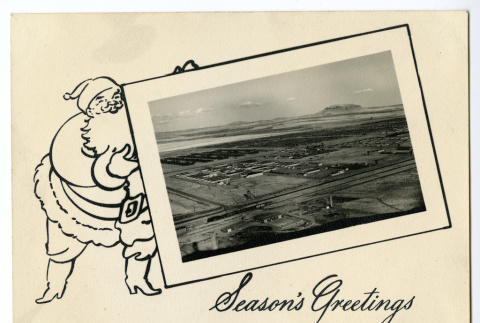
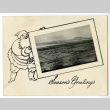
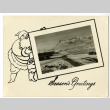
Christmas card featuring Santa Claus presenting an aerial photo of the Tule Lake incarceration camp showing buildings, a train, and the surrounding landscape. Card reads "Season's greetings." See this object in the California State Universities Japanese American Digitization project site: tos_01_001_020
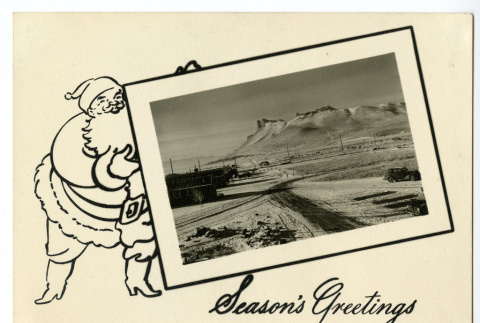
Christmas card of Santa Claus presenting a photo of the Tule Lake incarceration camp featuring buildings, fencing, a snowy road, and vehicles. Card reads "Season's greetings." See this object in the California State Universities Japanese American Digitization project site: tos_01_001_016
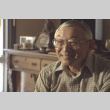
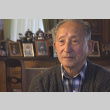
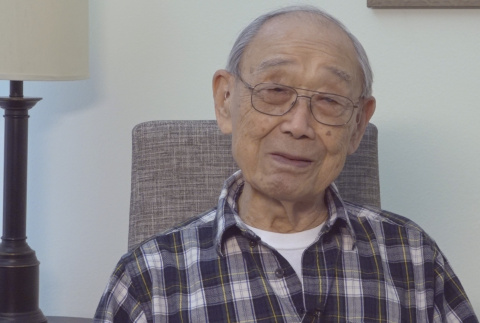
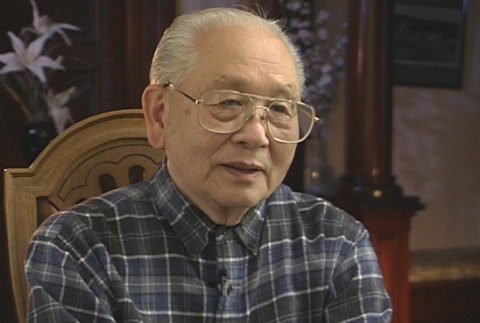
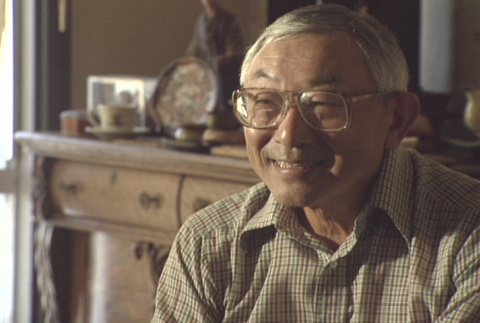
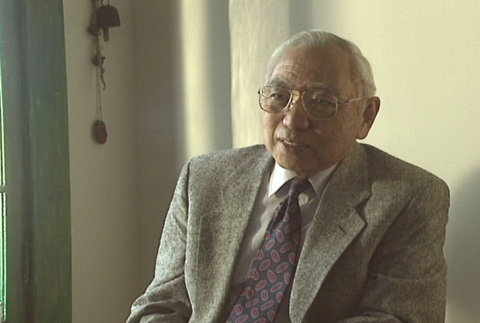
Nisei male. Born December 28, 1924, in Hood River, Oregon. Grew up in Hood River, where father and uncles ran a store. During World War II, removed to the Pinedale Assembly Center, California, and the Tule Lake concentration camp, California. After leaving camp, attended college in Denver and Philadelphia. Eventually became a physician and returned to …
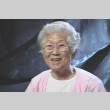
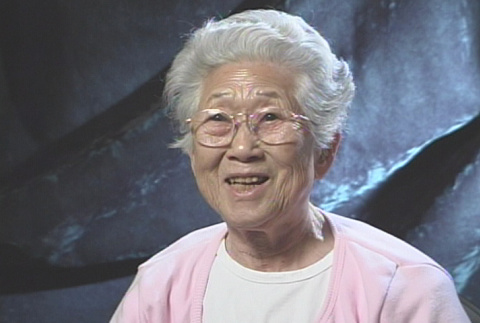
Nisei female. Born March 31, 1909, in Vashon Island, Washington. Raised in Vashon Island and Des Moines, Washington, before being removed with her two children to the Pinedale Assembly Center, California. Later transferred to Tule Lake concentration camp, California, and Minidoka, Idaho, before resettling in Chicago, Illinois. Lived and worked in Chicago before eventually returning to …
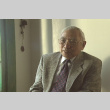
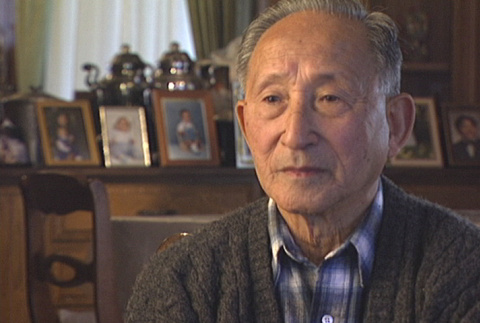
Nisei male. Born 1914 in Nemah, Washington. His family owned and operated Eagle Oyster Packing Company in Nahcotta, Washington. Incarcerated at the Tule Lake concentration camp, California. Returned to Nemah following the war, where his family had to fight to get the company back. Eventually, sold the business to Coast Oyster Company and stayed on as …
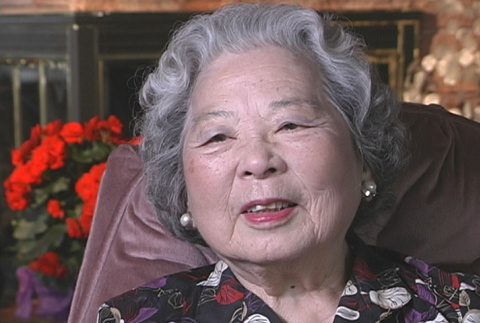
Sansei female. Born May 27, 1938, in Loomis, California. At the age of four, removed with family to the Tule Lake concentration camp, California, and the Amache concentration camp, Colorado. Family left camp in 1944 to live and work at Seabrook Farms, New Jersey. Attended nursing school in New Jersey, worked as a nurse, and raised …
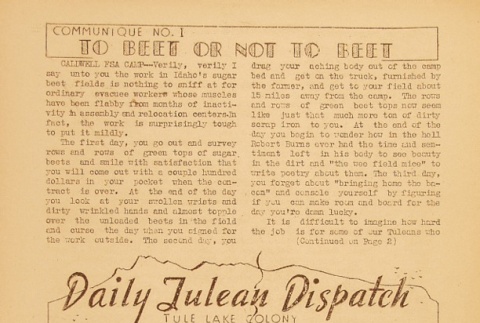
Selected article titles: "Communique No. 1: To Beet or Not to Beet" (p. 1), "WSSF Here to Aid Students" (p. 1), "Entire Regional Records to Be Coded in Colony" (p. 1), "Vehicle Drivers Cautioned" (p. 1), "Blackout Throws Cabaret Show Into Confusion" (p. 2), "Anti-Freeze Used in Fire Extinguishers" (p. 2), "Tule Lake Y.B.A. Reorganizes" (p. …
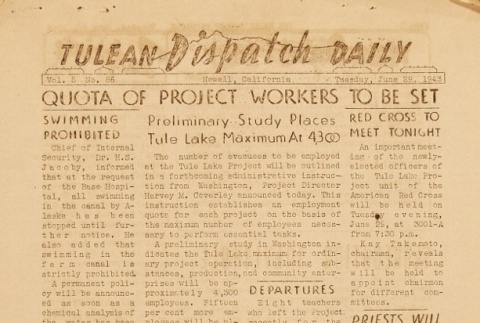
Selected article titles: "Quota of Project Workers to Be Set: Preliminary Study Places Tule Lake Maximum at 4,300" (p. 1), "Swimming Prohibited" (p. 1), "Goods Stored in Los Angeles" (p. 1), "Nursing to Be Taught" (p. 1), "Priests Will Hear Speakers" (p. 1), "Segregation Inevitable" (p. 2), "Dies Committee 'Amazed' At Crowded Living in Poston" (p. …
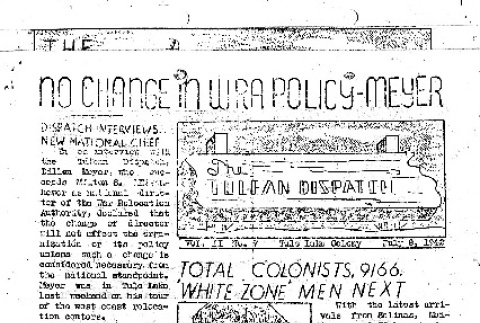
Selected article titles: "No Change in WRA Policy -- Meyer. Dispatch Interviews New National Chief" (p. 1), "Total Colonists, 9166: 'White Zone' Men Next" (p. 1), "Notify Tule Lake Address to Your Bank" (p. 1), "Diet Stations for Kids Open" (p. 4), "Red Cross Training Class to Open Here" (p. 4), "Writers to Form Literary Group" …
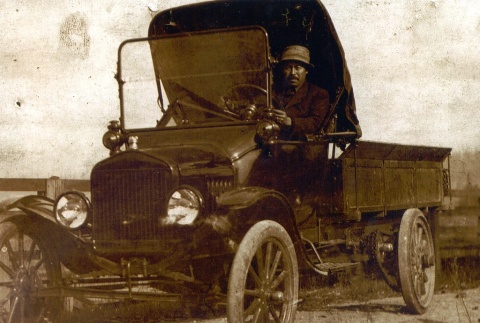
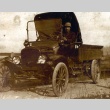
The Tsubota collection consists of photographs from the personal family collection of Minoru "Min" Tsubota, who was interviewed by Densho in 2003. The photographs document Minoru's life growing up in Kent, Washington, through his incarceration at Tule Lake concentration camp, and finally through his military service.
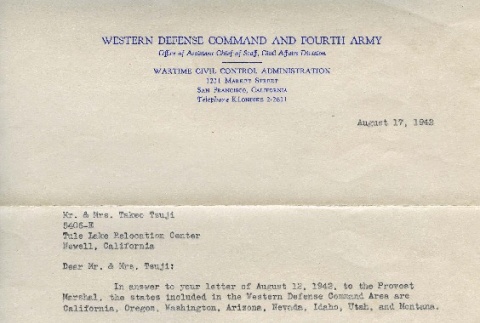
This collection is comprised of documents from the personal collection of Takeo Tsuji, who was held in the Tule Lake concentration camp, California, during World War II. Many of the documents are related to Mr. Tsuji's efforts to have his belongings restored to him after the war.
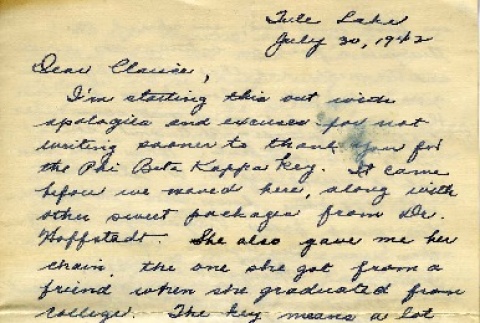
This collection consists of letters written to Clarice Osterud Hargiss, a student at the University of Washington during World War II. The letters were written by two Nisei friends, one in the Minidoka concentration camp, Idaho, and the other at the Tule Lake concentration camp, California.
The Kosai-Takemoto Collection includes photos from the Kosai family and Japanese American community in Tacoma, Washington before the war. There are several photos of Eiko and Ken at Tule Lake, including their wedding. Redress and reparations documents to the descendants of Masa Kosai are included.
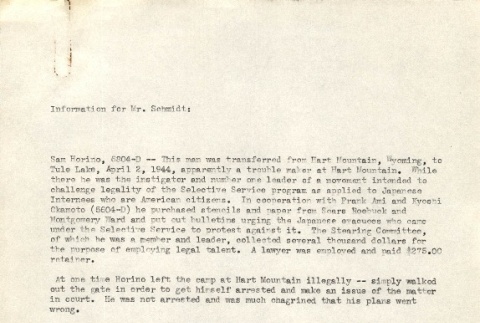
Informational report to Willard Schmidt about Sam Horino, an incarceree transferred from Heart Mountain Camp to Tule Lake Camp. Horino was accused of protesting the Selective Service program for incarcerated Japanese Americans and creating bulletins he posted throughout Heart Mountain Camp. See this object in the California State Universities Japanese American Digitization project site: sjs_sch_0045
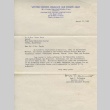
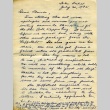
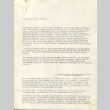
Meeting minutes of incarceree-led Tule Lake Camp government and camp advisory council. Describes efforts led to release prisoners from army stockades and plans for new building construction including a civic center. See this object in the California State Universities Japanese American Digitization project site: sjs_sch_0020
Feelings about attending the Tule Lake pilgrimage (Japanese language)
This interview was conducted in Japanese. It was translated so as to convey Mrs. Terasaki's way of speaking as closely as possible. For example, there are instances in which she makes some grammatical errors. These mistakes are conveyed through similar grammatical errors in English, in order to …
Recalling seeing "agitators" thrown into the stockade at Tule Lake
This interview was conducted by sisters Emiko and Chizuko Omori for their 1999 documentary, Rabbit in the Moon, about the Japanese American resisters of conscience in the World War II incarceration camps. As a result, the interviews in this collection are typically not life histories, …
Research study's focus on protest within Tule Lake concentration camp, California
This interview was conducted by sisters Emiko and Chizuko Omori for their 1999 documentary, Rabbit in the Moon, about the Japanese American resisters of conscience in the World War II incarceration camps. As a result, the interviews in this collection are typically not life …
Thoughts on poor condition of Tule Lake concentration camp, California
This interview was conducted by sisters Emiko and Chizuko Omori for their 1999 documentary, Rabbit in the Moon, about the Japanese American resisters of conscience in the World War II incarceration camps. As a result, the interviews in this collection are typically not life histories, …
Deciding to stay out of camp politics at Tule Lake
This interview was conducted by sisters Emiko and Chizuko Omori for their 1999 documentary, Rabbit in the Moon, about the Japanese American resisters of conscience in the World War II incarceration camps. As a result, the interviews in this collection are typically not life histories, …


![[Minutes of the joint meeting of the advisory council and the Co-ordinating Committee of the Tule Lake Center, February 8,1944] (ddr-csujad-2-20)](https://ddr.densho.org/media/cache/18/b3/18b33746e01663ad2743010b64dc0fbd.jpg)

![[Minutes of the joint meeting of the advisory council and the Co-ordinating Committee of the Tule Lake Center, February 8,1944] (ddr-csujad-2-20)](https://ddr.densho.org/media/cache/51/85/5185f52cad60827e42f3af2185f0b094.jpg)