
1098 items









1098 items

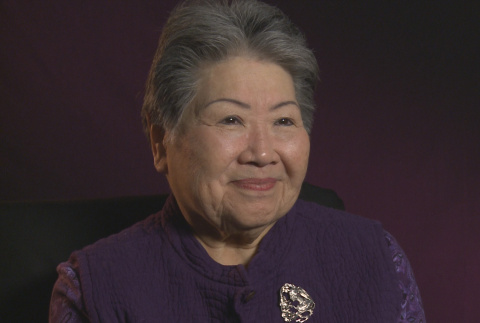
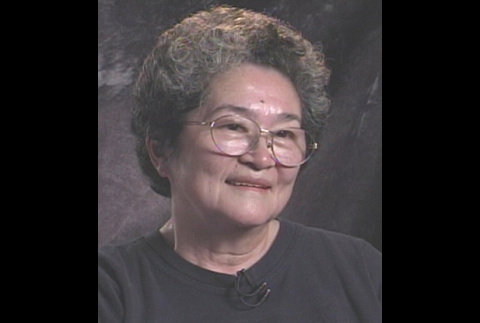
Narrator Mitsuko Hashiguchi
Nisei female. Born January 25, 1921, in Bellevue, Washington. Raised on a Bellevue farm, married and had a child before being incarcerated at the Pinedale Assembly Center, California, Tule Lake concentration camp, California, and Minidoka concentration camp, Idaho. In her interview, she discusses the Japanese American community in Bellevue before and after World War II.

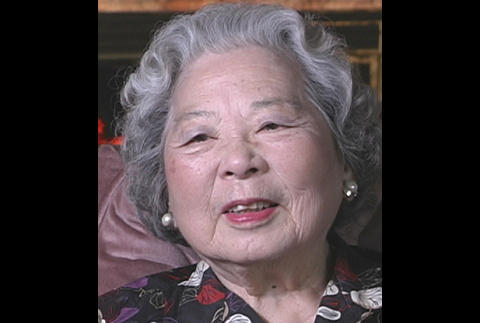
Narrator George Iseri
Nisei male. Born April 23, 1920, in Thomas, Washington. Grew up in Thomas where father ran a general store. During World War II, removed to the Pinedale Assembly Center, California, and the Tule Lake concentration camp, California. Left camp to work in Weiser, Idaho, and opened a service station. Eventually moved to Ontario, Oregon.

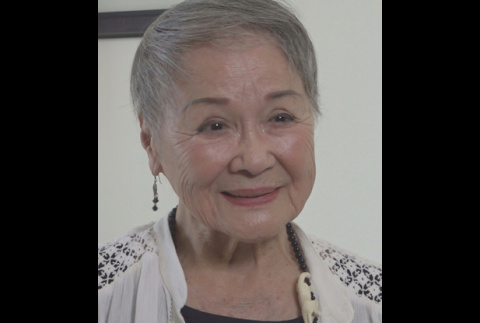
Narrator Taylor Tomita
Nisei male. Born February 17, 1922, in Odell, Oregon. Grew up in Odell, where parent ran a farm. During World War II, removed to the Pinedale Assembly Center, California, and the Tule Lake concentration camp, California. Transferred to the Minidoka concentration camp, Idaho. Served in the military before returning to the Hood River area.

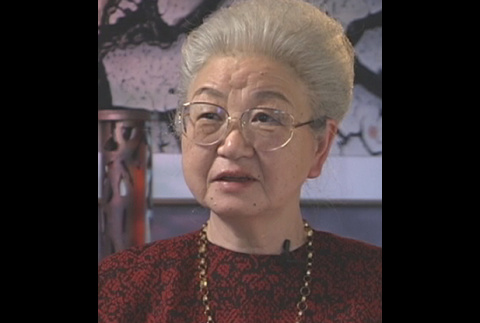
Narrator Susie "Jinx" Fujii
Nisei female. Born March 8, 1930, in Brooks, Oregon. Grew up in Brooks, where parents ran a farm. During World War II, removed to the Tule Lake concentration camp, California, and transferred to the Minidoka concentration camp, Idaho. After the war, returned to Oregon and remained in Portland.
vh
Barbara Reiko Mikami Keimi Interview (ddr-densho-1000-459)
Sansei female. Born December 4, 1935, in Sawtelle, California. Grew up in Huntington Beach, California, where father worked as a chauffeur. After the bombing of Pearl Harbor, father was picked up by the FBI and taken to the Tuna Canyon Detention Station. He rejoined the family at the Merced Assembly Center, California, and the family was …
Narrator Peggie Nishimura Bain
Nisei female. Born March 31, 1909, in Vashon Island, Washington. Raised in Vashon Island and Des Moines, Washington, before being removed with her two children to the Pinedale Assembly Center, California. Later transferred to Tule Lake concentration camp, California, and Minidoka, Idaho, before resettling in Chicago, Illinois. Lived and worked in Chicago before eventually returning to …

Narrator Miyo Minnie Uratsu
Nisei female. Born May 25, 1929, in Newcastle, California. Grew up in Newcastle, where parents ran a ranch. During World War II, was removed to the Tule Lake concentration camp, California. During the segregation period, transferred to the Heart Mountain concentration camp, Wyoming. After leaving camp, lived in Idaho and Utah before eventually returning to family's …

Narrator Homer Yasui
Nisei male. Born December 28, 1924, in Hood River, Oregon. Grew up in Hood River, where father and uncles ran a store. During World War II, removed to the Pinedale Assembly Center, California, and the Tule Lake concentration camp, California. After leaving camp, attended college in Denver and Philadelphia. Eventually became a physician and returned to …

Narrator Darlene Mukoda
Sansei female. Born May 27, 1938, in Loomis, California. At the age of four, removed with family to the Tule Lake concentration camp, California, and the Amache concentration camp, Colorado. Family left camp in 1944 to live and work at Seabrook Farms, New Jersey. Attended nursing school in New Jersey, worked as a nurse, and raised …

Narrator Seichi Hayashida
Nisei male. Born May 15, 1919, in Seattle, Washington. Grew up in a Japanese American farming community in Bellevue, Washington. Incarcerated at the Pinedale Assembly Center and Tule Lake concentration camp, both in California, and at Minidoka concentration camp, Idaho. Longtime member and supporter of the Japanese American Citizens League (JACL).
Narrator Takae Tanino Walts
Nisei female. Born August 4, 1930, in Bellevue, Washington. Grew up in Bellevue, where parents ran a farm. During World War II, removed to the Pinedale Assembly Center and Tule Lake concentration camp, California. After leaving camp, returned to Seattle, Washington, and eventually established a career as a flight attendant.
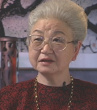
Narrator Ayame Tsutakawa
Kibei female. Born May 23, 1924, in the Hollywood area of Los Angeles, California. Sent to Japan to live with a relative when thirteen months old. Returned to United States and mother when twelve years old. Incarcerated at Sacramento Assembly Center and Tule Lake concentration camp, both in California. Resettled in Sacramento, California. Married George Tsutakawa, …

Narrator Taketora Jim Tanaka
Nisei male. Born January 2, 1926, in Sacramento, California. Grew up in Sacramento, where parents ran a farm. During World War II, removed to the Marysville Assembly Center and Tule Lake concentration camp, California. Transferred to the Topaz concentration camp, Utah. Drafted into the army, and served with the 442nd Regimental Combat Team in Italy. Following …

doc
Fire department of Tule Lake (ddr-csujad-26-14)
Description of the establishment, structure and operations of the fire department at Tule Lake. The report includes accounts of fires, what firemen do while waiting for fires, schedules, issues with wardens and administration, and ethnographic observations of "social status" in the camps. Report compiled as a portion of the Japanese American Evacuation and Resettlement Study (JERS). …

img
Tule Lake scrapbook illustrated page (ddr-csujad-26-56)
Scrapbook page features two illustrations: one of a boy sitting at a table titled "The thinker" and a second of "Students at work" depicting two boys and one girl working at a table. The page also includes several signatures under note reading "Best wishes for your continued success." Tule Lake scrapbook (ucsb_mei_0053), page 7. See this …

doc
Legal aid department of Tule Lake (ddr-csujad-26-16)
Report summarizing the establishment and workings of the legal aid department servicing Tule Lake based on an interview with Tim Yego. Includes a listing of department personnel with profiles and summarizes the types of cases brought to the department. Report compiled as a portion of the Japanese American Evacuation and Resettlement Study (JERS). See this object …
doc
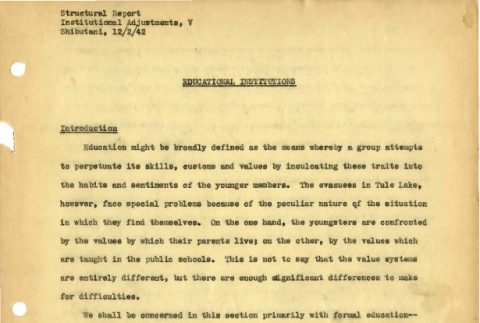
Structural report, institutional adjustments, V: educational institutions (ddr-csujad-26-20)
Essay observing education levels, types of students, and establishment of education programs at Tule Lake for English speaking students. Includes descriptions of programs for various age groups including nursery, primary, secondary, adult education, college and the Student Relocation Council. Report compiled as a portion of the Japanese American Evacuation and Resettlement Study (JERS). See this object …

doc
Tulean dispatch magazine section, vol. 1, no. 9 (ddr-csujad-26-50)
Monthly publication at Tule Lake incarceration camp including stories, poems, commentary and creative writing. Current issue includes: "Question 28" by Shuji Kimura; "Mandy's dream" by Frank Hijikata; "Toppers in camp" by Yuri Kobukata, Mary Harumi Sakai, Lorraine Takayama; "Band leader" by Bryan Mayeda, "Bachelors' quarter" by George Nakamura, "Poultry farm" by Makoto Kobukata, "Looking back" by …

doc
[Troops alert as Tule Japs defy Colonel], newspaper article on Tule Lake protests, November 13, 1943 (ddr-csujad-2-40)
Newspaper article about protests at Tule Lake Camp in November, 1943 which led to martial law being in place for three months. Article describes Colonel Verne Austin, Commander of Military Police, trying to regain control after the protests. He is quoted as saying "Henceforth the Army, and not trouble making Jap 'committees' will dictate camp life." …

img
Incarcerees Digging (ddr-csujad-13-6)
A group of people are photographed digging in the ground in a large expanse of land inside the Tule Lake incarceration camp. The housing barracks or some of type of structure are also pictured in the distance. Caption on back of photograph reads, "Jap inmates [sifting] to collect stones to make necklaces. Tulelake Calif (Nov 43)" …
img
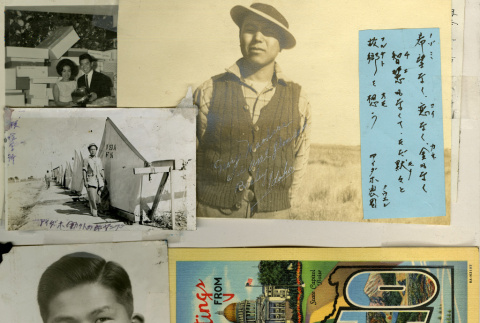
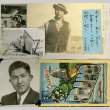
George Naohara photo album (ddr-csujad-38-1)
A photo album compiled by George Nobuo Naohara, a Kibei Nisei, who was incarcerated at Manzanar, Jerome, and Tule Lake incarceration camps during World War II. Included are photographs taken during/after World War II, depicting his farm labor experience in Idaho and Utah, incarceration in the Jerome incarceration camp, and Army language school training. See this …
doc
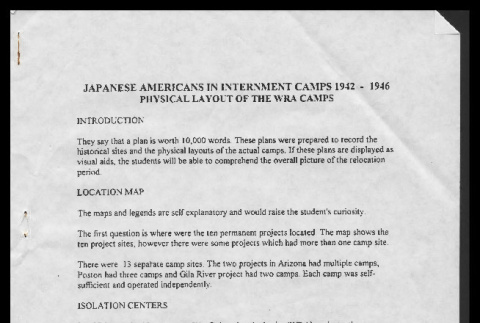
Japanese Americans in internment camps 1942-1946, physical layout of the WRA camps (ddr-csujad-55-2495)
Document detailing the physical layout and qualities of incarceration camps. Covers: isolation centers, assembly centers, permanent relocation centers, farm area, administrative area, internee area, barracks, mess hall, boiler room, recreation hall, block manager, ward, hospital schools, canteens, utilities, employment and salary, other centers, progressive project directors, camp closing, Tule Lake closure, and post-war years. See this …
Narrator Minoru Kiyota
Kibei male, born October 12, 1923, in Seattle, Washington. Raised primarily in San Francisco, California, spending four years in Hiratsuka, Japan. Was incarcerated with his family at Topaz concentration camp, Utah. Refused to sign the so-called "loyalty questionnaire," and as a consequence was moved to Tule Lake Segregation Center, California. In Tule, he renounced his U.S. …

Narrator Hope Omachi Kawashima
Sansei female. Born April 2, 1937, in Auburn, California. Grew up in Loomis, California. During World War II, removed to the Marysville Assembly Center, California, and the Tule Lake concentration camp, California. Transferred to the Topaz concentration camp, Utah. After leaving camp, lived and attended school in Nebraska for a few years before returning to Loomis. …
Narrator Marianne West
Nisei female. Born November 4, 1926, in Seattle, Washington. Family lived in Leavenworth, Washington, then moved to the West Coast. After the outbreak of World War II, family was removed from Bellingham, Washington, to Tule Lake concentration camp, California. Transferred to Heart Mountain concentration camp, Wyoming, before leaving to resettle in Spokane, Washington.