
5070 items

5070 items
img
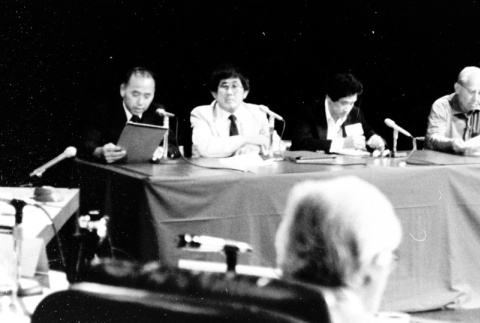
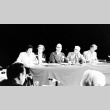
Redress hearings (ddr-densho-37-334)
The Commission on Wartime Relocation and Internment of Civilians (CWRIC) was created by an act of Congress on July 30, 1980. The committee was formed mainly to investigate matters surrounding the World War II internment of Japanese Americans and to recommend remedies. The CWRIC had no power to correct grievances. The hearings were conducted in twenty …
img
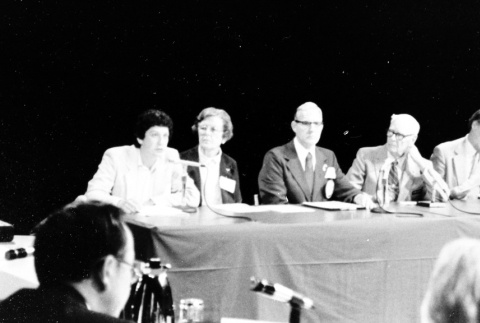
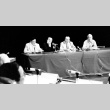
Redress hearings (ddr-densho-37-335)
The Commission on Wartime Relocation and Internment of Civilians (CWRIC) was created by an act of Congress on July 30, 1980. The committee was formed mainly to investigate matters surrounding the World War II internment of Japanese Americans and to recommend remedies. The CWRIC had no power to correct grievances. The hearings were conducted in twenty …
img
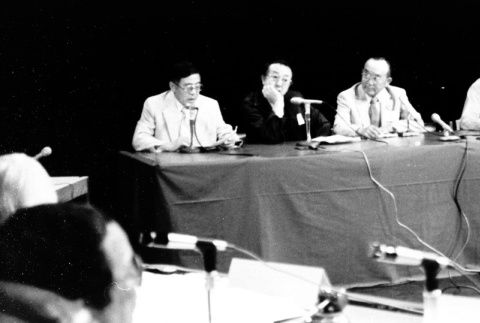
Redress hearings (ddr-densho-37-333)
The Commission on Wartime Relocation and Internment of Civilians (CWRIC) was created by an act of Congress on July 30, 1980. The committee was formed mainly to investigate matters surrounding the World War II internment of Japanese Americans and to recommend remedies. The CWRIC had no power to correct grievances. The hearings were conducted in twenty …
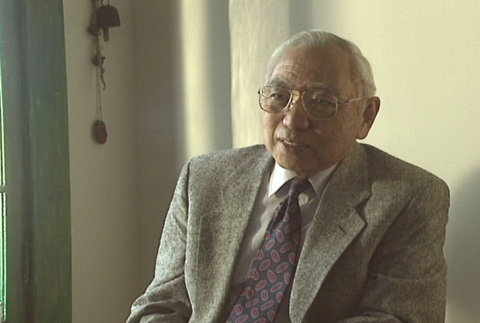
Narrator Kunio Otani
Nisei male. Born July 31, 1921, in Seattle, Washington. Raised in Raymond, Washington. Incarcerated at Tule Lake concentration camp, California, and Heart Mountain concentration camp, Wyoming; he worked on the staff of both camp newspapers, the Tulean Dispatch and the Heart Mountain Sentinel, respectively. Resettled in Seattle after the war and entered the greenhouse business. He …
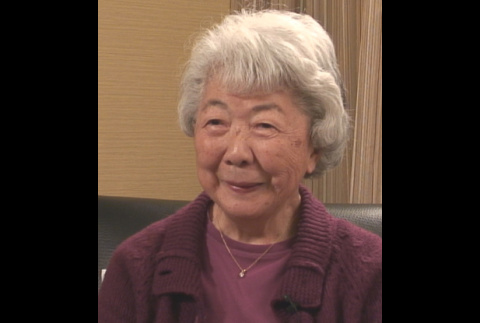
Narrator Misa Taketa
Nisei female. Born January 18, 1925, in Seattle, Washington. Grew up in the South Park area, south of Seattle, where parents ran a farm. During World War II, removed to the Pinedale Assembly Center, California, and the Tule Lake concentration camp, California. After leaving camp, lived and worked in Ontario, Oregon, for a time, before living …
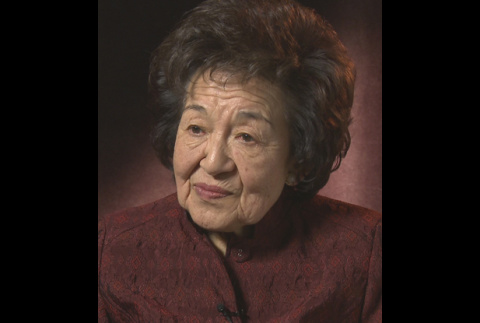
Narrator Masako Yoshida
Nisei female. Born July 14, 1924, in Seattle, Washington. Spent early years in Seattle before family moved to the Boyle Heights neighborhood of Los Angeles, California, where father worked as a janitor at a wholesale produce market. After the bombing of Pearl Harbor, removed to the Poston concentration camp, Arizona. Left camp to work in Detroit, …
Narrator Akemi Matsumoto
Alison Fujimoto and Dr. Kyle Kinoshita interviewed Akemi Matsumoto. Akemi Matsumoto first joined Seattle JACL in the 1970s as a fresh Sansei student activist. Thiis activism continued through her Chapter Presidency in 2001. Matsumoto was a firm believer achieving change through political clout via effective coalition building. Matsumoto continued her activities with Seattle JACL by connecting …
Narrator Misa (Oiye) Mihara
Sansei female. Born November 20, 1941, in Tacoma, Washington, where parents ran a restaurant. Spent early years at the Tule Lake concentration camp, California, where family was held. After leaving camp, moved to Seattle, Washington. Became an accomplished violinist, performing at an early age. Studied music at the University of Washington, then went on to become …
Collection
Tokuda Family Collection (ddr-densho-383)
The Tokuda Collection consists of three accessions. Accession 1 of the Tokuda collection contains a photograph album of George Tokuda's from his time as a student at the University of Washington in Seattle. Other subjects in the album include summers working in Alaska, and friends and family growing up in Mukilteo. This collection also includes other …
Narrator Hannah Hirabayashi
Nisei-Sansei female. Born 1938 in Seattle, Washington. Grew up in the town of Christopher, now part of Auburn, Washington, where parents ran a grocery store. After the bombing of Pearl Harbor, father was arrested by the FBI and sent to the Fort Missoula internment camp, Montana. The rest of the family went to the Puyallup Assembly …
Collection
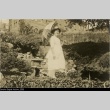
Mayeno Family Collection (ddr-densho-166)
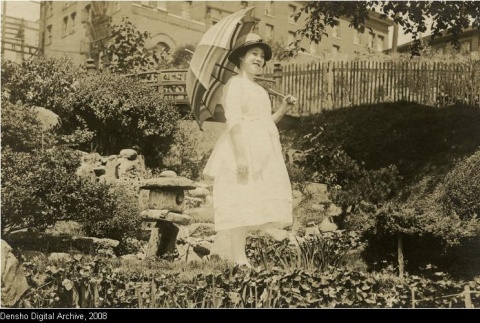
This collection consists of photographs and documents from the Mayeno family, relatives of the owners of the Maneki Restaurant in Seattle, Washington. The collection contains photographs of the restaurant's Japanese garden prior to World War II, as well as materials from the internment camps in Santa Fe and Lordsburg, New Mexico.
vh
Frank Miyamoto Interview Segment 1 (ddr-densho-1002-1-1)
Prewar activities: attending the University of Washington, conducting a study of the Seattle Japanese American community for master's thesis
This interview was conducted by sisters Emiko and Chizuko Omori for their 1999 documentary, Rabbit in the Moon, about the Japanese American resisters of conscience in the World War II incarceration camps. As a result, the …
Narrator Sharon Tanagi Aburano
Nisei female. Born October 31, 1925, in Seattle, Washington. Family owned and operated a successful grocery store prior to World War II. After the bombing of Pearl Harbor, removed to the Puyallup Assembly Center, Washington, and the Minidoka concentration camp, Idaho. Left camp in 1944 to attend St. Mary's School of Nursing in Rochester, Minnesota. Worked …
Narrator Shiuko Sakai
Nisei female. Born 1923 in Seattle, Washington. Grew up in Seattle where parents operated a hotel. During World War II, removed to the Puyallup Assembly Center, Washington, and the Minidoka concentration camp, Idaho. Left camp to live and work in New York, then worked for several years in Japan for the U.S. occupation forces. Returned to …
Narrator Kenji Ima
Nisei-Sansei male. Born July 15, 1937, in Seattle, Washington, where parents ran a hotel. During World War II, removed to the Puyallup Assembly Center, Washington, and the Minidoka concentration camp, Idaho. After leaving camp, family returned to Seattle. After graduating from college and earning a post-doctoral degree, became a professor at San Diego State University. Focused …
doc
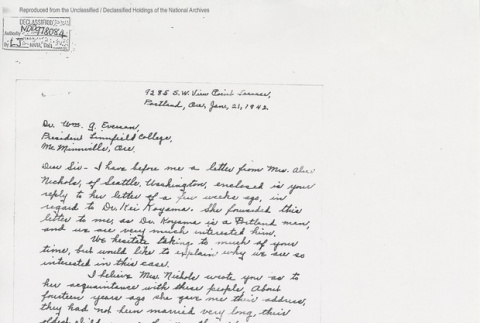
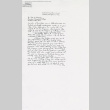
Letter written on behalf of Keizaburo Koyama by Mr. and Mrs. A.C. Goodenough. Page 1 of 4. (ddr-one-5-112)
Photocopy of a declassified letter written to Dr. William G. Everson, President of Linnfield College in McMinneville, Oregon and Chairman of the Alien Enemy Hearing Board by Mr. and Mrs. A.C. Goodenough. This is the first page of a four page letter. They are writing in response to a letter by Mrs. Alice Nichols of Seattle, …
av
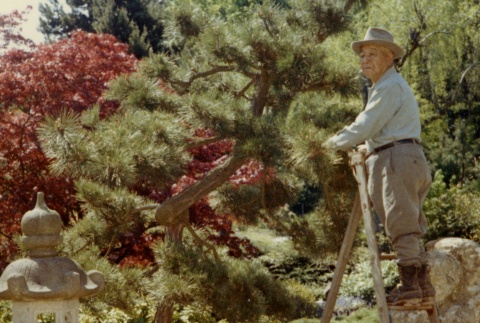
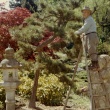
"Fujitaro Kubota and his garden" (ddr-densho-354-2125)
Fujitaro Kubota came to the United States in 1907. He settled in Seattle and founded a landscaping business based on principles of Japanese gardening while using many local plants. Kubota Garden began as a place to showcase Fujitaro's work for future clients, but grew into a community gathering place. Even through the horror of internment, Mr. …
vh
Seiko Edamatsu Interview (ddr-densho-1016-2)
Nisei female. Born July 18, 1919, in Seattle, Washington. Spent childhood in Seattle's Nihonmachi (Japantown) where parents ran the U.S. Hotel. Attended Bailey Gatzert Grade School and Washington Junior High School before moving to North Seattle with older siblings to operate a produce stand. Graduated from Roosevelt High School in 1937 and worked as a waitress …
vh
Kathryn Bannai Interview (ddr-sjacl-2-38)
Elaine Kim and Bill Tashima interviewed Kathryn Bannai. Kathryn Bannai was the lead counsel in Gordon Hirabayashi's coram nobis case (1983 – February 1985). Among other critical work, she successfully defeated the government's effort to dismiss Hirabayashi's case, which led to overturning Hirabayashi's convictions for resisting the curfew and exclusion orders promulgated under E.O. 9066. Bannai …
vh
Shigeko Sese Uno Interview (ddr-densho-1000-98)
Nisei female born April 6, 1915, in Seattle, Washington's International District. At an early age became active in the Japanese Baptist Church. Parents owned and operated a dairy plant called White River Dairy. Was a student at the Baptist Missionary Training School in Chicago, Illinois. Took a group of young women on an eye-opening trip to …
vh
Jim Akutsu Interview (ddr-densho-122-12)
Nisei male. Born 1920 in Seattle, Washington. Incarcerated at Puyallup Assembly Center, Washington, and Minidoka concentration camp, Idaho. Resisted draft, with the rationale that the U.S. government had classified him 4-C, an enemy alien, and he was therefore under no obligation to serve. Imprisoned at McNeil Island Penitentiary, Washington. Vocal critic of JACL. Resettled in Seattle, …
Collection
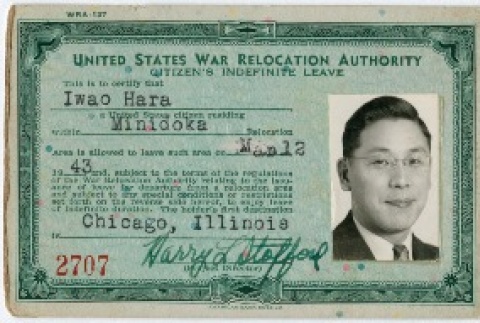
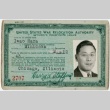
Mae Hara Collection (ddr-densho-308)
The Mae Hara Collection is comprised of photographs and documents from the personal family collection of Mae Hara, a Japanese American who was interview by Densho in 2004. The photos depict Mae's prewar life in Seattle, Washington. The documents concern her family's Oyster business pre-war, relocation to Minidoka, and post war life.
Narrator Yoshi Mamiya
Nisei female. Born October 25, 1924, and raised in Seattle, Washington. During her interview, she discusses memories of growing up in Seattle's Japantown.
Narrator Mako Nakagawa
Nisei female. Born February 1, 1937, in Seattle, Washington. Spent prewar childhood in Seattle. Incarcerated at the Puyallup Assembly Center, Washington; Minidoka concentration camp, Idaho; and Crystal City internment camp, Texas. In the postwar years, became a teacher, principal, and multicultural specialist for Washington State's Superintendent of the Office of Public Instruction. Developed and directed the …
Narrator Ryan Chin
Camila Nakashima and Bill Tashima interviewed Ryan Chin. Ryan Chin was Seattle JACL Chapter President in 2011 and was also a three-time National JACL Vice-President. Chin became active with Seattle JACL as a student at UW and organized successful events. As President, Chin was transformative in bringing the Chapter into the age of technology and worked …