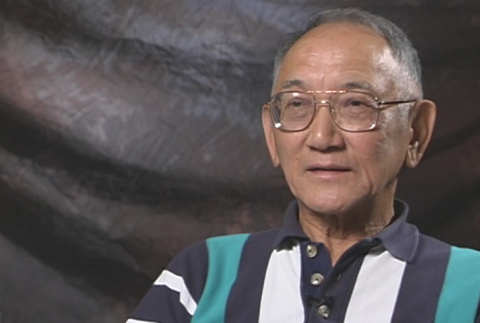
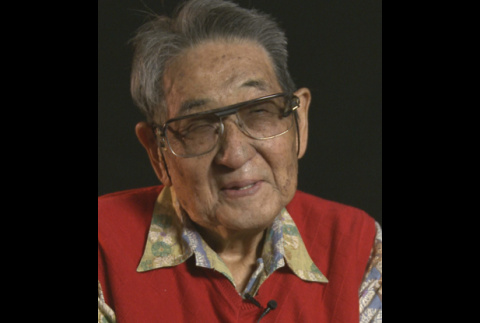
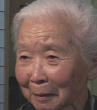
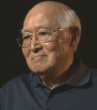
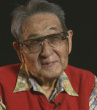
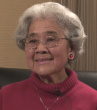
Nisei male. Born April 27, 1927, in Wapato, Washington. Family farmed in Yakima Valley, Washington, before the war. Incarcerated at the Portland Assembly Center, Oregon, and Heart Mountain concentration camp, Wyoming. Served briefly in the Military Intelligence Service (MIS). Resettled in Wapato, Washington.
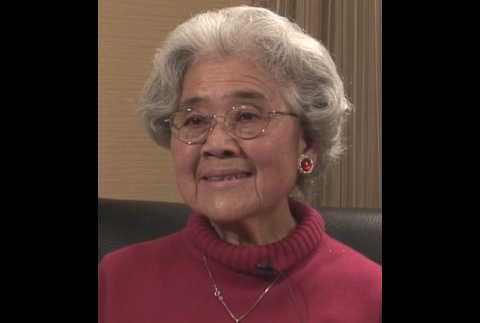
Sansei female. (Mother and father born in Hawaii.) Born February 1925 in Peru. Spent prewar childhood in Peru and Hawaii. Father picked up by the FBI and detained after bombing of Pearl Harbor. Was incarcerated at Jerome concentration camp, Arkansas, and Tule Lake concentration camp, California. Renounced citizenship in order to stay with parents, and was …
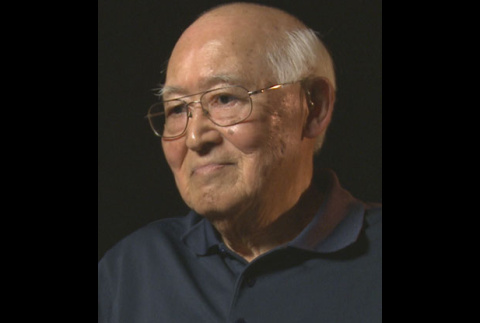
Nisei male. Born May 9, 1922, in Portland, Oregon. Moved to Seattle with father after parents divorced. Grew up in Seattle's Nihonmachi where father ran a secondhand store. Disinterested in college after seeing a lack of employment opportunities for graduating Japanese Americans. Went to work for Great Northern Railway, laying and maintaining tracks on the West …
Nisei/Sansei female. Born December 14, 1928, in Stockton, California. Father was Issei and mother was Nisei, born in Hawaii. Grew up in Santa Monica, California. During World War II, moved with family to Colorado to avoid mass removal. Remained in Denver, later operating a grocery store and greenhouse business with husband.
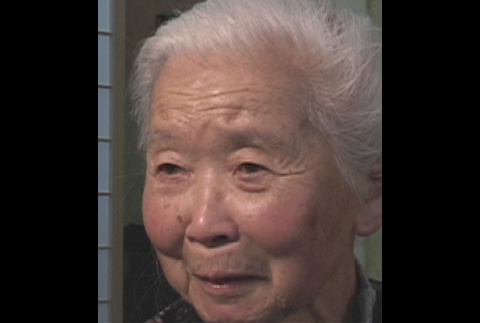
Nisei female. Born January 25, 1915, in Montavilla, Oregon. Grew up in Portland and attended college before World War II. During the war, removed to the Portland Assembly Center, Oregon, and the Minidoka concentration camp, Idaho. Left camp with husband and lived in New York and Washington, D.C. Eventually returned to Portland.
Nisei male. Born March 16, 1929, in Puyallup, Washington. Grew up in the Sumner, Washington, area, where parents had a produce business. During World War II, removed with family to the Puyallup Assembly Center, Washington, and the Minidoka concentration camp, Idaho. After the war, attended the University of Washington and the University of Southern California. Established …
Nisei male. Born April 26, 1929, in Pasadena, California. Grew up on Terminal Island, California. During World War II, removed to the Manzanar concentration camp, California. After leaving camp, family lived for a time in a hostel in Des Moines, Iowa, before returning to California. After the war, became an attorney and longtime community activist.
Nisei female. Born November 19, 1930, in Trujillo, Peru, where father ran a construction company. After the bombing of Pearl Harbor, father was arrested by the FBI and taken to the United States. The family joined him in Crystal City, Texas, then went to Japan after the war. Maria lived and worked in Japan until the …
Caption on front: "Bows Out In Blaze of Glory." Caption on side: "C. Company, Cpt. Walter Johnson, 1st Lt. Anthony Deluca, 1st Lt. Samuel Leibitz, 1st Lt. Bert Tanaka. Kenge Sakagami, Imoto, Omoto, Urada, Shikuma, Takahashi, Bob Sato, C. Co 442nd?"
Caption on front: "Bows Out In Blaze of Glory." Caption on side: "C. Company, Cpt. Walter Johnson, 1st Lt. Anthony Deluca, 1st Lt. Samuel Leibitz, 1st Lt. Bert Tanaka. Kenge Sakagami, Imoto, Omoto, Urada, Shikuma, Takahashi, Bob Sato, C. Co 442nd?"
The soldiers honored during this service were: Pfc. Akira Kanzaki, Pvt. Yohei Sagami, Pfc. Yoshito Noritake, Pfc. Hideo Yasui, Pfc. Yoshio Kato, Cpl. Jimmy T. Kokubu, Sgt. Ban Ninomiya, Pvt. Shin Sato, Pfc. George S. Miyaoka, Sgt. Ned T. Nakamura.
The soldiers honored during this service were: Pfc. Akira Kanzaki, Pvt. Yohei Sagami, Pfc. Yoshito Noritake, Pfc. Hideo Yasui, Pfc. Yoshio Kato, Cpl. Jimmy T. Kokubu, Sgt. Ban Ninomiya, Pvt. Shin Sato, Pfc. George S. Miyaoka, Sgt. Ned T. Nakamura.
Caption by Homer Yasui: "Wedding party of Eiko Yamaki [Tadakuma] and Tomonori Tom Morikado of Los Angeles The directory, Japanese-Americans of the Mid-Columbia Area and Relatives, states the Morikado was an Issei, born in Fukuoka ken, Japan."