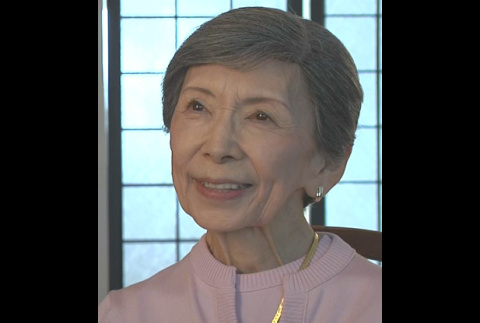
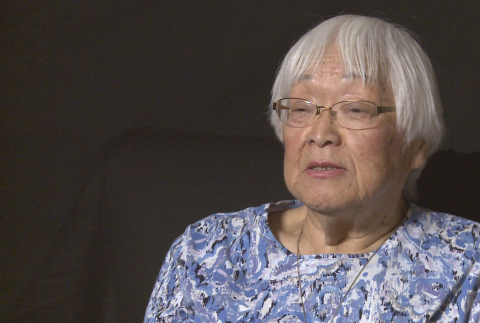
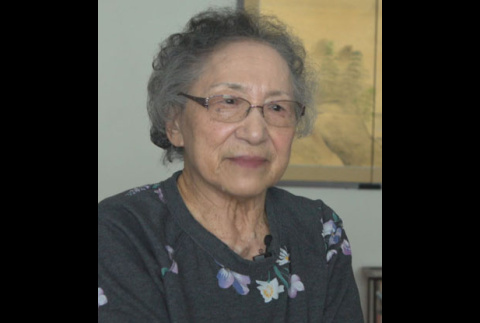
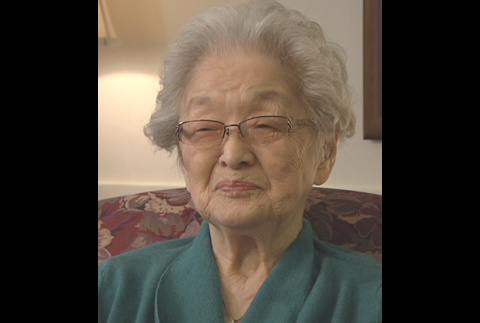
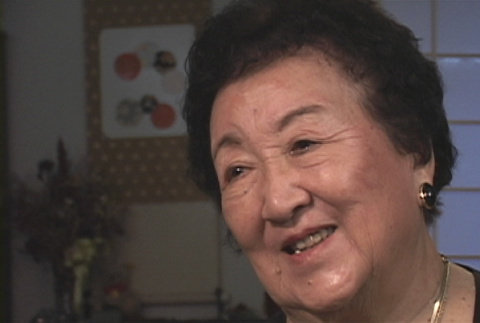
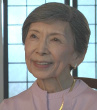
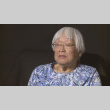
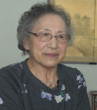
Nisei female. Born February 21, 1927, in Portland, Oregon. Grew up in Portland where parents ran a hotel business. During World War II, removed with family the Portland Assembly Center, Oregon, and the Minidoka concentration camp, Idaho. After leaving camp, attended high school for a time in Salt Lake City, Utah, before returning to Portland.
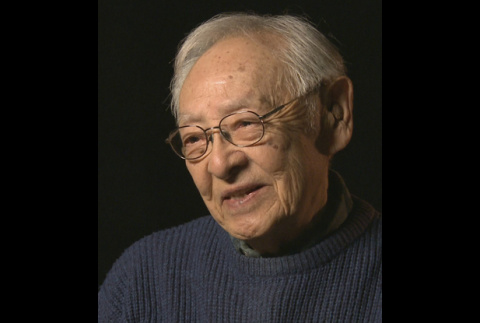
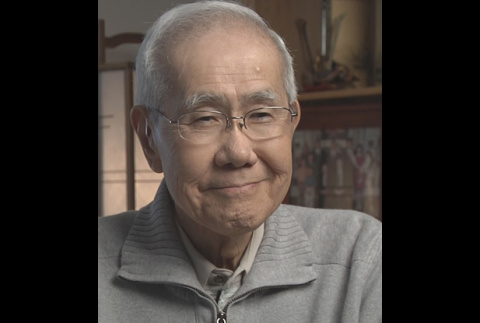
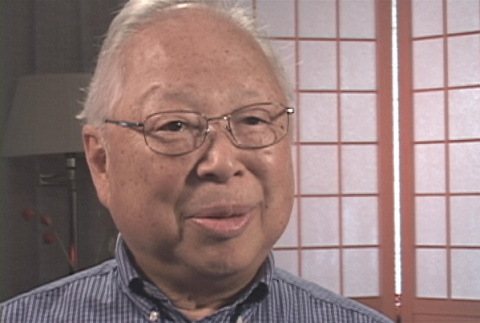
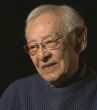
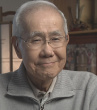
Nisei male. Born April 24, 1927, in Portland, Oregon. Grew up in the Portland area, where father worked for the railroad. During World War II, removed to the Portland Assembly Center, Oregon, and the Minidoka concentration camp, Idaho. After leaving camp, served in the military and eventually returned to Portland and became a teacher.
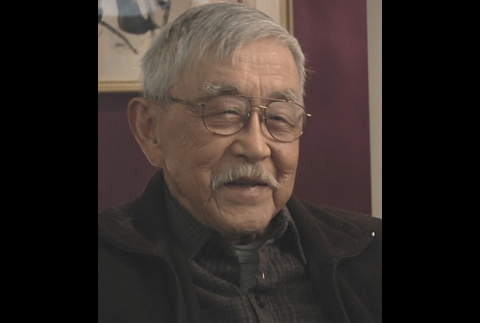
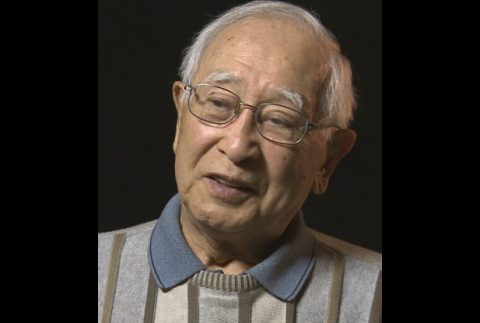
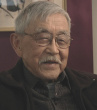
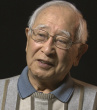
Nisei male. Born April 3, 1924, in Portland, Oregon. Grew up in Lake Oswego, Oregon, where parents ran a farm. During World War II, removed to the Portland Assembly Center, Oregon, and the Minidoka concentration camp, Idaho. After leaving camp, worked for a time and then was drafted into the army. Eventually returned to Portland and …
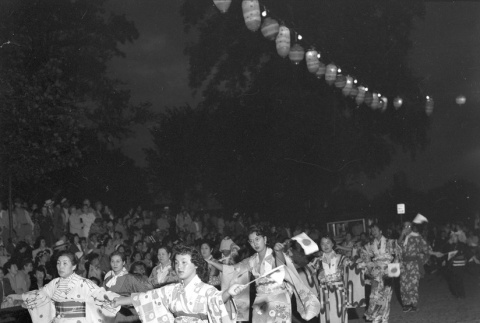
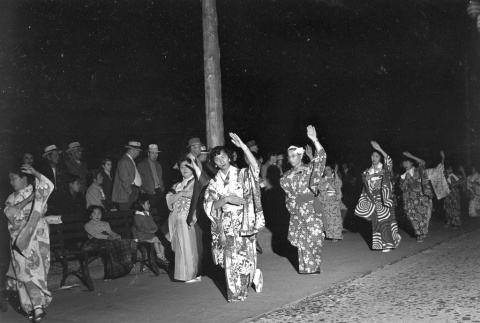
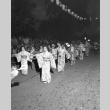
Black and white photographic negative of Obon dancers waving small Japanese flags. Left line from left to right: Hisano Sakamoto, Kaoru Funatake and unidentified women. Right line from left to right: Grace Mieko (Muramatsu) Ouchida, Shizuko "Shiz" (Ochiai) Ota Okazaki, Betty Nakashimada, Shiz (Fujita) Inaba and an unidentified woman. Obon is an annual event hosted by …
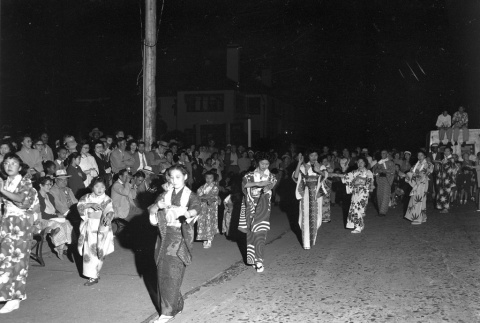
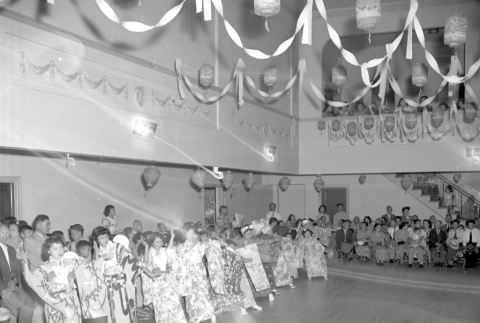
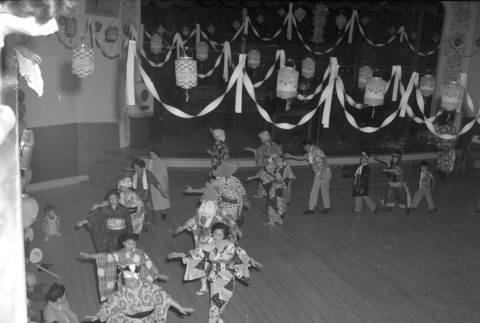
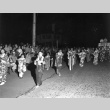
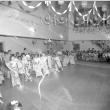
Black and white photographic negative of Obon dancers performing before a crowd. First woman in crowd on left side: Marian Hara. Obon dancers left line from right to left: Haru Fujii, Tamuro Miura, and Nobuko Yoshida. Obon dancers right line from right to left: Jimmy Yoshida. Obon is an annual event hosted by the Oregon Buddhist …
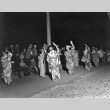
Black and white photographic negative of Obon dancers performing before a crowd. Obon dancers from left to right: Susanne Mineko (Sasaki) Myer, Susan Shizuko (Yoshida) Kurimoto, Mrs. Okayama, unidentified, Mary Yamaguchi, Jean (Tsujimura) Takashima, Atsuko "Alice" (Matsumoto) Ando, Noburo Takashima, Atsuko "Alice" Kida, remaining dancer unidentified. Obon is an annual event hosted by the Oregon Buddhist …
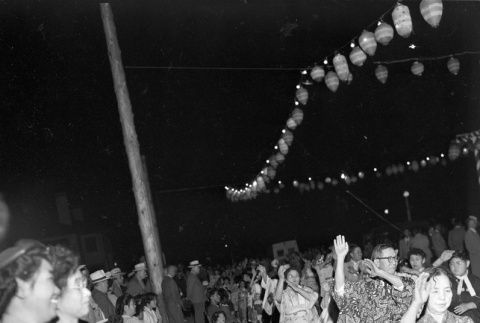
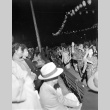
Black and white photographic negative of Obon dancers in front of a crowd with one arm raised. Obon dancers: second from the left dressed in a pattered kimono is Shiz (Fujita) Inaba, fourth from the left is Ben Kasubuchi, fifth from the left in back is Mary Yamaguchi. Obon is an annual event hosted by the …
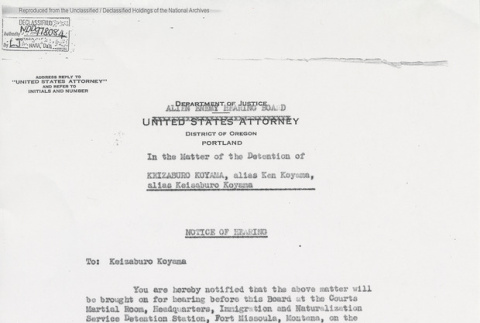
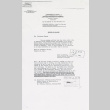
Photocopy of a declassified document from the Department of Justice, Alien Enemy Hearing Board, on the detention of Keizaburo Koyama. The notice tells Koyama that he will go before the Board at the Courts Martial Room, at the Immigration and Naturalization Service Detention Station at Fort Missoula, Montana on February 2, 1942 at 3:30 o'clock. He …
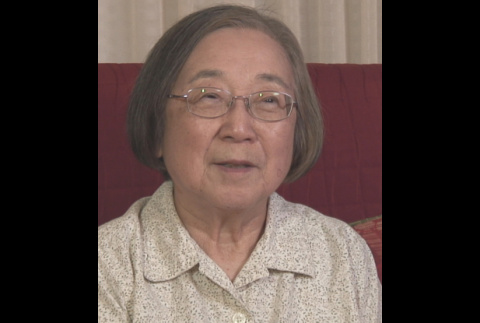
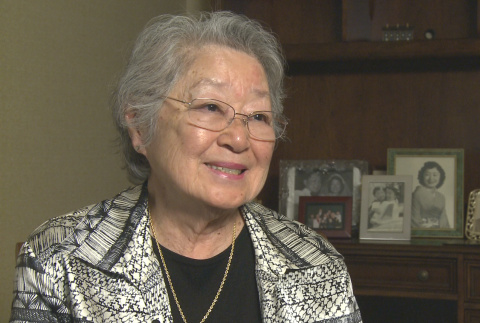
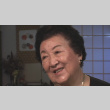
Nisei female. Born April 6, 1929, in the Dalles, Oregon. Grew up in the Gresham-Troutdale area of Oregon, where parents ran a farm. During World War II, removed to the Portland Assembly Center, Oregon, and the Minidoka concentration camp, Idaho. After leaving camp, married and raised a family in Ontario, Oregon.
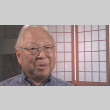
Nisei male. Born April 10, 1926, in Portland, Oregon. Grew up in Montavilla, Oregon, where father ran a Japanese-language newspaper. During World War II, removed to the Portland Assembly Center, Oregon, and the Minidoka concentration camp, Idaho. After the war, served in Korea in the U.S. military. Returned to Oregon and became a physician.
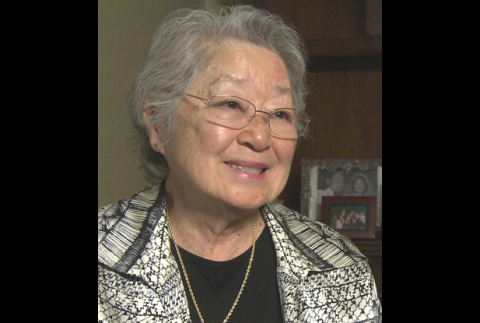
Nisei female. Born September 19, 1929, in Portland, Oregon. Grew up in Milwaukie, Oregon, where parents ran a farm. During World War II, removed to the Portland Assembly Center, Oregon, and the Minidoka concentration camp, Idaho. After leaving camp, returned to Oregon and parents ran a hotel business in Portland. Went to business school and worked …
Nisei male. Born May 29, 1926, in Portland, Oregon. Grew up in the Portland area, where parents ran a farm. During World War II, removed to the Portland Assembly Center, Oregon, and the Minidoka concentration camp, Idaho. Left camp to attend college in Des Moines, Iowa, and was drafted into the military. After military service, finished …
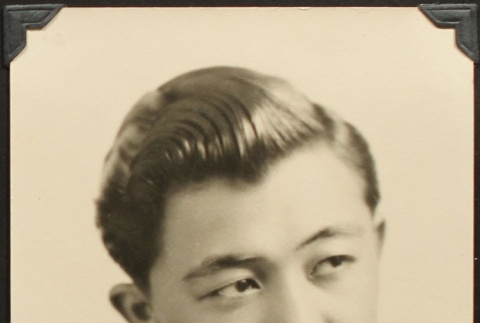
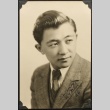
Caption by Homer Yasui: "Portrait of William Ito, the eldest son of Keisuke and Kei Ito, of Portland. William became the first Oregon Nisei to earn an M.D. degree. He established his practice in Honolulu, Hawaii." Signature on photograph: "Sincerely, William Ito."
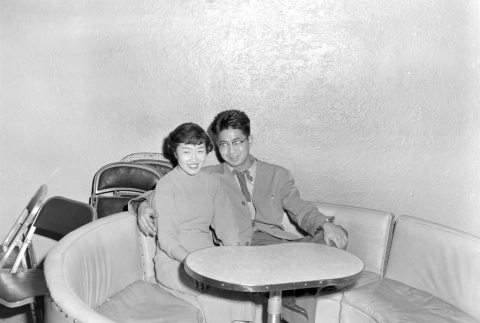
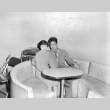
Black and white photographic negative of couple sitting alone in a booth at the Third Annual Nisei Bowling League Tournament Dance at McElroy's Ballroom in Portland, Oregon. The couple is posing for the camera. Woman identified as Frances (Sono) Gale, man unidentified.
Sansei female. Born August 27, 1950, in Des Moines, Iowa. Spent early childhood in Des Moines where father worked in refrigeration and air conditioning and mother worked as a nurse. Married and moved to Portland, Oregon. Raised a family while teaching dance and getting involved in Japanese American community activities and political causes. Eventually became the …
Nisei female. Born May 9, 1927, in Selleck, Washington. Spent much of childhood in Beaverton, Oregon, where father owned a farm. Influenced at an early age by parents' conversion to Christianity. During World War II, removed to the Portland Assembly Center, Oregon, and the Minidoka concentration camp, Idaho. After the war, worked to establish a successful …
Black and white photographic negative of Obon dancers rehearsing an Odori folk dance inside Norse Hall in Northeast Portland. Dancers from left to right: Betty Nakashimada, Aki (Shiraishi) Dong, Mabel (Maekawa) Ota, Carol (Takeda) Smith, unidentified, Tomi Tsujimura, Susan Shizuko (Yoshida) Kurimoto. Obon is an annual event hosted by the Oregon Buddhist Church (now known as …
Black and white photographic negative of Obon dancers rehearsing an Odori folk dance inside Norse Hall in Northeast Portland. Dancers form two circles, leader of outer circle is Tomi Tsujimura, leader of inner circle is Harue Akiyama, the Odori dance teacher. Obon is an annual event hosted by the Oregon Buddhist Church (now known as Oregon …
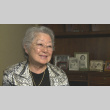
Nisei female. Born March 3, 1918, in Portland, Oregon. Grew up in Independence, Oregon, where parents ran a farm. Married and was pregnant with first child before World War II. During the war, was removed to the Portland Assembly Center, Oregon, and the Minidoka concentration camp, Idaho. After leaving camp, returned to the Gresham, Oregon, area.
Nisei female. Born July 26, 1924, in Portland, Oregon. Grew up in the Gresham/Troutdale area of Oregon, where parents had a farm. During World War II, removed to the Portland Assembly Center, Oregon, and the Minidoka concentration camp, Idaho. While in camp, worked as an assistant teacher. After camp, lived in New York before returning to …
Nisei female. Born April 5, 1929, in Portland, Oregon. Grew up in Portland where parents ran a hotel. In 1941, went with family on a trip to Japan to visit family and returned shortly before the bombing of Pearl Harbor. During World War II, removed to the Portland Assembly Center, Oregon, and the Minidoka concentration camp, …
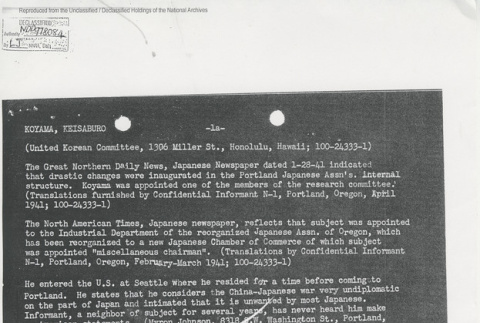
Photocopy of a declassified data card with biographical information on Keisaburo Koyama. The card is labeled "1a" and has a white check mark along the bottom center. Information on the card was acquired from two Japanese newspapers: The Great Northern Daily News and The North American Times. Translations of both articles was provided by Confidential Informant …
This material is based upon work assisted by a grant from the Department of the Interior, National Park Service. Any opinions, finding, and conclusions or recommendations expressed in this material are those of the author(s) and do not necessarily reflect the views of the Department of the Interior.
This material is based upon work assisted by a grant from the Department of the Interior, National Park Service. Any opinions, finding, and conclusions or recommendations expressed in this material are those of the author(s) and do not necessarily reflect the views of the Department of the Interior.
This material is based upon work assisted by a grant from the Department of the Interior, National Park Service. Any opinions, finding, and conclusions or recommendations expressed in this material are those of the author(s) and do not necessarily reflect the views of the Department of the Interior.