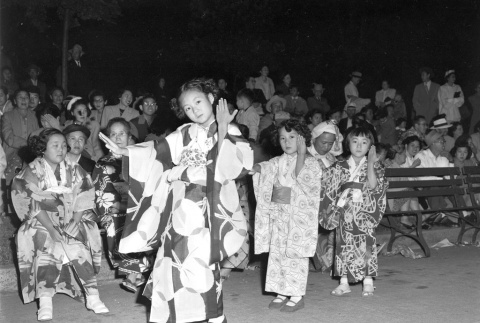
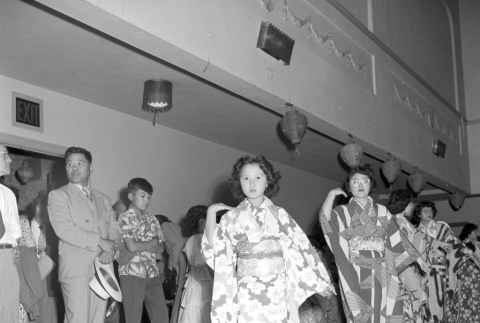
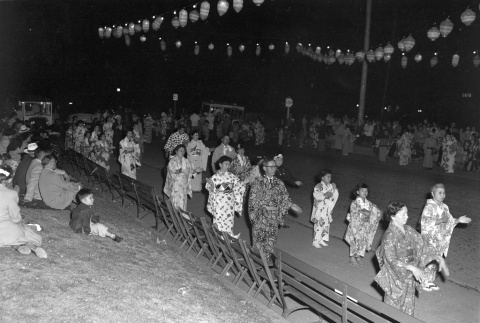
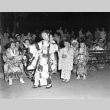
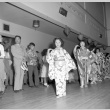
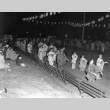
Black and white photographic negative of three young Obon dancers posing for camera in front of large crowd. Obon dancers from left to right: Jeanne Tanaka, Toshiko (Maekawa) Okino, and Eileen Tanaka. Crowd: first sitting from the left is Joyce (Tanaka) Fedler, first from the right sitting on bench is Joe Ikata. Obon is an annual …
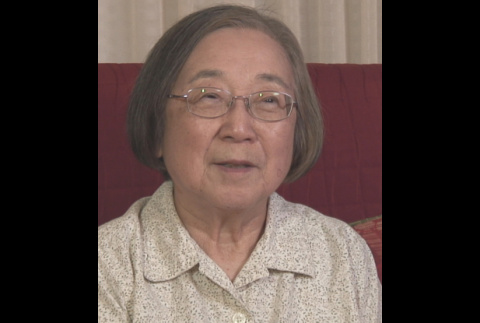
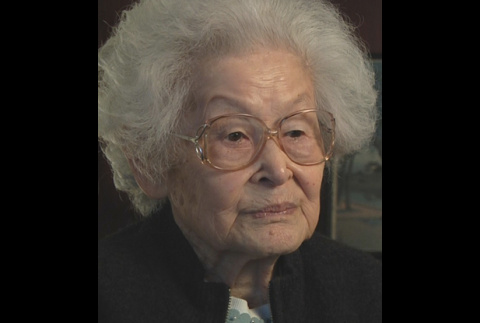
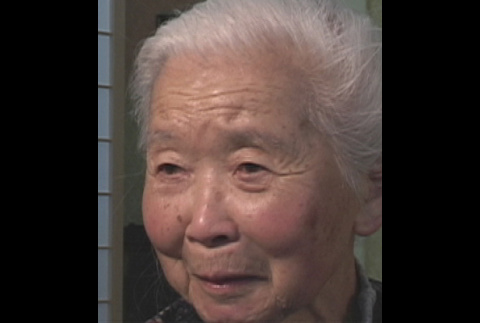
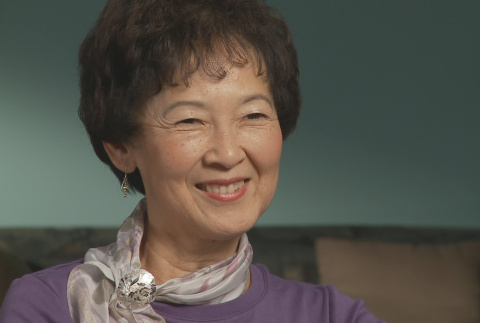
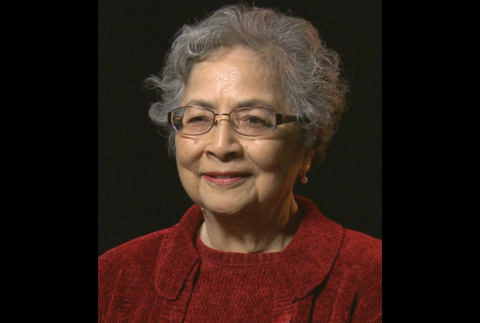
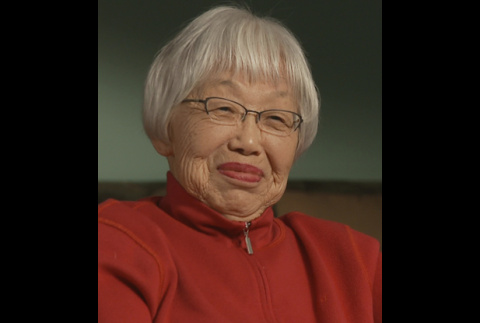
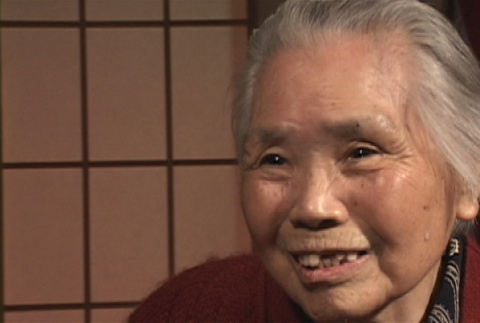
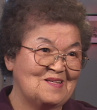
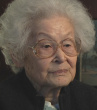
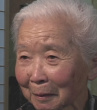
Nisei female. Born July 26, 1924, in Portland, Oregon. Grew up in the Gresham/Troutdale area of Oregon, where parents had a farm. During World War II, removed to the Portland Assembly Center, Oregon, and the Minidoka concentration camp, Idaho. While in camp, worked as an assistant teacher. After camp, lived in New York before returning to …
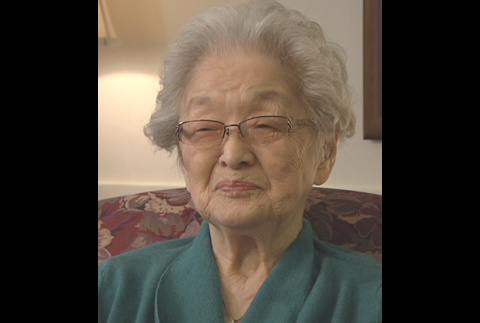
Nisei female. Born March 3, 1918, in Portland, Oregon. Grew up in Independence, Oregon, where parents ran a farm. Married and was pregnant with first child before World War II. During the war, was removed to the Portland Assembly Center, Oregon, and the Minidoka concentration camp, Idaho. After leaving camp, returned to the Gresham, Oregon, area.
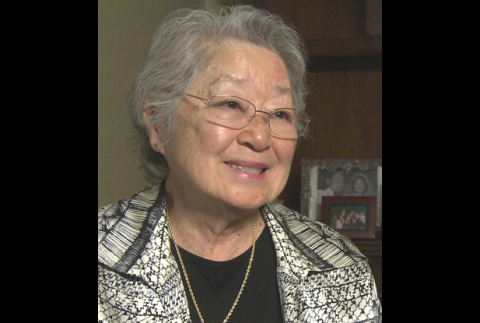
Nisei female. Born April 5, 1929, in Portland, Oregon. Grew up in Portland where parents ran a hotel. In 1941, went with family on a trip to Japan to visit family and returned shortly before the bombing of Pearl Harbor. During World War II, removed to the Portland Assembly Center, Oregon, and the Minidoka concentration camp, …
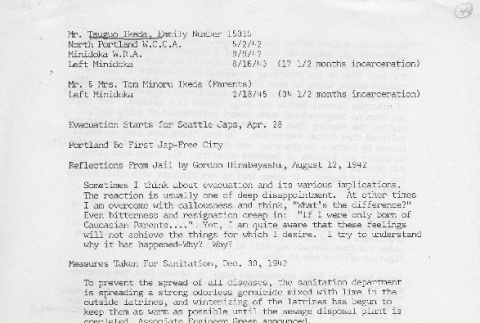
Written testimony of Tsuguo Ikeda. Incarcerated in the North Portland Assembly Center, Oregon, and the Minidoka concentration camp, Idaho. This testimony was presented at the CWRIC hearing in Seattle, Washington, on Wednesday, September 9, 1981, in the section titled "Documents Illustrating Camp Experiences and Attitudes."
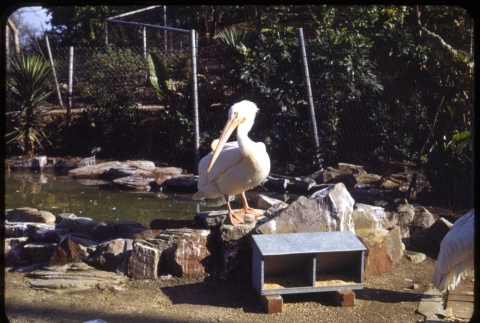
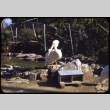
Color slide of a pelican perched on a rock. Image was most likely at the Portland Zoo in Washington Park (later moved to its current location from what is now the Japanese Gardans and renamed Oregon Zoo). According to donor processed on June 14, 1964.
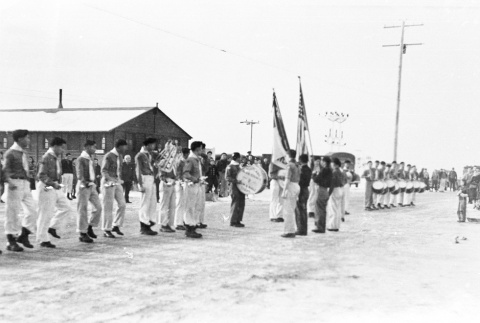
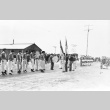
Original WRA caption: The Hunt District Boy Scouts Drum and Bugle Corps, parading in the administration area. This Drum and Bugle Corps, before evacuation was in Troop 123, Portland, Oregon. There are five troops in the Hunt District of the Snake River Area council.
Nisei female. Born August 3, 1920, in Portland, Oregon. Lost father at an early age, and mother and siblings set up a family farm and greenhouse business. During World War II, removed to the Portland Assembly Center, Oregon, and the Minidoka concentration camp, Idaho. After leaving camp, returned to Oregon.
Nisei female. Born January 4, 1919, in Portland, Oregon. Grew up in Fairview, Oregon, where family ran a farm. Married and had a child before World War II. During the war, removed to the Portland Assembly Center, Oregon, and the Minidoka concentration camp, Idaho. After leaving camp, returned to Fairview.
Nisei female. Born January 25, 1915, in Montavilla, Oregon. Grew up in Portland and attended college before World War II. During the war, removed to the Portland Assembly Center, Oregon, and the Minidoka concentration camp, Idaho. Left camp with husband and lived in New York and Washington, D.C. Eventually returned to Portland.
Description of prewar Japantown in Portland, Oregon
This material is based upon work assisted by a grant from the Department of the Interior, National Park Service. Any opinions, finding, and conclusions or recommendations expressed in this material are those of the author(s) and do not necessarily reflect the views of the Department of the Interior.
First impressions of the Portland Assembly Center, Oregon
This material is based upon work assisted by a grant from the Department of the Interior, National Park Service. Any opinions, finding, and conclusions or recommendations expressed in this material are those of the author(s) and do not necessarily reflect the views of the Department of the Interior.
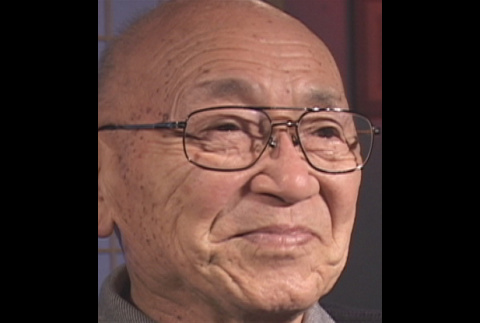
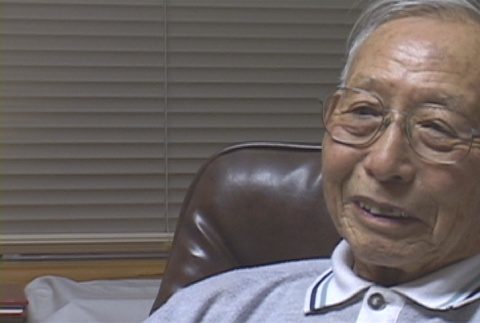
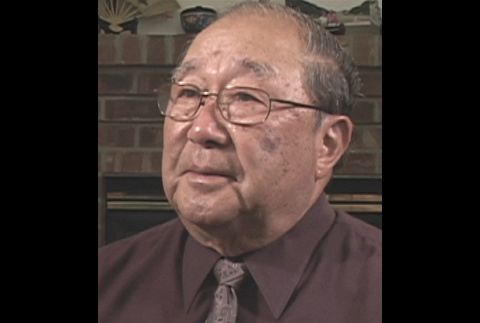
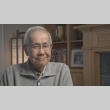
Nisei male. Born September 22, 1926, in Portland, Oregon. Grew up in Portland where parents ran a small grocery store. During World War II, removed to the Portland Assembly Center, Oregon, and the Tule Lake concentration camp, California. After leaving camp, was drafted into the Military Intelligence Service and served in Japan during the U.S. occupation. …
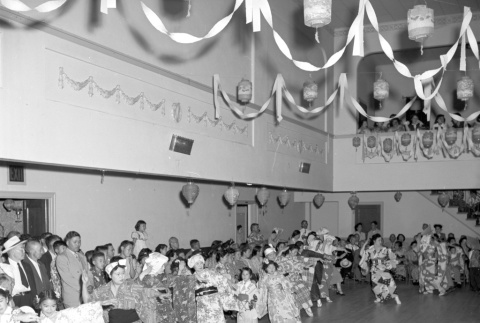
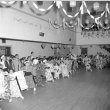
Black and white photographic negative of Obon dancers practicing an Odori folk dance inside Norse Hall in Northeast Portland. Second dancer from the left is identified as Atsuko "Alice" (Matsumoto) Ando. Young boy and third standing audience member from the left is identified as Eddie Tamiyasu. Obon is an annual event hosted by the Oregon Buddhist …
Black and white photographic negative of Obon dancers rehearsing an Odori folk dance inside Norse Hall in Northeast Portland. Dancers from left to right: Patricia “Pat” (Ikata) Iboshi, Marjory "Marge" (Ando) Smith, unidentified, unidentified, unidentified, Toshiko (Maekawa) Okino, Susan Shizuko (Yoshida) Kurimoto, and Nobuko Yoshida. Obon is an annual event hosted by the Oregon Buddhist Church …
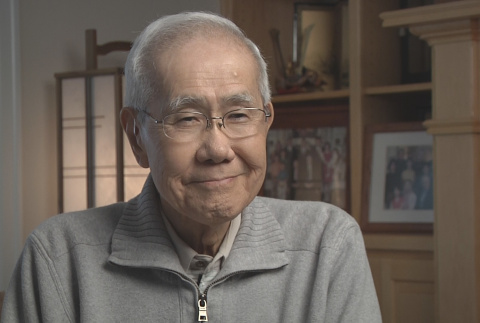
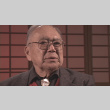
Nisei male. Born April 9, 1915, in Troutdale, Oregon. Grew up in several areas in Oregon where parents ran a farm. Started a grocery business before World War II. During the war, removed to the Portland Assembly Center, Oregon, and the Minidoka concentration camp, Idaho. After leaving camp, returned to Oregon and reestablished grocery business.
Nisei female. Born February 28, 1930, in Portland, Oregon. After losing mother at age two, went to live with a Swedish family until age nine. After the bombing of Pearl Harbor, removed to the Portland Assembly Center, Oregon, and the Minidoka concentration camp, Idaho. Returned to Portland to finish school following World War II.
Nisei female. Born February 27, 1931, in Portland, Oregon. During World War II, removed to the Portland Assembly Center, Oregon, and the Minidoka concentration camp, Idaho. After leaving camp, resettled with family in Minnesota, becoming a teacher in St. Paul.
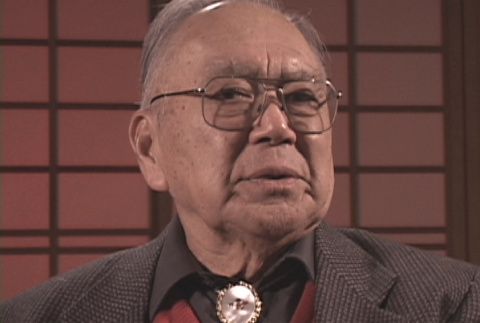
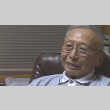
Nisei male. Born October 1, 1914, in Gresham, Oregon. Grew up in Gresham where parents ran a farm. During World War II, removed to the Portland Assembly Center, Oregon, and the Minidoka concentration camp, Idaho. After leaving camp, returned to Portland.
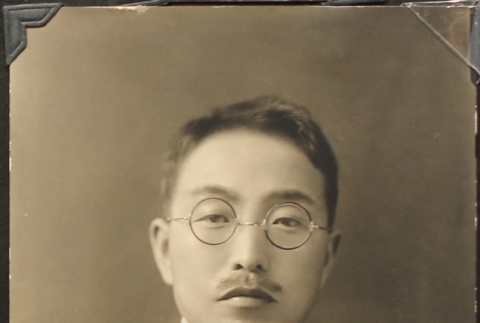
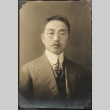
Caption by Homer Yasui: "Portrait of Daiichi Takeoka as a young man. This man was a highly influential in the Portland and in the Oregon Japanese communities. His oldest son, Kay, says that his father graduated from the University of Oregon law school in 1912...Daiichi Takeoka took a lead role in fighting discriminatory laws such as …
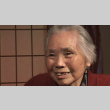
Issei female. Born March 14, 1906, in Japan, where family owned and operated a silkworm business. At age fifteen, immigrated to the United States to join father who was already there. Lived in Milwaukie, Oregon, before the war, and married and had six children. Husband passed away before World War II. During the war, removed to …
Nisei male. Grew up in Milwaukie, Oregon, where parents ran a farm. During World War II, removed to the Portland Assembly Center, Oregon, and the Minidoka concentration camp, Idaho. After leaving camp, returned to Oregon and resumed farming.
(This material is based upon work assisted by a grant from the Department of the Interior, National Park …
Nisei male. Born in Portland, Oregon. Grew up in Oregon, where parents ran a farm. In 1941, volunteered for the army and served as a medic during World War II. After military discharge, returned to Oregon and continued farming.
(This material is based upon work assisted by a grant from the Department of the Interior, National …
Black and white photographic negative of Obon dancers in a partial circle, a crowd encloses the dancers. Obon dancers right to left outer circle: Yoshino Fujii, Tamuro Miura, unidentified, Nobuko Yoshida, and Loretta (Fujii) Kaneko. Obon dancers right to left inner circle: fourth in Jimmy Yoshida, Patricia “Pat” (Ikata) Iboshi, Joe Shiraishi, and Yoneko (Aono) Sugimura. …
Nisei male. Born June 9, 1918, in Portland, Oregon. Grew up in Portland where parents ran a hotel and grocery business. Was drafted into the army prior to the bombing of Pearl Harbor, and was transferred to the army reserves. During World War II, removed to the Portland Assembly Center, Oregon, and the Minidoka concentration camp, …