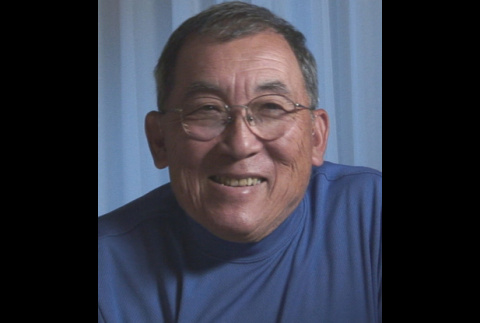
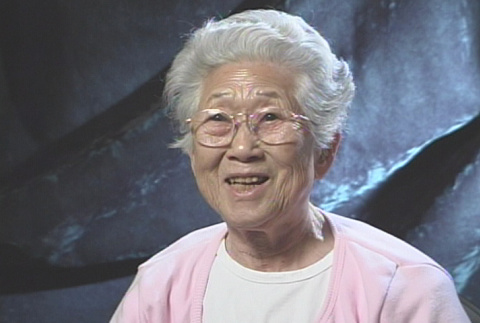
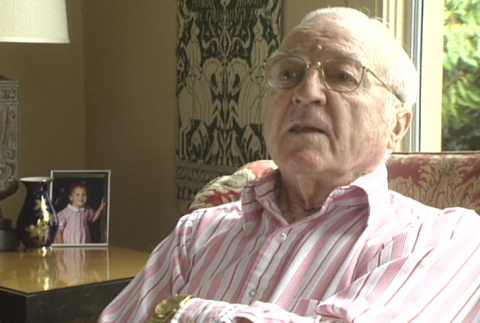
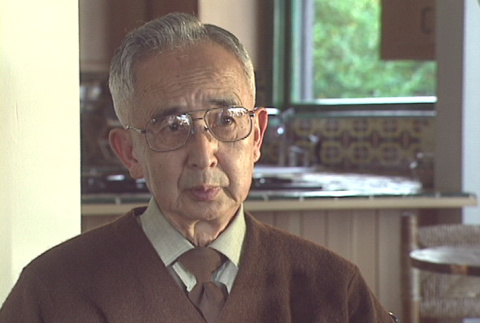
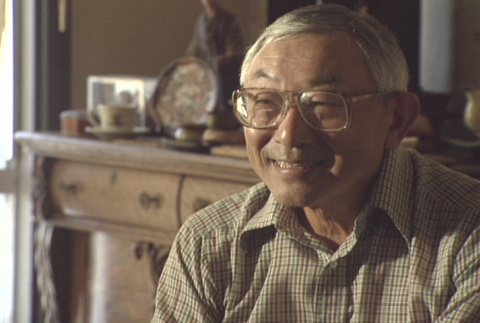
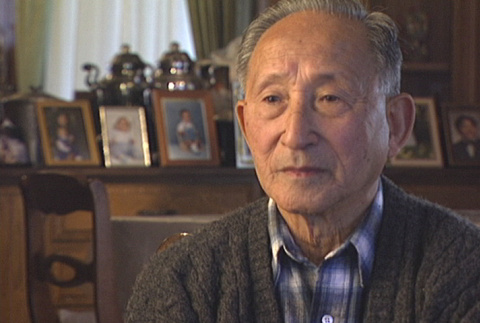
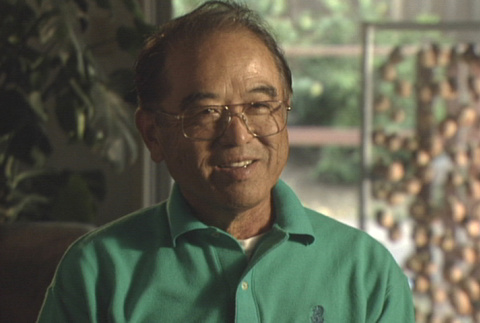
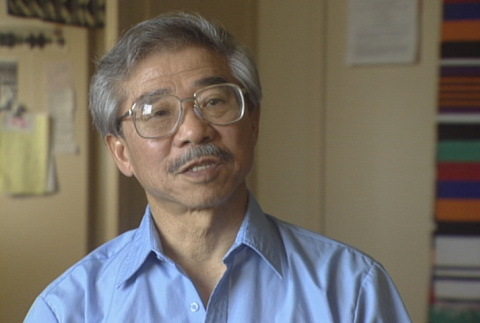
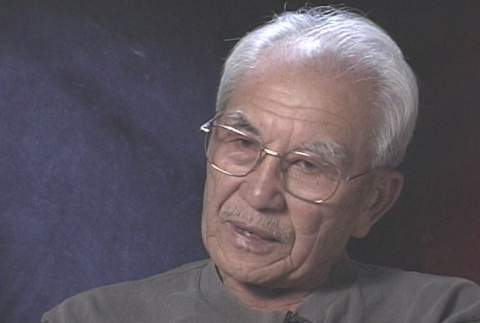
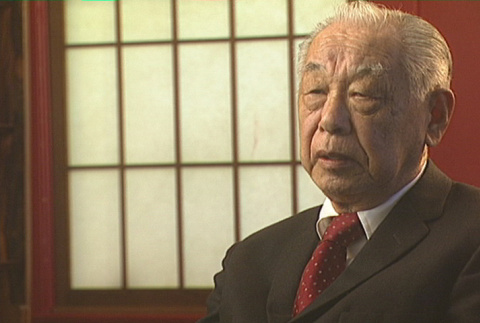
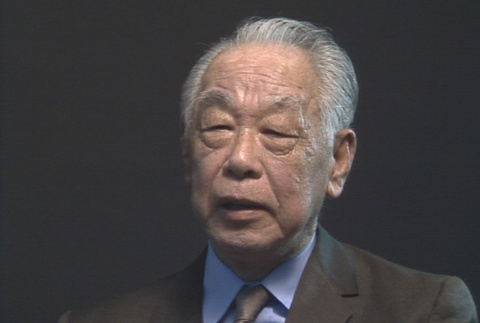
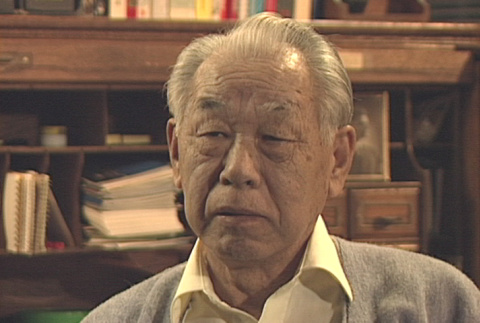
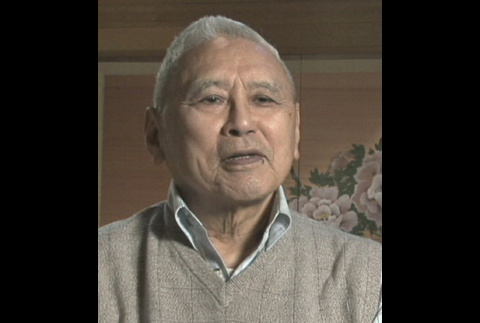
After the bombing of Pearl Harbor, father hides funds collected to build the church before being arrested by the FBI
This material is based upon work assisted by a grant from the Department of the Interior, National Park Service. Any opinions, finding, and conclusions or recommendations expressed in this material are those of the author(s) and …
Career plans before World War II; reaction to the bombing of Pearl Harbor
This interview was conducted by filmmaker Frank Abe for his 2000 documentary, Conscience and the Constitution, about the World War II resisters of conscience at the Heart Mountain incarceration camp. As a result, the interviews in this collection are typically not life …
Hearing about the bombing of Pearl Harbor: "I was just stunned when I heard the news" (audio only)
This material is based upon work assisted by a grant from the Department of the Interior, National Park Service. Any opinions, finding, and conclusions or recommendations expressed in this material are those of the author(s) and do not …
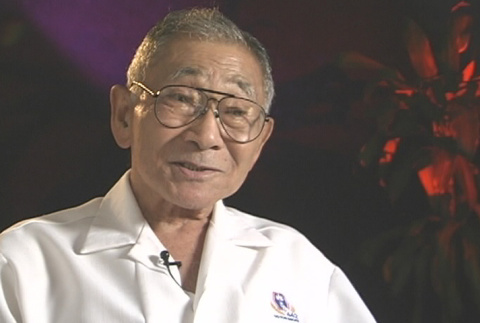
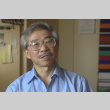
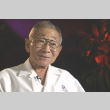
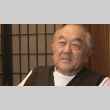
Nisei male. Born December 8, 1916, in Hawaii. Was already in the army when Japan bombed Pearl Harbor on December 7, 1941. Served with the Military Intelligence Service as a translator at the Pentagon and in Europe.
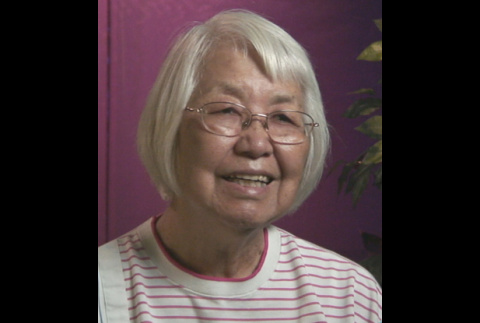
Nisei female. Born September 21, 1929, in Bakersfield, California. Following the bombing of Pearl Harbor, was removed to the Poston concentration camp, Arizona. After leaving camp, returned with family to Bakersfield before eventually moving to Sacramento, California.
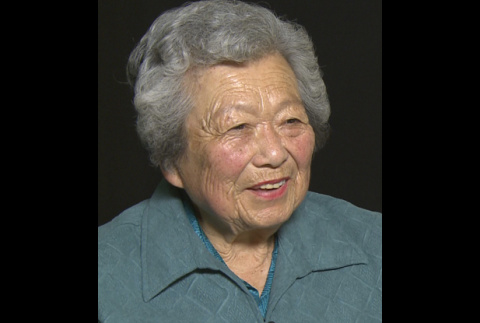
Nisei female. Born June 4, 1926, in Watsonville, California. Following the bombing of Pearl Harbor, removed to the Fresno Assembly Center, California, and the Jerome and Rohwer concentration camps, Arkansas. Following World War II, returned to Watsonville.
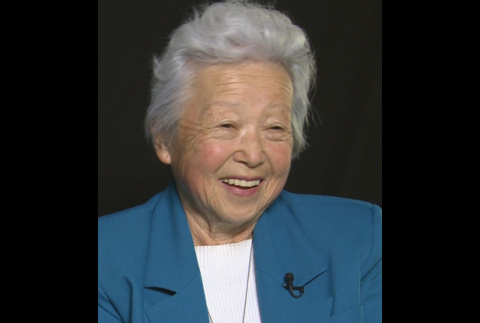
Nisei female. Born August 17, 1927, in Watsonville, California. Following the bombing of Pearl Harbor, removed to the Fresno Assembly Center, California, and the Jerome and Rohwer concentration camps, Arkansas. Following World War II, returned to Watsonville.
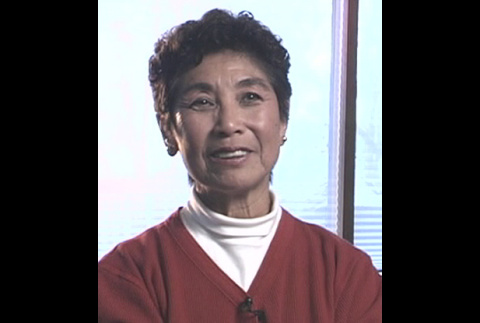
Nisei female. Born July 21, 1926, in Petersburg, Alaska. Both mother and father were jailed in Petersburg after the bombing of Pearl Harbor. Incarcerated at the Puyallup Assembly Center, Washington, and Minidoka concentration camp, Idaho. Resettled in Seattle, Washington.
Nisei male. Born August 1, 1933, in Oakland, California. Following the bombing of Pearl Harbor in 1941, moved with family to Reno, Nevada, during the "voluntary evacuation" period. Attended the University of Nevada and later worked for an aerospace company.
The bombing of Pearl Harbor: "I was just so shocked" (Japanese language)
This interview was conducted in Japanese. It was translated so as to convey Mrs. Terasaki's way of speaking as closely as possible. For example, there are instances in which she makes some grammatical errors. These mistakes are conveyed through similar grammatical errors in English, …
Climate of San Francisco, California, at the time of the bombing of Pearl Harbor
This interview was conducted by sisters Emiko and Chizuko Omori for their 1999 documentary, Rabbit in the Moon, about the Japanese American resisters of conscience in the World War II incarceration camps. As a result, the interviews in this collection are …
Thoughts on the bombing of Pearl Harbor, memories of anti-Japanese sentiment in the American press
This interview was conducted by sisters Emiko and Chizuko Omori for their 1999 documentary, Rabbit in the Moon, about the Japanese American resisters of conscience in the World War II incarceration camps. As a result, the interviews in this collection …
Thoughts on the bombing of Pearl Harbor; preparing for mass removal: slaughtering chickens, disposing of belongings
This interview was conducted by sisters Emiko and Chizuko Omori for their 1999 documentary, Rabbit in the Moon, about the Japanese American resisters of conscience in the World War II incarceration camps. As a result, the interviews in this …
Having children before the war; Christmas 1941, the aftermath of the bombing of Pearl Harbor
This interview was conducted by sisters Emiko and Chizuko Omori for their 1999 documentary, Rabbit in the Moon, about the Japanese American resisters of conscience in the World War II incarceration camps. As a result, the interviews in this collection …
Facing a hostile reaction in school and community following the bombing of Pearl Harbor
This interview was conducted by sisters Emiko and Chizuko Omori for their 1999 documentary, Rabbit in the Moon, about the Japanese American resisters of conscience in the World War II incarceration camps. As a result, the interviews in this collection are …
Memories of the bombing of Pearl Harbor and attending school the next day: being identified with Japan
This interview was conducted by sisters Emiko and Chizuko Omori for their 1999 documentary, Rabbit in the Moon, about the Japanese American resisters of conscience in the World War II incarceration camps. As a result, the interviews in …
This interview was conducted at the Voices of Japanese American Redress Conference, held on the UCLA campus and sponsored by the UCLA Asian American Studies Center and the UCLA School of Public Policy and Social Research. Because of the full conference schedule, the interview was limited to one hour. …
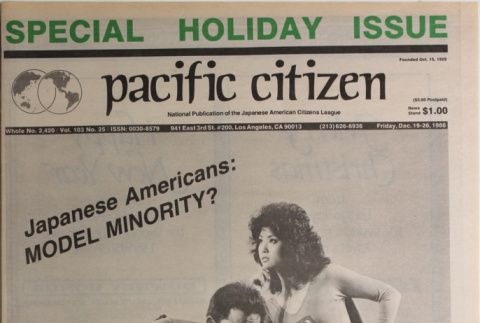
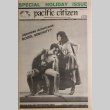
Special holiday issue organized into sections A 1-32, B 1-64, and A 33-64. Selected article titles: "As Others See Us: An Overview" (pp. A-4, A-13, A-20), "The Dilemma of the 'Model Minority' Image" (p. A-14), "Minoru Yasui, 1916-1986: In Remembrance" (pp. B-1-B-2), "The Nisei of the 1800 Engineer General Service Battalion: An Untold Story" (pp. B-39-B-40, …
Nisei male. Born June 26, 1922, in Montebello, California. Grew up in California, spending a short time in Japan prior to World War II. After the bombing of Pearl Harbor, moved to Denver, Colorado, during the "voluntary evacuation" period designated by the U.S. government. Arrested after refusing to report for military service after being drafted. Tried …
Nisei female. Born May 25, 1928, in Huancayo, Peru. Grew up in Huancayo, where father ran a successful store. After the bombing of Pearl Harbor, father went into hiding in an attempt to avoid being picked up by the Peruvian government. He was eventually found and picked up, and was reunited with family on the ship …
Nisei male, born June 21, 1920, in Compton, California. Raised on a farm in Lawndale, California. Following the bombing of Pearl Harbor, his father was picked up by FBI and detained at a Department of Justice (DOJ) internment camp in Lordsburg, New Mexico. His family voluntarily moved to Visalia, California, then was forcibly moved to Poston …
Nisei male. Born November 27, 1912, on Bainbridge Island, Washington. After the bombing of Pearl Harbor, moved to Denver and took a job as English Editor of a Japanese American vernacular newspaper, the Rocky Shimpo. As editor, wrote about and supported the Fair Play Committee in Heart Mountain concentration camp. Was charged and tried for conspiracy …
Nisei male. Born November 27, 1912, on Bainbridge Island, Washington. After the bombing of Pearl Harbor, moved to Denver and took a job as English Editor of a Japanese American vernacular newspaper, the Rocky Shimpo. As editor, wrote about and supported the Fair Play Committee in Heart Mountain concentration camp. Was charged and tried for conspiracy …
Nisei male. Born November 27, 1912, on Bainbridge Island, Washington. After the bombing of Pearl Harbor, moved to Denver and took a job as English Editor of a Japanese American vernacular newspaper, the Rocky Shimpo. As editor, wrote about and supported the Fair Play Committee in Heart Mountain concentration camp. Was charged and tried for conspiracy …
Nisei male. Born July 31, 1923, in Bainbridge Island, Washington. Age 18 when Japan bombed Pearl Harbor, was removed with family to Manzanar concentration camp, California. Later transferred to the Minidoka concentration camp, Idaho. Became an auto mechanic after World War II.