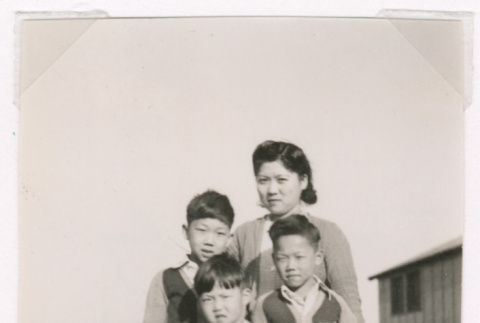
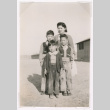
Photograph of a family of four in Minidoka. Identified left to right back row: George Tobe and Yukiko (Isoshima) Tobe. Front row left to right: Yutaka Tobe, Minoru Jim Tobe. The caption below the photo reads "The Tobe family Yukiko / George, Jim / Yutaka / Waiting for Mr. Tobe to be released 1942" in black …
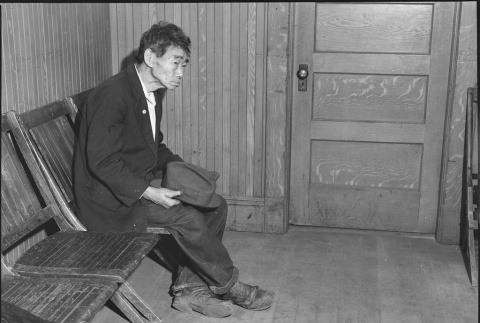
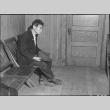
Original caption: Byron, California. Toshi Mizoguchi waiting at the Wartime Civil Control Administration station to register for evacuation. Mr. Mizoguchi came to the United States from Japan in 1892 and has been a farm laborer on California ranches since that time. He is unmarried. He is seen wearing an American flag on a celluloid button.
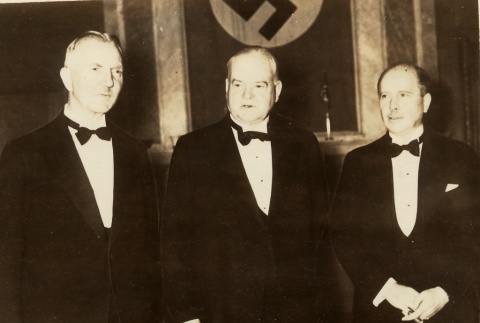
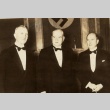
Caption on reverse [translation]: "Former President Hoover Visits Germany. (Berlin) Domei. Former President of the United States Hoover visited Germany and witnessed the glorious achievements of the Nazis across the country. Photograph: a meeting with Minister of Economics Dr. Schacht on March 8 (from left, Dr. Schact, Mr. Hoover, US Ambassador to Germany Wilson)."
Sansei male. Born July 12, 1934, in Salinas, California. After the bombing of Pearl Harbor on December 7, 1941, removed with family to the Salinas Assembly Center, California, and the Poston concentration camp, Arizona. After leaving camp, the family moved to Seabrook Farms, New Jersey. Mr. Ikeda attended Drexel University and studied mechanical engineering.
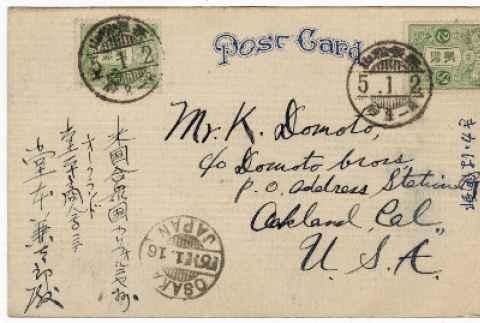
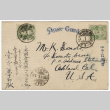
Postcard addressed to Mr. K. Domoto (likely Kanetaro Domoto) with a message written in Japanese. Postmarked 5.1.2 (Taisho 5- 1916, January 2 or Showa 5-1930, January 2) and 6.1.16 (Taisho 6-1917, January 16 or Showa 6-1931 January 16). Tied together with objects ddr-densho-356-183 through ddr-densho-356-188.
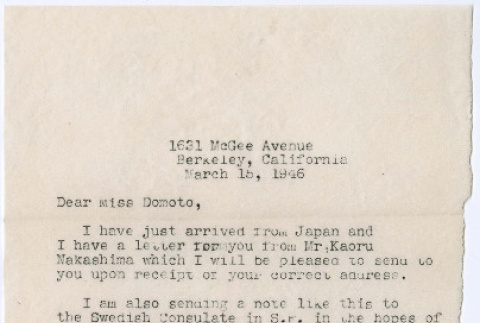
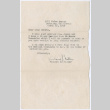
Letter from Richard J. Miller saying he has a letter for Wak from Mr. Kaoru Nakashima for her and would like to send it if he can have her current address; response from Toichi with Wak's address in Boston; envelope showing Boston address crossed out and a New Rochelle, New York address penciled in.
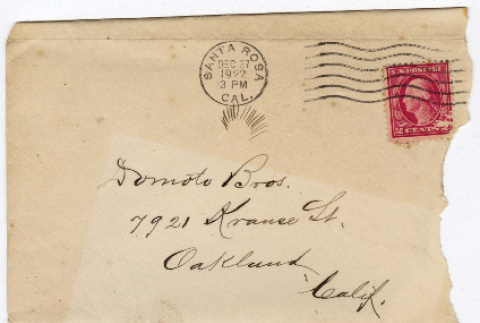
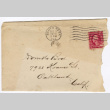
Envelope addressed to Domoto Bros. postmarked Dec. 27, 1922 Santa Rosa, California. Stored in the envelope were two letters and three postcard. First letter stored in envelope is to Mr. Domoto from K. Nagasawa of Santa Rosa dated Dec. 27, 1922. The letter is an acknowledgment of a shipment of flowers as a gift, and a …
Going to Japan for summer vacation, but remaining there after vacation was over
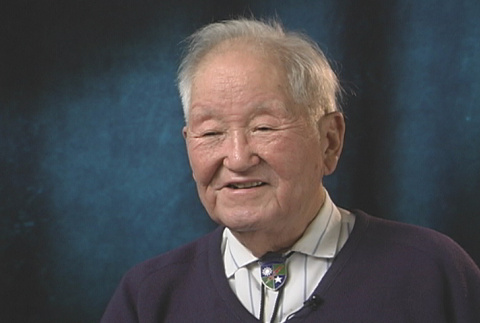
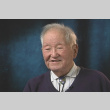
Although Mr. Matsumoto does not identify himself as a Kibei (American-born person of Japanese ancestry sent to Japan for formal education and socialization when young and later returned to the U.S.), some of his life experiences are similar to those who do identify …
Moving to permanent camp in Jerome, Arkansas; working as the storekeeper for the food warehouse
Although Mr. Matsumoto does not identify himself as a Kibei (American-born person of Japanese ancestry sent to Japan for formal education and socialization when young and later returned to the U.S.), some of his life experiences are similar to those who …
Acting somewhat as an interpreter between Issei, Nisei and Kibei in camp
Although Mr. Matsumoto does not identify himself as a Kibei (American-born person of Japanese ancestry sent to Japan for formal education and socialization when young and later returned to the U.S.), some of his life experiences are similar to those who do identify themselves …
Being warned not to volunteer for the military's "spy school," but deciding to go anyway
Although Mr. Matsumoto does not identify himself as a Kibei (American-born person of Japanese ancestry sent to Japan for formal education and socialization when young and later returned to the U.S.), some of his life experiences are similar to those who …
An incident involving a threat of court-martial in New Delhi, India
Although Mr. Matsumoto does not identify himself as a Kibei (American-born person of Japanese ancestry sent to Japan for formal education and socialization when young and later returned to the U.S.), some of his life experiences are similar to those who do identify themselves as …
Memories of the bombing of Pearl Harbor: "I thought it was a joke or something"
Although Mr. Matsumoto does not identify himself as a Kibei (American-born person of Japanese ancestry sent to Japan for formal education and socialization when young and later returned to the U.S.), some of his life experiences are similar to those who …
Preparing for mass removal: helping employer's family, continuing to work as delivery boy
Although Mr. Matsumoto does not identify himself as a Kibei (American-born person of Japanese ancestry sent to Japan for formal education and socialization when young and later returned to the U.S.), some of his life experiences are similar to those who do identify …
Intercepting a Japanese communication via tapped wire provides critical location information for a U.S. target
Although Mr. Matsumoto does not identify himself as a Kibei (American-born person of Japanese ancestry sent to Japan for formal education and socialization when young and later returned to the U.S.), some of his life experiences are similar to those who …
Going on a dangerous solo mission to spy on Japanese briefings regarding Nhpum Ga hill
Although Mr. Matsumoto does not identify himself as a Kibei (American-born person of Japanese ancestry sent to Japan for formal education and socialization when young and later returned to the U.S.), some of his life experiences are similar to those who …
Reflections on redress, the Japanese American Citizens League, and the resisters of conscience
Although Mr. Matsumoto does not identify himself as a Kibei (American-born person of Japanese ancestry sent to Japan for formal education and socialization when young and later returned to the U.S.), some of his life experiences are similar to those who do identify …
Keeping busy to pass the time in assembly center, trying not to feel too angry
Although Mr. Matsumoto does not identify himself as a Kibei (American-born person of Japanese ancestry sent to Japan for formal education and socialization when young and later returned to the U.S.), some of his life experiences are similar to those who …
Coping with having bank assets frozen after the bombing of Pearl Harbor
Although Mr. Matsumoto does not identify himself as a Kibei (American-born person of Japanese ancestry sent to Japan for formal education and socialization when young and later returned to the U.S.), some of his life experiences are similar to those who do identify themselves …
Memories of teenage years in Japan: spending time with grandfather, attending church
Although Mr. Matsumoto does not identify himself as a Kibei (American-born person of Japanese ancestry sent to Japan for formal education and socialization when young and later returned to the U.S.), some of his life experiences are similar to those who do identify themselves …
Difficulty of attending high school back in the U.S.: having to quickly learn U.S. history
Although Mr. Matsumoto does not identify himself as a Kibei (American-born person of Japanese ancestry sent to Japan for formal education and socialization when young and later returned to the U.S.), some of his life experiences are similar to those who …
Description of terrible conditions while battalion was trapped on Nhpum Ga hill for nine days
Although Mr. Matsumoto does not identify himself as a Kibei (American-born person of Japanese ancestry sent to Japan for formal education and socialization when young and later returned to the U.S.), some of his life experiences are similar to those who …
Family background: parents' immigration to the United States in the early 1900s
Although Mr. Matsumoto does not identify himself as a Kibei (American-born person of Japanese ancestry sent to Japan for formal education and socialization when young and later returned to the U.S.), some of his life experiences are similar to those who do identify themselves …
Witnessing an unfortunate incident while working for a family at a wholesale market
Although Mr. Matsumoto does not identify himself as a Kibei (American-born person of Japanese ancestry sent to Japan for formal education and socialization when young and later returned to the U.S.), some of his life experiences are similar to those who do identify …