Hearing about the atomic bombings in Japan while in China
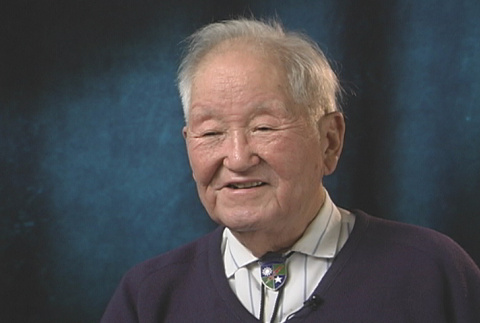
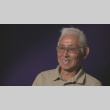
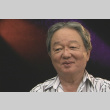
Although Mr. Matsumoto does not identify himself as a Kibei (American-born person of Japanese ancestry sent to Japan for formal education and socialization when young and later returned to the U.S.), some of his life experiences are similar to those who do identify themselves as such.
Being one of only fourteen selected for a dangerous mission
Although Mr. Matsumoto does not identify himself as a Kibei (American-born person of Japanese ancestry sent to Japan for formal education and socialization when young and later returned to the U.S.), some of his life experiences are similar to those who do identify themselves as such.
Thoughts on induction into the Ranger Hall of Fame
Although Mr. Matsumoto does not identify himself as a Kibei (American-born person of Japanese ancestry sent to Japan for formal education and socialization when young and later returned to the U.S.), some of his life experiences are similar to those who do identify themselves as such.
Thoughts on completing the original mission in Burma
Although Mr. Matsumoto does not identify himself as a Kibei (American-born person of Japanese ancestry sent to Japan for formal education and socialization when young and later returned to the U.S.), some of his life experiences are similar to those who do identify themselves as such.
This material is based upon work assisted by a grant from the Department of the Interior, National Park Service. Any opinions, finding, and conclusions or recommendations expressed in this material are those of the author(s) and do not necessarily reflect the views of the Department of the Interior.
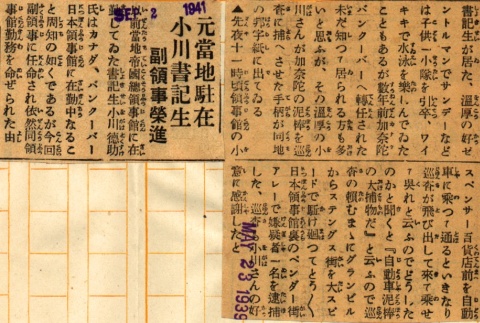
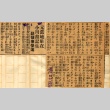
Article [translation]: "Mr. Ogawa was the former secretary of the consul in Honolulu. He is a gentleman who took many children to Waikiki Beach on Sunday. He enjoyed swimming with the children. Many residents already know Ogawa has moved to Vancouver in Canada. A Japanese newspaper in Vancouver has reported on Ogawa's exploits there. While Mr. …
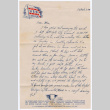
Letter from Sohei (John) Hohri to Harold Landon & Thelma Jo Bruce, dated January 5, 1997. Sohei provides the address for Crawford Peak, a gym coach in 1937, and writes a story about his interaction with Peak as a youth. Sohei writes that when internment began, Mr. Peak went down to the buses to see his …
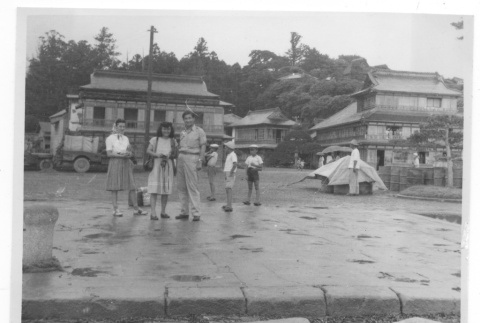
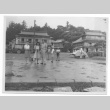
Black and white photographic print of (from left) Peggy Pedlow, Yo Tajiri, and Mr. Chang (a Chinese correspondent) standing on dock in Matsushima (likely), with three unidentified boys standing to their left in background and an unidentified man standing further to their left in background. Inscribed on the back: "3 Aug 47/Matsushima."
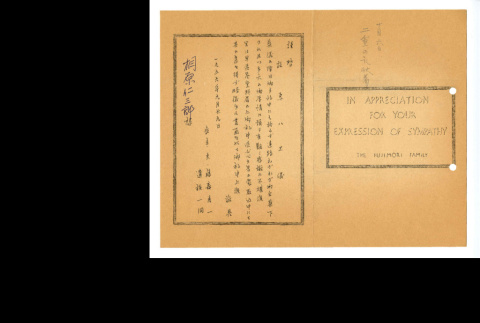
Cards from the Fujimori family and Murata family to Nisaburo Aibara. Mr. Aibara attended funeral services for Hae Fujimori and Kiyoshi Murata. See this object in the California State Universities Japanese American Digitization project site: csus_nac_0055
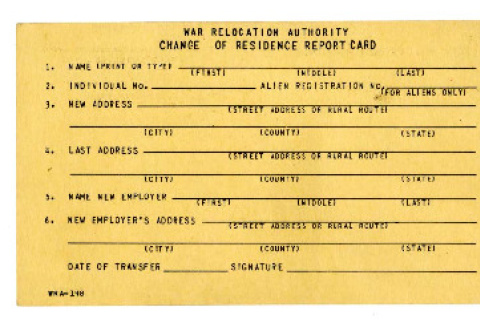
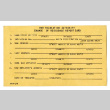
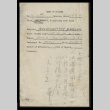
A blank form of "War Relocation Authority change of residence report card." It addresses "Mr. Vernon Kennedy, Relocation Supervisor," in Chicago, Illinois. See this object in the California State Universities Japanese American Digitization project site: oki_01_16_002
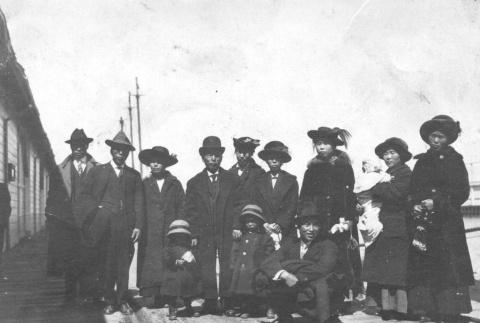
Front row (L to R): Takeshi, Roy, Uncle Frank Matsumoto. Back row (L to R): unknown, Mr. Nakatani, unknown, Roy's grandfather Wakamatsu Matsumoto, Mrs. Kitahara, unknown, Mrs. Muranaka, unknown, Tom (baby) held by Roy's mother, Tei Matsumoto. This picture was taken by Roy's father, Wakaji, when Roy's grandfather left for Japan to retire.
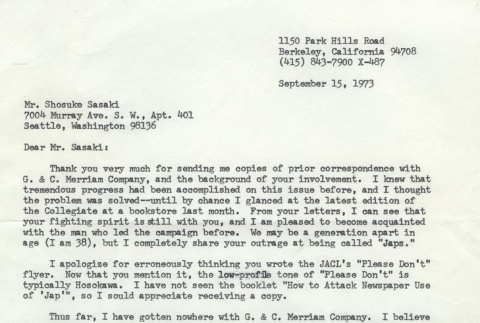
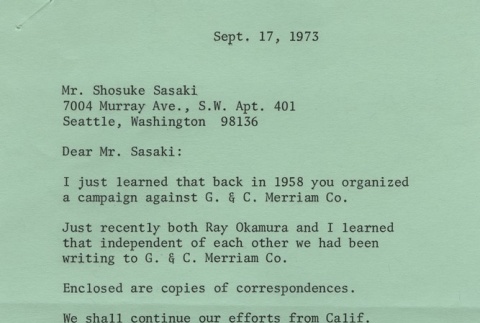
Letter from Raymond Okamura to Shosuke Sasaki about a recently revived campaign against a large publishing company for use of the term "Jap" in its printed materials. In the 1950s and 1960s, Mr. Sasaki was the leader of a movement against the use of the word "Jap" in movies and print media.
Letter from Clifford Uyeda to Shosuke Sasaki about a recently revived campaign against a large publishing company for use of the term "Jap" in its printed materials. In the 1950s and 1960s, Mr. Sasaki was the leader of a movement against the use of the word "Jap" in movies and print media.
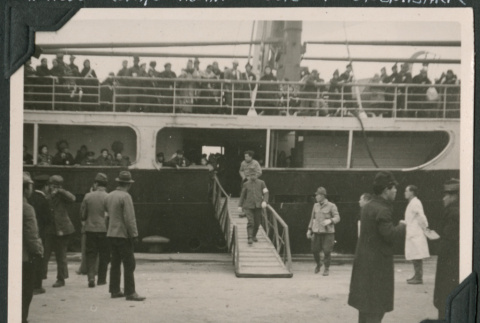
The caption in the photo album reads "Landing of repats at Hakata harbor ... Mr. Kido of Repat Ctr comes down having made arrangements. We call him 'Charlie'. Mar '47". Takashi Matsui was stationed in Japan with the U.S. military during the Allied occupation of Japan after the end of World War II.
Holiday card to the Kanzaki's from Chuck H, wishing the couple a happy and successful new year. Front of card reads "Seasons Greetings" message inside card reads "Mr. And Mrs. Kanzaki: I would like to add, to your other greetings, my wishes for a most successful and happy 1962. Love Chuck H"
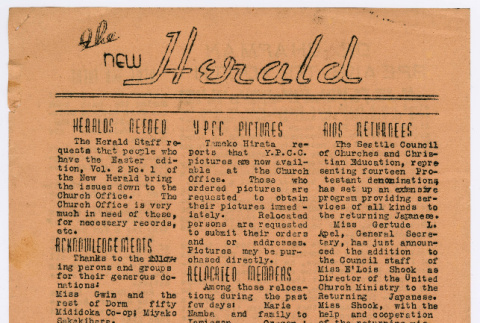
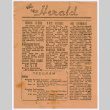
Selected article titles: "YPCC Pictures" (p. 1), "Relocated Members" (p. 1), Aids returnees" (p. 1), "Dr. Chapman speaks to youth" (p. 2), "Here and there" (p. 2), "Parting message by Mr. Willard Jaeger" (p. 3), "Never resting church office" (p. 3), "Report of the National Student Relocation Council on Scholarship Allocations" (p. 4)
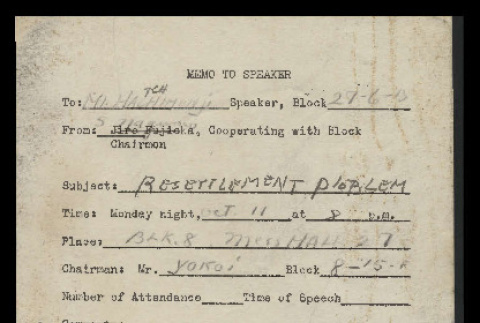
Memorandum from Jiro Fujioka to Speaker, Mr. Hatchimonji regarding his "resettlement problem" talk at Heart Mountain incarceration camp. Includes Japanese handwritten notes. See this object in the California State Universities Japanese American Digitization project site: sac_jaac_0958
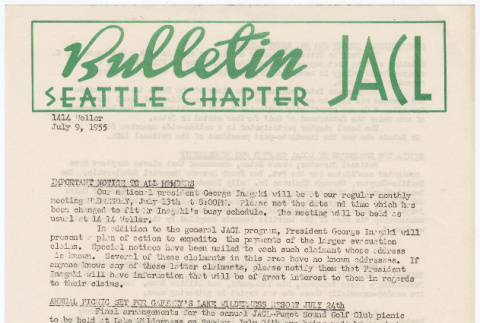
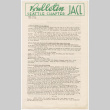
Bulletin covering the following topics: Report of O?Brien talk with membership, ?One item of special interest is the proposed appeal of the state Alien Land Act. Mr. O?Brien stated that this law was enacted primarily to present abuse by absentee landlords and its removal would require a change in the constitution.?
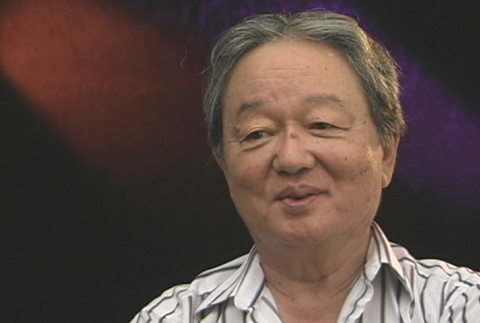
Nisei male. Born March 13, 1927, in San Francisco, California. Grew up in Los Angeles, California. During World War II, was removed to the Manzanar concentration camp, California. One of the major players in the movement for Japanese American redress and reparations, Mr. Hohri founded the National Council for Japanese American Redress (NCJAR).
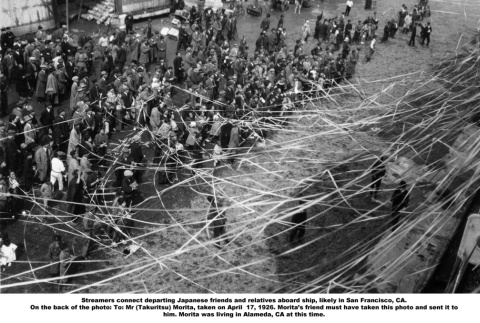
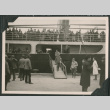
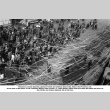
Caption below photo: Streamers connect departing Japanese friends and relatives aboard ship, likely in San Francisco, CA. On the back of the photo: To: Mr. (Takuritsu) Morita, taken on April 17, 1926. Morita's friend must have taken this photo and sent it to him. Morita was living in Alameda, CA at this time.
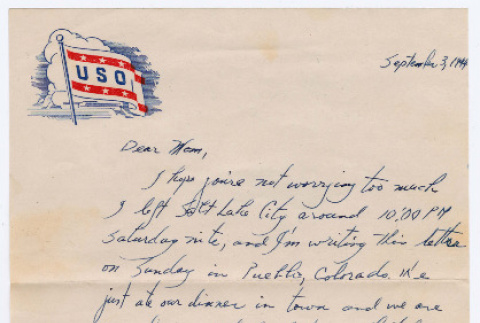
First check-in letter, written in Pueblo, CO. Includes a drawing of the Grand Canyon. Written only for Fuku, Tad's mother; it seems his father may have been sick. Tad mentions "Mr. Frank" and friends at the end. Parents' note on envelope back: No. 1 9/6 A.M. 1944 Wednesday Sept 6, 1944.
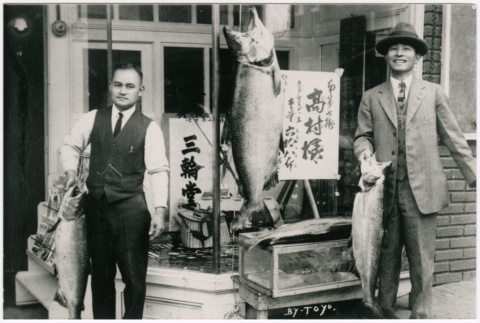
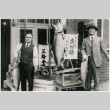
The salmon derby winner was a king salmon weighing 68 lbs, caught by Mr. Takamura. The store's owner, Kinzo Asaba, is on the left. The Mitsuwado store was located at 522 Main Street in Seattle's Nihonmachi, or Japantown. The store sold a variety of items including books, records, record players, and fishing tackle.
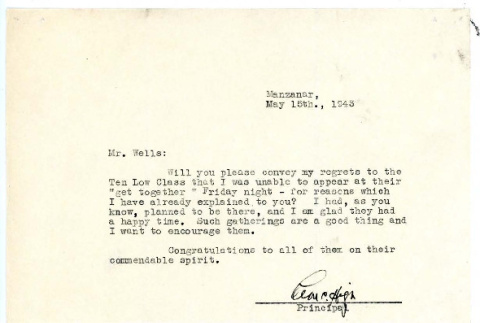
Letter expressing High's regrets for being unable to attend the Ten Low class "get together." He commends Harry Bentley Wells on organizing the event and encourages them in the future though. Transcription is found in item: ecm_wells_9072. See this object in the California State Universities Japanese American Digitization project site: ecm_wells_0072
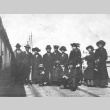
A group photograph of the attendees of Tanesuke Matsuda's funeral held at a Buddhist temple in Salt Lake, Utah. Mr. Matsuda died on April 18, 1937 at the age of 51. See this object in the California State Universities Japanese American Digitization project site: jia_12_012
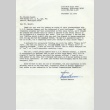
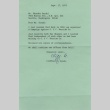
A holiday letter with greetings on Christmas and New Year from Amy Nakawaki [=Emiko AmyTerada] in Anaheim, California to Mr. and Mrs. A.W. Thomas in Lawndale, California. The letter includes general correspondence, including updates on her, Sam [=Usami], and Tsuyoshi. See this object in the California State Universities Japanese American Digitization project site: nis_06_030


![Ko Matsuda Tanesuke-shi no sogi [The funeral for the late Mr. Tanesuke Matsuda] (ddr-csujad-25-350)](https://ddr.densho.org/media/cache/0a/bb/0abb708f49aba1d4fdc3b512ba08a96a.jpg)
![Letter from Amy [Emiko Nakawaki] to Mr. and Mrs. A.W. Thomas, December 11, 1957 (ddr-csujad-4-28)](https://ddr.densho.org/media/cache/19/2c/192c204b35fa1d6c2f176b2f7f89a6e7.jpg)


![Ko Matsuda Tanesuke-shi no sogi [The funeral for the late Mr. Tanesuke Matsuda] (ddr-csujad-25-350)](https://ddr.densho.org/media/cache/a2/83/a283ba202f0a3f0808c8515e985d0956.jpg)
![Letter from Amy [Emiko Nakawaki] to Mr. and Mrs. A.W. Thomas, December 11, 1957 (ddr-csujad-4-28)](https://ddr.densho.org/media/cache/a5/ca/a5ca6bf33e6554bfa900df2e5d9217d0.jpg)