
2657 items

![Letter from W. Freitas to Mr. and Mrs. Seiichi Okine, October 19, [1947?] (ddr-csujad-5-281)](https://ddr.densho.org/media/cache/cf/bc/cfbcb20795f54f65a8de631bbb1b5ab1.jpg)
![Letter from Henry [Katsumi] Fujita to Mr. and Mrs. Davis, October 5, 1942 (ddr-csujad-23-14)](https://ddr.densho.org/media/cache/6f/67/6f67010717bcd4c6294bc08154b5a5dd.jpg)
![Ko Tanaka Makoto tsuitokai kinen [Memorial service for the late Mr. Makoto Tanaka] (ddr-csujad-25-331)](https://ddr.densho.org/media/cache/3b/4a/3b4a4a433ccecd61f829d85e39b2a69c.jpg)
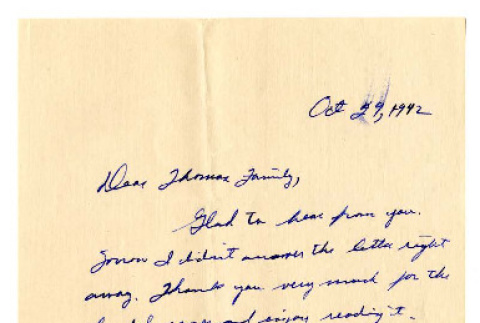
![Postcard from U. [Usami] Terada to Mr. and Mrs. Thomas, October 2, 1942 (ddr-csujad-4-5)](https://ddr.densho.org/media/cache/41/3b/413b74f0b7d5d825a0adfa7ebb40786c.jpg)
![Letter from Emiko [Nakawaki] to Mr. and Mrs. A.W. Thomas, December 15, 1951 (ddr-csujad-4-27)](https://ddr.densho.org/media/cache/ba/97/ba97e397f6bb8c13d657682a327fc905.jpg)
![Letter from Amy [Narawaki] to Mr. and Mrs. A.W. Thomas, December 15, 1971 (ddr-csujad-4-29)](https://ddr.densho.org/media/cache/1b/7b/1b7b9cd29fec3be54ae62bc65f7ea1b7.jpg)
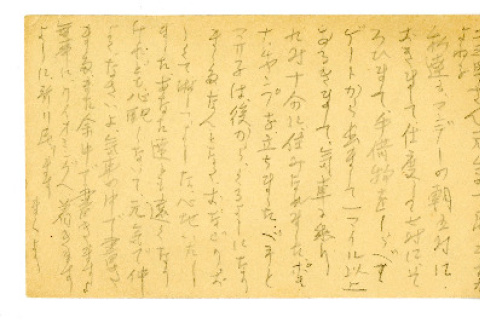
![Letter from Sojiro Nishimura to Mr. S. Okine, November 26, 1946 [in Japanese] (ddr-csujad-5-176)](https://ddr.densho.org/media/cache/d1/29/d1299ed342522663ead2407bdbd0113c.jpg)
2657 items

doc
Letter from John (Sohei) Hohri to Harold Landon and Thelma Jo Bruce (ddr-janm-18-23)
Two letters from Sohei (John) Hohri & Valeria Engelbretson to Harold Landon and Thelma Jo Bruce, dated January 24, 2011 and June 26, 2011. The envelope is addressed to Mr. and Mrs. Harold Landon in Granada Hills, CA from Mr. and Mrs. Sohei Hohri in New York City, NY. Sohei writes to thank Harold and his …
img
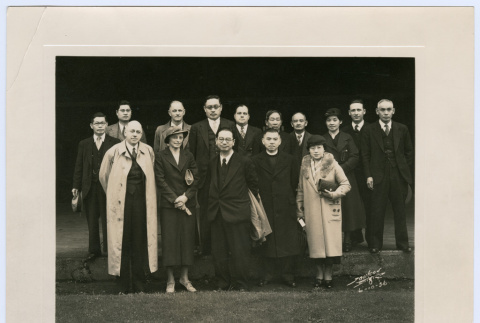
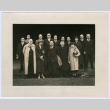
Group photo of 15 people (ddr-densho-474-6)
First row: Rev. Dr. J. Henry Carpenter, Miss April, Toyoshiko Kagura, Rev. Gennosuke Shoji; and Kane (Nagase) Shoji. Second Row: Unidentified, Mr. Arima, Rev. Ulysses Grant Murphy, Shuzo William Terazawa (also known as Shuzo or Akizo), Mr. Davis, unidentified, unidentified, Riku Hashiguchi, unidentified, and Chosuku Hashiguchi Rev. Gennosuke Shoji, Rector of St Peter’s Japanese Episcopal Mission …
doc
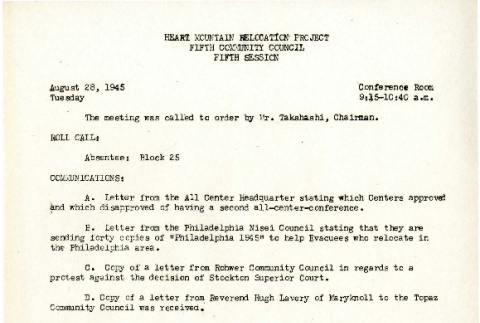
Heart Mountain Relocation Project Fifth Community Council, 5th session (August 28, 1945) (ddr-csujad-45-56)
The council minutes feature a discussion by Mr. Guy Robertson on freight delivery and camp security operations. See this object in the California State Universities Japanese American Digitization project site: HMRC_01-01_085
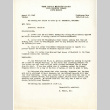
![Letter from W. Freitas to Mr. and Mrs. Seiichi Okine, October 19, [1947?] (ddr-csujad-5-281)](https://ddr.densho.org/media/cache/b9/e9/b9e9e399d620befaa91eb75621876049.jpg)
doc
Letter from W. Freitas to Mr. and Mrs. Seiichi Okine, October 19, [1947?] (ddr-csujad-5-281)
A thank you letter from Mr. Freitas to Seiichi and Tomeyo Okine for their visit and flowers. See this object in the California State Universities Japanese American Digitization project site: oki_03_15_001
img
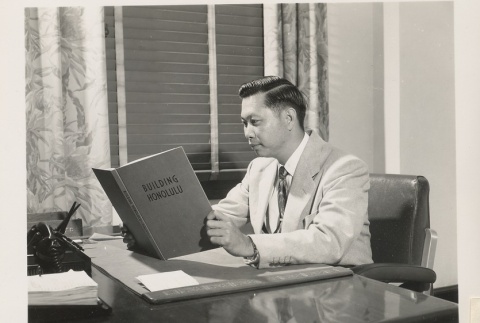
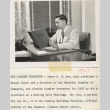
A Honolulu Chamber of Commerce treasurer reading at his desk (ddr-njpa-2-241)
Caption on front: NEW CHAMBER TREASURER - James K. C. Doo, past president of Commerce, was elected chamber treasurer for 1955 by the b ... Directors at a meeting held Thursday. Mr. Doo, a partner ... Yat Loy Co., is shown reading Building Honolulu, official history of the chamber. (Camera Hawaii photo)."
img
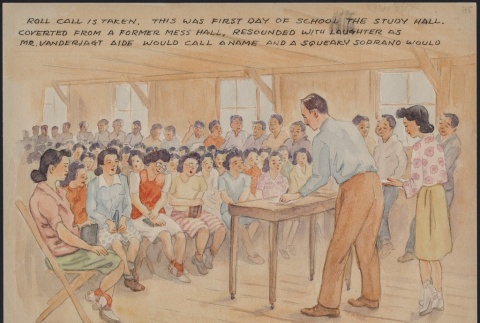
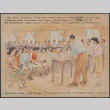
Painting of roll call at Manzanar High School (ddr-manz-2-52)
Caption: "Roll call is taken. This was the first day of school he study hall. Converted from a former mess ahll, resounded with laughter as Mr. Vanderjagt aide would call a name a squeaky soprano would respond 'Here,' only to be followed by an off-pitch bass 'Heah.'"
img
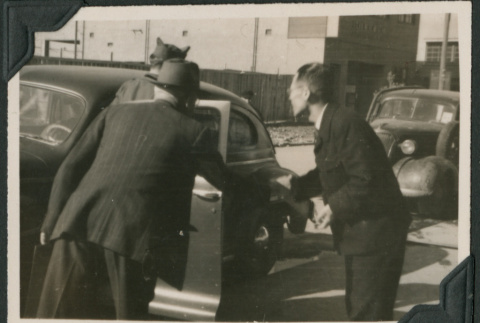
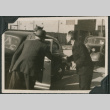
American soldiers leaving dinner party (ddr-densho-397-175)
The caption in the photo album reads "Dr. Cotner, Mr. Utsunomiya, Driver look on after Col Allen + Capt Cross enter '42 Plymouth in front of Mitsukoshi". Takashi Matsui was stationed in Japan with the U.S. military during the Allied occupation of Japan after the end of World War II.
img
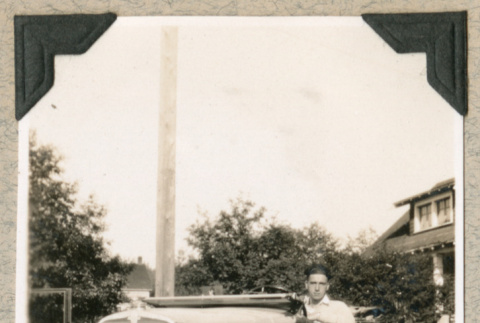
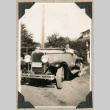
Percy Sherar driving car (ddr-densho-383-219)
The Sherars lived in Mukilteo at the same time as the Tokuda family in the 1920s. The Sherar family consisted of Archie and Eurda May as well as their children Percy (born c. 1910) and May (born c. 1914). Written on album page below photograph: "Mr. Percy Sherar".
doc
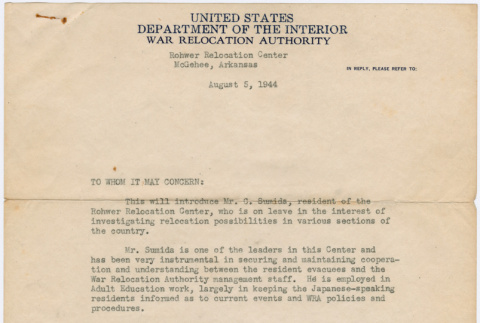
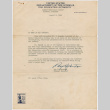
Recommendation letter for Chimata Sumida from Ray D. Johnston (ddr-densho-379-41)
Ray Johnston , Project Director of Rohwer, recommended employment for Chimata Sumida in cities that he wished to relocate. Mr. Johnston wrote that Chimata Sumida was a "leader" in the Center and was very "instrumental in maintaining cooperation and understanding between the resident evacuees and the Relocation Authority management staff."
doc
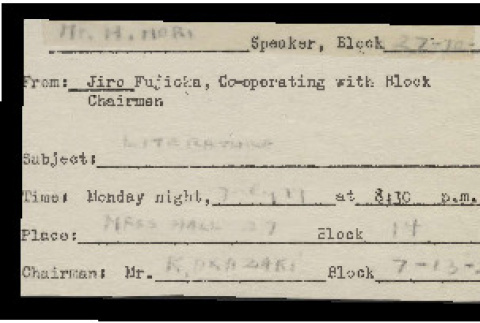
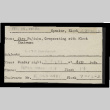
Memo from Jiro Fujioka, Co-operating with Block Chairmen, Heart Mountain, to Mr. Mimori, July 19, 1943 (ddr-csujad-55-708)
Memorandum from Jiro Fujioka to Speaker, Mr. Mimori regarding his speech on literature at Heart Mountain incarceration camp. See this object in the California State Universities Japanese American Digitization project site: sac_jaac_0710
doc
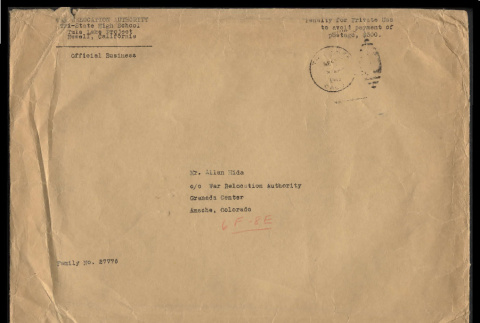
Envelope from the Tri-State High School, Tule Lake Project, to Mr. Allan Minoru Hida, Granada Center (ddr-csujad-55-1990)
Envelope from the Tri-State High School, Tule Lake incarceration center to Mr. Allan Minoru Hida, Granada Center. See this object in the California State Universities Japanese American Digitization project site: sac_jaac_1993
img
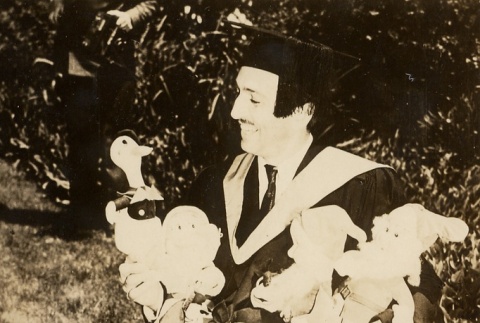
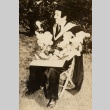
Walt Disney receiving an honorary Master of Arts from Harvard University (ddr-njpa-1-396)
Caption on reverse [translation]: "The Old Man of Cartoons Receives a Degree. (Camp Leach, USA) Domei. Walt Disney, the American animated films master who has become internationally famous, has now received an honorary Master of Arts degree from Harvard University. Photograph: a happy Mr. Disney. [stamped] July 19 1938."
![Letter from Henry [Katsumi] Fujita to Mr. and Mrs. Davis, October 5, 1942 (ddr-csujad-23-14)](https://ddr.densho.org/media/cache/de/a3/dea32809be3982ef15ef5c209195a9a2.jpg)
doc
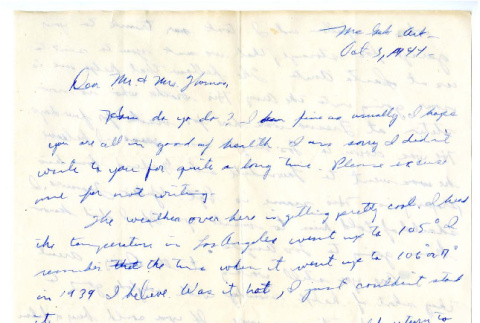
Letter from Henry [Katsumi] Fujita to Mr. and Mrs. Davis, October 5, 1942 (ddr-csujad-23-14)
Describes in detail the long train ride from Sept. 15-18 between Merced and the Granada (Amache) incarceration camp: the layout of the train cars, times to different towns, tunnels and coal smoke, eating and sleeping arrangements, military troops and equipment staged along the railway, desert scenery, late arrival at Amache, an extra night aboard the train, …
img
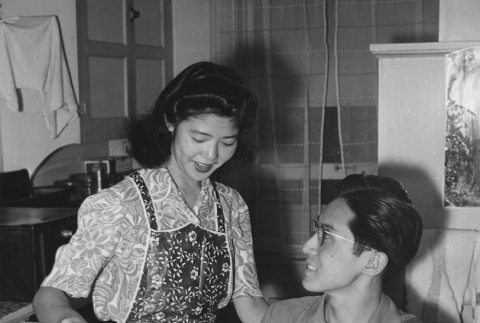
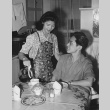
Mr. and Mrs. George Amano having breakfast in their apartment in Detroit, Michigan (ddr-csujad-14-31)
Mr. and Mrs. George Amano having breakfast in their apartment in Detroit, Michigan. They came from Central Utah incarceration camp. George works as a lens grinder for Kindy Optical Company. June 20, 1943. Photo by M. Graw. See this object in the California State Universities Japanese American Digitization project site: HMLSC_TOMO_031
![Ko Tanaka Makoto tsuitokai kinen [Memorial service for the late Mr. Makoto Tanaka] (ddr-csujad-25-331)](https://ddr.densho.org/media/cache/1d/4d/1d4dfe92dea3909b4496261adfae03ad.jpg)
img
Ko Tanaka Makoto tsuitokai kinen [Memorial service for the late Mr. Makoto Tanaka] (ddr-csujad-25-331)
A group photograph of the attendees of a memorial service for Makoto Tanaka held at a Buddhist temple on October 22, 1940. The photograph is taken by "Aiko," a photo studio in Seattle, Washington. The funeral followers are offered by "Fukuoka-ken Kaigai Kyokai" [=Fukuoka Prefecture Oversee Association]. The photograph is given from Shonosuke and Nobuko Tanaka …
![Postcard from U. [Usami] Terada to Mr. and Mrs. Thomas, October 2, 1942 (ddr-csujad-4-5)](https://ddr.densho.org/media/cache/1a/14/1a140a90486c960300371b6a6ff991c2.jpg)
doc
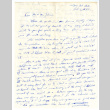
Postcard from U. [Usami] Terada to Mr. and Mrs. Thomas, October 2, 1942 (ddr-csujad-4-5)
The postcard is correspondence from Usami Terada, an incarceree at the Rohwer incarceration camp, to Mr. and Mrs. Thomas in Lawndale, California. Usami Terada discusses his arrival to El Paso, Texas, on the way to Arkansas, describing the styles of the houses in Texas, comparing them to homes in Hermosa Beach, California. The postcard depicts a …
doc
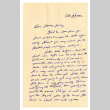
Letter from Usami Terada to Mr. and Mrs. A.W. Thomas, October 3, 1943 (ddr-csujad-4-18)
A letter from Usami Terada, an incarceree at the Rohwer incarceration camp, to Mr. and Mrs. A.W. Thomas in Lawndale, California. The letter discusses the Japanese American incarcerees returning to California and the West Coast. He describes the returning people as "half bred or wife of Caucasian" and a female attending Pasadena Junior College. He expresses …
doc
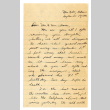
Letter from Usami Terada to Mr. and Mrs. A.W. Thomas, October 29, 1942 (ddr-csujad-4-15)
A letter from Usami Terada, an incarceree at the Rohwer incarceration camp, to Mr. and Mrs. A.W. Thomas in Lawndale, California. In the letter, he describes his life and the conditions of the Rohwer incarceration camp. He also describes the Japanese American soldiers visiting the camp: among the soldiers, he finds Sam Kita, one of his …
doc
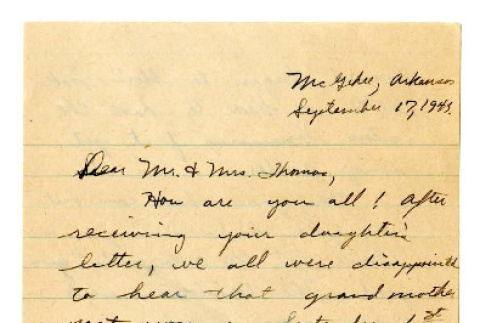
Letter from Usami Terada to Mr. and Mrs. A.W. Thomas, September 17, 1943 (ddr-csujad-4-16)
A letter from Usami Terada, an incarceree in the Rohwer incarceration camp, to Mr. and Mrs. A. W. Thomas in Lawndale, California. It is a condolence letter for their family members' passing. This letter also includes updates on: the weather in Arkansas, Usami's garden in the camp, and his younger brother, "Tsuyoshi." This letter is enclosed …
![Letter from Emiko [Nakawaki] to Mr. and Mrs. A.W. Thomas, December 15, 1951 (ddr-csujad-4-27)](https://ddr.densho.org/media/cache/69/4b/694bd58f87f9035842e4fd256a1c8eb4.jpg)
doc
Letter from Emiko [Nakawaki] to Mr. and Mrs. A.W. Thomas, December 15, 1951 (ddr-csujad-4-27)
A holiday letter with greetings on the occasion of Christmas and New Year from Emiko Nakawaki [= Emiko Amy Terada] in Anaheim, California to Mr. and Mrs. Thomas in Lawndale, California. In the letter, she informs them of her new address in Cypress, California and talks about her 10-month old son. See this object in the …
![Letter from Amy [Narawaki] to Mr. and Mrs. A.W. Thomas, December 15, 1971 (ddr-csujad-4-29)](https://ddr.densho.org/media/cache/2b/8d/2b8d1e9c080a566dca558c77ad5d0877.jpg)
doc
Letter from Amy [Narawaki] to Mr. and Mrs. A.W. Thomas, December 15, 1971 (ddr-csujad-4-29)
A holiday letter of greetings on Christmas from Amy Nakawaki [=Emiko Amy Terada] in Stanton, California to Mr. and Mrs. A.W. Thomas in Lawndale, California, which contains basic correspondence. See this object in the California State Universities Japanese American Digitization project site: nis_06_031
doc
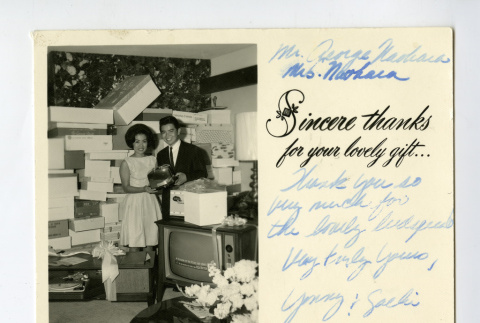
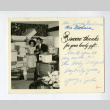
Card from Jonny and Sachi Koyama to Mr. George Naohara and Mrs. Naohara (ddr-csujad-38-7)
A thank-you card for a wedding gift (a bedspread) sent from George and Mitzi Naohara. Includes the photo of Johnny and Sachi. An item from "George Naohara photo album" (csudh_nao_0001), page 1. See this object in the California State Universities Japanese American Digitization project site: nao_01_01_002
doc
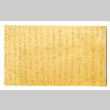
Postcard from Tsuruno Meguro to Mr. and Mrs. Fred Takano, August 14, 1942 (ddr-csujad-42-62)
A postcard from Tsuruno Meguro to her son-in-law and daughter, Fumio Fred and Yoneko Takano in the Santa Anita Assembly Center. She informs that her departure has been scheduled on Monday August 17, and her son-in-law, Ben, and her daughter, Masako, will leave later. English translation is found in item: csudh_tak_0063. Typescript is found in item: …
doc
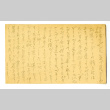
Postcard from K. Meguro to Mr. and Mrs. F. Takano, August 17, 1942 (ddr-csujad-42-65)
A postcard from Tsuruno Meguro to her son-in-law and daughter, Fumio Fred and Yoneko Takano in the Santa Anita Assembly Center. She writes in a train during the trip to the Heart Mountain incarceration camp. She details the departure in the morning when she left the assembly center. English translation is found in item: csudh_tak_0066. Typescript …
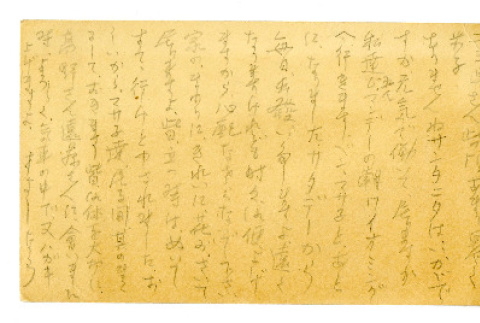
![Letter from Sojiro Nishimura to Mr. S. Okine, November 26, 1946 [in Japanese] (ddr-csujad-5-176)](https://ddr.densho.org/media/cache/9f/01/9f0175cc56876759bbb51bba8b905f9f.jpg)
doc
Letter from Sojiro Nishimura to Mr. S. Okine, November 26, 1946 [in Japanese] (ddr-csujad-5-176)
A letter from Sojiro Nishimura to his uncle, Seiichi Okine. He writes about his visit in the Okines' place in California and appreciation for their courtesy and generosity. He also notes that he has found the monetary gift of 15 dollars included in a gift from the Okines but would like to take only 5 dollars …