
2652 items
![[Shosake Nitta and sons in car] (ddr-csujad-29-268)](https://ddr.densho.org/media/cache/7d/07/7d073fea7becd06c495f53eb37d87329.jpg)
![[ Letter to the Whitney family from Fukuda family, May 23, 1942 ] (ddr-janm-22-1)](https://ddr.densho.org/media/cache/1d/a0/1da07b49d461037214c0c468cfff4c2e.jpg)
![Letter from [Ayame] May Okine to Mr. Makoto Okine, October 22, 1946 (ddr-csujad-5-173)](https://ddr.densho.org/media/cache/31/6e/316e34f6d5bfe03092444901c37be259.jpg)
![Envelope from Hompa Hongwanji Los Angeles Betsuin to Mr. S. Okine, [1951] (ddr-csujad-5-228)](https://ddr.densho.org/media/cache/67/a3/67a334000bf7ba98d859bcf44548b969.jpg)
![Letter from May [Ayame] Okine to Mr. Makoto Okine, October 7, 1946 (ddr-csujad-5-164)](https://ddr.densho.org/media/cache/51/15/5115f2aa4f23e1557e87f4920835610c.jpg)
![Letter from Kamekichi Nakano to Mr. S. Okine, [February?], 1948 [in Japanese] (ddr-csujad-5-255)](https://ddr.densho.org/media/cache/35/d4/35d49f7f46d71d5bf251abb70439065c.jpg)

2652 items
doc
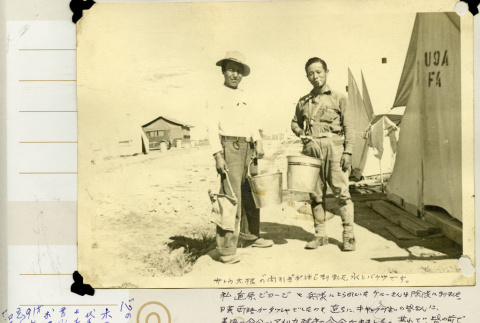
George Naohara's handwritten annotations (ddr-csujad-38-4)
English translations of handwritten annotations from "George Naohara photo album" (csudh_nao_0001), page 6: [Right top] I (George Naohara) and Keny Kuwahara [Kenneth Kenji Kuwahara], who had been drafted but was discharged. He was fluent in Japanese and English. Immediately after arriving at the C.C.C. Camp, an announcement of the U.S. government order was made in English. …
img
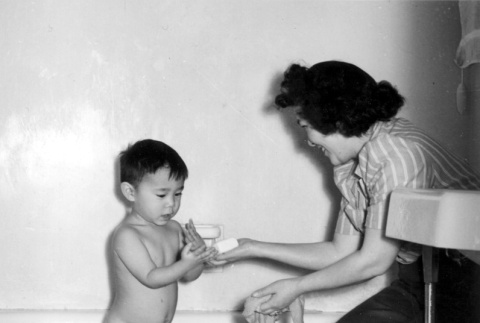
WRA resettlement image (ddr-densho-7-10)
Original WRA caption: "It's good to have a private bath of your own again," says Mrs. George Isoda as [she] gives her 2-1/2-year-old son Robin his daily bath. "After the community showers at the relocation centers, there's nothing quite so good as to be able to come home to your own warm tub and all the …
img
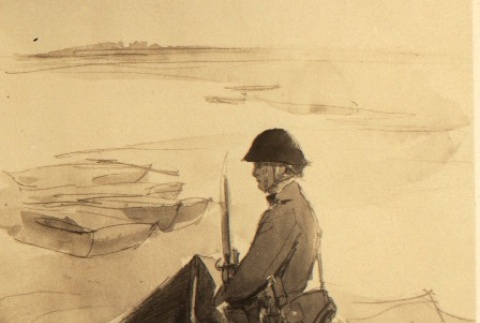
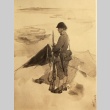
Ryushi Kawabata and one of his sketches (ddr-njpa-4-550)
Caption on reverse [translation]: "Kawabata returns. Ryushi Kawabata came back from a one-month trip to Beijing and Mongolia. He arrived at Tokyo Station at 9 p.m. on the 27th. The photos are (1) his sketch of the battle line and (2) Mr. Kawabata himself."
doc
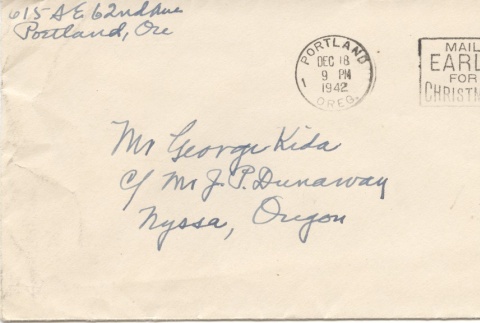
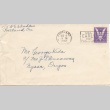
Letter from Mary Hedley to George Kida (ddr-one-3-31)
Letter and envelope from Mary Hedley to George Kida in Nyssa, Oregon, dated December 18, 1942. Writes that she wishes they had completed a land deal before because the property is in Mr. Arthur Hedley's name, who is critically ill and no longer lucid.
doc
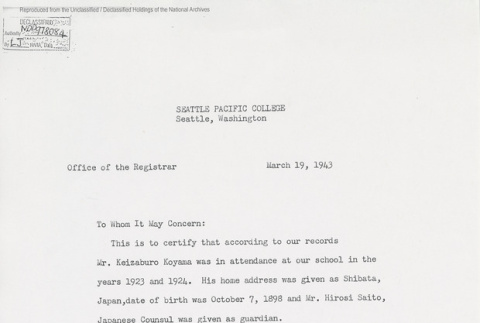
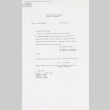
Seattle Pacific College confirmation of attendance letter (ddr-one-5-192)
Photocopy of a declassified letter from Seattle Pacific College in Seattle, Washington for Keisaburo Koyama. It states that he was a student at the school from 1923 to 1924 and that he was under the guardianship of Mr. Hiroshi Saito of the Japanese Consul.
![[Shosake Nitta and sons in car] (ddr-csujad-29-268)](https://ddr.densho.org/media/cache/9b/0f/9b0ff4779a3aeaae9df34114a5e01d5a.jpg)
img
[Shosake Nitta and sons in car] (ddr-csujad-29-268)
Mr. Shosake Nitta with sons riding in their first car, a Model T Ford. See this object in the California State Universities Japanese American Digitization project site: P211
doc
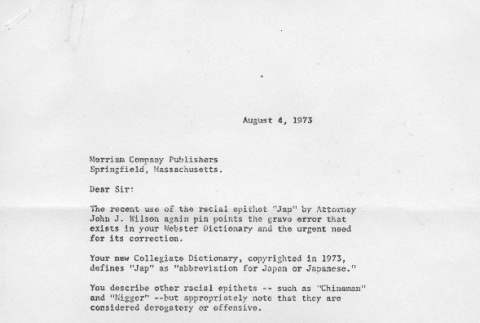
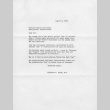
Correspondence regarding a publishing company's use of the term "Jap" (ddr-densho-274-59)
Series of letters collected by Shosuke Sasaki regarding a campaign against publishing companies for their use of the term "Jap." In the 1950s and '60s, Mr. Sasaki was the leader of a movement against the use of the word "Jap" in movies and print media.
img
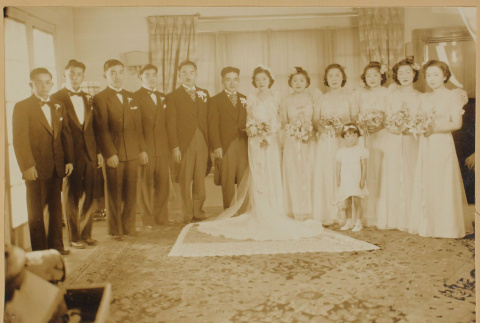
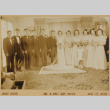
Ray and Mikie (Kageyama) Yasui wedding party (ddr-densho-287-741)
Photograph of the wedding party of Ray Yasui and Mikie (Kageyama) Yasui. To the right of the bride is Molly (Kageyama) Maeda. Written on the album page below the image is "Hood River Mr. & Mrs. Ray Yasui Aug 13, 1939" in black and red ink.
img
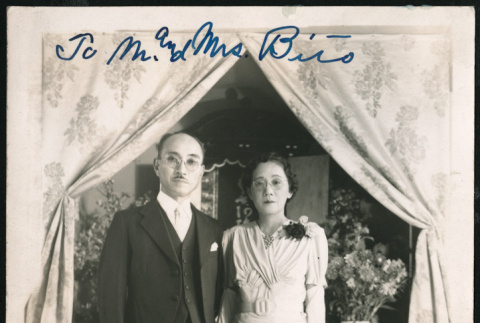
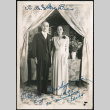
Rev. and Mrs. H.N. Sugimaro on their wedding day (ddr-densho-395-16)
Rev. and Mrs. H.N. Sugimaro pose for the camera on their wedding day, in front of a display of flowers, at the Minidoka concentration camp. Written on front: To Mr. and Mrs. Bito [sic]; Rev. H.N. and Mrs. Sugimaro; Aug. 4, 1945 on Minidoka, Idaho.
img
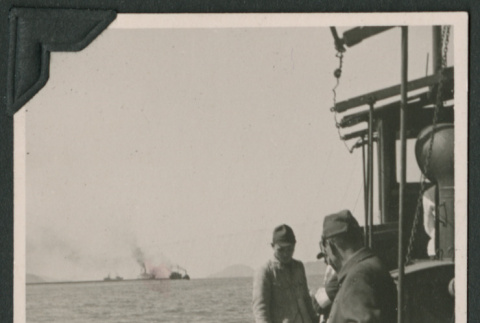
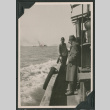
Soldiers waiting for repatriation boat (ddr-densho-397-344)
The caption in the photo album reads "Repatriation Ship 'Unzen Maru' - Repat boat seen in distance Mr. Tsutsui in JPSE uniform". Takashi Matsui was stationed in Japan with the U.S. military during the Allied occupation of Japan after the end of World War II.
img
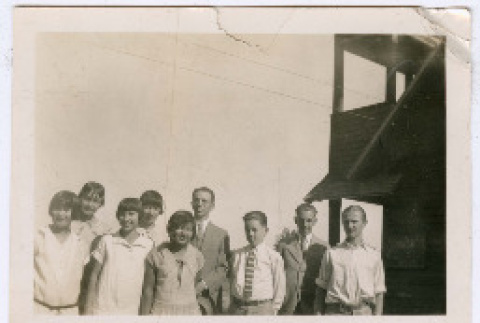
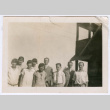
Group photo (ddr-densho-378-986)
Group of 9 individuals outside near a tall structure. Written on the back "Front row - L. to R. Hede, Ida, Mea, Ed, Carl, and Oki Back row Edith, Doris and Mr. Thomas (teacher)" in blue ink. The photograph was stored loosely between pages 34 & 35.
![[ Letter to the Whitney family from Fukuda family, May 23, 1942 ] (ddr-janm-22-1)](https://ddr.densho.org/media/cache/af/3e/af3ea1abde137f1f7984c80e81123023.jpg)
doc
[ Letter to the Whitney family from Fukuda family, May 23, 1942 ] (ddr-janm-22-1)
One (1) handwritten postcard from the Fukuda family to Mr. and Mrs. Whitney on May 23, 1942, in California. The Fukuda family writes a thank you letter to the Whitney's for assisting them and seeing them off on their way to the Poston concentration camp.
img
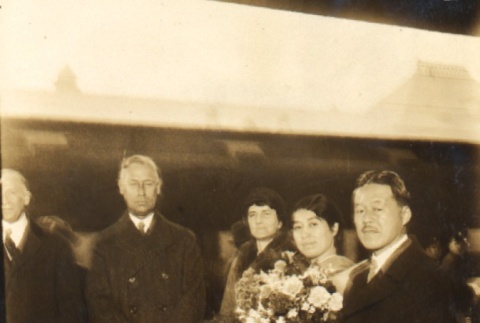
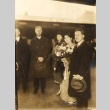
Mr. and Mrs. Naokichi Matsunaga with a Dutch minister and his wife (ddr-njpa-4-865)
Caption on reverse [translation]: "Matsunaga left for his new post, ambassador to Holland. The new Japanese ambassador to Holland, Mr. Naokichi Matsunaga, with his wife, took a train from Tokyo Station at 12:52 p.m. on the 28th and left from Yokohama by ship. The picture shows, from the right, Ambassador Matsunaga and his wife at Tokyo …
doc
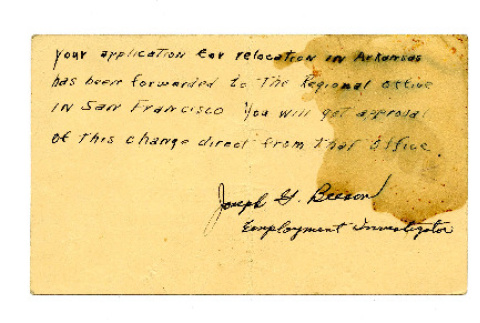
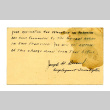
Postcard from Joseph G. Beeaon to Mr. George Naohara, November 2, 1942 (ddr-csujad-38-553)
A postcard from Joseph G. Beeaon, Employment Investigator to George Nobuo Naohara. It responds to Goerge Naohara's application for induction into the Jerome camp, Arizona after the work in Idaho. It informs that he will be notified by the Regional Office in San Francisco, California. See this object in the California State Universities Japanese American Digitization …
doc
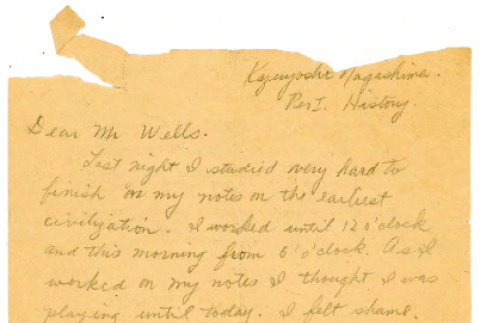
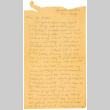
Letter from Kazuyoshi Nagashima to Mr. Wells regarding poor performance in class (ddr-csujad-48-54)
A letter from Kazuyoshi Nagashima, a student in period 1 History, to Mr. Wells explaining why he has not completed his final assignment on the civilization of Egypt and why he performed poorly on the test given that day. Transcription is found in item: ecm_wells_9054. See this object in the California State Universities Japanese American Digitization …
doc
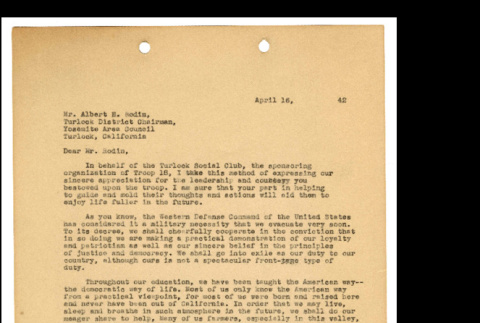
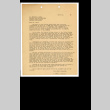
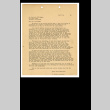
Letter from Tsuneo Iwata to Mr. Albert H. Rodin, April 16, 1942 (ddr-csujad-46-12)
Letter of gratitude from Tsuneo Iwata president of the Turlock Social Club to Mr. Albert H. Rodin, Turlock District Chairman, in response to the mass removal in California. See this object in the California State Universities Japanese American Digitization project site: csus_nac_0012
doc
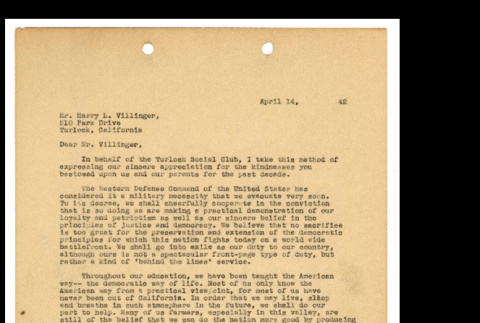
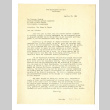
Letter from Tsuneo Iwata to Mr. Harry L. Villinger, April 14, 1942 (ddr-csujad-46-11)
Letter of gratitude from Tsuneo Iwata president of the Turlock Social Club to Mr. Harry L. Villinger, in response to the mass removal in California. See this object in the California State Universities Japanese American Digitization project site: csus_nac_0011
doc
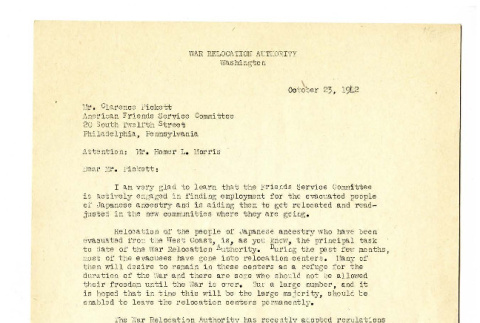
Letter from the WRA Director to Mr. Clarence Pickett, October 23, 1942 (ddr-csujad-18-13)
Letter from the WRA Director to Mr. Clarence Pickett addresses Friends Service Committee's contribution toward finding employment for the incarcerees. See this object in the California State Universities Japanese American Digitization project site: RSG_01-01_03
img
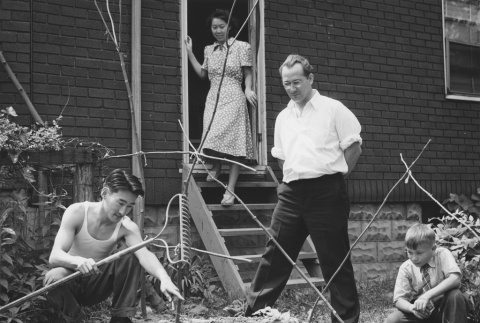
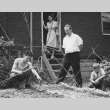
Mr. and Mrs. Frank Doi in their victory garden in Detroit, Michigan (ddr-csujad-14-32)
Mr. and Mrs. Frank Doi in their victory garden in Detroit, Michigan. Frank came from Colorado River incarceration camp. He works as an apprentice in a dental laboratory. June 20, 1943. Photo by M. Graw. See this object in the California State Universities Japanese American Digitization project site: HMLSC_TOMO_032
![Letter from [Ayame] May Okine to Mr. Makoto Okine, October 22, 1946 (ddr-csujad-5-173)](https://ddr.densho.org/media/cache/73/7c/737ceb986093eeffe4f366af9add2c2a.jpg)
doc
Letter from [Ayame] May Okine to Mr. Makoto Okine, October 22, 1946 (ddr-csujad-5-173)
A letter from Ayame May Okine in Chicago to her brother-in-law, Makoto Okine in Whittier, California. She expresses her delight about her husband's returning home from Japan and updates on their lives including traveling to New York and visiting her sister in New Jersey. She also expresses that she is awaiting for the day when Masao …
![Envelope from Hompa Hongwanji Los Angeles Betsuin to Mr. S. Okine, [1951] (ddr-csujad-5-228)](https://ddr.densho.org/media/cache/cf/ca/cfcaf78b9a24246df9ae3223605e131e.jpg)
doc
Envelope from Hompa Hongwanji Los Angeles Betsuin to Mr. S. Okine, [1951] (ddr-csujad-5-228)
An envelope from Hompa Hongwanji Los Angeles Betsuin to Seiichi Okine. It contains the items, csudh_oki_0224, csudh_oki_0225, csudh_oki_0226, csudh_oki_0227 and csudh_oki_0228. See this object in the California State Universities Japanese American Digitization project site: oki_02_64_001
![Letter from May [Ayame] Okine to Mr. Makoto Okine, October 7, 1946 (ddr-csujad-5-164)](https://ddr.densho.org/media/cache/a8/29/a829f2a9e76849e86fb3f5a6eb3d1be8.jpg)
doc
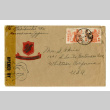
Letter from May [Ayame] Okine to Mr. Makoto Okine, October 7, 1946 (ddr-csujad-5-164)
A letter from Ayame Okine to her brother-in-law, Makoto Okine. She writes from Chicago Illinois. In the letter, she thanks him for the monetary gift for purchasing a car and writes about her moving plan from Chicago to California. See this object in the California State Universities Japanese American Digitization project site: oki_02_15_001
doc
Letters from Jokichi and Fumiko Yamanaka to Mr. S. Okine, July, 1947 (ddr-csujad-5-206)
Contains two Japanese letters, one English letter, and one envelope. All three letters are enclosed in the envelope and mailed from Hiroshima, Japan. Letters are written by Jokichi Yamanaka and Fumiko Yamanaka, addressing their relatives, Seiichi Okine and Makoto Okine. See this object in the California State Universities Japanese American Digitization project site: oki_02_45_001-004
![Letter from Kamekichi Nakano to Mr. S. Okine, [February?], 1948 [in Japanese] (ddr-csujad-5-255)](https://ddr.densho.org/media/cache/47/4c/474cebe9391dc7df84eb5da1a5b24b16.jpg)
doc
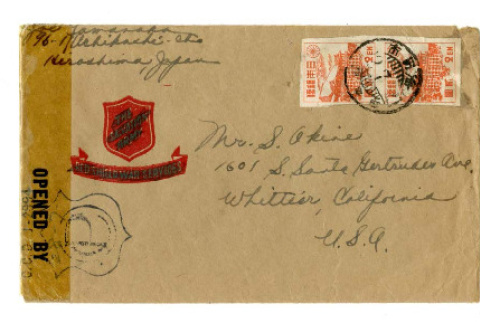
Letter from Kamekichi Nakano to Mr. S. Okine, [February?], 1948 [in Japanese] (ddr-csujad-5-255)
A letter from Sueno Nakano in Hiroshima, Japan to her sister, Tomeyo Okine. The letter is mailed under her husband's name, Kamekichi Nakano. In the letter, Sueno laments her struggles and grieves for the losses of Sunada family members [Tomeyo and Sueno's parent's family]. In losing their four brothers, Sueno takes over the responsibilities for the …

doc
Letters to and from Mr. and Mrs. Meyer Katzman and Tomoye Takahashi (ddr-densho-424-838)
Information about tour to Japan