Memories of the Minidoka concentration camp, Idaho
This material is based upon work assisted by a grant from the Department of the Interior, National Park Service. Any opinions, finding, and conclusions or recommendations expressed in this material are those of the author(s) and do not necessarily reflect the views of the Department of the Interior.
Transferring to Minidoka concentration camp, Idaho
This material is based upon work assisted by a grant from the Department of the Interior, National Park Service. Any opinions, finding, and conclusions or recommendations expressed in this material are those of the author(s) and do not necessarily reflect the views of the Department of the Interior.
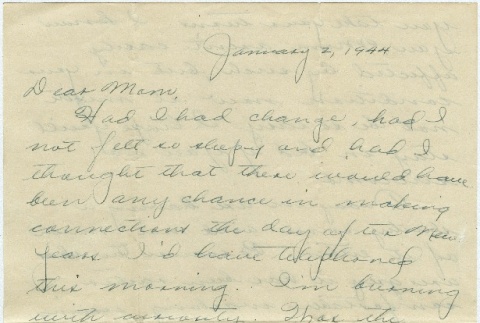
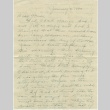
The Frances Haglund Collection consists of correspondence, manuscripts, clippings and other miscellaneous documents about Frances Haglund's time as a teacher at Minidoka concentration camp, Idaho.
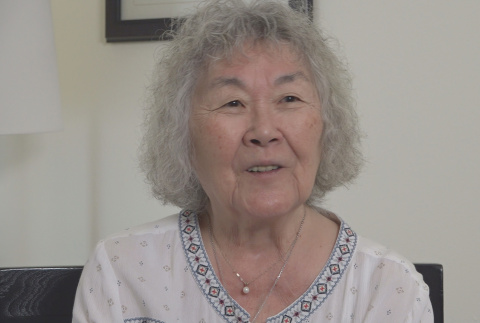
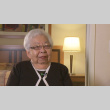
Nisei female. Born May 26, 1944, in the Minidoka concentration camp, Idaho. Prior to World War II, parents lived in Hood River, Oregon. After the bombing of Pearl Harbor, they were removed to the Pinedale Assembly Center, California, and the Tule Lake concentration camp, California, before transferring to Minidoka. After leaving camp, the family resettled in …
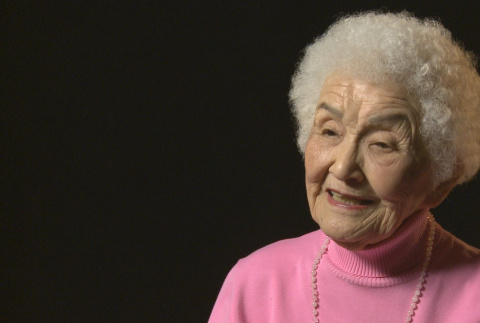
Nisei female. Born April 11, 1923, in Seattle, Washington. Grew up in Seattle, where parents ran a hotel. Went to live in Japan for several years prior to World War II. During the war, removed to the Puyallup Assembly Center, Washington, and the Minidoka concentration camp, Idaho. While in Minidoka, recruited to teach elementary school, and …
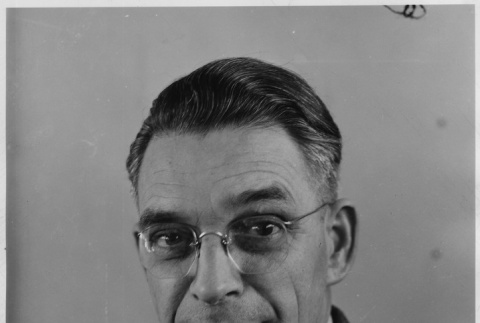
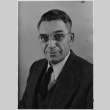
Original WRA caption: H.L. Stafford, project director of Minidoka Relocation Center, Hunt, Idaho, formerly administrative officer in Idaho for the Agricultural Adjustment Administration of the U.S. Department of Agriculture, Boise. Mr. Stafford was born in 1893 at Tarkio, Missouri and has lived in Idaho since 1912. Before entering government service, he engaged in farming, banking, and …
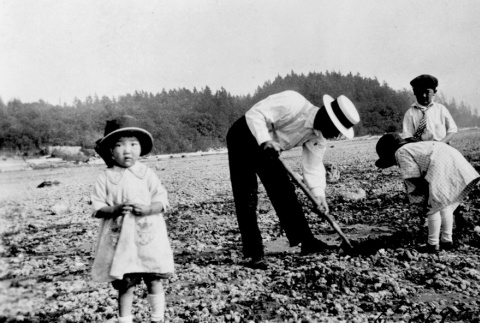
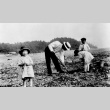
The photographs in the collection of the Wing Luke Asian Museum, Seattle, Washington, 1920s-1940s, focus primarily on oyster farming and the Minidoka concentration camp, Idaho. The images from Minidoka include barracks, schools, and leisure activities such as sports and arts and crafts.
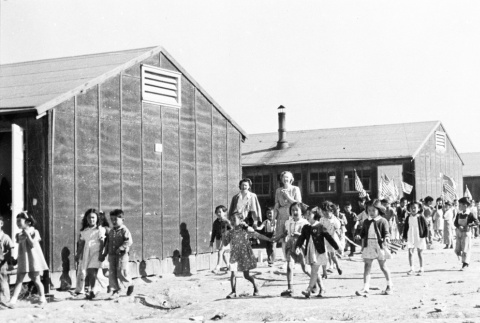
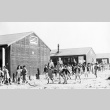
Original museum description: Photograph, black and white glossy of a scene in Minidoka, Idaho[,] internment camp showing school children marching or parading near the barracks. There are two women white teachers and another adult woman at the rear. Some of the children are carrying American flags, and the flagpole in the back is at half staff. …
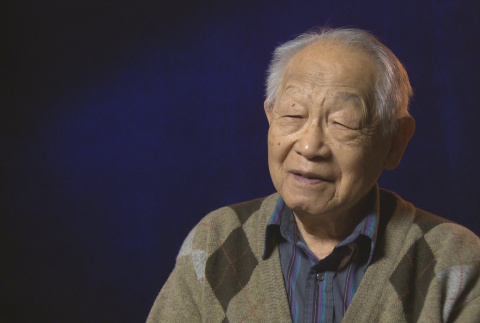
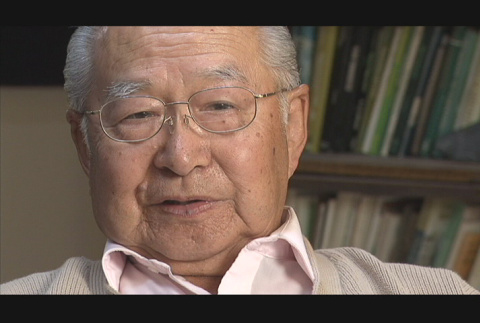
Nisei male. Born December 22, 1925, in Tacoma, Washington. Grew up primarily on Vashon Island, Washington. Removed to the Pinedale Assembly Center and the Tule Lake concentration camp, Washington, later transferring to the Minidoka concentration camp, Idaho. Drafted into the army and served with the Military Intelligence Service. Worked for the U.S. Forest Service and eventually …
Nisei female. Born April 20, 1924, in Portland, Oregon. Spent one summer in Japan just before the onset of war between the U.S. and Japan. Incarcerated at the Portland Assembly Center, Oregon, and the Minidoka concentration camp, Idaho. Left camp as part of the National Youth Administration, and worked in Salt Lake City, Utah, and Chicago, …
White male. Born May 26, 1918, in Visalia, California. Attended school in Sacramento, California, and then enrolled in the University of Southern California. Involved in the development of the new progressive education theory at Stanford University in the 1930s, and was teaching high school in Sacramento, California when Pearl Harbor was bombed. Worked as a teacher …
Nisei-Sansei female. Born May 9, 1941, in Seattle Washington. An infant when Japan bombed Pearl Harbor, family was sent to the Puyallup Assembly Center, Washington, and the Minidoka concentration camp, Idaho. After leaving camp, family returned to Seattle, where Dotti attended school. After high school, moved to Southern California, raised a family, and became a teacher …
Nisei female. Born November 23, 1919, in Dee, Oregon. Grew up in Dee, where parents had a farm. Finished college before the bombing of Pearl Harbor. During World War II, removed to the Portland Assembly Center, Oregon, and the Minidoka concentration camp, Idaho. After leaving camp, lived for a time in Milwaukee, Wisconsin, before returning to …
Nisei male. Born December 27, 1932, in Seattle, Washington. Grew up in Seattle, and was in the third grade during mass removal to the Puyallup Assembly Center, Washington. Moved with family to Minidoka concentration camp, Idaho, before returning to Seattle to attend middle and high school. Found a lifelong job at Osborn & Ulland, a retail …
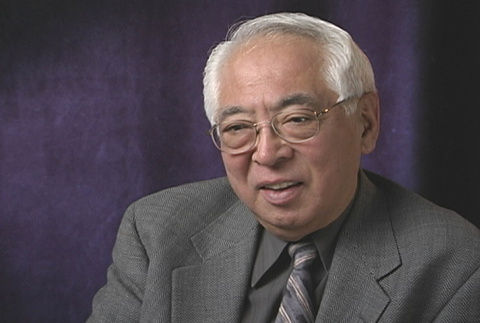
Nisei male. Born August 12, 1912, in Seattle, Washington. Grew up in Seattle, where parents owned a series of hotels. Graduated from the University of Washington prior to World War II. During the war, was removed to the Puyallup Assembly Center, Washington, and the Minidoka concentration camp, Idaho. After leaving camp, lived in Spokane, Washington, for …
Nisei male. Born October 27, 1926, in Bainbridge Island, Washington. Parents were strawberry farmers before World War II. After the bombing of Pearl Harbor, removed with family to Manzanar concentration camp, California. Unlike most Bainbridge Island Japanese Americans, did not transfer to the Minidoka, Idaho, concentration camp. Returned to Bainbridge Island after the war, and attended …
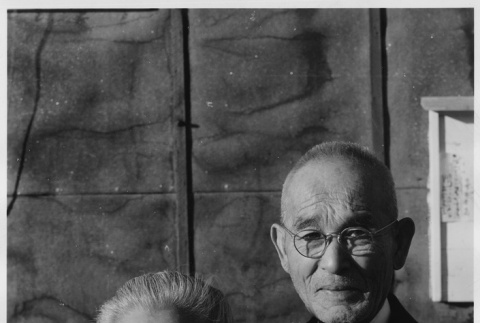
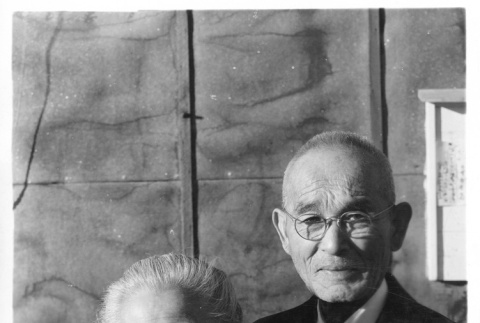
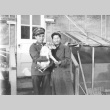
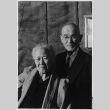
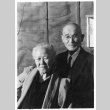
Original WRA caption: Minidoka Relocation Center, Hunt, Idaho. Joseph Gerald Osamu Sakamoto, 80, and Mary Ann Tsuchi Sakamoto, 80, on their golden wedding anniversary. Mr. and Mrs. Sakamoto came to the United States from Japan in 1894. He was the first Japanese second-hand furniture store proprietor, first Japanese express man and one of the first vegetable …
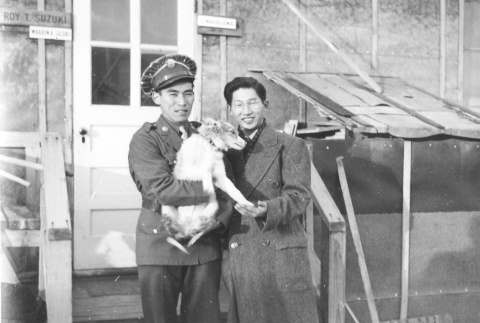
The Suzuki Family Collection contains photographs from Warren Suzuki. They cover life at Minidoka concentration camp, Idaho during the war and a pilgrimage back in later years.
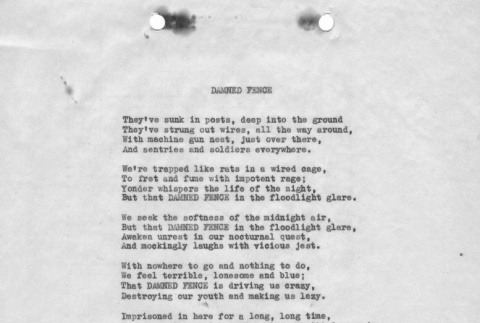
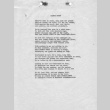
The Yoshihara Collection consists of several documents from the 1940s, including a poem written in Minidoka concentration camp, Idaho, an application for U.S. citizenship, and government-issued identification cards.
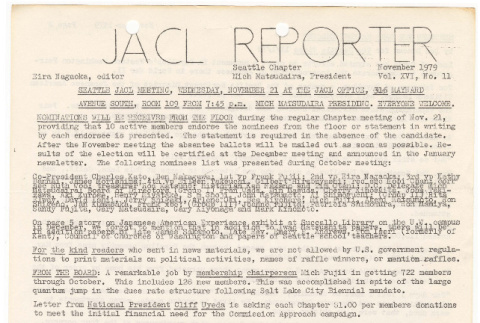
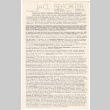
Newsletter covering the following topics: Board meeting to discuss direction for Seattle JACL redress direction. A large turnout is requested; Camp Harmony monument delayed for lack of funding; Press Conference for ?Day of Remembrance? Postponement of Pilgrimage??Japanese Americans in Idaho fear white backlash, say ?Day of Remembrance: at Minidoka by former concentration camp internees will ?embarrass? …
WRA caption on reverse: "Joseph Gerald Osamu Sakamoto, 80, and Mary Ann Tsuchi Sakamoto, 80, on their golden wedding anniversary, Dec. 11, 1943, at the Minidoka Relocation Center, Hunt, Idaho. Mr. and Mrs. Sakamoto came to the United States from Japan in 1894. He was the first Japanese second-hand furniture store proprietor, first Japanese express man …
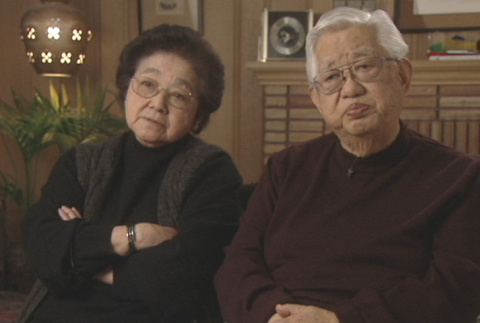
Nisei couple. Met in the Minidoka concentration camp, Idaho, and eventually resettled in Spokane, Washington.
(This material is based upon work assisted by a grant from the Department of the Interior, National Park Service. Any opinions, finding, and conclusions or recommendations expressed in this material are those of the author(s) and do not necessarily reflect the …
Nisei male. Born January 12, 1925, in Portland, Oregon, where parents ran a hotel business. During World War II, removed to the Portland Assembly Center, Oregon, and the Minidoka concentration camp, Idaho. Left camp early to attend college in Ohio. Was drafted into the Military Intelligence Service and served in Japan during the U.S. occupation. Returned …
Issei female. Born October 4, 1901, in Fukuda, Japan. Grew up in Japan and immigrated to the U.S. after marrying. Settled in Portland, and during World War II was removed to the Portland assembly center, Oregon, and the Minidoka concentration camp, Idaho. After the war, returned to Portland.
(This interview was conducted in Japanese. The transcript …