
6770 items
6770 items
av
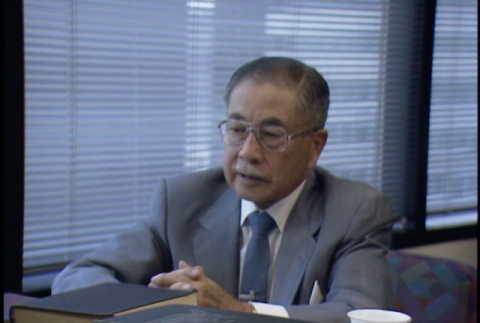
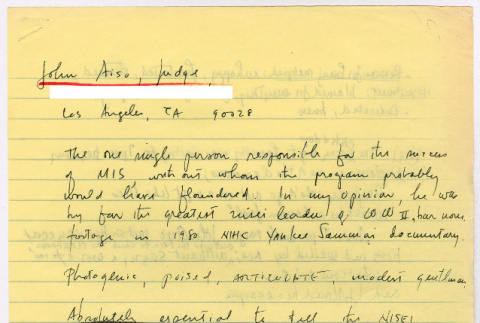
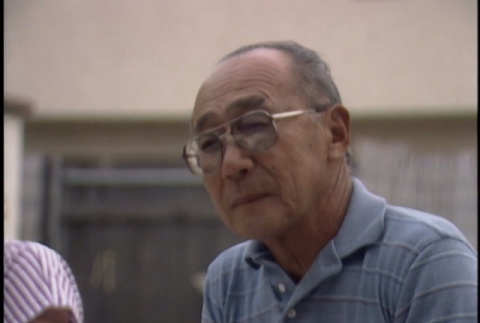
Interview with John Aiso, part 4 of 5 (ddr-densho-1007-1577)
Aiso discusses the difficulty Nisei had becoming commissioned officers, the qualities of Nisei MISLS students, how he himself learned Japanese, his time at Harvard Law School and difficulty finding a job, his time working for the British American Tobacco Company in Manchukuo, being drafted and founding the MISLS, and the role of Nisei soldiers during the …
av
Interview with Sho Nomura, part 2 of 6 (ddr-densho-1007-1611)
Nomura discusses his family's internment at Gila River, volunteering and testing for the MIS language school, and the difficulty his family faced in camp after he volunteered. Video starts at 0:22. Loni Ding can be heard asking questions behind the camera. Original title: 94, II LA #41, 7-25-85, Sho Nomura Interview II. Interview continues at ddr.densho.org/ddr-densho-1007-1612/
av
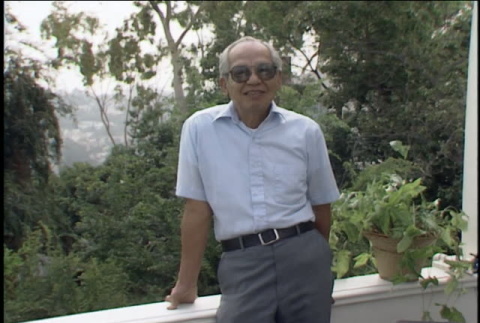
Balcony conversation between George Kanegai, Yosh Yamada, and Jimmie Matsumura (ddr-densho-1007-1604)
George Kanegai, Yosh Yamada, and Jimmie Matsumura Matsumura have a conversation on a balcony, directed by Loni. The three talk about their service, the Z Plan, the 112th, and Yosh's deployment overseas before the war. Original title: 90, II LA #31, 7-24-85, Balcony: K. Akune, H. Akune, Kanegai, Yamada & Matsumura
av
Interview with Clarence Matsumura, part 2 of 5 (ddr-densho-1007-1609)
Matsumura discusses growing up in Wyoming, his mother's cooking, moving to Los Angeles in 1936, getting his radio license, Pearl Harbor, evacuation to Pomona and Heart Mountain, his attempts to join the Navy, Air Force, Coast Guard and Marines, being drafted, his basic training in Fort Hood, TX, his deployment in Europe, and the Hollywood store …
av
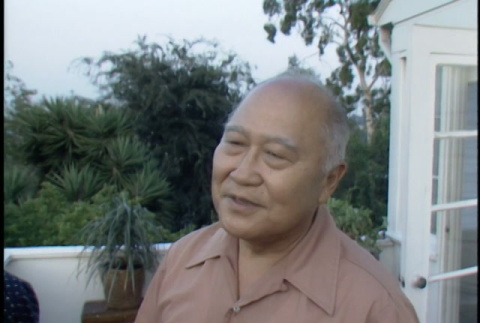
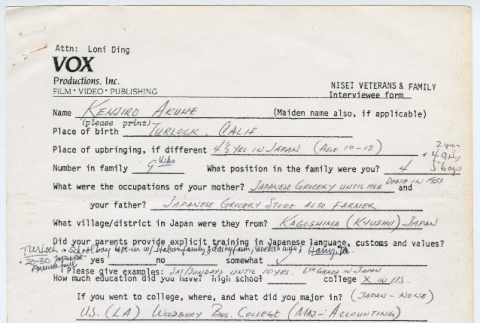
Interview with Harry and Ken Akune, part 1 of 6 (ddr-densho-1007-1589)
Ken is on the left, Harry on the right. The two discuss growing up together in Turlock, CA, the years they spent in Japan as children, their father's relationship with the Caucasian community in Turlock, and the racial discrimination they faced in Turlock. Video starts at 0:28. Loni Ding can be heard asking questions behind the …
av
Interview with Jimmie Matsumura, part 3 of 4 (ddr-densho-1007-1607)
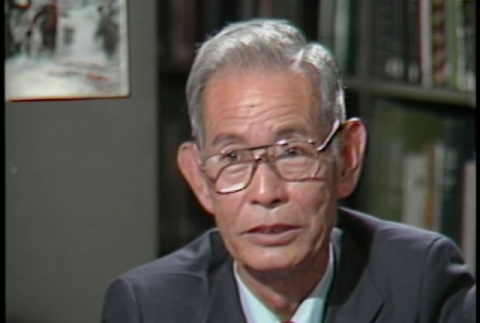
Matsumura discusses the time he spent in Japan as a child, the difficulty of Japanese high school, his work on the Far East military tribunal post-war. Video starts at 0:24. Loni Ding can be heard asking questions behind the camera. Audio cuts out at 20:36. Original title: II LA #34, 7-24-85, J. Matsumura Interview III. Interview …
doc
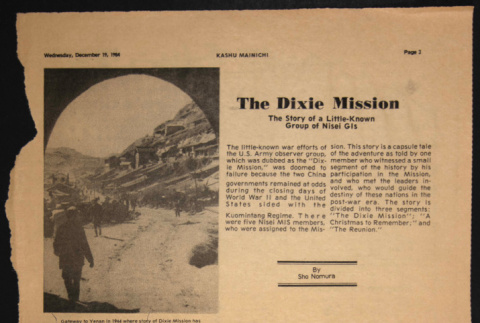
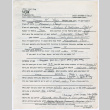
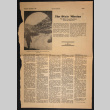
The Dixie Mission article (ddr-densho-1007-1387)
Article on a WWII U.S. army observer group in China. Published in Kashu Mainichi.
img
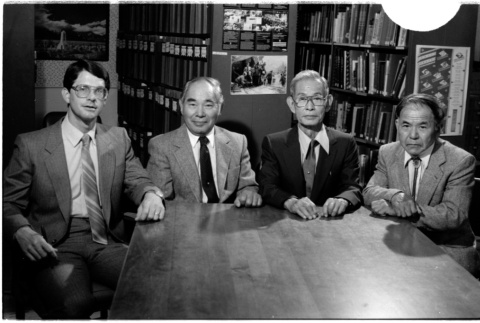
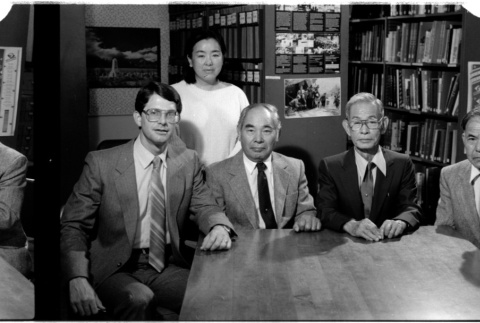
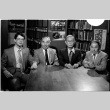
Paul Minerich, Tim Nomiyama, Masao Kataoka, and Kenjiro Hayakawa at table (ddr-densho-1007-1139)
Negative. Names listed from left to right. Taken during interviews for The Color of Honor at UCLA.
img
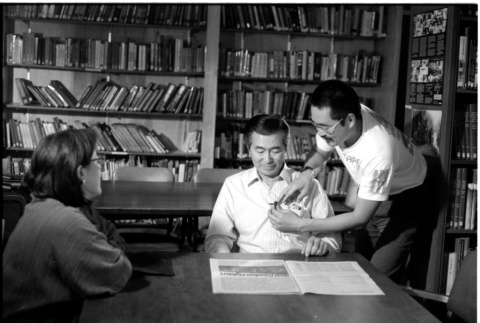
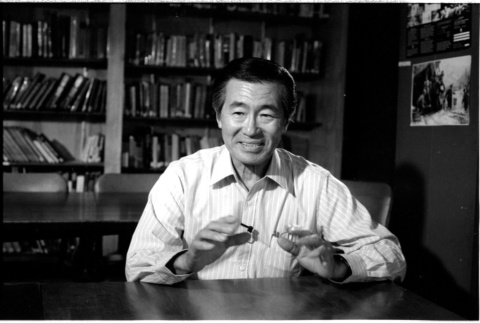
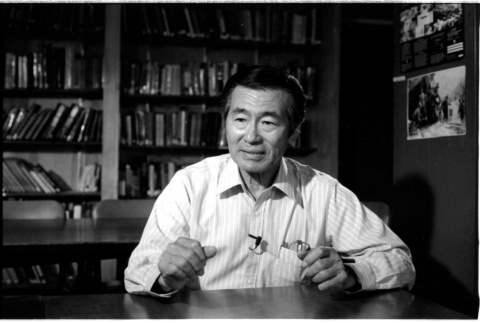
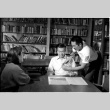
Frank S. Emi with Loni Ding and crew member (ddr-densho-1007-1161)
Negative. This interview appears in Color of Honor.
av
Interview with Clarence Matsumura, part 3 of 5 (ddr-densho-1007-1771)
Continued from ddr.densho.org/ddr-densho-1007-1609/. Matsumura discusses the impact of growing up in a small town in Wyoming (particularly the lack of discrimination), the discrimination he faced in Heart Mountain, the movie theaters he ran at Heart Mountain, the extracurricular programs he helped run in camp, going to school, volunteering for the military from school, his time …
av
Interview with Harry Akune, part 3 of 4 (ddr-densho-1007-1602)
Akune discusses his service on Corregidor Island and Mindoro Island, and a combat jump he performed. Video starts at 0:28. Loni Ding can be heard asking questions behind the camera. Original title: 88, II LA #29, 7-24-85, Harry Akune Interview III. Interview continues at ddr.densho.org/ddr-densho-1007-1603/

av
Interview with Harry and Ken Akune, part 4 of 6 (ddr-densho-1007-1592)
This tape exclusively features Ken Akune, who discusses the risk of capture by Japanese forces, his impressions of Merrill's Marauders and the 442nd, his connections to the Office of War Information, and the relationship between Japanese prisoners of war and the men he served with. Video starts at 0:30. Loni Ding can be heard asking questions …
av
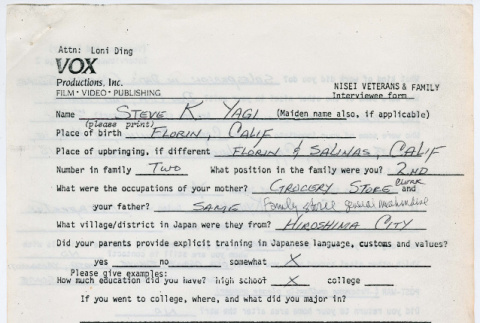
Interview with Don Oka, Steve Yagi, and Shigeo Ito, part 3 of 8 (ddr-densho-1007-1619)
Oka on the left, Yagi in the center, and Ito on the right. The three discuss their service in the Pacific theater, their military training in the Midwest, JICPOA, and their encounters with high-ranking officers. Video starts at 0:23. Loni Ding can be heard asking questions behind the camera. Original title: II LA #49, 7-26-85, Oka, …
img
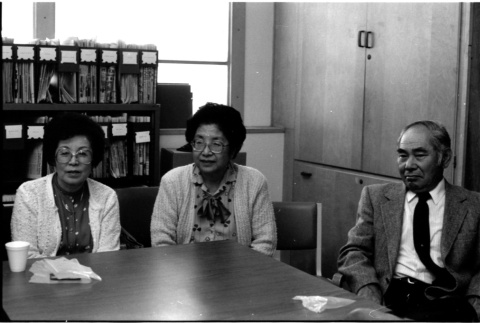
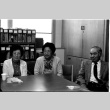
Two women and Tim Nomiyama at table (ddr-densho-1007-1144)
Negative. Taken during interviews for The Color of Honor at UCLA.
img
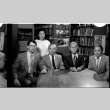
Paul Minerich, Loni Ding, Tim Nomiyama, Masao Kataoka, and Kenjiro Hayakawa at table (ddr-densho-1007-1140)
Negative. Names listed from left to right. Taken during interviews for The Color of Honor at UCLA.
av
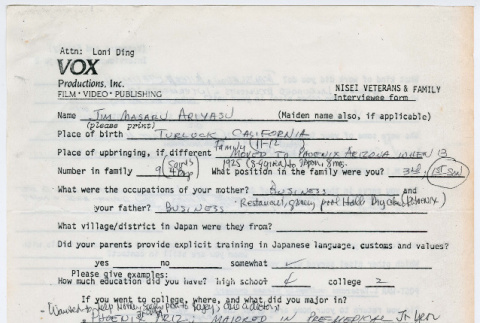
Interview with Jim Ariyasu, part 5 of 5; interview with Harry Akune, part 1 of 4 (ddr-densho-1007-1600)
Ariyasu discusses saving a peer from a court martial, his real estate work, and racial solidarity. At 15:10, interview with Ariyasu ends and interview with Harry Akune begins. Akune discusses his time at Merced and Amache, volunteering for the army from camp, and his community's reaction to his decision to volunteer. Loni Ding can be heard …
av
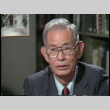
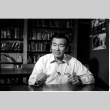
Interview with Paul Minerich, Tim Nomiyama, Masao Kataoka, and Kenjiro Hayakawa, part 3 of 8 (ddr-densho-1007-1800)
From left to right: Minerich, Nomiyama, Kataoka, Hayakawa. Kataoka discusses being a soldier when evacuation started, the interment of his wife, and the relationship between Kibei and Nisei soldiers. Kataoka and Nomiyama discuss how they met. Nomiyama discusses when he decided to refuse to serve, being called a traitor when he left Japan, returning to the …
doc
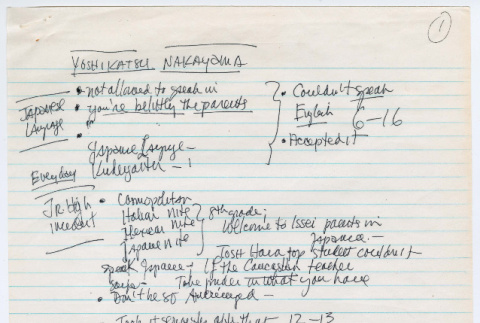
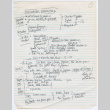
Yoshikatsu (Yosh) Nakayama interview notes (ddr-densho-1007-967)
Used for the film The Color of Honor.
av
Kanegai family dinner and Moose (John) Fujikawa interview, part 1 of 4 (ddr-densho-1007-1582)
Footage of the Kanegai family eating in their backyard. Unscripted. The younger mustached man is Bruce Kanegai; the older man to his right is his father George. Video starts at 0:29. Interview with Fujikawa starts at 10:44. Fujikawa talks about his childhood in LA, his decision not to go to college, his reaction to Pearl Harbor, …