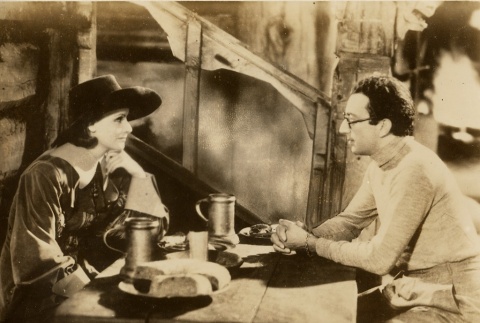
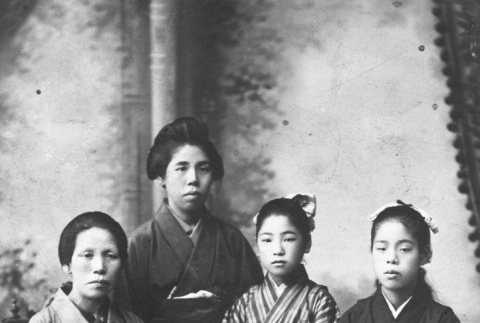
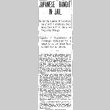
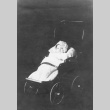
Caption on reverse [translation]: "Greta Garbo, Really Married This Time. (Hollywood) Rengo. It was recently announced that Ms. Greta Garbo, who has reached the peak of her field as a queen of the screen after starring in 'Mata Hari' and 'Grand Hotel', and the famous director Rouben Mamoulian, who has directed first-rank films such as 'Dr. …
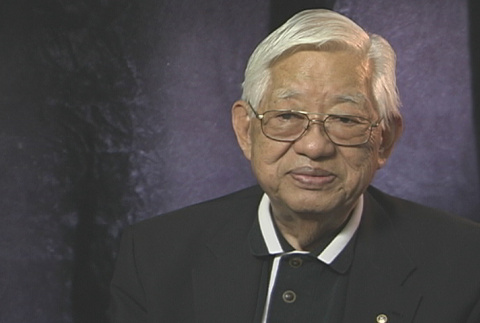
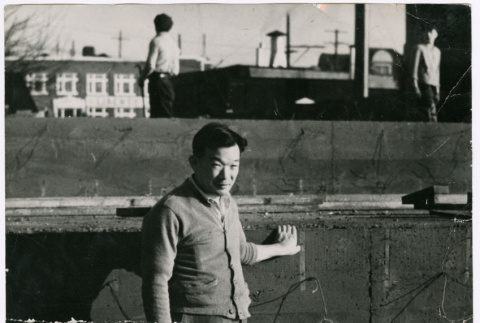
Nisei male. Born May 15, 1921, in Seattle, Washington. Spent much of childhood in Japan, returning to the U.S. at the age of fifteen. Began attending the University of Washington before being removed to Puyallup Assembly Center, Washington, and Minidoka concentration camp, Idaho. Created a series of art pieces depicting camp life. Moved to Spokane, Washington, …
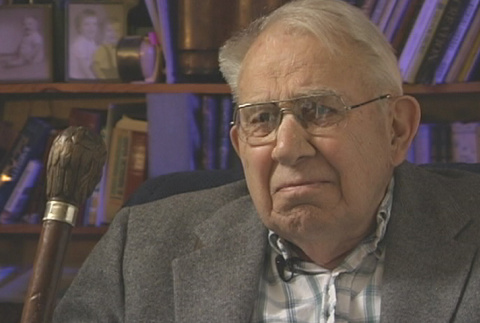
White male. Born February 25, 1910, in Seattle, Washington. Co-publisher (with his wife Milly) and editor of the newspaper, The Bainbridge Review, from 1935-1963. During World War II, The Bainbridge Review was the sole newspaper on the West Coast to continuously speak out against the mass removal and incarceration of Japanese Americans, primarily through Woodward's editorials. …
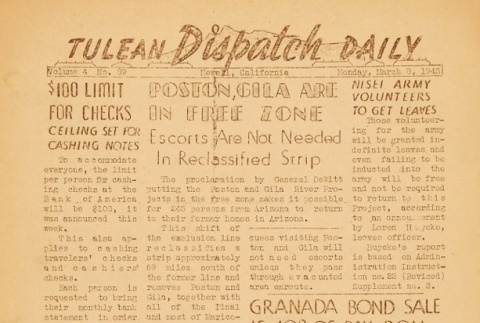
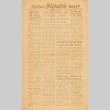
Selected article titles: "$100 Limit For Checks: Ceiling Set For Cashing Notes" (p. 1), "S.C.A. Meeting" (p. 1), "Poston, Gila Are in Free Zone: Escorts Are Not Needed in Reclassified Strip" (p. 1), "Nisei Army Volunteers To Get Leaves" (p. 1), "Granada Bond Sale is 10% of Pay Roll" (p. 1), "Tuesday Alien Registration" (p. 1), …
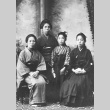
The B. Shibayama collection consists of photographs from the personal family collection of Betty Morita Shibayama, who was interviewed by Densho in 2003. The photographs document Betty's life in prewar Hood River, Oregon, her experiences in Minidoka concentration camp, Idaho, and her involvement in the fight for redress for Japanese Latin Americans.
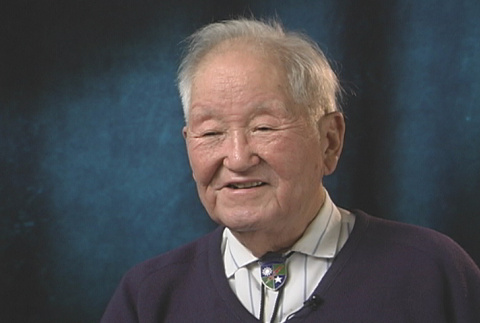
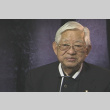
Although Mr. Matsumoto does not identify himself as a Kibei (American-born person of Japanese ancestry sent to Japan for formal education and socialization when young and later returned to the U.S.), some of his life experiences are similar to those who do identify themselves as such.
Although Mr. Matsumoto does not identify himself as a Kibei (American-born person of Japanese ancestry sent to Japan for formal education and socialization when young and later returned to the U.S.), some of his life experiences are similar to those who do identify themselves as such.
Although Mr. Matsumoto does not identify himself as a Kibei (American-born person of Japanese ancestry sent to Japan for formal education and socialization when young and later returned to the U.S.), some of his life experiences are similar to those who do identify themselves as such.
Although Mr. Matsumoto does not identify himself as a Kibei (American-born person of Japanese ancestry sent to Japan for formal education and socialization when young and later returned to the U.S.), some of his life experiences are similar to those who do identify themselves as such.
Although Mr. Matsumoto does not identify himself as a Kibei (American-born person of Japanese ancestry sent to Japan for formal education and socialization when young and later returned to the U.S.), some of his life experiences are similar to those who do identify themselves as such.
Although Mr. Matsumoto does not identify himself as a Kibei (American-born person of Japanese ancestry sent to Japan for formal education and socialization when young and later returned to the U.S.), some of his life experiences are similar to those who do identify themselves as such.
Although Mr. Matsumoto does not identify himself as a Kibei (American-born person of Japanese ancestry sent to Japan for formal education and socialization when young and later returned to the U.S.), some of his life experiences are similar to those who do identify themselves as such.
Although Mr. Matsumoto does not identify himself as a Kibei (American-born person of Japanese ancestry sent to Japan for formal education and socialization when young and later returned to the U.S.), some of his life experiences are similar to those who do identify themselves as such.
Although Mr. Matsumoto does not identify himself as a Kibei (American-born person of Japanese ancestry sent to Japan for formal education and socialization when young and later returned to the U.S.), some of his life experiences are similar to those who do identify themselves as such.
This material is based upon work assisted by a grant from the Department of the Interior, National Park Service. Any opinions, finding, and conclusions or recommendations expressed in this material are those of the author(s) and do not necessarily reflect the views of the Department of the Interior.
This material is based upon work assisted by a grant from the Department of the Interior, National Park Service. Any opinions, finding, and conclusions or recommendations expressed in this material are those of the author(s) and do not necessarily reflect the views of the Department of the Interior.
This material is based upon work assisted by a grant from the Department of the Interior, National Park Service. Any opinions, finding, and conclusions or recommendations expressed in this material are those of the author(s) and do not necessarily reflect the views of the Department of the Interior.
This material is based upon work assisted by a grant from the Department of the Interior, National Park Service. Any opinions, finding, and conclusions or recommendations expressed in this material are those of the author(s) and do not necessarily reflect the views of the Department of the Interior.
The Matsumoto collection consists of photographs from the personal family collection of Ranger Roy H. Matsumoto, who was interviewed by Densho in 2003. Mr. Matsumoto was one of the famed Merrill's Marauders, and the photographs depict aspects of his life from his childhood in California through his induction into the Ranger Hall of Fame.
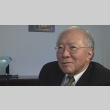
This collection consists of one interview conducted by author Josh Tuininga. The interview is not a full life history, focusing instead on Gerald L. Beppu's family's experiences during and after World War II, including the establishment of their family business, Linc's Tackle Shop. This interview was supported, in part, by a grant from 4Culture.
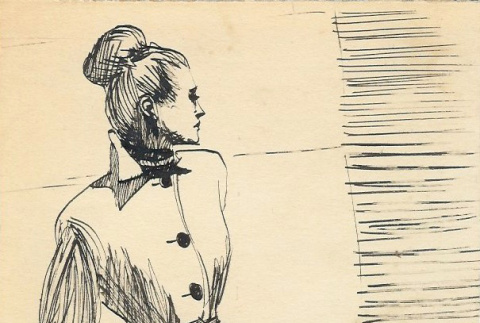
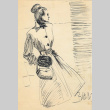
The Doris & Carl Saito Collection consists of photographs, documents, illustrations, and ephemera from the Saito Family's time at Heart Mountain concentration camp. There are photographs depicting life in the camps, needlework done by Asano Ota, fashion illustrations by Doris Saito, and photographs and documents regarding Carl Saito's time in the 442nd Regimental Combat Team.
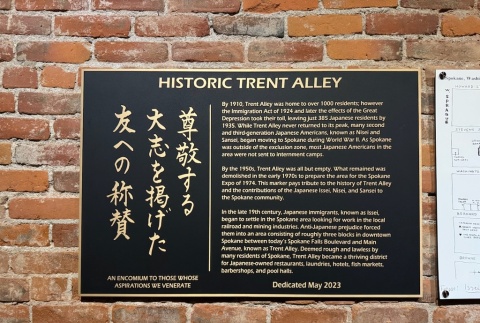
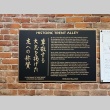
This collection contains two short films and five photographs. The first film gives a brief history of the Trent Alley district of Spokane, Washington. The second film is an interview with Alice Tanaka concerning her life growing up in Trent Alley. The five photographs show the historic marker in Spokane dedicated in May 2023.
The collection contains materials (photos, documents, journals, and ephemera) related to the Arai and Kawaguchi families, including documents related to the family's incarceration at Minidoka and relocation. Particularly, the life and work of architect Allen Kichio Arai, who designed the Seattle Betsuin Buddhist Temple in 1940, including blueprints and design notes for the project.
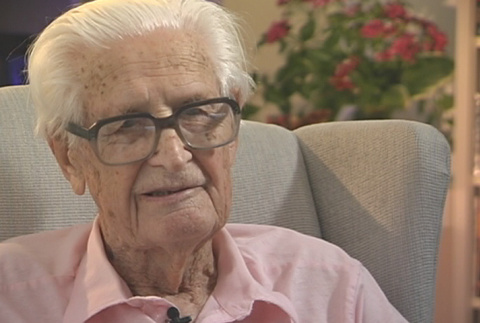
In this interview Mr. Schmoe refers to Aki Kurose, a former employee, fellow Quaker, peace activist, and long-time friend. At the time of this interview, Ms. Kurose had recently passed away after a long struggle with cancer. At the time of this interview, Mr. Schmoe is 102 years old.