
910 items
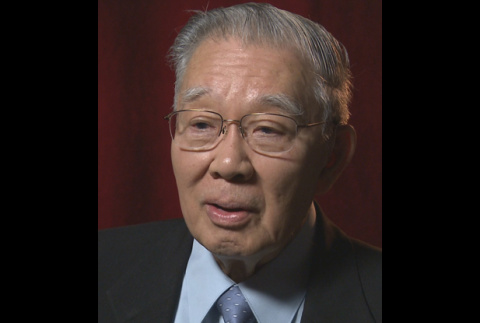
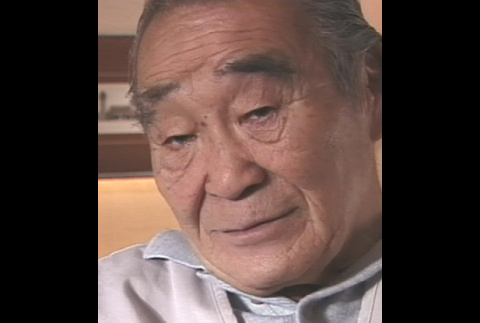
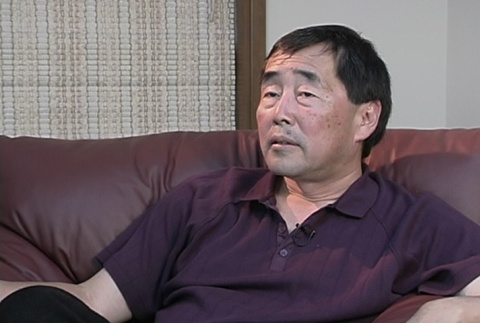
910 items
Narrator Eugene Tatsuru Kimura
Nisei male. Born September 19, 1922, in Sheridan, Wyoming. At a young age, moved to Seattle, Washington, and spent most of childhood there. Was enrolled at the University of Washington when Japan bombed Pearl Harbor on December 7, 1941. Removed to the Puyallup Assembly Center, Washington, before returning with family to Sheridan. Attended the University of …
Narrator Robert "Rusty" Kimura
Nisei male. Born January 19, 1915, in Sacramento, California. During World War II, sent to the Topaz concentration camp, Utah. Volunteered for the military out of camp, and was recruited to serve in the Military Intelligence Service.
vh
Ryo Imamura Segment 19 (ddr-densho-1000-27-19)
Buddhist philosophy of non-attachment to "forms": Buddhist 442nd soldiers' acceptance of a Christian chaplain
vh
Ryo Imamura Segment 20 (ddr-densho-1000-27-20)
Supporting the plight of the United Farm Workers, to the dismay of Japanese American farmers
vh
Ryo Imamura Segment 8 (ddr-densho-1000-27-8)
Similarities and differences between Jodo Shinshu Buddhism and Judeo-Christianity
vh
Ryo Imamura Segment 10 (ddr-densho-1000-27-10)
Similarities and differences between Jodo Shinshu Buddhism and Judeo-Christianity; Japanese American Buddhists' values: understated, anonymous service
vh
Ryo Imamura Segment 1 (ddr-densho-1000-27-1)
Role of the Berkeley Buddhist Temple in providing housing and serving the community during the postwar resettlement period
vh
Ryo Imamura Segment 31 (ddr-densho-1000-27-31)
Present day relations between Japanese American Christian community and Japanese American Buddhist community
vh
Ryo Imamura Segment 27 (ddr-densho-1000-27-27)
The problem with applying Western psychological therapy without regard to culture
vh
Ryo Imamura Segment 15 (ddr-densho-1000-27-15)
Reflecting on the need for a broader, more inclusive vision of Buddhism, father's influence
vh
Ryo Imamura Segment 33 (ddr-densho-1000-27-33)
Issues of self-image, cultural adaptation, and survival mechanisms as a racial minority
vh
Ryo Imamura Segment 4 (ddr-densho-1000-27-4)
Contrasting role of prewar Buddhist churches with those of today
vh
Ryo Imamura Segment 14 (ddr-densho-1000-27-14)
Discussion of increasing Caucasian membership in Buddhist churches
vh
Ryo Imamura Segment 3 (ddr-densho-1000-27-3)
Issei values, community service and compassion: grandparents' ministry, caring for the children of Issei farm laborers
vh
Ryo Imamura Segment 28 (ddr-densho-1000-27-28)
How Buddhist beliefs impact individual viewpoint and perception of the incarceration experience
vh
Ryo Imamura Segment 26 (ddr-densho-1000-27-26)
Learning how to communicate about "emotions," as an "Asian male therapist"
vh
Ryo Imamura Segment 12 (ddr-densho-1000-27-12)
Evolution and adaptation within the Japanese American Buddhist Church: the challenge of introducing new ideas and practices into existing traditions and rituals
vh
Ryo Imamura Segment 9 (ddr-densho-1000-27-9)
Some of the unique characteristics of Japanese American Buddhist churches
vh
Ryo Imamura Segment 25 (ddr-densho-1000-27-25)
Analyzing the relationship between Buddhism and Western psychotherapies
vh
Ryo Imamura Segment 30 (ddr-densho-1000-27-30)
Discussion of prewar discrimination against Buddhists and social pressures to convert to Christianity
vh
Ryo Imamura Segment 17 (ddr-densho-1000-27-17)
Leading an antiwar demonstration on a Buddhist temple in Hawaii
vh
Ryo Imamura Segment 6 (ddr-densho-1000-27-6)
Role of early Buddhist ministers as community leaders, advocating social justice
vh
Ryo Imamura Segment 18 (ddr-densho-1000-27-18)
Reconciling wartime killing by Buddhist 442nd Regimental Combat Team soldiers with Buddhism's doctrine of nonviolence