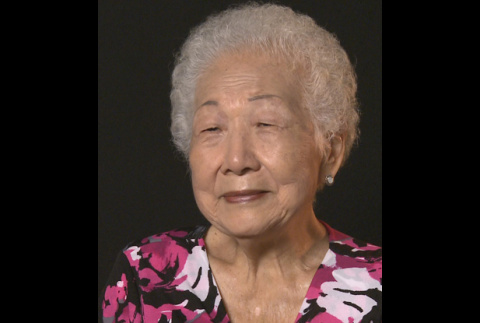
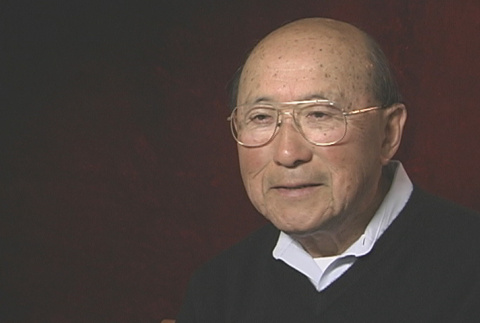
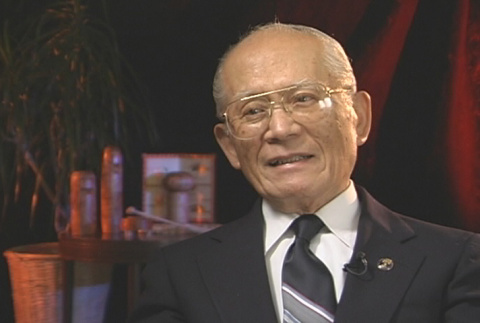
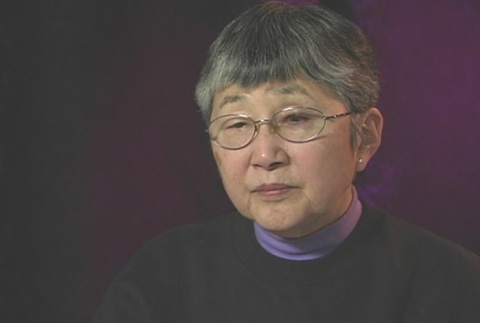
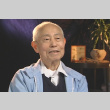
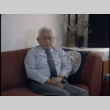
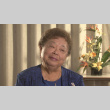
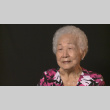
This interview was conducted by the Japanese American Museum of San Jose, and is part of a project entitled "Lasting Stories: The Resettlement of San Jose Japantown," a collaborative project between the Japanese American Museum of San Jose and Densho.
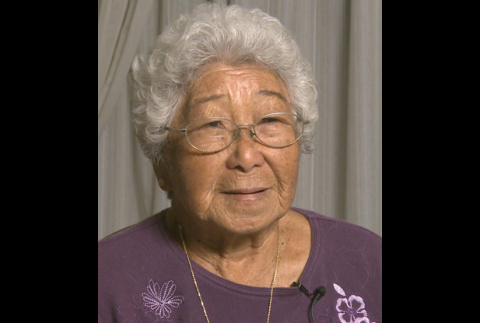
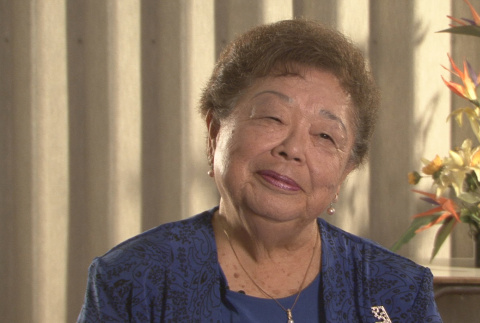
Nisei female. Born April 30, 1925, in Waipahu, Hawaii. Just before World War II, moved with family to the Ewa Beach area of Oahu, near Pearl Harbor. Witnessed the Japanese attack on Pearl Harbor on December 7, 1941. Because of proximity to the harbor, family was forced to evacuate their home in Ewa Beach and had …
Memories of traveling into Spokane every weekend to attend Japanese language school
This interview was conducted as part of a project to capture stories of the Japanese American community of Spokane, Washington. Densho worked in collaboration with the Northwest Museum of Arts and Culture.
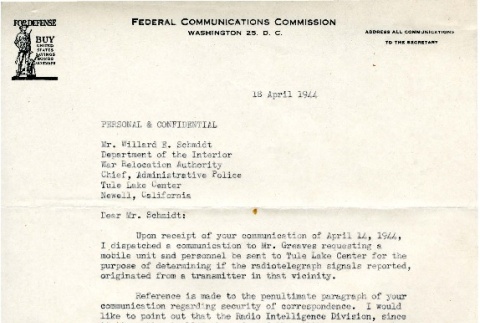
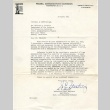
Concerns an investigation into whether radiotelegraph signals originated from a transmitter in the vicinity of the Tule Lake incarceration camp; included is a page, presumably from a letter sent by Schmidt to Sterling on April 14th, 1944, describing Administration concerns about the Japanese Language School. See this object in the California State Universities Japanese American Digitization …
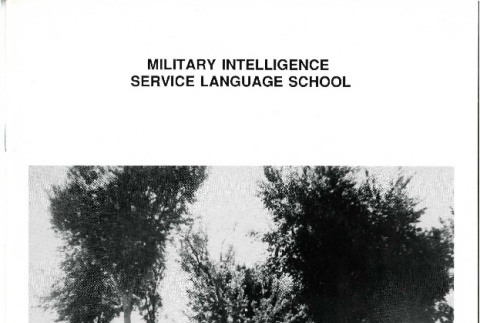
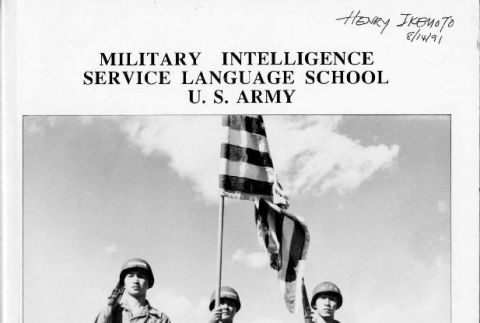
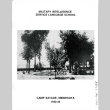
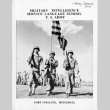
This book was published "to commemorate the 50th anniversary of Military Intelligence Service Language School and to document the records of wartime episodes of Japanese-American Nisei soldiers in the Pacific Theater of Operation and to compile a collection of treasured remembrances of Camp Savage ..." See this object in the California State Universities Japanese American Digitization …
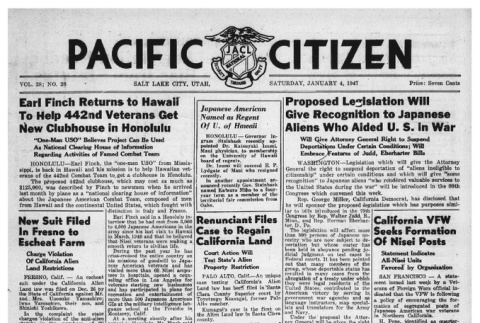
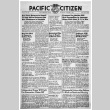
Selected article titles: Proposed Legislation Will Give Recognition to Japanese Aliens Who Aided U.S. in War" (p. 1), "Renunciant Files Case to Regain California Land" (p. 1), "Dismiss Aratani Case Testing California School Segregation" (p. 1), "Independent Group Will Fight For Evacuation Claims Bill" (p. 1), "Canada's Ban Against Return Of Evacuees to West Coast Will …
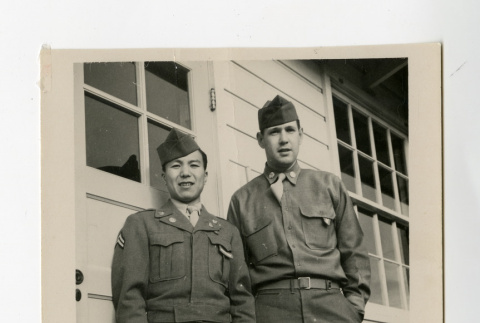
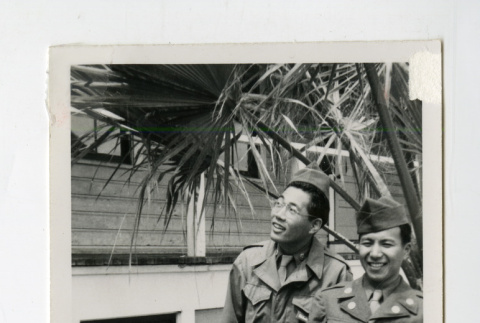
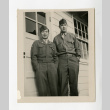
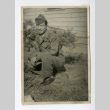
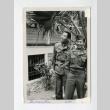
Photographed is George Nobuo Naohara in U.S. military uniform standing with another U.S. soldier at U.S. Army language school in Presidio of Monterey, California. A photo from "George Naohara photo album" (csudh_nao_0001), page 26. See this object in the California State Universities Japanese American Digitization project site: nao_01_26_005
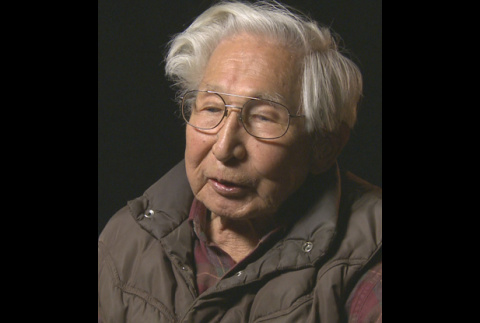
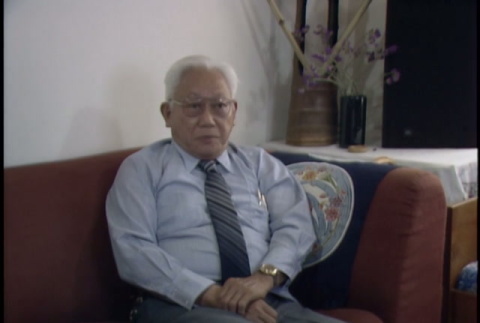
Kibei male. Born June 16, 1911, in Greeley, Colorado. Raised in Denver, Colorado, until the age of five. Sent to Japan for schooling in 1917 and returned to the U.S. at the age of seventeen. Continued his education to eventually become the first Nikkei attorney in the state of Colorado. Drafted into the U.S. Army in …
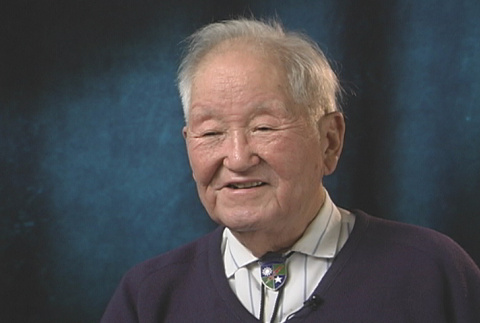
Description of relationship between Kibei and Nisei at Camp Savage, Minnesota; thoughts on the level of Japanese language education at the language school
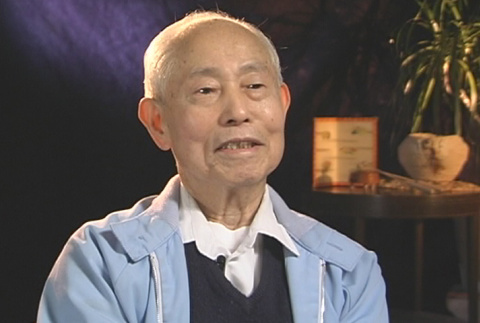
Although Mr. Matsumoto does not identify himself as a Kibei (American-born person of Japanese ancestry sent to Japan for formal education and socialization when young and later returned to the U.S.), some of …
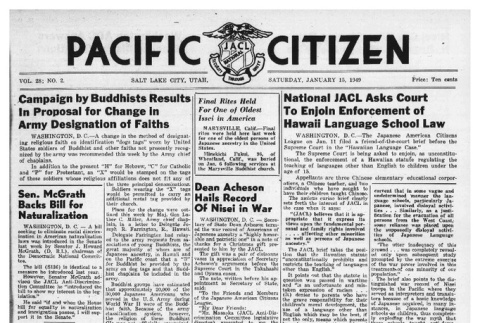
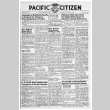
Selected article titles: "Campaign by Buddhists Results in Proposal for Change in Army Designation of Faith" (p. 1), "National JACL Asks Court To Enjoin Enforcement of Hawaii Language School Law" (p. 1), "U.S. Study Notes Nation-wide Prevalence of Racial Prejudice" (p. 1), "Japanese Linguists Sought by U.S. Army Interpreter Service" (p. 1), "CIO Charges Bowling Group …
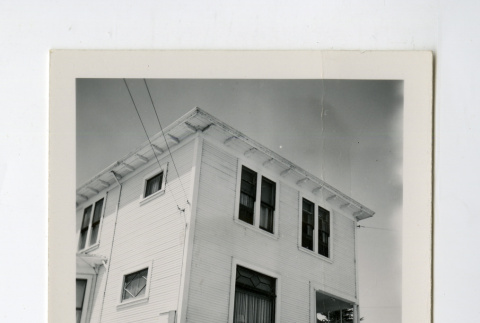
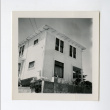
A house of the Shintani family where George and Mitzi Naohara rented a room while George was attending U.S. Army language school in Presidio of Monterey, California. A photo from "George Naohara photo album" (csudh_nao_0001), page 32. See this object in the California State Universities Japanese American Digitization project site: nao_01_32_002
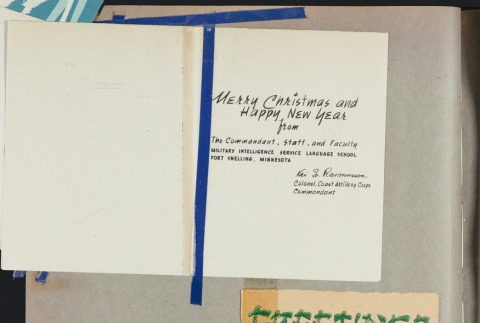
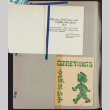
Christmas card from the commandant, staff, and faculty at the Military Intelligence Service Language School at Fort Snelling, Minneapolis on behalf of Colonel Kai Rasmussen. An item from: pages 76-77 of the Sue Kato scrapbook (gfb_skc_001). See this object in the California State Universities Japanese American Digitization project site: 2019_002_001_052_03
Photographic documentary of Nisei soldiers served in World War II, Pacific Theatre as military intelligence operators. Photographs were taken by Stone S. Ishimaru, Official U.S. Army photographer, 8th Army, originally for a magazine, "Life." Includes Military Intelligence Service Language School at Fort Snelling, Minnesota, Pacific Theater of operations, and occupation of Japan. See this object in …
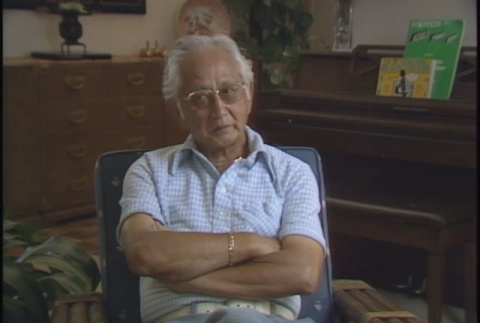
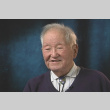
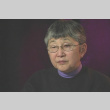
Fukuhara discusses his relationship with the Mount family, his time in the Gila internment camp, volunteering for the military from camp, his time in military language school, and the possibility of being captured by the Japanese military. Video ends at 19:49. Original title: 119, II SJ #25, 8-17-85, Fukuhara, Harry's house. Interview continues at ddr.densho.org/ddr-densho-1007-1635/
Nisei male. Born February 27, 1921, in Seattle, Washington. At age ten, was sent to Japan to live and attend school. Returned to Seattle prior to World War II. During the war, was removed to the Puyallup Assembly Center, Washington, and the Minidoka concentration camp, Idaho. Answered "no-no" on the so-called "loyalty questionnaire" and was transferred …
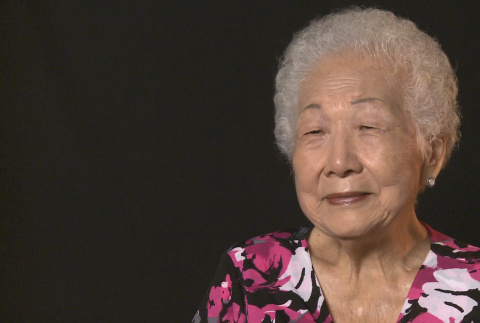
Nisei female. Born January 28, 1919, in Hilo, Hawaii. Grew up in Hilo before moving to Japan in 1934. Attended school in Japan, returning to Hilo before the outbreak of World War II. During the war, father was arrested and removed to the Kilauea Military Camp and Sand Island internment camps, Hawaii. During father's absence, took …
Nisei female. Born 1923 in Spokane, Washington. Spent childhood in downtown Spokane where parents ran the Oriental Laundry. Family was active with the Methodist Episcopal Church and mother taught at the Japanese Language School. Attended Lewis & Clark High School. Remembers changes in the Japanese American community brought about by World War II. Husband, Sumio Tai, …
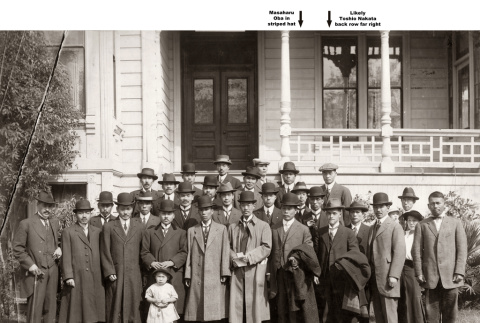
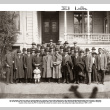
Caption below photo: An early group of Issei men and one woman gather for a portrait in front of Mary Helm Hall, at the Japanese Methodist Episcopal Church, South, in Alameda, CA. In the second row, second from the right side is Masaharu Oba, who came to Alameda in 1907 and shortly after, began working as …
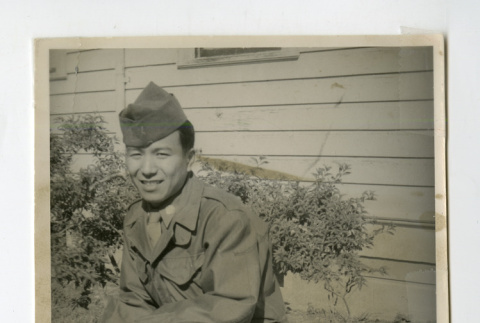
Photographed is George Nobuo Naohara in U.S. Army uniform at U.S. Army language school in Presidio of Monterey, California. The handwritten note on the backside reads: George Naohara, 1950-1956. Title from note. A photo from "George Naohara photo album" (csudh_nao_0001), page 27. See this object in the California State Universities Japanese American Digitization project site: nao_01_27_002
Photographed are George Nobuo Naohara and Okumura in U.S. military uniform. It is taken at U.S. Army language school in Presidio of Monterey, California. The caption reads: Naohara, Okumura. Title from caption. A photo from "George Naohara photo album" (csudh_nao_0001), page 30. See this object in the California State Universities Japanese American Digitization project site: nao_01_30_003
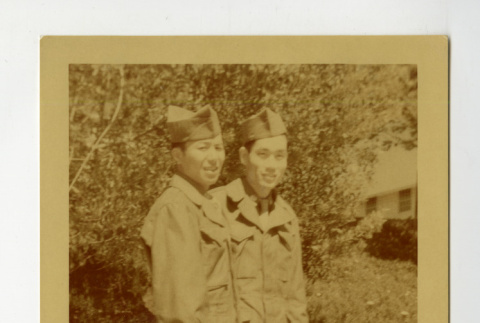
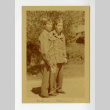
Photographed are two Nisei soldiers in U.S. military uniform at U.S. Army language school in Presidio of Monterey, California. Includes Fukumitsu and George Nobuo Naohara. The caption reads: Fukumitsu, Geo. Title from caption. A photo from "George Naohara photo album" (csudh_nao_0001), page 26. See this object in the California State Universities Japanese American Digitization project site: …
Ariyasu discusses going to school to become a commissioned officer, his dreams of becoming a surgeon, his mother's health issues during his childhood, and the Japanese language testing he did upon joining the military. Loni Ding can be heard asking questions behind the camera. Original title: 82, II LA #23, 7-24-85, Jim Ariyasu Interview II. Interview …
Childhood memories: attending school and Japanese language school
This material is based upon work assisted by a grant from the Department of the Interior, National Park Service. Any opinions, finding, and conclusions or recommendations expressed in this material are those of the author(s) and do not necessarily reflect the views of the Department of the Interior.
This material is based upon work assisted by a grant from the Department of the Interior, National Park Service. Any opinions, finding, and conclusions or recommendations expressed in this material are those of the author(s) and do not necessarily reflect the views of the Department of the Interior.