Getting a job as a delivery boy for a grocery store: making deliveries to outlying communities of Los Angeles
Although Mr. Matsumoto does not identify himself as a Kibei (American-born person of Japanese ancestry sent to Japan for formal education and socialization when young and later returned to the U.S.), some of his life experiences are …
Reuniting with a relative while stationed in China, and finding out that brother, also in the military, had survived
Although Mr. Matsumoto does not identify himself as a Kibei (American-born person of Japanese ancestry sent to Japan for formal education and socialization when young and later returned to the U.S.), some of his life experiences are …
Thoughts on not being recommended for the Medal of Honor for actions on Nhpum Ga hill
Although Mr. Matsumoto does not identify himself as a Kibei (American-born person of Japanese ancestry sent to Japan for formal education and socialization when young and later returned to the U.S.), some of his life experiences are similar to those …
Warning battalion of a planned Japanese attack, then shouting military orders in Japanese to confuse the enemy
Although Mr. Matsumoto does not identify himself as a Kibei (American-born person of Japanese ancestry sent to Japan for formal education and socialization when young and later returned to the U.S.), some of his life experiences are similar to …
Reported to the FBI for possessing a short-wave radio before the war, listening to Japanese news reports
Although Mr. Matsumoto does not identify himself as a Kibei (American-born person of Japanese ancestry sent to Japan for formal education and socialization when young and later returned to the U.S.), some of his life experiences are similar to …
Parents receive a phone call from Japan days before the bombing of Pearl Harbor
This material is based upon work assisted by a grant from the Department of the Interior, National Park Service. Any opinions, finding, and conclusions or recommendations expressed in this material are those of the author(s) and do not necessarily reflect the views …
Answering the question: "If Japan invaded the U.S., which side will you fight for?"
This material is based upon work assisted by a grant from the Department of the Interior, National Park Service. Any opinions, finding, and conclusions or recommendations expressed in this material are those of the author(s) and do not necessarily reflect the views …
Reflections: "I'm back to my original ambition of trying to be a bridge between Japan and America"
This material is based upon work assisted by a grant from the Department of the Interior, National Park Service. Any opinions, finding, and conclusions or recommendations expressed in this material are those of the author(s) and do not necessarily …
Stationed in Japan in a counterintelligence unit: witnessing the hardships faced by the Japanese people
This material is based upon work assisted by a grant from the Department of the Interior, National Park Service. Any opinions, finding, and conclusions or recommendations expressed in this material are those of the author(s) and do not necessarily reflect the …
Reuniting with brother who was serving with the U.S. army during the occupation of Japan
This material is based upon work assisted by a grant from the Department of the Interior, National Park Service. Any opinions, finding, and conclusions or recommendations expressed in this material are those of the author(s) and do not necessarily reflect the …
Developing respect and admiration for the Japanese while attending school in Japan, description of Japanese values and culture
This interview was conducted at the 1998 Tule Lake Pilgrimage held at Klamath Falls, Oregon and at the site of Tule Lake incarceration camp in California. Given the limited time available during this event, the length and breadth …
Hearing about the bombing of Pearl Harbor; brother was working in Japan at the time
This material is based upon work assisted by a grant from the Department of the Interior, National Park Service. Any opinions, finding, and conclusions or recommendations expressed in this material are those of the author(s) and do not necessarily reflect the …
Growing up with seven siblings in Nagano Prefecture, Japan (Japanese language)
This interview was conducted in Japanese. It was translated so as to convey Mrs. Murayama's way of speaking as closely as possible. For example, there are instances in which she makes grammatical errors. These mistakes are conveyed through similar grammatical errors in English in order …
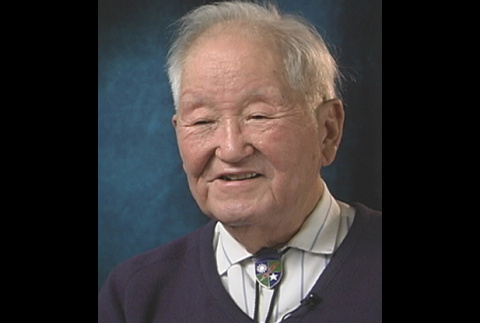
Nisei male. Born May 1, 1913, in Laguna, California. Lived in Japan from childhood through teenage years, before returning to the United States during high school. Incarcerated in the Santa Anita Assembly Center, California, and the Jerome concentration camp, Arkansas. Volunteered for the U.S. army in 1942, and was inducted in the Military Intelligence Service. Selected …
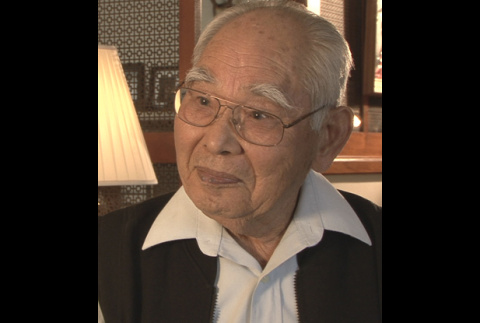
Kibei-Nisei male. Born January 20, 1916, in Alameda, California. At the age of five, family returned to live in Japan. Attended school in Japan before returning to the U.S. in 1937. Drafted into the U.S. Army, and was in training when Japan bombed Pearl Harbor on December 7, 1941. Resisted military orders while in basic training, …
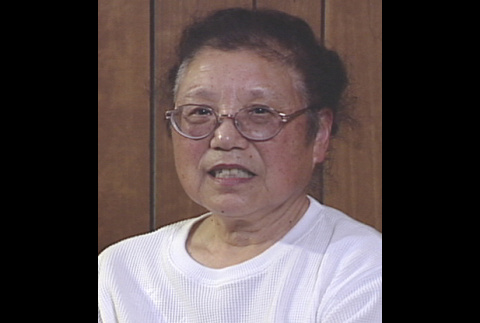
Sansei female. Born August 2, 1922, in Suooshima, Yamaguchi, Japan, and lived there until she was about 1 1/2 years old. Grew up in Tacoma, Washington. During World War II, incarcerated at the Pinedale Assembly Center, California, and Tule Lake concentration camp, California. At Tule Lake she and her husband married, and her oldest son, Kenichi, …
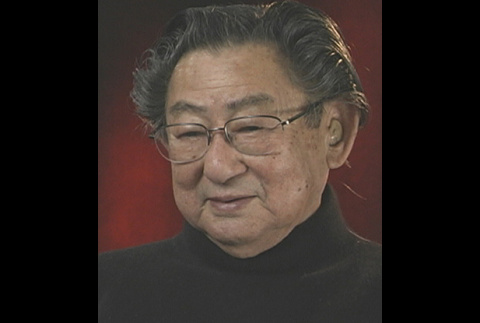
Kibei male. Born November 9, 1919, in Thomas, Washington. Went to Japan at age twelve, attended school, and returned to the U.S. as a high school student. Enlisted in the army just prior to the bombing of Pearl Harbor, and was eventually recruited for the Military Intelligence Service. Selected as one of fourteen Japanese Americans to …
Nisei male. Born May 19, 1917, in Eastport, Idaho, and spent childhood in Spokane, Washington. In 1933 traveled to Japan with family where father became ill and died. Attended school in Japan for three years and then returned to Spokane in 1936 and worked on a farm. Following the bombing of Pearl Harbor, volunteered for military …
Kibei Nisei male. Born October 4, 1915, in Stockton, California. As a young child, sent to Japan to live with grandparents and attend school. Returned to California at age eighteen, and drafted into the U.S. military. Discharged from the army after Japan bombed Pearl Harbor. Removed to the Tanforan Assembly Center, Washington, and the Topaz concentration …
Nisei male. Born May 15, 1921, in Seattle, Washington. Spent much of childhood in Japan, returning to the U.S. at the age of fifteen. Began attending the University of Washington before being removed to Puyallup Assembly Center, Washington, and Minidoka concentration camp, Idaho. Created a series of art pieces depicting camp life. Moved to Spokane, Washington, …
Nisei male. Born February 7, 1925, in Sacramento, California. At a very young age, sent to Japan for several years. Returned at age six and lived with family in Loomis, California. During World War II, removed to the Arboga Assembly Center, California, and the Tule Lake concentration camp, California. Transferred briefly to the Amache concentration camp, …
Nisei female. Born December 5, 1930, in Gardena, California. Grew up in Gardena where parents ran a restaurant. After the bombing of Pearl Harbor, father was arrested and taken away by the FBI. During mass removal, family was sent to the Manzanar concentration camp, California, and reunited with father. Following the Leave Clearance questionnaire in 1943, …
Nisei female. Born April 11, 1923, in Seattle, Washington. Grew up in Seattle, where parents ran a hotel. Went to live in Japan for several years prior to World War II. During the war, removed to the Puyallup Assembly Center, Washington, and the Minidoka concentration camp, Idaho. While in Minidoka, recruited to teach elementary school, and …
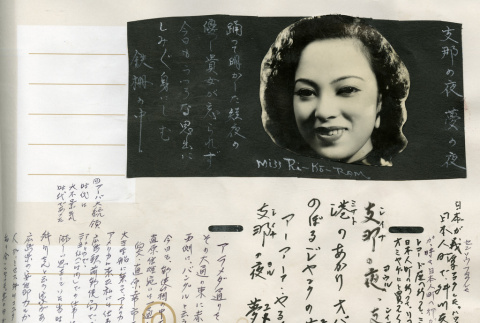
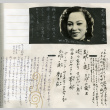
English translation of the annotations from "George Naohara photo album" (csudh_nao_0001), page 12: [Right] Japan declared a war, and Japanese Imperial Army attacked Pearl Harbor in Hawaii. When the war broke out, Yuta Masukawa was visiting Little Tokyo, Los Angeles. He rode on a streetcar to get to Little Tokyo and bought a record, "Shina no …
Nisei female. Born November 3, 1918, in San Francisco, California. As a young woman, entire family visited Japan for ten months, where she acquired the skill of Japanese typing at the Kumahira Typist Yoseisho in Hiroshima. Returned to the U.S. with most of her family (eldest brother remained in Japan) and was working at the Japanese …