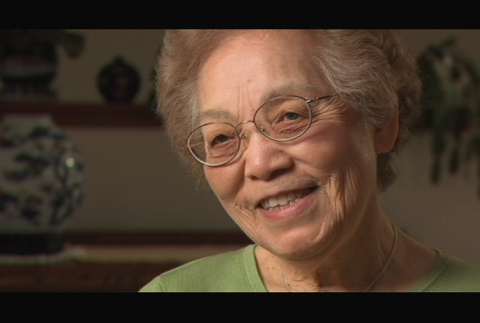
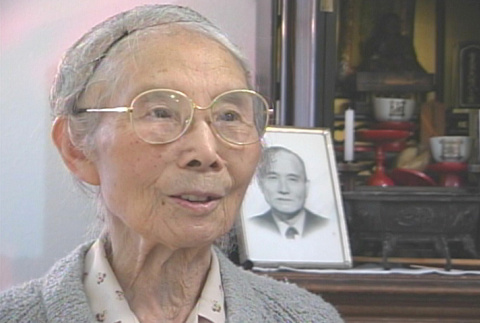
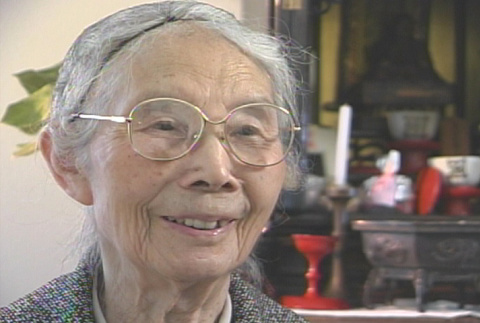
Nisei female. Grew up on Bainbridge Island, Washington. Was working as a maid in Seattle when Japan bombed Pearl Harbor on December 7, 1941. During the war, removed to the Manzanar concentration camp, California, and transferred to the Minidoka concentration camp, Idaho.
(This material is based upon work assisted by a grant from the Department of …
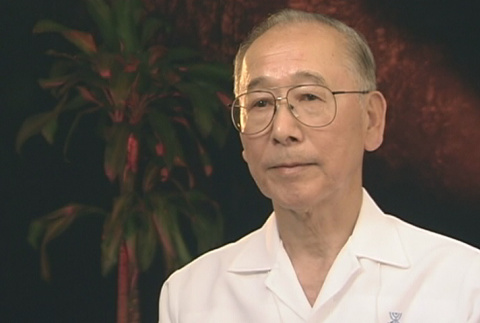
Kibei male. Born 1915 in Florin, California. From age seven to seventeen, lived in Japan when the family decided to move there. Returned to the United States in 1932 and attended school. Accepted into the California civil services, but was fired after World War II began. During the war, removed to the Fresno Assembly Center, California, …
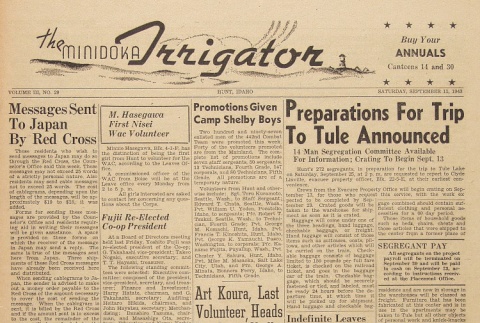
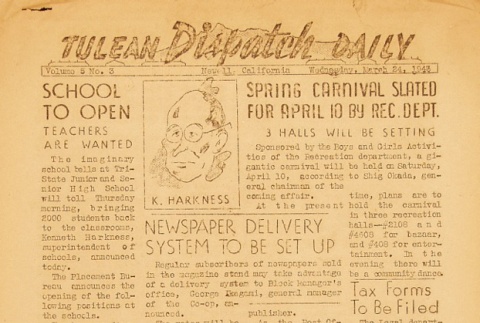
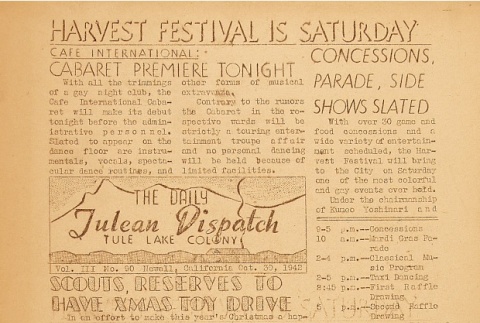
Selected article titles: "Messages Sent to Japan By Red Cross" (p. 1), "Noteworthy: American Federation of Teachers Passes Resolution Backing Nisei" (p. 1), "M. Hasegawa First Nisei Wac Volunteer" (p. 1), "Promotions Given Camp Shelby Boys" (p. 1), "Brother, Take That Hyphen Out of Japanese-American" (p. 1), "Preparations for Trip to Tule Announced. 14 Man Segregation …
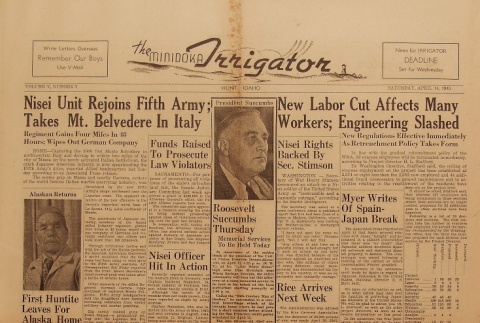
Selected article titles: "Nisei Unit Rejoins Fifth Army; Takes Mt. Belvedere in Italy" (p. 1), "Campaign Held to Keep Nisei Away" (p. 1), "Evacuees Must Apply For Ration Books" (p. 1), "Roosevelt Succumbs Thursday" (p. 1), "University Students Cause Confusion at Anti-Japanese Meet; Say Nazism At Work" (p. 1), "Myer Writes of Spain-Japan Break" (p. 1), …
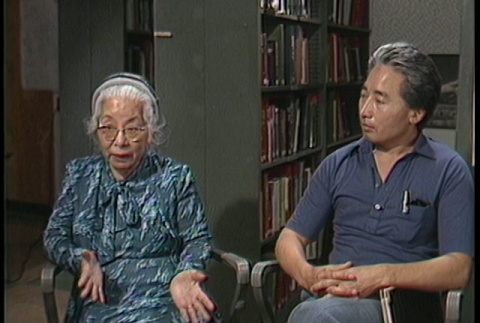
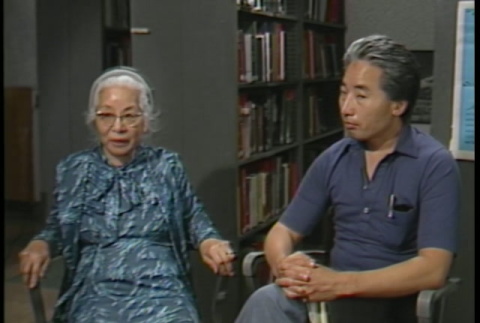
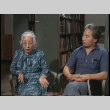
Gary discusses the legal efforts to reverse the charges of the DB Boys, his role in the hearings, and the reasons it took so long for the DB Boys to pursue legal action. Grace discusses why she buried her husband in Japan. Video starts at 0:51. Loni Ding can be heard asking questions behind the camera. …
Selected article titles: "Senator Chandler May Visit Colony: Military Affairs Special Committee Make Inquiries" (p. 1), "Repatriation Open Beginning Thursday" (p. 1), "Project Cleanup Drive to Get Underway Soon" (p. 1), "Doughnut Sale Drive" (p. 1), "An Editorial: Now You Know, Senator" (p. 2), "Married Should Strive to Improve Their Relationship" (p. 2), "Prince Chichibu Feared …
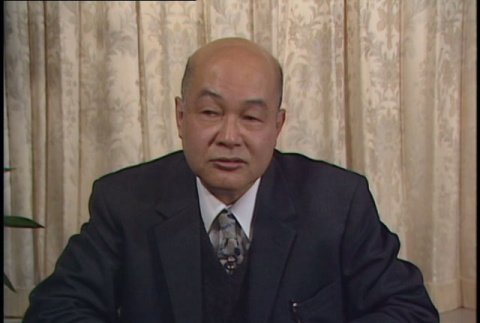
Nozawa discusses the mistreatment of the Nisei during Roosevelt's visit to Fort Riley, a complaint he wrote to John J. McCloy afterwards, being punished for writing the letter without permission, the differences between Kibei and US-educated Nisei, growing up in Japan, being drafted while in Santa Monica, and being court martialed. Loni Ding can be heard …
Grace discusses moving to Orange County after her husband's death, her impressions of the DB Boys and her relationship with them, Gary discusses learning about the DB Boys, his father's plans for his children, how going to Japan helped broaden his worldview, and his father's philosophy. Interview starts at 0:55. Loni Ding can be heard asking …
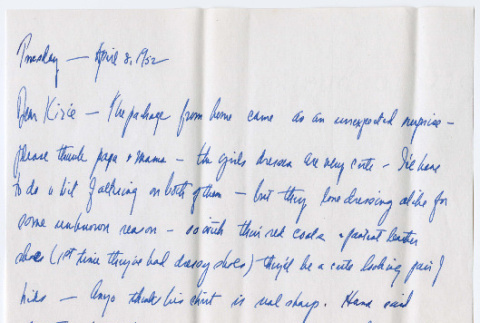
Letter from Sally thanking Kimiko for a package of gifts, mostly clothes for the children. Visiting friends Al and Connie Clempner (?) have moved to the area and Sally is distressed about having to spend time with their badly behaved child. A Japanese architect friend has suggested that they apply for a Ford Foundation grant and …
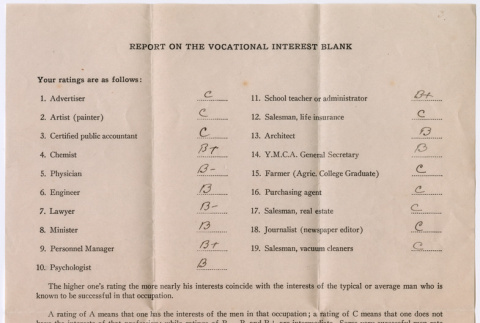
Report from Edward K. Strong, Jr., of Stanford University, on Kaneji's vocational interests as measured by a test. "B" rating, or "intermediate," for his match with the profession of architect. Summary text also states that "Since all the standards in this test are based upon white men it is quite conceivable that they do not apply …
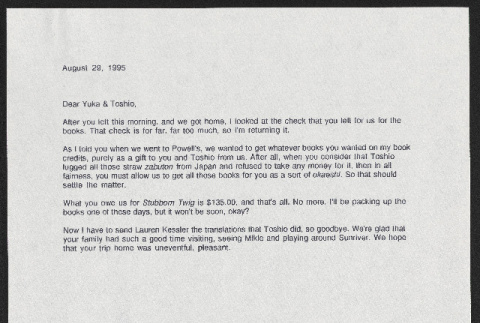
A typed letter from Homer Yasui to his sister and brother-in-law Yuka and Toshio Fujikura, dated August 29, 1995. Homer returns a check to Yuka and Toshio for books purchased at Powell's, explaining that they were intended as a gift of okaeshi (reciprocity) for the straw zabuton cushions Toshio had brought them from Japan. He notes …
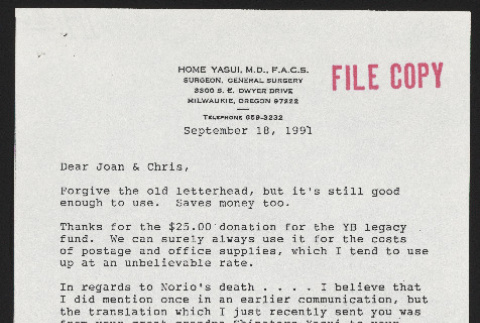
Copy of a typed letter from Homer Yasui to Joan Kay and Chris Emerson, dated September 18, 1991. In the letter, Homer thanks Joan for her financial contribution to the family's legacy fund and relays the limited details he gathered from Yuka concerning Norio Yasui's fatal bicycle accident and his wife's illness. Page 2 is a …
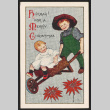
Postcards sent to the Yasui Brothers from 1912 to 1916. The first postcard depicts a child pushing a smaller child in a wooden wheelbarrow with text that reads, "Hurrah! for a Merry Christmas." The second postcard features a sepia-toned photograph of Mount Pitt in Oregon. The third and fourth postcards display three monochromatic photographs of hotels …
A typed letter from Minoru Yasui to his father Masuo Yasui, dated February 2, 1935. Minoru thanks his father for a $37 check and describes a demanding exam schedule. He discusses his new role as chairman for Japan Night on campus, a cultural event sponsored by Japanese students. Minoru requested Consul Toyokazu Nakamura from Portland to …
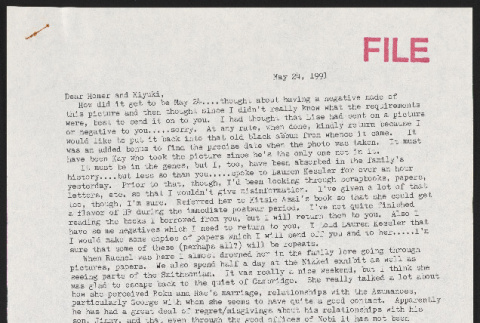
Copy of a typed letter from Yuka Yasui Fujikura to her brother and sister-in-law Homer and Miyuki (Yabe) Yasui, dated May 24, 1991. Yuka encloses an old family photograph for duplication and discusses her own recent efforts to document their history, which included a long interview with author Lauren Kessler and sharing family lore during Rachel's …
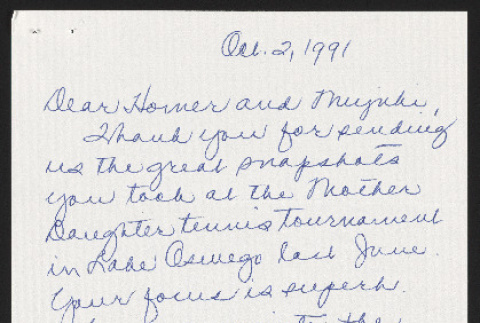
A handwritten letter from Michi Yasui Ando to her brother and sister-in-law Homer and Miyuki (Yabe) Yasui, dated October 2, 1991. In the letter, Michi expresses her appreciation for the Yasui family artifacts they continue to uncover, including her old steamship ticket to Japan, and reflects on the legacy preserved by their parents. Additionally, she shares …
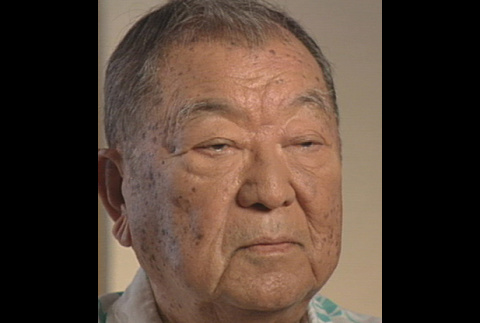
Nisei male. Born February 21, 1918, in Selma, California. Drafted prior to World War II. During the war, served in the Military Intelligence Service with the Mars Task Force in Burma, and as an interpreter for General MacArthur in Japan.
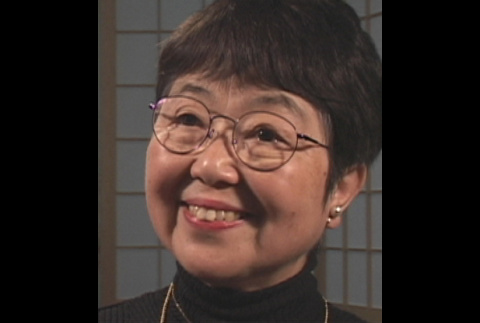
Shin-Issei female. Born July 21, 1936, in Sasebo, Japan. Was a child in Okayama during World War II. After the war, immigrated to the United States and lived and worked in various places including Honoulu, Hawaii, and Portland, Oregon.
Obtaining a passport, making arrangements to leave Japan before husband is drafted (Japanese language)
This interview was conducted in Japanese and was translated so as to convey Mrs. Terao's way of speaking as closely as possible. For example, there are instances in which she makes some grammatical errors. These mistakes are conveyed through similar grammatical errors …
Saying goodbye to mother upon leaving Japan for the United States (Japanese language)
This interview was conducted in Japanese and was translated so as to convey Mrs. Terao's way of speaking as closely as possible. For example, there are instances in which she makes some grammatical errors. These mistakes are conveyed through similar grammatical errors in …
Family background: born in Midorii in Hiroshima Prefecture, Japan (Japanese language)
This interview was conducted in Japanese and was translated so as to convey Mrs. Terao's way of speaking as closely as possible. For example, there are instances in which she makes some grammatical errors. These mistakes are conveyed through similar grammatical errors in English in …
Memories of growing up in the town of Gion, Japan (Japanese language)
This interview was conducted in Japanese and was translated so as to convey Mrs. Terao's way of speaking as closely as possible. For example, there are instances in which she makes some grammatical errors. These mistakes are conveyed through similar grammatical errors in English …
This interview was conducted at the Voices of Japanese American Redress Conference, held on the UCLA campus and sponsored by the UCLA Asian American Studies Center and the UCLA School of Public Policy and Social Research. Because of the full conference schedule, our interviews were limited to one hour. The …
Reaction to hearing of the atomic bombing of Hiroshima, Japan (Japanese language)
This interview was conducted in Japanese and was translated so as to convey Mrs. Terao's way of speaking as closely as possible. For example, there are instances in which she makes some grammatical errors. These mistakes are conveyed through similar grammatical errors in English …