
235 items
235 items
av
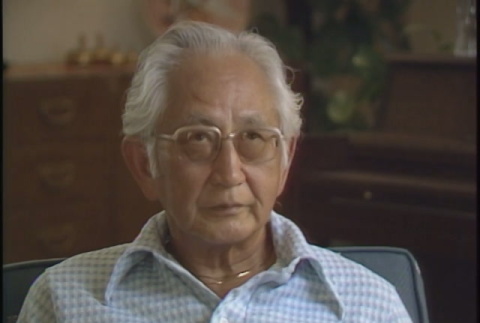
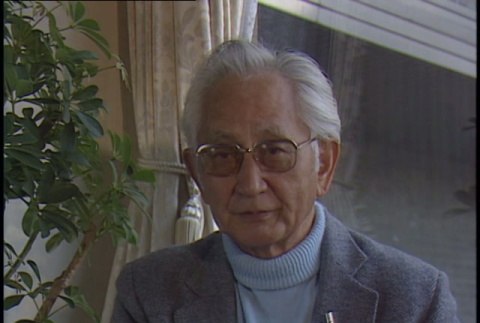
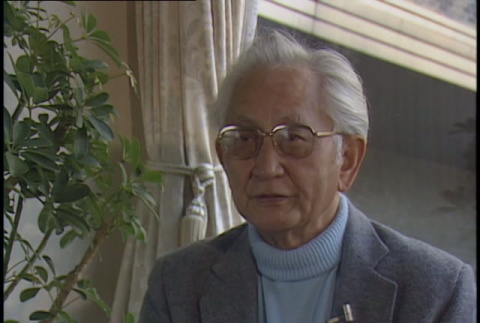
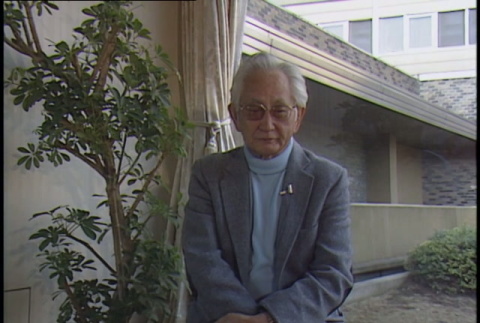
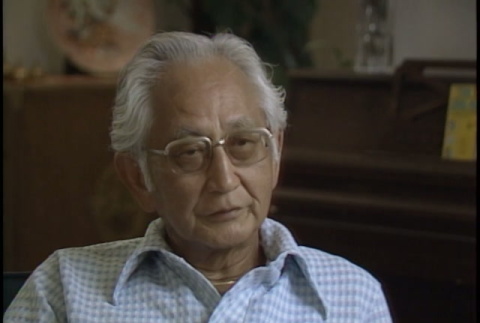
Interview with Harry Fukuhara, part 6 of 6 (ddr-densho-1007-1637)
Fukuhara discusses the reasons why some Nisei did not join the military, why he volunteered, his feelings on incarceration, and discrimination he faced in the US. Loni Ding can be heard asking questions behind the camera. Video ends at 20:00. Original title: 123, II SJ #29, 8-17-85, Harry's House SJ
av
Interview with Harry Fukuhara, part 3 of 6 (ddr-densho-1007-1634)
Fukuhara discusses his relationship with the Mount family, his time in the Gila internment camp, volunteering for the military from camp, his time in military language school, and the possibility of being captured by the Japanese military. Video ends at 19:49. Original title: 119, II SJ #25, 8-17-85, Fukuhara, Harry's house. Interview continues at ddr.densho.org/ddr-densho-1007-1635/
av
Interview with Harry Fukuhara, part 4 of 6 (ddr-densho-1007-1635)
Fukuhara discusses the danger of being mistaken for a Japanese soldier and his experiences interrogating Japanese prisoners of war. Video starts at 0:49. Loni Ding can be heard asking questions behind the camera. Original title: 120, II SJ #26, 8-17-85, Fukuhara, Harry's house, 8/17/18, reel #26. Interview continues at ddr.densho.org/ddr-densho-1007-1636/
av
Interview with Harry Fukuhara, part 5 of 6 (ddr-densho-1007-1636)
Fukuhara discusses combat operations in Japan, the atomic bombs, his experiences in Hiroshima before and after the bombing, and the role of Nisei in postwar Japan. Video starts at 0:34. Loni Ding can be heard asking questions behind the camera. Original title: 122, II SJ #28, 8-17-85, Harry's house. Interview continues at ddr.densho.org/ddr-densho-1007-1637/
av
Interview with Harry Fukuhara, part 3 of 5 (ddr-densho-1007-1699)
Fukuhara discusses how he approached interviewing prisoners of war, his relationship with Caucasian soldiers in the military, and the risk of being captured by the Japanese military. Video starts at 0:25. Loni Ding can be heard asking questions behind the camera. Original title: 214, II JA #38, Harry Fukuhara, Sun. Feb. 2. Interview continues at ddr.densho.org/ddr-densho-1007-1700/
av
Interview with Harry Fukuhara, part 4 of 5 (ddr-densho-1007-1700)
Fukuhara discusses the possibility of meeting his brother (who was in the Japanese army) on the battlefield, the mental struggles soldiers faced in Japan, and his thoughts on draft resisters. Loni Ding can be heard asking questions behind the camera. Original title: 215, II JA #39, Harry Fukuhara, Sun. Feb. 2. Interview continues at ddr.densho.org/ddr-densho-1007-1701/
av
Interview with Harry Fukuhara, part 2 of 6 (ddr-densho-1007-1633)
Fukuhara discusses working as a gardener, his employers (the Mounts) offering to adopt him, deciding to enter camp with his sister, his time in the Tulare assembly center and the Mounts visiting, Video starts at 0:40. Loni Ding can be heard asking questions behind the camera. Original title: 118, II SJ #24, 8-17-85, SJ, Harry's house. …
av
Interview with Harry Fukuhara, part 5 of 5 (ddr-densho-1007-1701)
Fukuhara discusses the role of Nisei in the occupation, the Japanese reaction to occupation, the difficulties of occupation, and the occupation in Okinawa. Loni Ding can be heard asking questions behind the camera. Original title: 216, II JA #40, Harry Fukuhara, Sun. Feb. 2
av
Interview with Harry Fukuhara, part 1 of 5 (ddr-densho-1007-1697)
Fukuhara discusses his service in the Pacific theater, working with ATIS, and his first landing. Loni Ding can be heard asking questions behind the camera. Last few seconds are an accidental recording from the Kiyofumi Kojima interview. Original title: 212, II JA #36, Harry Fukuhara, Sun. Feb. 2. Interview continues at ddr.densho.org/ddr-densho-1007-1698/
av
Interview with Harry Fukuhara, part 2 of 5 (ddr-densho-1007-1698)
Fukuhara discusses his service in the Pacific, being mistaken for a Japanese soldier, interviewing a gravely wounded prisoner of war, and POWs he interviewed just before their death. Loni Ding can be heard asking questions behind the camera. Original title: 213, II JA #37, Harry Fukuhara, Sun. Feb. 2. Interview continues at ddr.densho.org/ddr-densho-1007-1699/
av
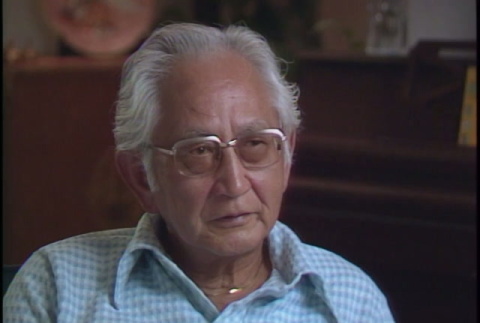
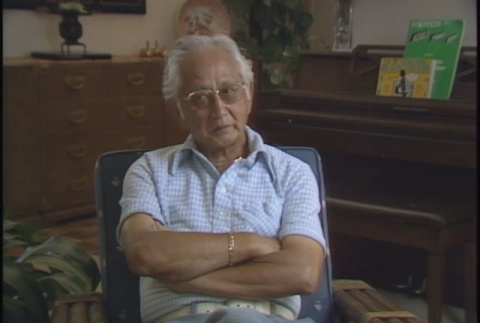
Interview with Harry Fukuhara, part 1 of 6 (ddr-densho-1007-1632)
Fukuhara discusses growing up in Seattle and Auburn, WA, the time he spent in Hiroshima as a child, his time working before college, studying at Woodbury College in LA, his reaction to Pearl Harbor, evacuation, and entering the Tulare assembly center with his sister. Video starts at 0:50. Loni Ding can be heard asking questions behind …
img
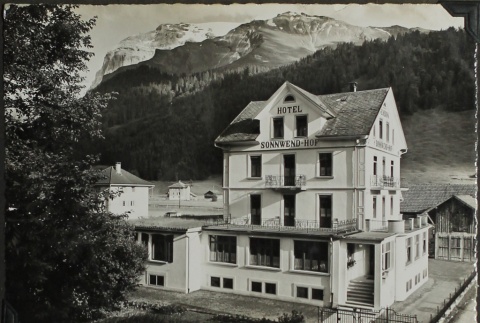
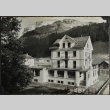
"Hotel Chester Fukuhara & I stayed at" (ddr-densho-201-251)
"Hotel Sonnwend-Hof." Caption on front: "Hotel Chester Fukuhara & I stayed at."
img
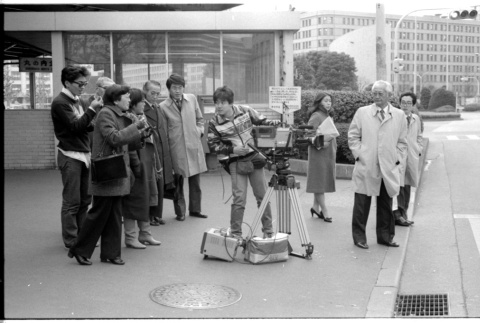
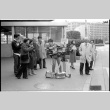
Group outdoors with camera at Tokyo Station (ddr-densho-1007-1185)
Negative. Loni Ding fourth from left (in boots). Harry Fukuhara second from right.
doc
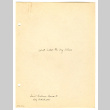
What will be my future (ddr-csujad-48-6)
Term paper by Lily Fukuhara for period V Social Problems class taught by Mr. Harry Bentley Wells, a teacher at Manzanar High School. Chapter headings include: After high school- What next?; Possibilities after graduation; What are my goals?; and Will I attend college? Ch. 1: Lily describes an excitement for graduation and a tendency to overplan …
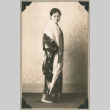
img
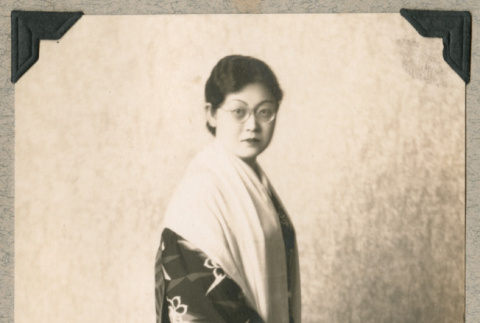
Woman in kimono (ddr-densho-383-225)
Woman pictured possibly Yasuko Fukuhara (c. 1905-1938), a neighbor of the Tokuda family in Seattle in the 1930s.
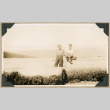
img
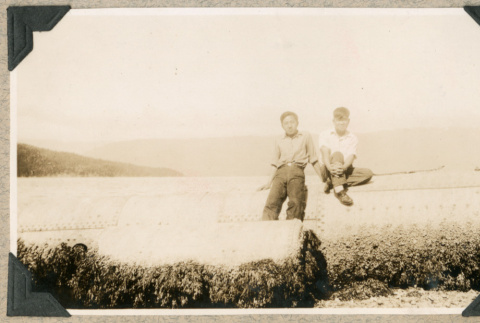
Two men near ocean (ddr-densho-383-194)
Written on album page below photograph: "Ted Fukuhara and Tats Ishimoto" (left to right).
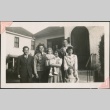
img
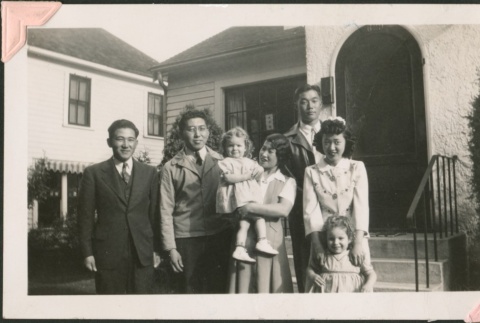
A group in front of a house (ddr-densho-328-270)
Caption in album: "Emmett, Idaho / Tom Hikida, Chester Fukuhara, Mrs. Hikida, Masao Sakagami, Pearl Hikida."
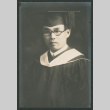
img
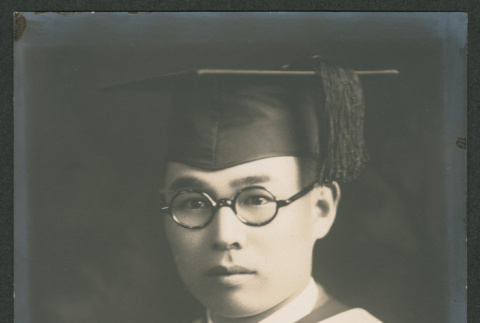
graduation portrait of Setaro Fukuhara (ddr-densho-378-754)
Portrait of a man in a graduation cap and gown. Inscribed on photograph is "Sincerely Yours Seitaro Fukuhara U.C., A.B. '27" in black ink. Caption on album page: "1927"
vh
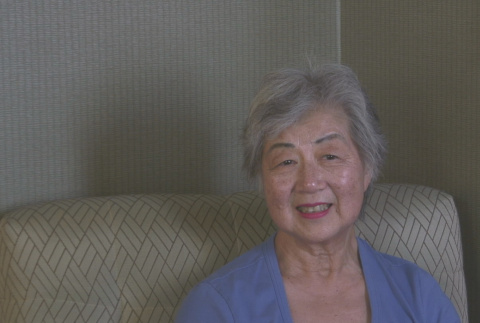
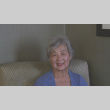
Yoshino Grace Fukuhara Niwa Interview (ddr-manz-1-139)
Nisei female. Born October 29, 1942, in the Manzanar concentration camp, California. Daughter of well-known artists Henry Fukuhara. After leaving camp, the family moved to New York. Yoshino eventually returned to live in California, where her family resided before World War II.
img
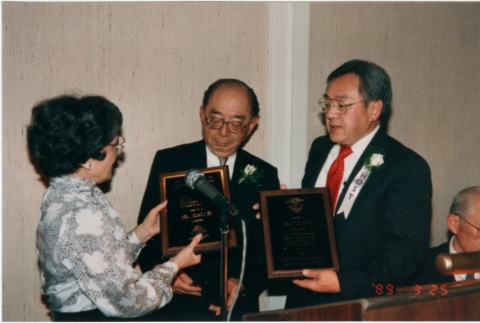
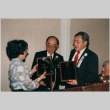
JACL Legislative Education Committee plaque presentation at the Nisei Veterans Installation Banquet (ddr-densho-10-49)
Cherry Kinoshita presenting plaques to Mas Fukuhara, Nisei Veterans Committee Commander, and John Ishii, MIS-NW President.
img
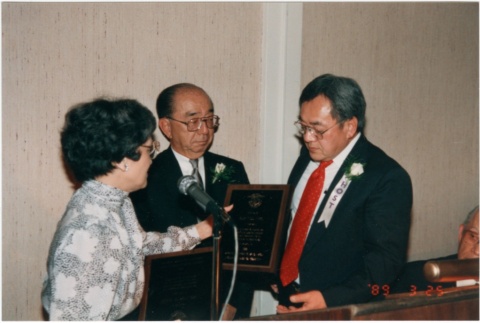
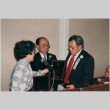
JACL Legislative Education Committee plaque presentation at the Nisei Veterans Installation Banquet (ddr-densho-10-50)
Cherry Kinoshita presenting plaques to Mas Fukuhara, Nisei Veterans Committee Commander, and John Ishii, MIS-NW President.
img
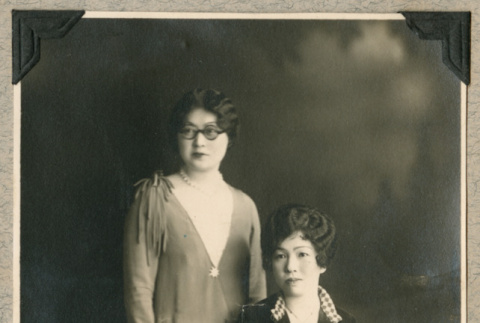
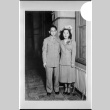
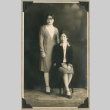
Studio portrait of two women (ddr-densho-383-251)
Left to right: Yasuko Fukuhara and Mrs. Sunahara. Yasuko Fukuhara (c. 1905-1938), a neighbor of the Tokuda family in Seattle in the 1930s. Written on album page below phtotograph: "Mrs. Sunahara and Mrs. Fukahara [sic]". Embossed on bottom left corner of photograph: "Jackson Studio, Seattle".
doc
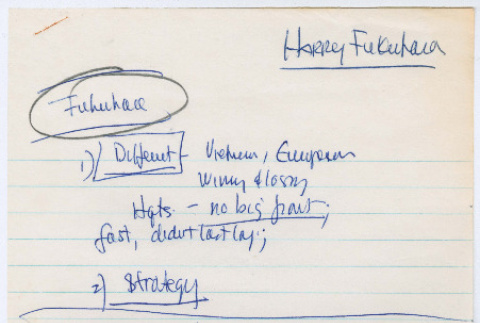
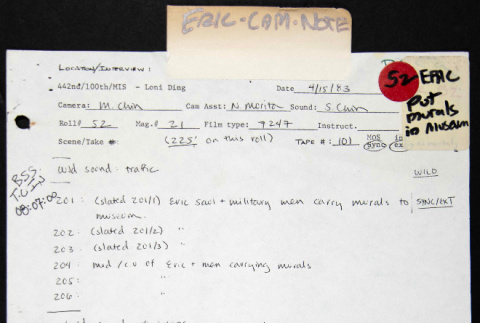
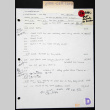
Eric Saul camera notes for Nisei Soldier (ddr-densho-1007-1393)
Camera notes for a Nisei Soldier segment Eric Saul, Rudy Tokiwa, Kent (Hori?), and Harry (possibly Harry Fukuhara).