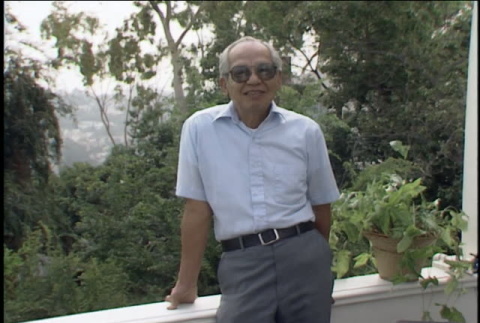
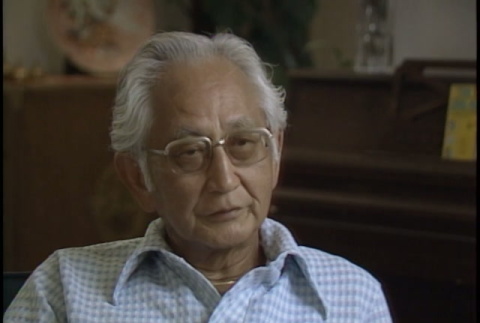
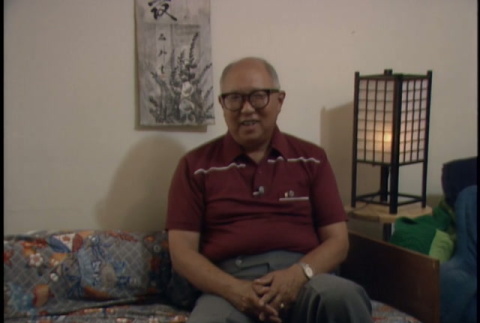
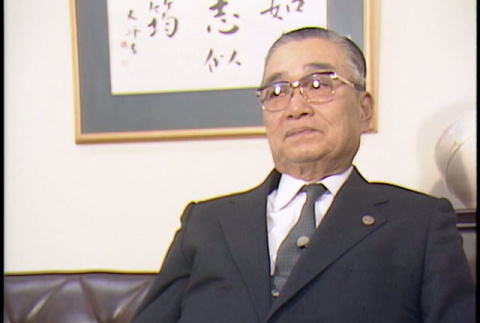
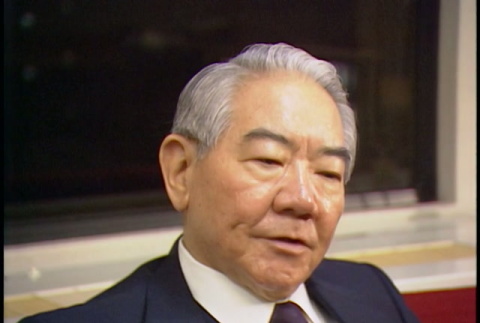
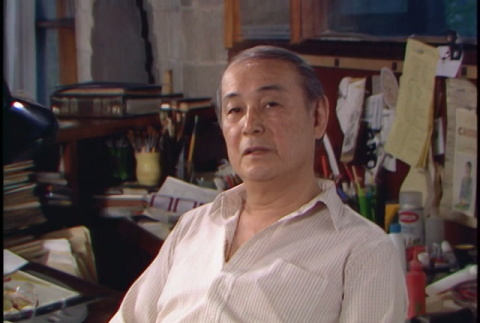
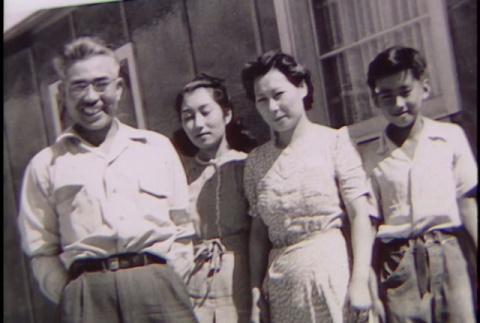
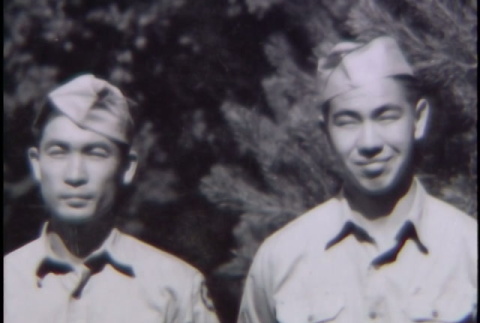
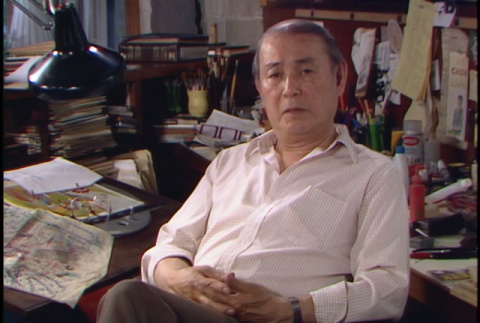
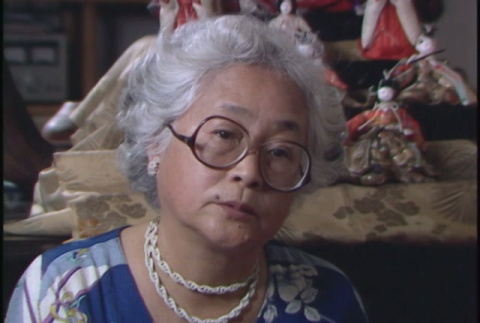
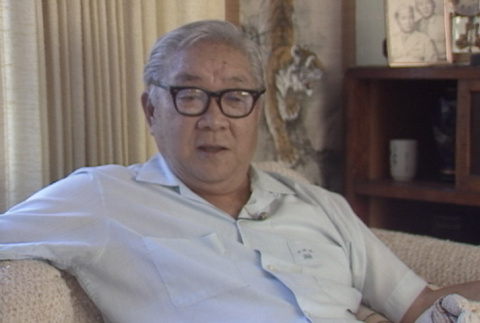
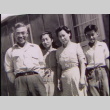
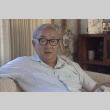
Nomura discusses his family's internment at Gila River, volunteering and testing for the MIS language school, and the difficulty his family faced in camp after he volunteered. Video starts at 0:22. Loni Ding can be heard asking questions behind the camera. Original title: 94, II LA #41, 7-25-85, Sho Nomura Interview II. Interview continues at ddr.densho.org/ddr-densho-1007-1612/
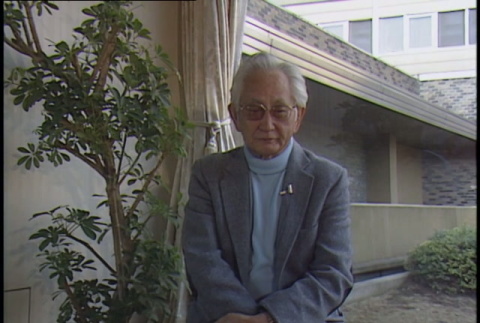
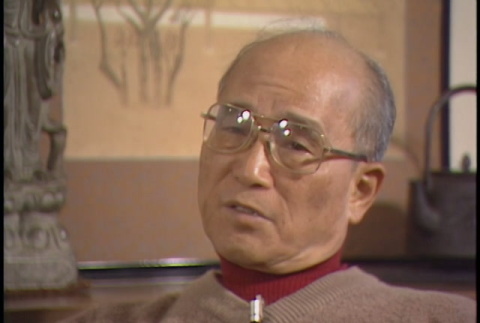
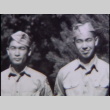
Fukuhara discusses his service in the Pacific, being mistaken for a Japanese soldier, interviewing a gravely wounded prisoner of war, and POWs he interviewed just before their death. Loni Ding can be heard asking questions behind the camera. Original title: 213, II JA #37, Harry Fukuhara, Sun. Feb. 2. Interview continues at ddr.densho.org/ddr-densho-1007-1699/
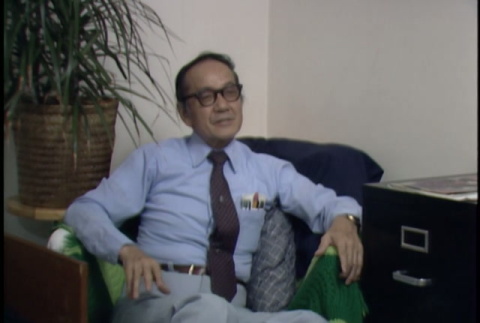
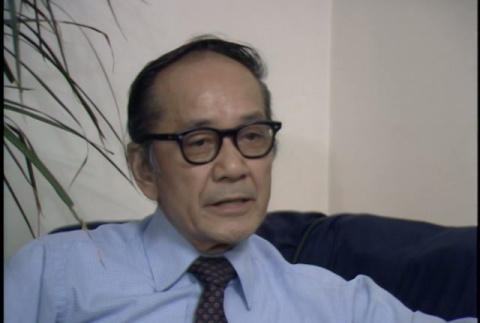
Matsumura discusses growing up in Wyoming, his mother's cooking, moving to Los Angeles in 1936, getting his radio license, Pearl Harbor, evacuation to Pomona and Heart Mountain, his attempts to join the Navy, Air Force, Coast Guard and Marines, being drafted, his basic training in Fort Hood, TX, his deployment in Europe, and the Hollywood store …
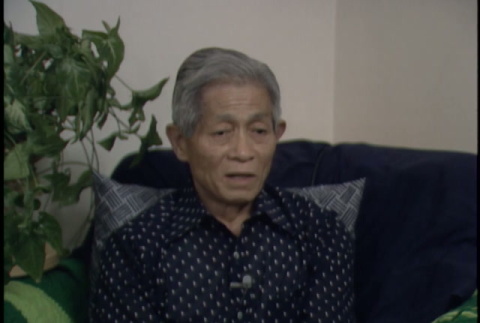
Matsumura discusses the time he spent in Japan as a child, the difficulty of Japanese high school, his work on the Far East military tribunal post-war. Video starts at 0:24. Loni Ding can be heard asking questions behind the camera. Audio cuts out at 20:36. Original title: II LA #34, 7-24-85, J. Matsumura Interview III. Interview …
Fukuhara discusses growing up in Seattle and Auburn, WA, the time he spent in Hiroshima as a child, his time working before college, studying at Woodbury College in LA, his reaction to Pearl Harbor, evacuation, and entering the Tulare assembly center with his sister. Video starts at 0:50. Loni Ding can be heard asking questions behind …
Continued from ddr.densho.org/ddr-densho-1007-1609/. Matsumura discusses the impact of growing up in a small town in Wyoming (particularly the lack of discrimination), the discrimination he faced in Heart Mountain, the movie theaters he ran at Heart Mountain, the extracurricular programs he helped run in camp, going to school, volunteering for the military from school, his time …
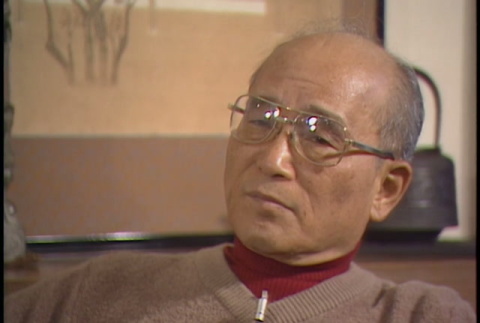
Aka discusses his father's reaction to being arrested, the sort of person his father was, growing up apart from his family, working as a "schoolboy", his time studying at San Francisco City College, getting drafted, being evacuated to Fort San Houston, and being ordered to go to Camp Savage for language school. Loni Ding can be …
Akune discusses his service on Corregidor Island and Mindoro Island, and a combat jump he performed. Video starts at 0:28. Loni Ding can be heard asking questions behind the camera. Original title: 88, II LA #29, 7-24-85, Harry Akune Interview III. Interview continues at ddr.densho.org/ddr-densho-1007-1603/
Aka discusses his father's arrest and incarceration by the FBI, his time in language school, his time teaching in the military in Monterey, his service in occupied Japan after the war, and his first impressions of Tokyo. Loni Ding can be heard asking questions in the background. Original title: II JA #22, Ray Aka, Feb. 1, …
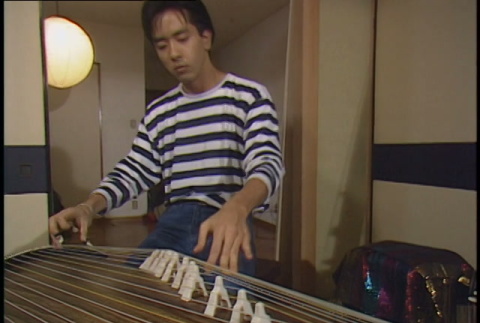
Kenny and Chizuko (last names unknown) are the taiko performers. Exterior footage filmed from a car at night. Taiko tuning and performance starts at 4:45 and runs through end of tape. Original title: 231, II JA #63, 3D taiko (end only), Koto Performance (Yamakoshi), Feb. 7, 1986. Koto performance continues at ddr.densho.org/ddr-densho-1007-1716/
Saiki discusses the loyalty questionnaire given to Nisei in camp, visiting his father in New Mexico, being drafted, being recruited for intelligence work, moving to Japan in 1967, his work in international business, and the formation of the Military Intelligence Service Language School Association and other such organizations. Loni Ding can be heard asking questions behind …
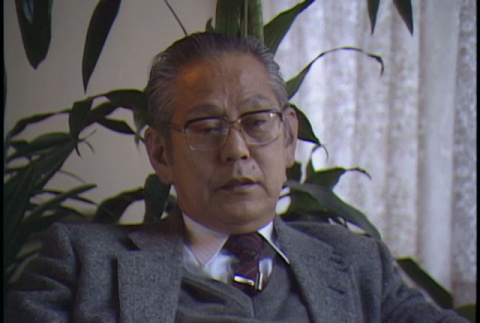
Miwa discusses his relationship with Harry Fukuhara, Fukuhara's work during the occupation, the difficulty of distributing food in occupied Japan, and the role of Nisei in the occupation. Interview conducted mostly in Japanese with the aid of an interpreter. Loni Ding can be heard asking questions behind the camera. Original title: 190, II JA #3, Yoshio …
Nakamura discusses his service in China on the front lines, and meeting an American pilot who crash-landed in his area. He reads a letter he wrong during wartime. Loni Ding can be heard asking questions in the background. Original title: 198, II JA #16, George Nakamura, Fri. Jan. 31. Interview continues at ddr.densho.org/ddr-densho-1007-1683/
Ishii discusses his parents (who immigrated from Shikoku), their internment in Rohwer, his father's death in camp, and his difficulty communicating with his parents. Video starts at 0:53. Loni Ding can be heard asking questions behind the camera. Original title: 56, II NY #41, 6-85, Ishii. Interview continues at ddr.densho.org/ddr-densho-1007-1558/
B-roll of various wartime pictures, including Kawamoto's parents in camp. Also includes Kawamoto's dog tags from his service. No sound, video starts at 0:49. Original title: 54, II NY #38, 6-85, Yukio's photos, dog tag, etc.
B-roll of various wartime and family pictures, presumably from Kawamoto's albums. No sound. Video starts at 0:57. Original title: 53, II NY #37, 6-85, Kawamoto pix. B-roll continues at ddr.densho.org/ddr-densho-1007-1554/
Kaneko discusses arriving at Tule Lake, his first impressions of camp, his difficulty meeting people in camp, draft registration/the loyalty questionnaire and the conflict it caused, his father encouraging him to register for the draft, his refusal to register, his arrest and interrogation, and being sent to a CCC camp and forced to work. Interview starts …
Ishii discusses his mother gaining US citizenship, returning to work at Disney after the war, other animation work, detention at Santa Anita, the L'il Neebo comic strip, the MIS gopher mascot, and his political beliefs. Video starts at 0:55. Loni Ding can be heard asking questions behind the camera. Original title: 57, II NY #42, 6-85, …
Iijima discusses her parents and siblings, their expectations, growing up poor in Oakland, and discrimination. Particular emphasis on her mother, who died when Kazuko was young. Video starts at 0:56. Loni Ding can be heard asking questions behind the camera. Original title: 37, II NY #16, 6-85, Kazuko Iijima. Interview continues at ddr.densho.org/ddr-densho-1007-1533/
Gosho discusses why he and his brothers were sent to Japan as children. Interview starts at 0:49. Loni Ding can be heard asking questions. Starting at 3:55, a song plays on synthesizer, presumably performed by Gosho. Original title: 23, Hank Gosho interview, 4-7-83
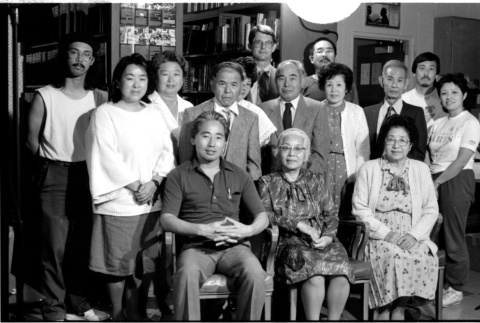
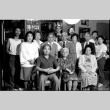
Negative. Top row: Paul Minerich, unknown. Middle row: unknown, Loni Ding, unknown, Kenjiro Hayakawa, Lisa Nomiyama, Tim Nomiyama, unknown, Masao Kataoka, unknown, unknown. Bottom row: Gary Itano, Grace Itano, unknown. All names listed from left to right. Taken during interviews for The Color of Honor at UCLA.
Techniques for interrogating Japanese prisoners of war
This material is based upon work assisted by a grant from the Department of the Interior, National Park Service. Any opinions, finding, and conclusions or recommendations expressed in this material are those of the author(s) and do not necessarily reflect the views of the Department of the Interior.
Thoughts about officers in the Military Intelligence Service
This material is based upon work assisted by a grant from the Department of the Interior, National Park Service. Any opinions, finding, and conclusions or recommendations expressed in this material are those of the author(s) and do not necessarily reflect the views of the Department of the Interior.
Advice when training interrogators of Japanese prisoners of war
This material is based upon work assisted by a grant from the Department of the Interior, National Park Service. Any opinions, finding, and conclusions or recommendations expressed in this material are those of the author(s) and do not necessarily reflect the views of the Department of the …