Adjusting to life in Pasadena, California and becoming involved in the controversy over the Fair Housing bill
Mitsuye Yamada was interviewed together with her two surviving brothers, William Toshio Yasutake and Joseph Yasutake, in group sessions on October 8-9, 2002. She was interviewed individually on October 9-10, 2002.
Before being contacted by Densho, the Yasutake siblings …
Fond memories of living in a dormitory at the University of Cincinnati, returning to visit years later
Mitsuye Yamada was interviewed together with her two surviving brothers, William Toshio Yasutake and Joseph Yasutake, in group sessions on October 8-9, 2002. She was interviewed individually on October 9-10, 2002.
Before being contacted by Densho, the Yasutake siblings …
Description of a race-related incident while living in a dormitory at the University of Cincinnati
Mitsuye Yamada was interviewed together with her two surviving brothers, William Toshio Yasutake and Joseph Yasutake, in group sessions on October 8-9, 2002. She was interviewed individually on October 9-10, 2002.
Before being contacted by Densho, the Yasutake siblings had planned …
Father is denied a visa to visit Japan, yet later was allowed to become a U.S. citizen
Mitsuye Yamada was interviewed together with her two surviving brothers, William Toshio Yasutake and Joseph Yasutake, in group sessions on October 8-9, 2002. She was interviewed individually on October 9-10, 2002.
Before being contacted by Densho, the Yasutake siblings …
Hearing the news of the end of the war; being asked about the concentration camps by a returning soldier
Mitsuye Yamada was interviewed together with her two surviving brothers, William Toshio Yasutake and Joseph Yasutake, in group sessions on October 8-9, 2002. She was interviewed individually on October 9-10, 2002.
Experiences speaking in classrooms about parallels between the Japanese American experience and September 11, 2001
Joseph Yasutake was interviewed together with his sister Mitsuye (Yasutake) Yamada and surviving brother, William Toshio Yasutake, in group sessions on October 8-9, 2002. He was also interviewed individually on October 9, 2002.
Before being contacted by Densho, the Yasutake siblings …
Memories of Crystal City internment camp, Texas: "I feel like I'm goin' to a prison."
Joseph Yasutake was interviewed together with his sister Mitsuye (Yasutake) Yamada and surviving brother, William Toshio Yasutake, in group sessions on October 8-9, 2002. He was also interviewed individually on October 9, 2002.
Before being contacted by Densho, the Yasutake siblings …
Parents' experiences as domestic help; "I was ashamed of the fact that my parents were servants."
Joseph Yasutake was interviewed together with his sister Mitsuye (Yasutake) Yamada and surviving brother, William Toshio Yasutake, in group sessions on October 8-9, 2002. He was also interviewed individually on October 9, 2002.
Experiences as one of the only Asian Americans in Terrace Park, Ohio, isolated incidents of racism
Joseph Yasutake was interviewed together with his sister Mitsuye (Yasutake) Yamada and surviving brother, William Toshio Yasutake, in group sessions on October 8-9, 2002. He was also interviewed individually on October 9, 2002.
Being one of the few Asian American families in Denver, Colorado, not much awareness of Japanese ethnic identity
Joseph Yasutake was interviewed together with his sister Mitsuye (Yasutake) Yamada and surviving brother, William Toshio Yasutake, in group sessions on October 8-9, 2002. He was also interviewed individually on October 9, 2002.
Importance of the vocal stance of Japanese American communities, feeling concerned about people's hesitation to speak out
Joseph Yasutake was interviewed together with his sister Mitsuye (Yasutake) Yamada and surviving brother, William Toshio Yasutake, in group sessions on October 8-9, 2002. He was also interviewed individually on October 9, 2002.
Moving to Cincinnati, Ohio after World War II, witnessing parents unhappily employed as domestic help, attending school and participating in sports
Joseph Yasutake was interviewed together with his sister Mitsuye (Yasutake) Yamada and surviving brother, William Toshio Yasutake, in group sessions on October 8-9, 2002. He was also interviewed individually on October 9, 2002.
Memories of the atomic bombings of Hiroshima and Nagasaki, the end of World War II
Joseph Yasutake was interviewed together with his sister Mitsuye (Yasutake) Yamada and surviving brother, William Toshio Yasutake, in group sessions on October 8-9, 2002. He was also interviewed individually on October 9, 2002.
Before being contacted by Densho, the Yasutake siblings …
Finishing college at the University of Illinois, acceptance into ROTC influenced by older brother's service with the 442nd Regimental Combat Team during World War II
Joseph Yasutake was interviewed together with his sister Mitsuye (Yasutake) Yamada and surviving brother, William Toshio Yasutake, in group sessions on October 8-9, 2002. He was also interviewed individually on October …
Mitsuko Nagell talks with Frank Iwasaki about his experiences during WWII at Tule Lake concentration camp. Digital Histories is a mechanism for AAPNHPI older adults to use their unique voices and perspectives in sharing stories with the generations to come. Since its creation in 2003, Digital Histories has provided a professional and artistic work environment for …
On the release of Japanese-American from relocation centers for jobs in the Midwest. Nisei families leave a center. WRA offices locate civilian employment for them. Some Japanese work on a farm in Illinois, others in a candy factory, a machine shop, an egg dehydrating plant, and other industries. The WRA aids families in procuring living quarters.Creator(s): …
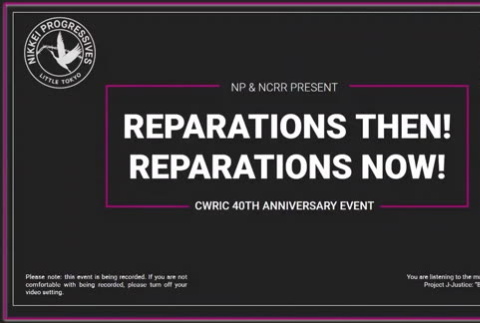
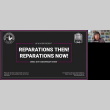
The Struggle for Black Reparations: A Conversation: Panelists: Akinyele Umoja, scholar activist, author, Prof. GA State Univ. Kamm Howard, author, Nat’l Male Co-Chair N’COBRA Nkechi Taifa, attorney, activist, author, founding member N’COBRA Miya Iwataki (Moderator), founding member NCRR Call to Action: traci kato kiriyama, Nikkei Progressives Solidarity Statements: Dr. Cheryl Grills, AB 3121 CA Reparations Task …
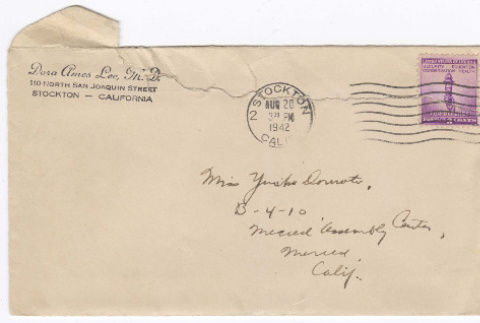
Two letters stored in one envelope between Yuriko Domoto Tsukada and Dora Ames Lee. The first letter is to Dora Ames Lee from Yuriko Domoto dated August 1, 1942. In this letter Yuri writes in regards to a patient of Dr. Ames who's family has made inquires about their wellbeing through Yuriko. She also discusses her …
Aftermath of the battle of the "Lost Battalion"; not having time to write to family
This interview was conducted as part of a project to capture stories of the Japanese American community of Spokane, Washington. Densho worked in collaboration with the Northwest Museum of Arts and Culture.
Recalling the period following Pearl Harbor: barred from taking photos as editor of school annual
This interview was conducted as part of a project to capture stories of the Japanese American community of Spokane, Washington. Densho worked in collaboration with the Northwest Museum of Arts and Culture.
Coming back to Spokane after the war, a confrontation with a supposed Pacific war veteran
This interview was conducted as part of a project to capture stories of the Japanese American community of Spokane, Washington. Densho worked in collaboration with the Northwest Museum of Arts and Culture.
Recreational activities in concentration camp: attending school
This interview was conducted by the Japanese American Museum of San Jose, and is part of a project entitled "Lasting Stories: The Resettlement of San Jose Japantown," a collaborative project between the Japanese American Museum of San Jose and Densho.
This interview was conducted by the Japanese American Museum of San Jose, and is part of a project entitled "Lasting Stories: The Resettlement of San Jose Japantown," a collaborative project between the Japanese American Museum of San Jose and Densho.
Visiting a hostel for returning Japanese Americans postwar
This interview was conducted by the Japanese American Museum of San Jose, and is part of a project entitled "Lasting Stories: The Resettlement of San Jose Japantown," a collaborative project between the Japanese American Museum of San Jose and Densho.
Thoughts on living in San Jose, California, postwar
This interview was conducted by the Japanese American Museum of San Jose, and is part of a project entitled "Lasting Stories: The Resettlement of San Jose Japantown," a collaborative project between the Japanese American Museum of San Jose and Densho.