
10000 items


10000 items
doc
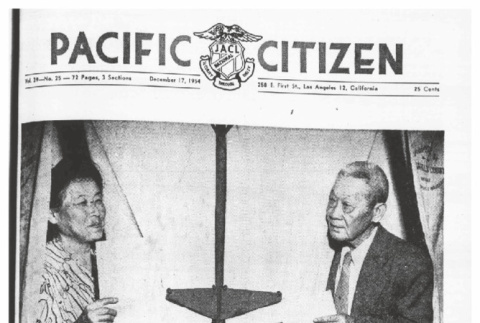
The Pacific Citizen, Vol. 39 No. 25 (December 17, 1954) (ddr-pc-26-51)
Selected article titles: "Best Story in 50 Years: The Issei Votes" (p. 1), "It Took Guts for the Issei to Stay in this Country" (p. 4), "More Logical FDR Had Selective Evacuation in Mind Signing Order" (p. 6), "Can't Find 100% Anti-American in Japan" (p. 12), "Speculating on JACL's Chances in the 84th" (p. 30), "Getting …
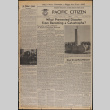
doc
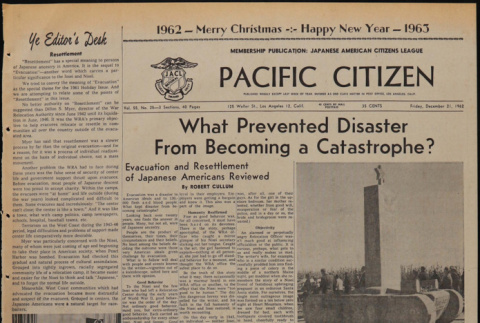
Pacific Citizen, Vol. 55, No. 25 (December 21, 1962) (ddr-pc-34-51)
Selected article titles: "What Prevented Disaster from Becoming a Catastrophe? Evacuation and Resettlement of Japanese Americans Reviewed" (p.A1-2), "Nisei GI and Resettlement" (p.A1, 3), "First Returnees Set Economic Rebirth Pattern" (p.A3), "Fear of Negro-Japanese Conflict Premature" (p.A3), "Japanese American Migration Patterns Following War Relocation" (p.B1-2), "Civil Rights" (p.B3-4), "'60-'70 Planning Commission Cites Advance in Youth" (p.B5), …
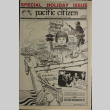
doc
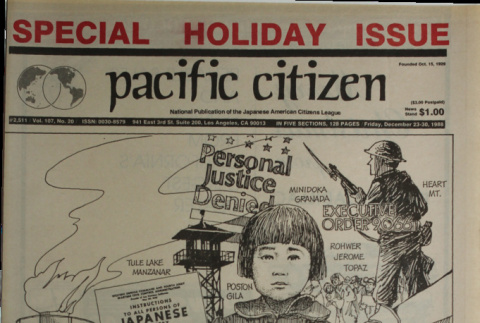
Pacific Citizen, Vol. 107, No. 20 (December 23-30, 1988) (ddr-pc-60-45)
Special holiday issue divided into sections A 1-12, B 1-12, C 1-16, D 1-12, E 1-24, D 13-24, C 17-32, B 13-24, and A 13-24. Selected article titles: "The President Signs the Redress Bill" (pp. B-1-B-2), "Decision to Cooperate" (pp. C-4-C-5), "Despite Wishes of Some: Comparatively Few Internees Came from Hawaii" (pp. E-2-E-3, E-19), and "John …
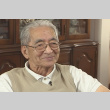
vh
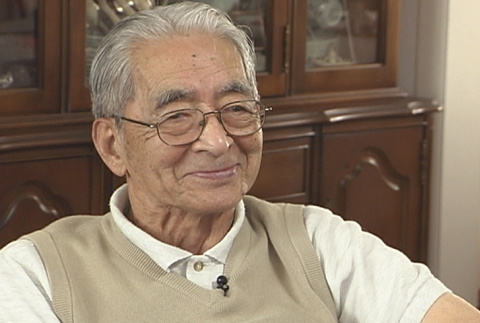
Sam Ogo Interview (ddr-densho-1000-193)
Nisei male. Born September 1, 1919, in Millwood, Washington, where father worked for SP&S railroad. After serious injury, father quit the railroad and moved family to Spokane, Washington, where they operated numerous hotels. Sent to Japan with siblings in 1933 to attend school. Was only one in the family to return to the U.S. three years …
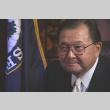
vh
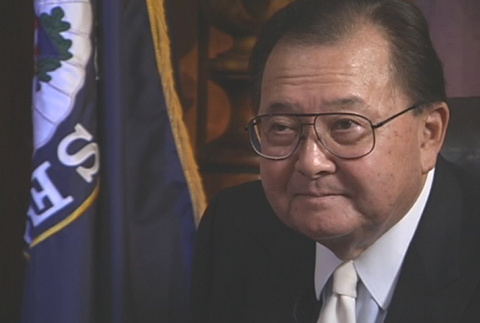
Daniel Inouye Segment 10 (ddr-densho-1000-28-10)
Bridging the rift between the Hawaii and mainland Japanese Americans, and learning about the concentration camps for the first time
This interview was conducted at the senator's office in Honolulu, Hawaii, as part of a series of interviews with veterans attending the 1998 Americans of Japanese Ancestry Veterans National Convention held in Honolulu, Hawaii. Because of …
Collection
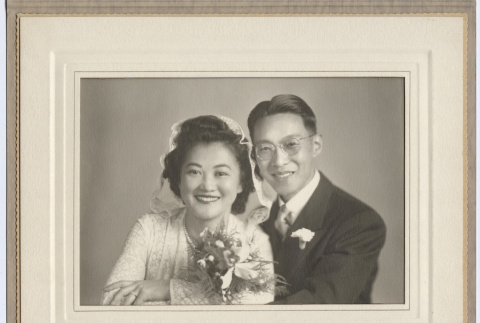
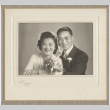
Yuriko Domoto Tsukada Collection (ddr-densho-356)
This collection consists of Yuriko Tsukada (nee Domoto)’s photographs, correspondences, personal records, diaries, and Granada (Amache) Camp Administrative Records related to the Social Welfare Department.
Photographs in this collection are of the Domoto and Tsukada families before 1941.
The correspondences are to Yuriko Tsukada (nee Domoto) from friends and family while she was held in Merced …
doc
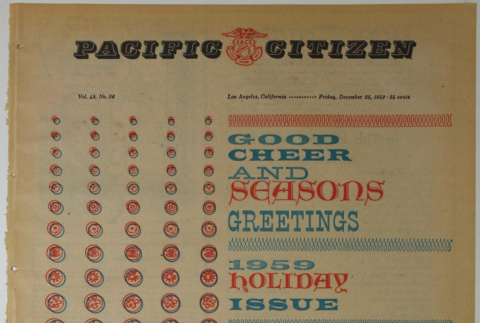
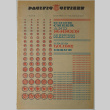
Pacific Citizen, Vol. 49, No. 26 (December 25, 1959) (ddr-pc-31-52)
Selected article titles: "14 Nisei and the Marauders" (p. 3), "Business of Rescuing Drowning Suicides" (p. 7), "Hawaii: Bridge to Asia" (p. 13), "Service is Basic Reason for JACL Existence" (p. 20), "Chapter feels its diversified program has 1960-70 appeal" (p. 22), "Paul Horiuchi: Before success was limned in his paint brushes" (p. 37), "Making community …
doc
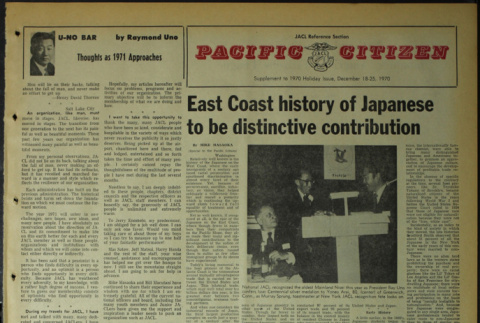
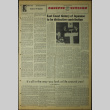
Pacific Citizen, Vol. 71, No. 25 (December 18, 1970) (ddr-pc-42-50)
Selected article titles: "East Coast history of Japanese to be distinctive contribution" (p. 1), "National Constitution Japanese American Citizens League" (p. 2), "JACL chapter presidents" (p. 4), "JACL Bowling Tournament Champions" (p. 7), "The JACL Story: For Better Americans in a Greater America" (p. 9), "Heart Mountain WRA Camp residents sound off before a Dies Committee …
doc
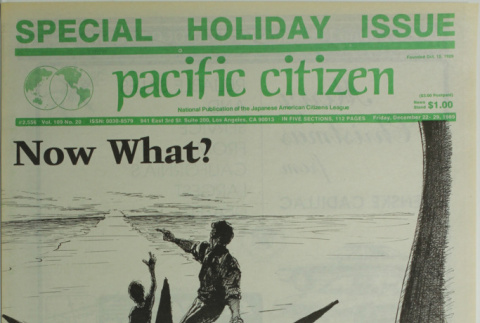
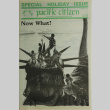
Pacific Citizen, Vol. 109, No. 20 (December 22-29, 1989) (ddr-pc-61-45)
Special holiday issue separated into sections A 1-24, B 1-24, C 1-24, D 1-24, and E 1-16. Selected article titles: "A Tribute to Dyke Miyagawa" (p. B1), "A Set of Historic Redress Letters: Including Two Read by Reagan Himself" (pp. B-6-B-7), "JACL-LEC and Redress" (p. C-1), "From Evacuation to Redress: A Speech Delivered at the Third …
doc
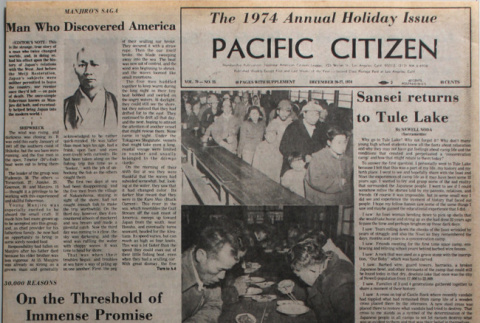
Pacific Citizen, Vol. 79, No. 25 (December 20-27, 1974) (ddr-pc-46-50)
Holiday issue organized into sections A 1-12, B 1-12, C 1-12, and D 1-12. Selected article titles: "Sansei Returns to Tule Lake" (pp. A-1, A-3), "Fears in Tule Lake: Evacuees Remember Them" (pp. A-1, A-3-A-4), "Seattle Nihonmachi: Beat of the '20s and '30s" (pp. B-1, B-9-B-10), "Giri: Righteous Way: Inside Tanforan, Topaz" (pp. B-4, B-8-B-9), and …
doc
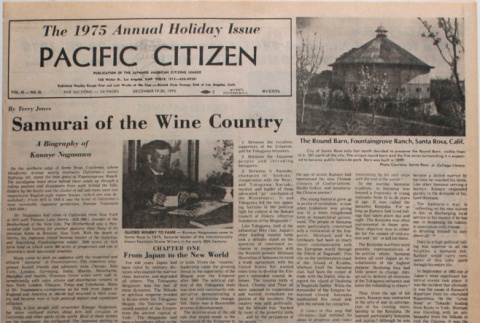
Pacific Citizen, Vol. 81, No. 25 (December 19-26, 1975) (ddr-pc-47-50)
Holiday issue organized into sections A 1-12, B 1-12, C 1-12, D 1-12, and E 1-6. Selected article titles: "Samurai of the Wine Country" (pp. A-1, C-1, C-5, C-8, C-10-D-1), "The Forgotten Nisei" (pp. A-1, A-3-A-5, A-8), "Tokie Was Naturalized 'Twice'" (pp. A-10, B-4), "Anti-Nisei Discrimination in the Mormon State" (pp. B-10-B-11), and "WW2 Gov't Cover …
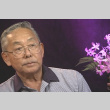
vh
Henry Bruno Yamada Interview (ddr-densho-1000-105)
Nisei male. Born 1923 on the Island of Kauai, Hawaii. Volunteered for military service shortly after graduating from High School. Served in the 442nd Regimental Combat Unit in a mortar platoon during World War II. (The 442 was an entirely Asian American segregated fighting unit.) After the war, he lived on the U.S. mainland for many …
av
A Thousand Paper Cranes: How Denver's Japanese American Community Emerged from Internment (ddr-densho-1024-16)
Documentary film about the wartime incarceration and about Japanese Americans in Denver after the war. Scenes shot at the Amache site today serve as a backdrop for the incarceration stories, while the segments on Denver focus on the importance of Colorado Governor Ralph Carr and on Sakura Square, the symbolic center of Colorado's Japanese American community. …
Collection
Digital Library of Japanese American Incarceration Films (ddr-densho-1024)
The Digital Library of Japanese American Incarceration Films includes over 100 films and videos about the forced removal and incarceration of Japanese Americans on the West Coast during World War II. With footage spanning over eighty years, from the 1940s to the present, this library includes a wide range of projects that represent diverse viewpoints on …

vh
Dave Tatsuno Interview (ddr-jamsj-2-6)
Nisei male. Born March 31, 1913, in San Francisco, California. Spent difficult childhood years in San Francisco under care of a guardian while family lived in Japan. Graduated with a degree in business administration from the University of California at Berkeley before World War II. Removed to Tanforan Assembly Center, California, and then to Topaz concentration …
vh
George Yamada Interview (ddr-densho-1000-187)
Nisei male. Born November 16, 1923, in Spokane, Washington. Spent childhood in downtown Spokane where parents ran the World Hotel. Father also worked as a mail handler for the Great Northern Railroad. Attended Lewis and Clark High School and Washington State University. During the war remembers seeing train cars pass through Spokane with Japanese Americans headed …
vh
In Memory of Cherry Kinoshita Interview (ddr-sjacl-2-34)
In this interview, Ana Tanaka and Joy Misako St. Germain interviewed Dr. Kyle Kinoshita to discuss Kinoshita's mother's, the late Cherry Kinoshita and Kyle Kinoshita's contributions to the JACL and the JA community. "Keep Your Eyes on the Prize," could well have been Cherry Kinoshita's mantra. She was the linchpin in the Seattle JACL and National …
vh
George S. Matsui Interview (ddr-densho-1008-2)
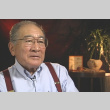
Nisei male. Born March 1, 1915, in Los Angeles, California. Spent prewar childhood in Long Beach, California, but attended grade school and junior high in Japan. Returned to the United States to attend high school. In 1941, was drafted into the U.S. Army and sent to Camp Roberts, San Luis Obispo, California for basic training. Was …
vh
Harvey Watanabe Interview (ddr-densho-1008-5)
Nisei male. Born February 1919 in Exeter, California. Spent prewar childhood in Visalia, California. Drafted prior to World War II. Served in an activated National Guard unit at Fort Lewis, Washington. When World War II broke out, he and all the other Nisei servicemen at Fort Lewis were sent inland. About twenty, Harvey included, went to …
av
Go for Broke! (ddr-densho-1024-59)
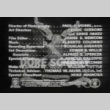
1951 feature film that tells the story of 442nd Regimental Combat Team and that climaxes with the rescue of the "Lost Battalion." A popular and critical success, Go For Broke! represents a landmark in the representation of Japanese Americans in Hollywood films. The film focuses on the transformation of the initially bigoted Lt. Michael Grayson (played …

av
Ties That Bind: Generations of Faith (ddr-densho-1024-25)
Documentary film about this history of the Buena Vista United Methodist Church, a Japanese American church in Alameda, California , on its 100th anniversary. Using family photographs, home movies and other sources, the film takes us through the church's history in ten and twenty year intervals, highlighting its founding and early growth through the Issei era, …
Narrator Kay Ochi
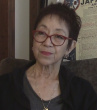
Born in San Diego, California. During the Redress Movement, the Department of Justice's Office of Redress Administration (ORA) was established to identify and administer reparations payments to eligible individuals. Acted as a community liaison with the ORA from 1989 to 2000 as an officer of the Nikkei for Civil Rights & Redress (NCRR) in Los Angeles. …
Narrator William "Bill" Kaneko
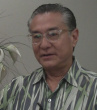
Born in Honolulu, Hawaii. During the Redress Movement, the Department of Justice's Office of Redress Administration (ORA) was established to identify and administer reparations payments to eligible individuals. As President of the Honolulu chapter of the Japanese American Citizens League, worked with the ORA from 1989 to 1998. Later pursued a legal career in Honolulu with …
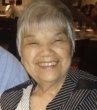
Narrator Geri Handa
Geri Handa was born in San Jose, California, in 1948, and studied in the early 1970s at the School of Social Welfare at the University of California, Los Angeles, with a focus on community organizing and social services for seniors. She joined Asians for Community Actions in San Jose and worked at Keiro Nursing Home in …
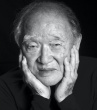
Narrator Junji Sarashina
Junji Sarashina was born in 1929 in Lahaina, Hawai'i, the son of a minister of a Buddhist Temple Nishihongan-ji and a teacher of Japanese-style flower arrangement, music, sewing, and cooking. The youngest of five children, Sarashina grew up surrounded by temple members (mostly plantation workers) and their families who enjoyed community picnics and samurai films. When …