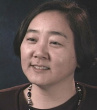
The attitude of some Japanese Americans to the resisters: "they're unwilling to find the forgiveness in their hearts"
This interview was conducted by filmmaker Frank Abe for his 2000 documentary, Conscience and the Constitution, about the World War II resisters of conscience at the Heart Mountain incarceration camp. As a result, the interviews in this …
Observing differences between Japanese Americans from Hawaii and the mainland during training
This material is based upon work assisted by a grant from the Department of the Interior, National Park Service. Any opinions, finding, and conclusions or recommendations expressed in this material are those of the author(s) and do not necessarily reflect the views of the …
The important role of Nisei in the postwar occupation of Japan
This material is based upon work assisted by a grant from the Department of the Interior, National Park Service. Any opinions, finding, and conclusions or recommendations expressed in this material are those of the author(s) and do not necessarily reflect the views of the Department …
Conducting a survey in Minnesota to determine the area's receptiveness to Japanese Americans
This material is based upon work assisted by a grant from the Department of the Interior, National Park Service. Any opinions, finding, and conclusions or recommendations expressed in this material are those of the author(s) and do not necessarily reflect the views of …
This material is based upon work assisted by a grant from the Department of the Interior, National Park Service. Any opinions, finding, and conclusions or recommendations expressed in this material are those of the author(s) and do not necessarily reflect the views of the Department of the Interior.
Understanding the positions of draft resisters during World War II
This material is based upon work assisted by a grant from the Department of the Interior, National Park Service. Any opinions, finding, and conclusions or recommendations expressed in this material are those of the author(s) and do not necessarily reflect the views of the Department of …
The difficulties faced by Nisei in the Military Intelligence Service because of secrecy
This material is based upon work assisted by a grant from the Department of the Interior, National Park Service. Any opinions, finding, and conclusions or recommendations expressed in this material are those of the author(s) and do not necessarily reflect the views of …
Being stripped of weapons by the War Department after the bombing of Pearl Harbor
This material is based upon work assisted by a grant from the Department of the Interior, National Park Service. Any opinions, finding, and conclusions or recommendations expressed in this material are those of the author(s) and do not necessarily reflect the views …
General Mark Clark's feelings towards the Japanese Americans in the 100th Battalion
This material is based upon work assisted by a grant from the Department of the Interior, National Park Service. Any opinions, finding, and conclusions or recommendations expressed in this material are those of the author(s) and do not necessarily reflect the views of the …
Facing challenges finding sponsors for a redress bill
This material is based upon work assisted by a grant from the Department of the Interior, National Park Service. Any opinions, finding, and conclusions or recommendations expressed in this material are those of the author(s) and do not necessarily reflect the views of the Department of the Interior.
This material is based upon work assisted by a grant from the Department of the Interior, National Park Service. Any opinions, finding, and conclusions or recommendations expressed in this material are those of the author(s) and do not necessarily reflect the views of the Department of the Interior.
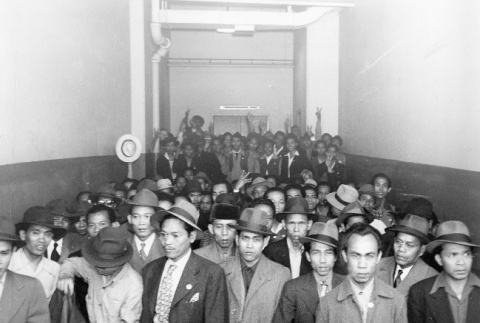
Caption found with the image reads, "After several weeks of action in the U.S. District Court, and an appeal to the Circuit Court of Appeals and to the Supreme Court, an order was obtained for removal of the Indonesians from the immigration detention quarters, San Francisco, to the immigration Detention Facility at Crystal City, Texas. Here …
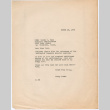
A letter from Masao Okine who is stationed in Yokohama, Japan as a Nisei soldier to his parents, Seiichi and Tomeyo Okine. This letter is mailed via San Francisco by the U.S. Postal Service. In the letter, he describes his work and daily routine in Japan. He has been transferred from Tokyo to Yokohama and his …
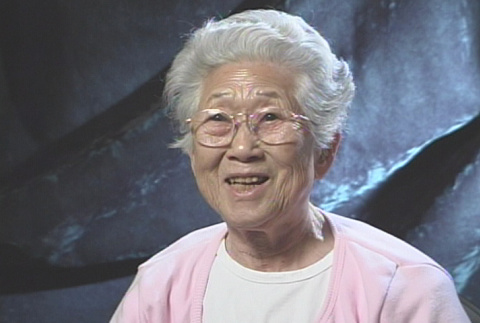
Kibei female. Born October 5, 1910, in San Francisco, California. At age three, sent to live with grandfather and receive education in Fukuoka, Japan. After high school, temporarily moved to Tokyo and assisted family-owned business. In 1929, returned to U.S. to join parents in Sacramento. After arranged marriage to Mr. Tadao Sakita, moved to Los Angeles, …
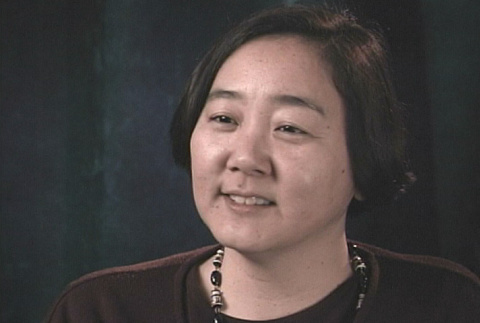
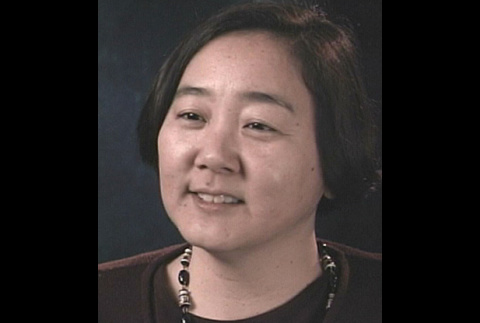
Sansei female. Born 1955 in Los Angeles, California. Grew up in Gardena, California, surrounded by a large Japanese American community. Influenced by father's role in community and politics, and mother's emphasis on education. Attended University of California, Santa Barbara where she became increasingly aware of Japanese American history, issues of ethnic identity and racial inequality. Attended …
A letter from Masao Okine to his parents, Seiichi and Tomeyo Okine in Hawthorne. This letter is written in Japan where Masao is currently stationed as a Nisei soldier and mailed via San Francisco by the U.S. Army Postal Service. In the letter, Masao describes his work as a US Army solider in Japan: He has …
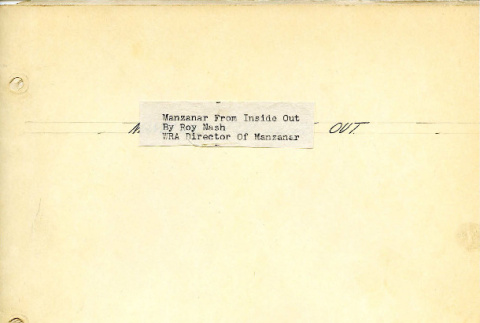
Text of address by Roy Nash, Director of the Manzanar War Relocation Project, given to the Commonwealth Club of California, San Francisco, on July 31, 1942 for the purpose of "interpret[ing] the actuality of a War Relocation Center housing 10,000 evacuees" in view of perceptions of mistreatment of incarcerees in California. Sections of the speech include …
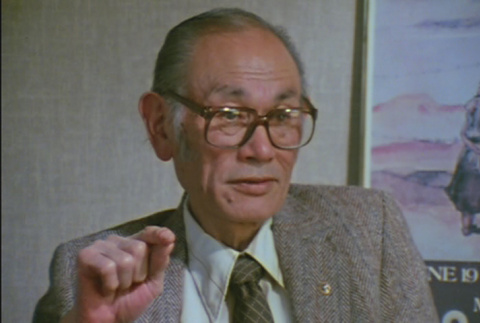
Nisei male. Born January 30, 1919, in Oakland, California. Mr. Korematsu was working as a welder in San Francisco when Japan bombed Pearl Harbor on December 7, 1941. After Executive Order 9066 was issued in 1942, he decided to resist the evacuation orders, and was not removed with his family. He was arrested in May of …
A letter from Masao Okine to his parents, Seiichi and Tomeyo Okine, along with a note in English. He writes from Tokyo, Japan, where he is stationed as a Nisei soldier. The letter is mailed via San Francisco by the U.S. Postal Service. In the letter, Masao informs that he has been transferred from Sagamihara to …
A letter from Masao Okine to his parents, Seiichi and Tomeyo Okine in Hawthorne, California. This letter is written in Japan where Masao is stationed as a U.S. military soldier and mailed via San Francisco by the U.S. Army Postal Service. Masao describes his stay in Japan, being transferred from Sagamihara, Kanagawa, to Tokyo, possibly being …
Sansei female. Born 1955 in Los Angeles, California. Grew up in Gardena, California, surrounded by a large Japanese American community. Influenced by father's role in community and politics, and mother's emphasis on education. Attended University of California, Santa Barbara where she became increasingly aware of Japanese American history, issues of ethnic identity and racial inequality. Attended …
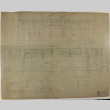
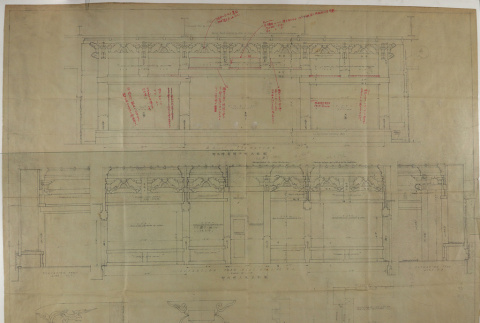
Architectural plans altar, likely for Betsuin Temple in Seattle, approved by the Buddhist Mission of North American in San Francisco. With handwritten notes in Japanese
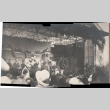
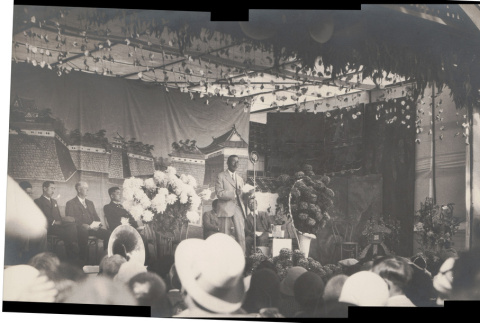
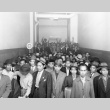
Hirokichi "Harry" Hayashi at the microphone before a crowd. Hirokichi served as the president of the San Francisco Market president between 1930 and 1932

![Letter from Masao Okine to Mr. and Mrs. S. Okine, August 16, 1946 [in Japanese] (ddr-csujad-5-156)](https://ddr.densho.org/media/cache/9c/33/9c33074facaad11a4f1a240173ce9fe0.jpg)
![Letter from Masao Okine to Mr. and Mrs. Okine, January 10, 1946 [in Japanese] (ddr-csujad-5-121)](https://ddr.densho.org/media/cache/98/5a/985a9e384e81da3476dcd4c2284e90e7.jpg)
![Letter from Masao Okine to Mr. and Mrs. S. Okine, February 18, 1946 [in Japanese] (ddr-csujad-5-190)](https://ddr.densho.org/media/cache/aa/0a/aa0a7d2a46a9b6f91b2a9fdcba1d08a5.jpg)
![Letter from Masao Okine to Mr. and Mrs. Okine, January 19, 1946 [in Japanese] (ddr-csujad-5-124)](https://ddr.densho.org/media/cache/6e/47/6e47c717bde11813193ed77970c2b9f8.jpg)
![Letter from Masao Okine to Mr. and Mrs. S. Okine, August 16, 1946 [in Japanese] (ddr-csujad-5-156)](https://ddr.densho.org/media/cache/78/02/7802dc5dd10d589f00bd6f01c6295ae5.jpg)
![Letter from Masao Okine to Mr. and Mrs. Okine, January 10, 1946 [in Japanese] (ddr-csujad-5-121)](https://ddr.densho.org/media/cache/b0/08/b008621cc4cbd7352bdd5ce9a5199fc8.jpg)
![Letter from Masao Okine to Mr. and Mrs. S. Okine, February 18, 1946 [in Japanese] (ddr-csujad-5-190)](https://ddr.densho.org/media/cache/47/4a/474a0e512634525517d473f352ad5888.jpg)
![Letter from Masao Okine to Mr. and Mrs. Okine, January 19, 1946 [in Japanese] (ddr-csujad-5-124)](https://ddr.densho.org/media/cache/9c/ba/9cba07a33ea3ab48964bdf48f9ae2f5d.jpg)