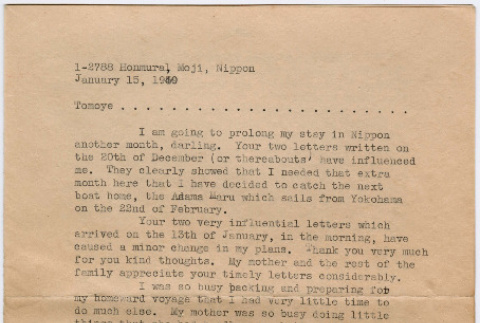
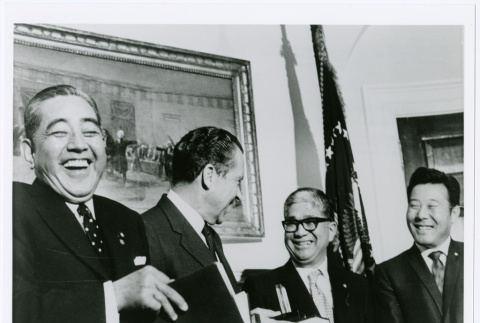
Planning to extend his visit to Japan another month to continue to work on his Japanese. Set of photos including in envelope in photograph collection: ddr-densho-426-1386-1394
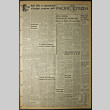
Issue 108 includes an announcement that author Jan J. Russell is writing a story about Crystal City, letters to the editor, an article about an earthquake in Japan, and more.
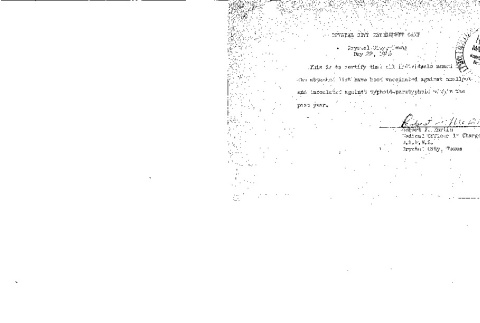
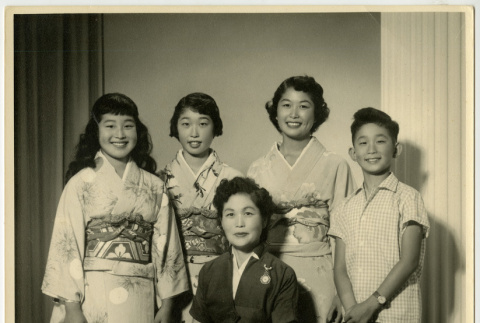
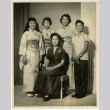
Collection of 69 photographs and 4 documents from the Yoshioka family. The photographs are of Kiyoko Yoshioka nee Maeda's life, mainly pre-war California and Japan, some from Poston, and some in post-war California.
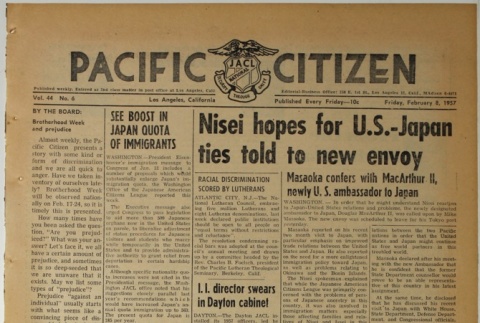
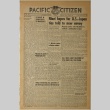
Selected article titles: "Nisei hopes for U.S.-Japan ties told to new envoy Masaoka confers with MacArthur II, newly U.S. ambassador to Japan" (p. 1); "See boost in Japan quota of immigrants" (p. 1); "Masaoka to speak at Philadelphia fete" (p. 1); "JACL urges early enactment of civil rights bill this session" (p. 1); "College Scholarship plus …
A letter from Haruto Okine in Hiroshima, Japan, to his uncle, Seiichi Okine. The letter is mailed by Naoji Okine, Seiichi's brother. In the letter, Haruto thanks Seiichi Okine for the gifts and gives congratulations to Masao Okine on his new baby. He hopes that Seiichi will return to Japan someday when Japan rebuilds from the …
A letter from Naoji Okine in Hiroshima, Japan to his brother, Seiichi Okine. He informs that Seiichi's gifts have been brought by Kenji Okine, including milk, sugar, and soap bars, and appreciates his support. He asks about prices in the U.S. as short supply drives prices high in Japan. He thinks back of his life in …
Surgeon's inspection card for Buichiro Itabashi's journey on the S.S. Shinano from Kobe, Japan, to Seattle, Washington, U.S.A. . Itabashi's name appears misspelled on the card. Front of card reads: "INSPECTION CARD / (Immigrants and Steerage Passengers)." Filled portion of card reads: "Port of departure, Kobe, Japan. Date of departure, JUL 26th 1902 / Name of …
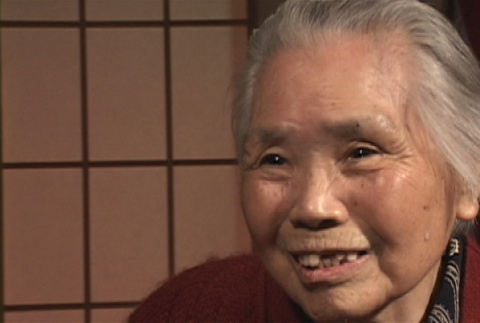
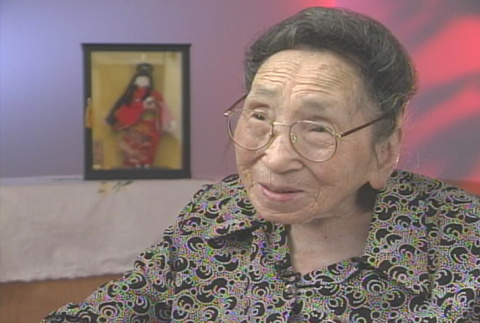
Issei female. Born 1895 in Nagano, Japan. Married Mr. Kazuyoshi Murayama, an Issei who returned to Japan temporarily for an arranged marriage. Immigrated to the U.S. in August of 1916. Worked for a wealthy family in North Dakota, then settled in Seattle. Went back to Japan in 1924, but returned to Seattle in 1925. Owned a …
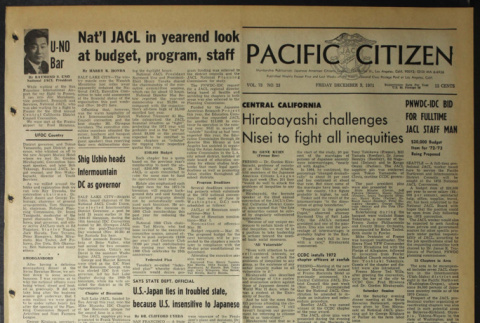
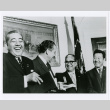
Selected article titles: "Nat'l JACL in year end look at budget, program, staff" (p. 1), "Central California: Hirabayashi challenges Nisei to fight all inequities" (p. 1), "PNWDC-IDC bid for full time JACL staff man" (p. 1), "U.S.-Japan ties in troubled state, because U.S. insensitive to Japanese" (p. 1), "Parents troubled by drug abuse, delinquency meet for …
Kibei male. Born December 29, 1928, in Pendleton, Oregon. Father passed away at an early age, and Henry was taken by mother with several siblings to Katsuura, Japan. Attended school in Japan and worked in factories to support the war effort during World War II. Left Japan after the war, and was drafted by the U.S. …
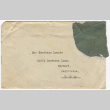
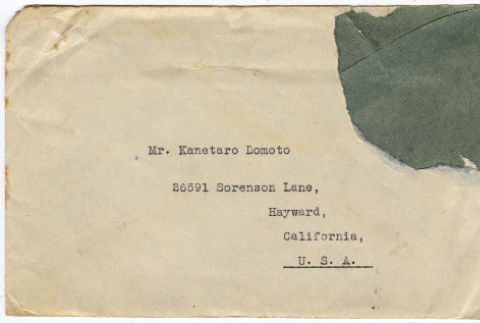
Envelope addressed to Mr. Kanetaro Domoto, stamp and postmark removed, on the back is the return address to Domoto & Co. Importers & Exporters in Yokohama, Japan with the date Mar. 30, 1936 stamped on the back. Inside stored two letters. The first letter addressed to Kanetaro Domoto and dated March 28, 1936. The letter is …
Description of middle school in Japan, involvement in compulsory military training
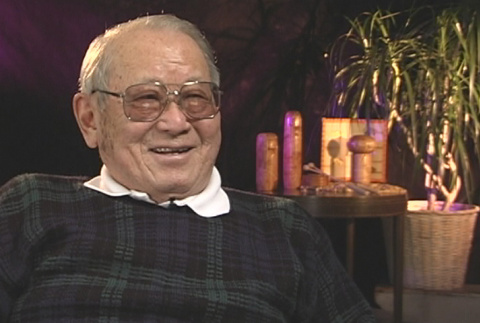
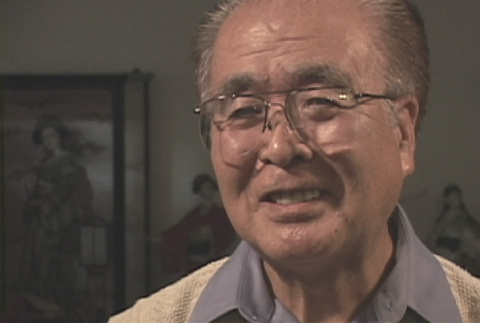
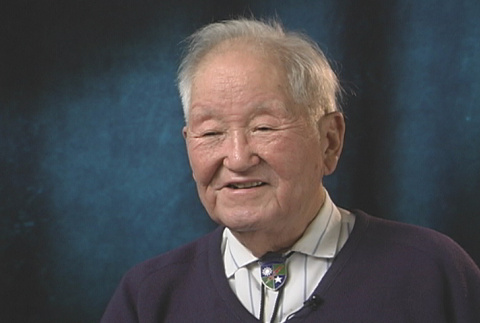
Although Mr. Matsumoto does not identify himself as a Kibei (American-born person of Japanese ancestry sent to Japan for formal education and socialization when young and later returned to the U.S.), some of his life experiences are similar to those who do identify themselves as …
Pursing a romantic interest in Japan as a teenager
Although Mr. Matsumoto does not identify himself as a Kibei (American-born person of Japanese ancestry sent to Japan for formal education and socialization when young and later returned to the U.S.), some of his life experiences are similar to those who do identify themselves as such.
Taking a side trip to Hiroshima while stationed in Japan
Although Mr. Matsumoto does not identify himself as a Kibei (American-born person of Japanese ancestry sent to Japan for formal education and socialization when young and later returned to the U.S.), some of his life experiences are similar to those who do identify themselves as such.
While working undercover in Japan, meeting family of future wife
Although Mr. Matsumoto does not identify himself as a Kibei (American-born person of Japanese ancestry sent to Japan for formal education and socialization when young and later returned to the U.S.), some of his life experiences are similar to those who do identify themselves as such.
Attending elementary school in Japan, encountering discrimination as an American immigrant
Although Mr. Matsumoto does not identify himself as a Kibei (American-born person of Japanese ancestry sent to Japan for formal education and socialization when young and later returned to the U.S.), some of his life experiences are similar to those who do identify themselves as …
First impressions of Japan and meeting grandmother for the first time
Although Mr. Matsumoto does not identify himself as a Kibei (American-born person of Japanese ancestry sent to Japan for formal education and socialization when young and later returned to the U.S.), some of his life experiences are similar to those who do identify themselves as …
Hearing about the atomic bombings in Japan while in China
Although Mr. Matsumoto does not identify himself as a Kibei (American-born person of Japanese ancestry sent to Japan for formal education and socialization when young and later returned to the U.S.), some of his life experiences are similar to those who do identify themselves as such.




![Letter from Haruto Okine to Mr. Seichi Okine, January 29, 1948 [in Japanese] (ddr-csujad-5-240)](https://ddr.densho.org/media/cache/5f/03/5f03902b26959fb3eb2c4cac65088ade.jpg)
![Letter from Naoji Okine to Seiichi Okine, December 13, 1949 [in Japanese] (ddr-csujad-5-266)](https://ddr.densho.org/media/cache/1f/ce/1fce7de10ecc9214cc15e3c4ff4aec58.jpg)




![Letter from Haruto Okine to Mr. Seichi Okine, January 29, 1948 [in Japanese] (ddr-csujad-5-240)](https://ddr.densho.org/media/cache/a7/80/a780dbec446759470fa5525aa833c26b.jpg)
![Letter from Naoji Okine to Seiichi Okine, December 13, 1949 [in Japanese] (ddr-csujad-5-266)](https://ddr.densho.org/media/cache/ed/4a/ed4a87c5910ae2256e2916be5e29d93b.jpg)