
Digital Library of Japanese American Incarceration Films ddr-densho-1024
107 items

107 items
av
Eyewitness: Stan Honda: Reflections of a Photojournalist (ddr-densho-1024-88)
Short documentary film about photojournalist Stan Honda, who gained fame for the photographs he took of the aftermath of the attacks on the World Trade Center on September 11, 2001. See this item in the Densho Resource Guide at: Eyewitness: Stan Honda: Reflections of a Photojournalist (film). See this item in the Digital Library of …
av
Harsh Canvas: Henry Sugimoto (ddr-densho-1024-89)
A 2001 biographical documentary film on the life and work of Issei artist Henry Sugimoto, based on the artist's memoirs and testimony before the Commission on Wartime Relocation and Internment of Civilians. The film highlights Sugimoto's art through archival and contemporary footage and follows his life's journey from immigration to his incarceration with his family during …
av
Looking Like the Enemy (ddr-densho-1024-90)
Documentary film on the unique experiences of Japanese American soldiers in Asian wars: World War II, the Korean War, and the Vietnam War. The 52-minute film was made by Karen L. Ishizuka and Robert A. Nakamura in conjunction with the exhibition Fighting for Tomorrow: Japanese Americans in America's Wars at the Japanese American National Museum and …
av
9066 to 9/11: America's Concentration Camps Then... and Now? (ddr-densho-1024-91)
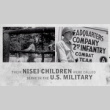
A 2004 documentary film directed by Akira Boch that looks at the World War II expulsion of Japanese Americans into American concentration camps through the contemporary lens of the terrorist attacks of September 11, 2001. See this item in the Densho Resource Guide at: 9066 to 9/11: America's Concentration Camps Then... and Now? (film). See …
av
Unexpected Journeys: Remarkable Stories of Japanese in America (ddr-densho-1024-92)
Documentary film consisting of short profiles of Japanese Americans whose "surprising stories" were shaped by World War II in unusual ways. See this item in the Densho Resource Guide at: Unexpected Journeys: Remarkable Stories of Japanese in America (film). See this item in the Digital Library of the Japanese American Incarceration Films at: https://archive.org/details/ddr-densho-1024-92.

av
Words, Weavings, and Songs (ddr-densho-1024-93)
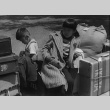
2002 documentary film profiling three Nisei women who drew on their experiences as teenagers in American concentration camps to pursue different types of creative expression both in camp and afterwards. The three artists featured are writer, playwright, and painter Wakako Yamauchi , weaver Momo Nagano, and singer Mary Nomura. See this item in the Densho Resource …
av
Time of Fear (ddr-densho-1024-95)
Documentary film that provides an overview of the Japanese American World War II incarceration experience with a focus on the two camps in Arkansas, Jerome and Rohwer. Time of Fear tells its story using archival still and moving images—including home movie footage of Jerome taken by Akira and Yoshio Hayashi—along with recreations and interviews with Japanese …
av
Speak Out for Justice: An Introduction by Kay Ochi (ddr-densho-1024-98)
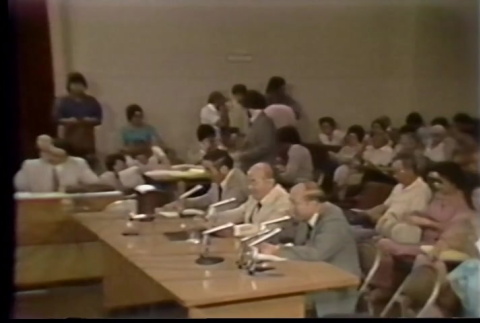
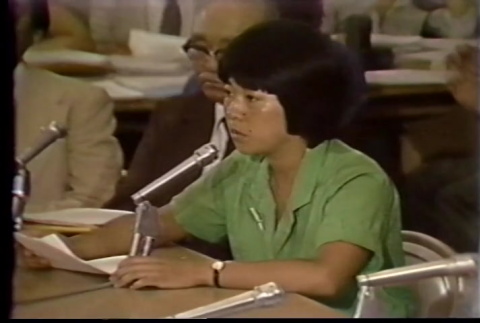
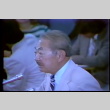
Co-Chair of NCRR/Los Angeles Kay Ochi provides an overview introduction of the Commission on Wartime Relocation and Internment of Civilians (CWRIC) hearings in Los Angeles, held from August 4 through August 6, 1981. Kay Ochi emphasizes the power of testimonies, grassroots organizations, and the importance of speaking out against injustice. To commemorate the 40th anniversary of …
av
Speak Out for Justice: August 4, 1981- Part 1 (ddr-densho-1024-99)
Elected Officials give their testimonies on the circumstances and facts surrounding the forced relocation and internment of over 120,000 Japanese Americans during World War II. Introduction by Co-Chair of NCRR/Los Angeles Kay Ochi. Part 1 Testifiers: Senator S. I. Hayakawa, Barbara Marumoto, Edmund Edelman, Tom Bradley, Mas Fukai To commemorate the 40th anniversary of the 1981 …
av
Speak Out for Justice: August 4, 1981 - Part 2 (ddr-densho-1024-100)
Japanese Americans break their silence to speak out on the pain, suffering, and loss experienced as a result of the issuance of Executive Order 9066. The first-hand accounts detail the enormous loss of property and business among many Japanese Americans after World War II. Introduction by Jim Matsuoka, Co-Founder of Los Angeles Committee Coalition for Redress …
av
Speak Out for Justice: August 4, 1981 - Part 3 (ddr-densho-1024-101)
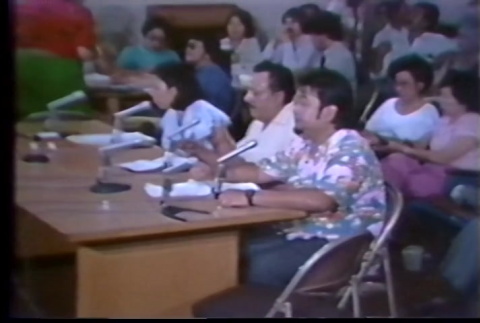
Testifiers speak out on the heartbreaking accounts of camp experiences, post-war trauma, and the racial prejudice endured by many Japanese Americans. Introduction by Harry Kawahara, Former Redress Committee Chairman. Part 3 Testifiers: Henry S. Yamaga, Alfred Nabeta, Robert O'Brien, Morris Kight, Harry Kawahara, Hannah Tomiko Holmes, Raymond Wiedman To commemorate the 40th anniversary of the 1981 …
av
Speak Out for Justice: August 4, 1981 - Part 4 (ddr-densho-1024-102)
Testifiers continue to speak out on the intergenerational impact of Executive Order 9066 on Japanese Americans. The demand for Community Redress and Reparations grows as the testimonies continue to speak out on the psychological trauma and feelings of shame felt by many interned Japanese Americans. Introduction by Duane Kubo, Co-Founder of Visual Communications. Part 4 Testifiers: …
av
Speak Out for Justice: August 5, 1981 - Part 1 (ddr-densho-1024-103)
Nisei (second-generation Japanese Americans) veterans speak out about the injustice shown to Japanese Americans during World War II and in solidarity demand redress. A confrontation occurs between testifier Jim Kawaminami and author Lillian Baker, who denied that Japanese Americans were incarcerated during World War II. Introduction by Roy Nakano, Director of UCLA Asian American Studies Center. …
av
Speak Out for Justice: August 5, 1981 - Part 2 (ddr-densho-1024-104)
Testifiers continue to show bravery in speaking out on the impact of Japanese internment during World War II. These stories show the economic loss, psychological trauma, and impact on education for many interned Japanese. Introduction by Jen Noji of Nikkei Progressives and Alan Nishio, Former Co-Chair of NCRR Los Angeles Part 2 Testifiers: Jack Fujimoto, Y. …
av
Speak Out for Justice: August 5, 1981 - Part 3 (ddr-densho-1024-105)
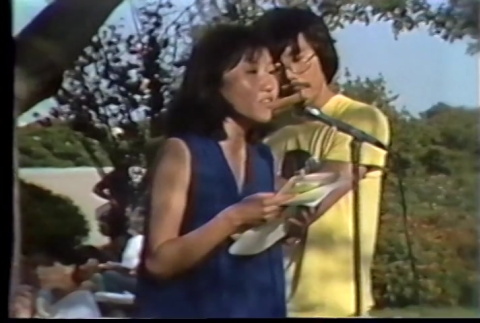
In a lunch-time rally planned by NCRR, organizations and communities come together in solidarity to speak out in support for Japanese American Redress. Introduction by Miya Iwataki, Co-Founder of NCRR. To commemorate the 40th anniversary of the 1981 Commission on Wartime Relocation and Internment of Civilians (CWRIC) Los Angeles hearings, Visual Communications and Nikkei for Civil …
av
Speak Out for Justice: August 5, 1981 - Part 4 (ddr-densho-1024-106)
As the Commission on Wartime Relocation and Internment of Civilians (CWRIC) Los Angeles hearings resume, Issei testifiers speak out on the injustice shown towards people of Japanese ancestry during World War II. Testifiers from the San Diego Redress and Reparations Committee also speak out on behalf of their experiences and their families. Introduction by Jan Tokumaru, …
av
Speak Out for Justice: August 5, 1981 - Part 5 (ddr-densho-1024-107)
As the Commission on Wartime Relocation and Internment of Civilians (CWRIC) Los Angeles hearings proceed, testimonies of financial losses and psychological trauma drive the movement for Redress and Reparations forward. The testifiers show solidarity in their support for interned people of Japanese ancestry. Introduction by Mark Masaoka and Miyako Noguchi of Nikkei Progressives. Part 5 Testifiers: …
av
Speak Out for Justice: August 5, 1981 - Part 6 (ddr-densho-1024-108)
Testifiers continue to speak out on economic and property loss as a result of forced relocation and internment. Japanese Americans share their experiences of search, seizure, and mistreatment during their time spent in internment camps. Introduction by Alison Kochiyama, Executive Director of the Gardena Valley Japanese Cultural Institute. Part 6 Testifiers: Kiyoshi Sonoda, Larry Boss, Mary …
av
Speak Out for Justice: August 6, 1981 - Part 1 (ddr-densho-1024-109)
Testimonies emerge from the issei (first generation Japanese) perspective as testifiers demand to speak out in Japanese. Japanese Americans from Terminal Island tell their stories of being forcibly removed from their homes and placed into internment camps. Introduction by Yasuko Sakamoto of NCRR, and Alina Nakano, granddaughter of Bert and Lillian Nakano. Part 1 Testifiers: Dean …
av
Speak Out for Justice: August 6, 1981 - Part 2 (ddr-densho-1024-110)
Mental health professionals provide insight into the detrimental effects of camp trauma and the impact on psychological and physical health. Japanese Americans speak out on the extreme racial prejudice and discrimination experienced in post-camp life. Introduction by Karen Umemoto, Executive Director of the UCLA Asian American Studies Center, and Michael Nishimura, member of Nikkei Progressives. Part …
av
Speak Out for Justice: August 6, 1981 - Part 3 (ddr-densho-1024-111)
Testifiers continue to speak out on the economic loss and psychological impact of Japanese internment during World War II. Recollections of post-camp resettlement also demonstrate the discrimination and prejudice experienced by many Japanese Americans. Introduction by June Hibino of Nikkei Progressives and NCRR. Part 3 Testifiers: Rei Osaki, Peter K. Ota, John J. Saito, Linda Morimoto, …
av
Speak Out for Justice: August 6, 1981 - Part 4 (ddr-densho-1024-112)
Members from various associations and organizations provide legal viewpoints on the constitutional issues and impact of camp experiences on Japanese American psyche. All of them demand for monetary reparations and constitutional remedy. Introduction by Steve Nagano of NCRR and Nikkei Progressives. Part 4 Testifiers: Fred Okrand, Junji Kumamoto, Alan Terakawa, Carole Sei Morita, Rose Matsui Ochi, …
av
Speak Out for Justice: August 6, 1981 - Part 5 (ddr-densho-1024-113)
As the final day of the CWRIC hearings conclude, testifiers continue to speak out on the impact of EO 9066 on Japanese American communities and unite in their demand for monetary redress. The testimonies recall business property loss, resettlement difficulties, and racial prejudice. Introduction by Richard Katsuda, educator and co-chair of NCRR. Part 5 Testifiers: Akemi …
av
Speak Out for Justice: August 6, 1981 - Part 6 (ddr-densho-1024-114)
The three days of CWRIC LA hearings concludes with final comments from the three remaining Commissioners present. [Commissioners Arthur S. Flemming, Hugh B. Mitchell, and William M. Marutani] Introduction by Abraham Ferrer of Visual Communications. To commemorate the 40th anniversary of the 1981 Commission on Wartime Relocation and Internment of Civilians (CWRIC) Los Angeles hearings, Visual …
av
Speak Out for Justice: August 4, 1981 - Little Tokyo Towers Evening Session (ddr-densho-1024-115)
On the evening of August 4, 1981, NCRR arranged a special evening session at the Little Tokyo Towers in Los Angeles, so that people who worked during the day could attend and participate in the CWRIC hearings. While the testimony footage for this session is incomplete and disjointed, the testifiers provide their heartbreaking experiences of personal …