Mass removal ("evacuation")

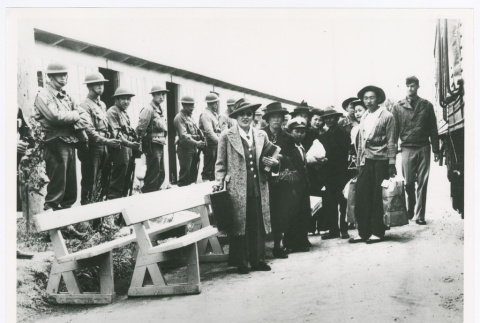
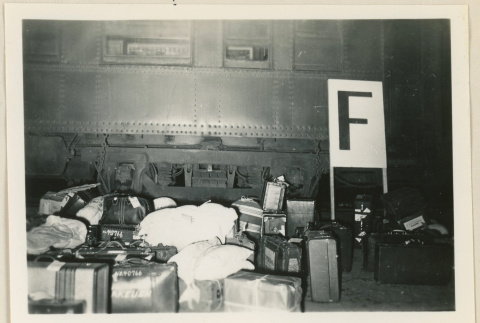
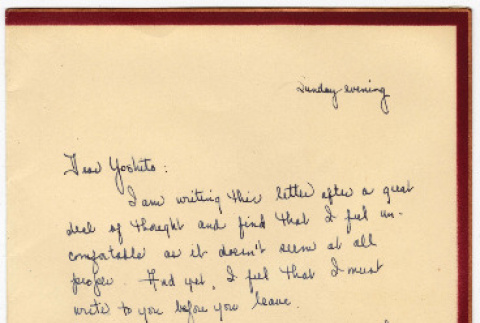
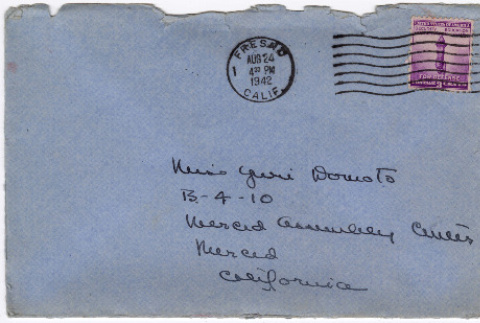
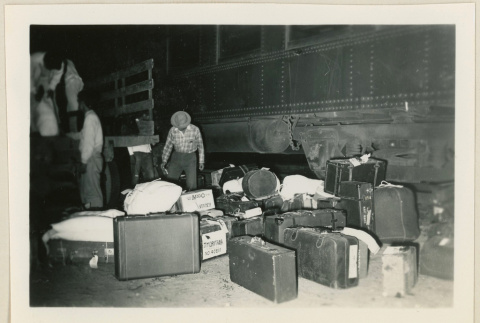
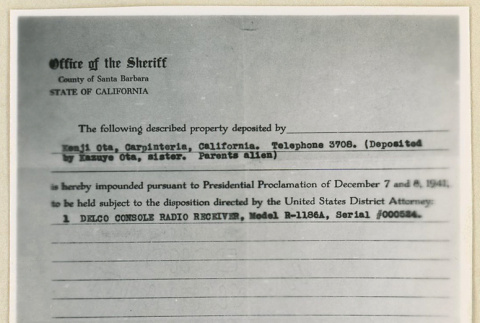
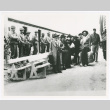
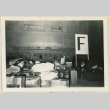
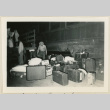
On March 2, 1942, Public Proclamation No. 1 began to appear on telephone poles and buildings. This was the first official notice Japanese Americans had of their immediate removal from the West Coast. The notices stated that they had six or seven days to prepare, and were to take only what they could carry. They were not told where they would be taken. People rushed to sell or store, in one week, property and belongings acquired over a lifetime. Some families tucked their valuables away in their attic or basement and locked the door, hoping to return soon. On the appointed "evacuation" day, thousands of Japanese Americans gathered at designated locations, with the numbered identification tags they had been issued tied to their coats. Watched by curious onlookers, they were met by armed soldiers and transported in buses, private cars, and trains to sixteen temporary "assembly centers" in California, Washington, Oregon and Arizona.

World War II (283)
Mass removal ("evacuation") (746)

Related articles from the Densho Encyclopedia :
Final Report, Japanese Evacuation from the West Coast, 1942 (book)
Facilities
Format
Genre
Usage

Use <Ctrl> or (⌘) keys to select multiple terms

746 items
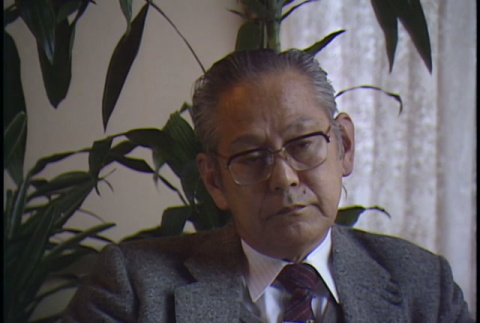
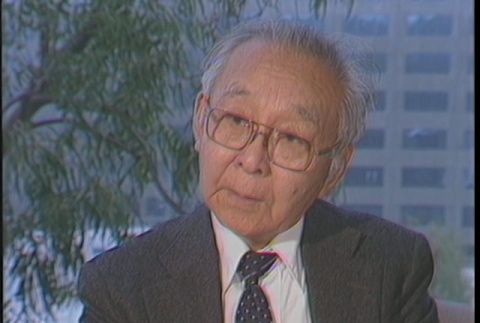
Interview with Arthur (Art) Morimitsu, part 1 of 6 (ddr-densho-1007-1749)
av Interview with Arthur (Art) Morimitsu, part 1 of 6 (ddr-densho-1007-1749)
Morimitsu discusses evacuation, his family's internment at Tule Lake, anti-Japanese sentiment after Pearl Harbor, being recruited by the military, and camp attitudes towards recruitment. Loni Ding can be heard asking questions in the background. Original title: 58B, II VFW #1, VFW - Art Morimitsu, Feb. 15, 1987. Interview continues at ddr.densho.org/ddr-densho-1007-1750/
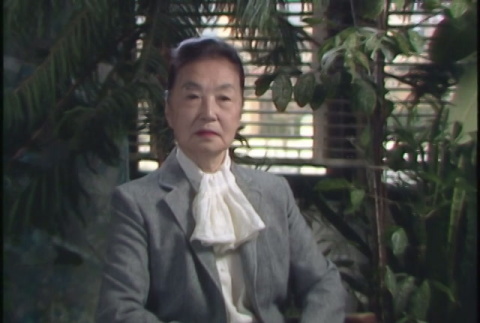
Interview with Barry Saiki, part 5 of 5 (ddr-densho-1007-1706)
av Interview with Barry Saiki, part 5 of 5 (ddr-densho-1007-1706)
Saiki discusses what he wants Sansei and Americans in general to know about internment and the importance of being "bicultural". Loni Ding can be heard asking questions behind the camera. Original title: 219, II JA #45, Barry Saiki, Sun. Feb. 2
Interview with Henry (Hank) Gosho, part 1 of 3 (ddr-densho-1007-1768)
av Interview with Henry (Hank) Gosho, part 1 of 3 (ddr-densho-1007-1768)
Gosho discusses returning to Seattle from Japan before the war, his brothers being conscripted into the Japanese army, Pearl Harbor, his father's arrest by the FBI, assuming the Nisei wouldn't be evacuated, being relocated to Puyallup/Camp Harmony, realizing that he was a prisoner, his time at Minidoka, deciding early on to join the military, and the …
Interview with Hideko Seo, part 1 of 4 (ddr-densho-1007-1535)
av Interview with Hideko Seo, part 1 of 4 (ddr-densho-1007-1535)
Seo discusses her experiences growing up in Portland, moving to Chicago during evacuation, her brother Jimmy's service/camp visits, and her family's time in Minidoka. Also mentions her brother's death during the war. Video starts at 0:52. Loni Ding can be heard asking questions behind the camera. Original title: II NY #19, 6-85, Hideko Seo. Interview continues …
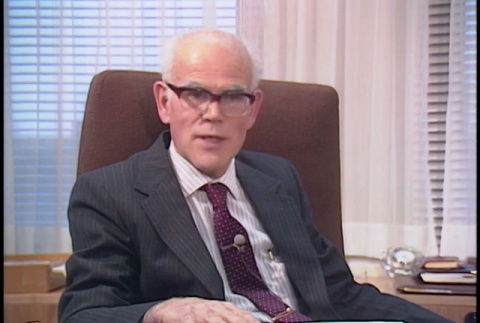
Roger Daniels interviewed by Kent Hori, part 2 of 4 (ddr-densho-1007-1757)
av Roger Daniels interviewed by Kent Hori, part 2 of 4 (ddr-densho-1007-1757)
Daniels discusses the reaction to Pearl Harbor, anti-Japanese sentiment and hysteria, the decision to incarcerate, reactions to EO 9066, James Omura's testimony against internment (and reads a letter Omura wrote), the treatment of German and Italian Americans during the war, the process of evacuation, and resistance to evacuation. Part 1 of this interview is not in …
Interview with Bill Dizer, part 1 of 3 (ddr-densho-1007-1676)
av Interview with Bill Dizer, part 1 of 3 (ddr-densho-1007-1676)
Dizer, who lives in Japan, discusses how he started to learn Japanese at the University of Michigan, his thoughts on evacuation and his deployment in Japan. Interview starts at 6:15. Loni Ding can be heard asking questions behind the camera. Original title: 193, II JA #10, Bill Dizer, Fri., Jan. 31. Interview continues at ddr.densho.org/ddr-densho-1007-1677/
Interview with Sho Nomura, part 2 of 6 (ddr-densho-1007-1611)
av Interview with Sho Nomura, part 2 of 6 (ddr-densho-1007-1611)
Nomura discusses his family's internment at Gila River, volunteering and testing for the MIS language school, and the difficulty his family faced in camp after he volunteered. Video starts at 0:22. Loni Ding can be heard asking questions behind the camera. Original title: 94, II LA #41, 7-25-85, Sho Nomura Interview II. Interview continues at ddr.densho.org/ddr-densho-1007-1612/
Interview with Clarence Matsumura, part 2 of 5 (ddr-densho-1007-1609)
av Interview with Clarence Matsumura, part 2 of 5 (ddr-densho-1007-1609)
Matsumura discusses growing up in Wyoming, his mother's cooking, moving to Los Angeles in 1936, getting his radio license, Pearl Harbor, evacuation to Pomona and Heart Mountain, his attempts to join the Navy, Air Force, Coast Guard and Marines, being drafted, his basic training in Fort Hood, TX, his deployment in Europe, and the Hollywood store …
Interview with Harry Fukuhara, part 1 of 6 (ddr-densho-1007-1632)
av Interview with Harry Fukuhara, part 1 of 6 (ddr-densho-1007-1632)
Fukuhara discusses growing up in Seattle and Auburn, WA, the time he spent in Hiroshima as a child, his time working before college, studying at Woodbury College in LA, his reaction to Pearl Harbor, evacuation, and entering the Tulare assembly center with his sister. Video starts at 0:50. Loni Ding can be heard asking questions behind …
Roger Daniels interviewed by Kent Hori, part 4 of 4; interview with John Kaneko, part 1 of 3 (ddr-densho-1007-1759)
av Roger Daniels interviewed by Kent Hori, part 4 of 4; interview with John Kaneko, part 1 of 3 (ddr-densho-1007-1759)
Daniels discusses the early successes of the Japanese army, the political justifications for relocation, why German and Italian Americans were not vilified in the same way, and the lack of support for Japanese Americans politically, culturally, and legally. Includes audio from reaction shots of Daniels and Hori, as well as recordings of Hori asking standalone questions. …
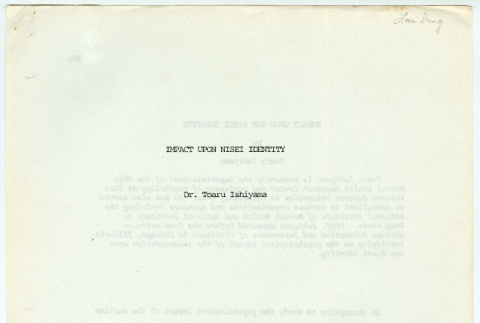
Impact Upon Nisei Identity by Dr. Toaru Ishiyama (ddr-densho-1007-1454)
doc Impact Upon Nisei Identity by Dr. Toaru Ishiyama (ddr-densho-1007-1454)
Statement prepared for the JACL National Committee for Redress. Focuses on the psychological effects of internment.
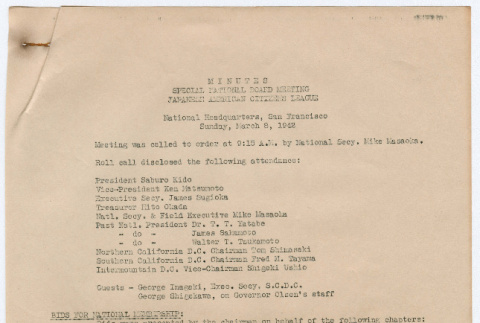
Meeting Minutes from the Special National Board Meeting of the Japanese American Citizens League on March 8, 1942 (ddr-densho-356-768)
doc Meeting Minutes from the Special National Board Meeting of the Japanese American Citizens League on March 8, 1942 (ddr-densho-356-768)
Meeting minutes from the JACL Special Nation Board Meeting. Topics include bids for national membership, future organization and activities, Appointment of national committee chairmen, nomination of officers, Washington representative, Special report on evacuation, and discussion on general evacuation principles.
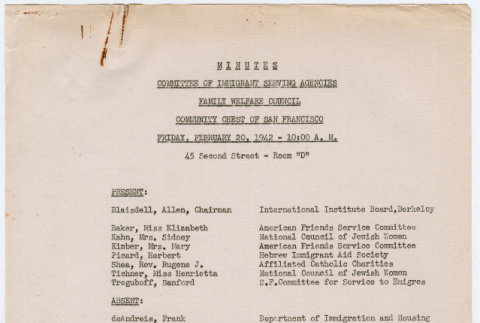
Meeting Minutes from Committee of Immigrant Serving Agencies meeting on February 20, 1942 (ddr-densho-356-767)
doc Meeting Minutes from Committee of Immigrant Serving Agencies meeting on February 20, 1942 (ddr-densho-356-767)
Meeting Minutes from Committee of Immigrant Serving Agencies meeting on February 20, 1942. Topics covered in the meeting include: reading correspondence regarding Japanese Americans, summery of recent board meeting, planned community outreach regarding public sentiment towards Japanese Americans, and planning financial assistance for Japanese Americans.
Letter to Yoshito Shibata (ddr-densho-356-212)
doc Letter to Yoshito Shibata (ddr-densho-356-212)
Two drafts of a letter to Yoshito Shibata from presumably Yuriko Domoto Tsukada in which she asks to talk in person about a photo she received from him.
Four letters to Yuri Domoto from Tomi Domoto (ddr-densho-356-289)
doc Four letters to Yuri Domoto from Tomi Domoto (ddr-densho-356-289)
Four letters stored in one envelope to Yuriko Domoto Tsukada from her cousin Tomi Domoto. Appears the letters were mailed separately and later stored together in one envelope. 6/8 letter: discusses events leading up to forced removal, inquires about how family are settling into the camp and how hers is and mutual friends. 8/8 letter: discusses …
API