
Seattle
Geographic communities
(318)
Washington
(651)
Seattle
(1351)
Related articles from the
Densho Encyclopedia :
Executive Order 9066: 50 Years Before and 50 Years After (exhibition),
Aki Kurose,
S. Frank Miyamoto,
James Sakamoto,
Monica Sone,
International District
1351 items
1351 items
vh
Henry Miyatake Interview IV (ddr-densho-1000-56)
Nisei male. Born April 28, 1929, in Seattle, Washington. Incarcerated at Puyallup Assembly Center and Minidoka concentration camp, Idaho. Had some key childhood experiences with discrimination that made him a self-described, "independent thinker," and later, an influential figure in the Japanese American community. While a teenager in camp, he wrote and defended an essay criticizing the …
vh
Gene Akutsu Interview I (ddr-densho-1000-1)
Nisei male. Born September 23, 1925, in Seattle, Washington. Spent prewar childhood in Seattle's Nihonmachi. Incarcerated at Puyallup Assembly Center, Washington, and Minidoka concentration camp, Idaho. Refused to participate in the draft and was imprisoned at McNeil Island Penitentiary, Washington, for draft resistance. Resettled in Seattle.
vh
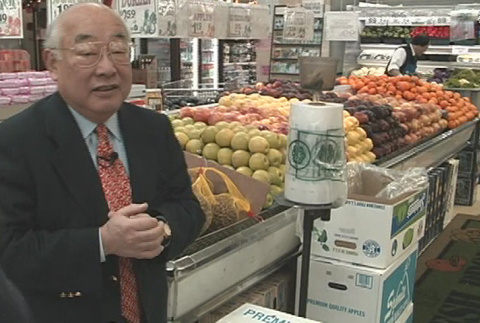
Tomio Moriguchi Interview I (ddr-densho-1000-59)
Ni-ten-gosei (Nisei/Sansei) male. Born April 16, 1936, in Tacoma, Washington. During World War II, was incarcerated with his family at the Tule Lake concentration camp, California. After the war, resettled in Seattle's Nihonmachi, where his father reestablished the family business, Uwajimaya, selling Japanese foodstuff and other items. Worked at Uwajimaya throughout his childhood -- along with …
vh
Tomio Moriguchi Interview III (ddr-densho-1000-61)
Ni-ten-gosei (Nisei/Sansei) male. Born April 16, 1936, in Tacoma, Washington. During World War II, was incarcerated with his family at the Tule Lake concentration camp, California. After the war, resettled in Seattle's Nihonmachi, where his father reestablished the family business, Uwajimaya, selling Japanese foodstuff and other items. Worked at Uwajimaya throughout his childhood -- along with …
vh
Tomio Moriguchi Interview II (ddr-densho-1000-60)
Ni-ten-gosei (Nisei/Sansei) male. Born April 16, 1936, in Tacoma, Washington. During World War II, was incarcerated with his family at the Tule Lake concentration camp, California. After the war, resettled in Seattle's Nihonmachi, where his father reestablished the family business, Uwajimaya, selling Japanese foodstuff and other items. Worked at Uwajimaya throughout his childhood -- along with …
vh
Henry Miyatake Interview V (ddr-densho-1000-57)
Nisei male. Born April 28, 1929, in Seattle, Washington. Incarcerated at Puyallup Assembly Center and Minidoka concentration camp, Idaho. Had some key childhood experiences with discrimination that made him a self-described, "independent thinker," and later, an influential figure in the Japanese American community. While a teenager in camp, he wrote and defended an essay criticizing the …
vh
Henry Miyatake Interview III (ddr-densho-1000-55)
Nisei male. Born April 28, 1929, in Seattle, Washington. Incarcerated at Puyallup Assembly Center and Minidoka concentration camp, Idaho. Had some key childhood experiences with discrimination that made him a self-described, "independent thinker," and later, an influential figure in the Japanese American community. While a teenager in camp, he wrote and defended an essay criticizing the …
vh
Henry Miyatake Interview II (ddr-densho-1000-54)
Nisei male. Born April 28, 1929, in Seattle, Washington. Incarcerated at Puyallup Assembly Center and Minidoka concentration camp, Idaho. Had some key childhood experiences with discrimination that made him a self-described, "independent thinker," and later, an influential figure in the Japanese American community. While a teenager in camp, he wrote and defended an essay criticizing the …
vh
Tomio Moriguchi Interview IV (ddr-densho-1000-62)
Ni-ten-gosei (Nisei/Sansei) male. Born April 16, 1936, in Tacoma, Washington. During World War II, was incarcerated with his family at the Tule Lake concentration camp, California. After the war, resettled in Seattle's Nihonmachi, where his father reestablished the family business, Uwajimaya, selling Japanese foodstuff and other items. Worked at Uwajimaya throughout his childhood -- along with …
doc
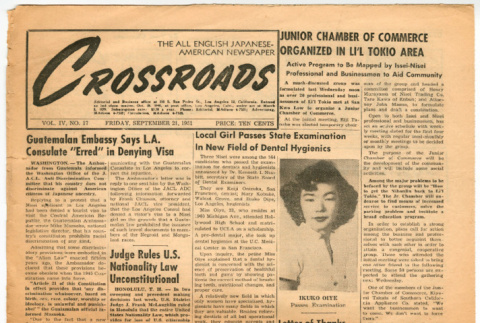
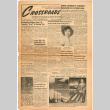
Crossroads Vol. IV, No. 17 (September 21, 1951) (ddr-densho-507-2)
Selected article titles: “Just Browsing” (p. 2), “Profile” (p. 3), “Society” (p. 4), “Social Silhouettes” (p. 5), “Club Notes” (p. 6), “Church Notices” (p. 6), “Sports” (p. 7), “Professional Directory” (p. 8)
doc
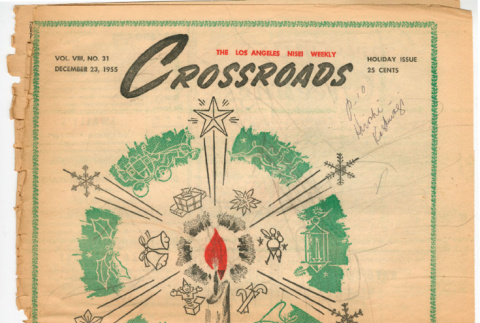
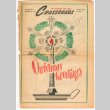
Crossroads VIII, No. 37 (December 23, 1955) (ddr-densho-507-4)
Selected article titles: “Christmas Greetings” (p. 2), “Crossroads to Somewhere” (p. 3), “Society” (p. 4), “My In-Laws and Senryu” (p. 6), “Tak’s Case” (p. 8-9, 16), “Mondai Wa Akira” (p. 10, 15), “Insurance in Birdies” (p. 11), “The Miyako Trio” (p. 12, 18), “Traditional Holiday Recipes” (p. 14), “Stagettes or The Year is 1949” (p. 17), …
doc
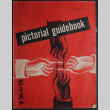
1952 Pictorial Guidebook (ddr-densho-266-78)
Select article titles: "Rare photographs capture beauties of Fuji" (pg 19-34); "The Issei Story" (pg. 35-58); "Pictures: San Francisco, Sacramento, Los Angeles, Twin Cities, New York, Chicago, Seattle, Japan" (pg. 59-112); "Organizations: Bird's-eye view of Nisei groups in the U.S." (pg. 113-138). Removed pages 140-167 from public website to protect personal information.
img
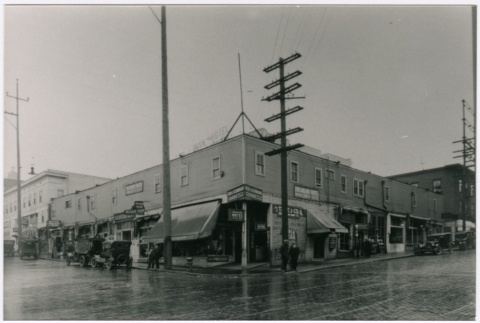
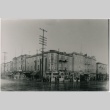
Southeast corner of 6th and King Street (ddr-densho-353-120)
Japanese businesses included the King coffee shop, the Mukilteo hotel, Panama grocery and express, Hinode Laundry baths and the Paris Hotel.
img
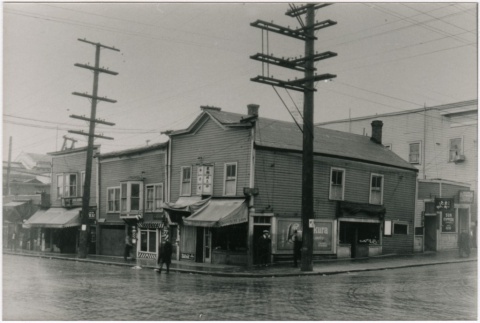
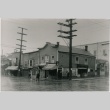
Northwest corner of 6th and King Street (ddr-densho-353-119)
Japanese businesses included Asakura Jewelry on the corner, Togo Meshiya, Sun Express, and a small grocery and tobacco shop run by the Sumiokas.
img
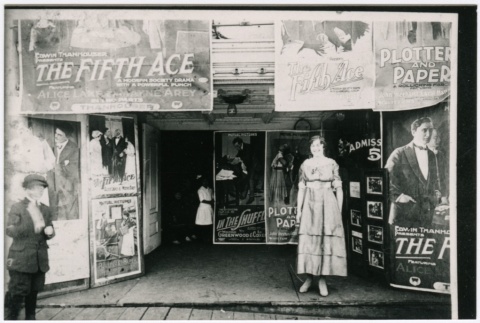
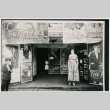
Seizaburo Mukai's Jackson Theater (ddr-densho-353-95)
Seizaburo Mukai also ran the Atlas, the Circle, and the Rialto theaters.
img
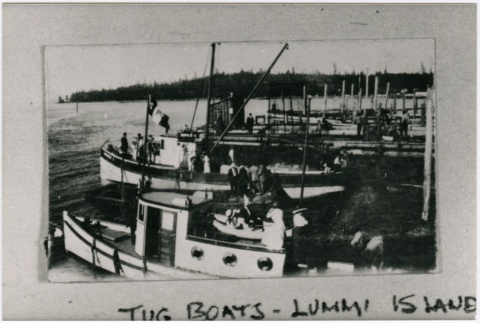
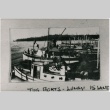
Tugboats at Lummi Island (ddr-densho-353-144)
For several years, Kiichi Setsuda was president of the Japanese American Fertilizing and Fisheries Company at Lummi Island, near Bellingham.
img
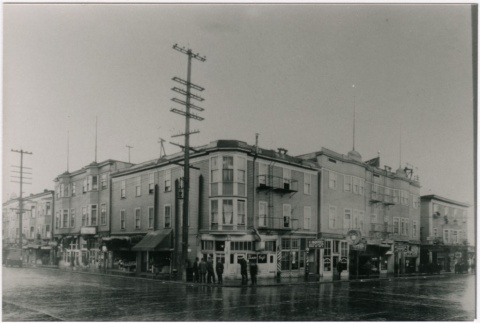
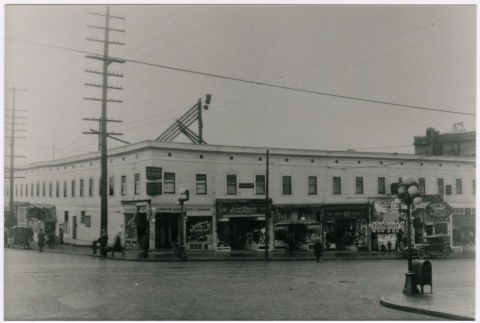
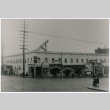
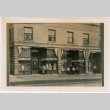
Block of Japanese businesses (ddr-densho-353-102)
Identified businesses are the dentists Dr. H Kato and Dr. S. Higashida upstairs, with the Welcome Hotel, Sanyo 10 cent store, Gosho Drugs, and the Jackson Street Sanitary barber shop on the street level.
img
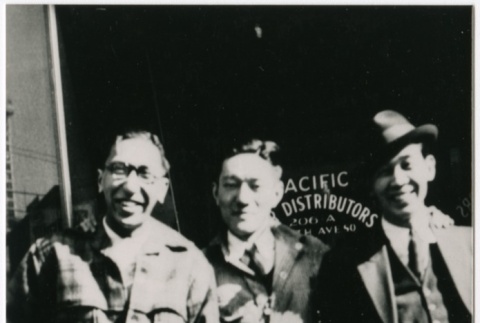
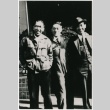
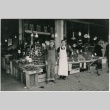
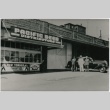
Three men standing together (ddr-densho-353-142)
Ted, Dick Setsuda, and Tats in front of the Pacific Beer Distributor building.
img
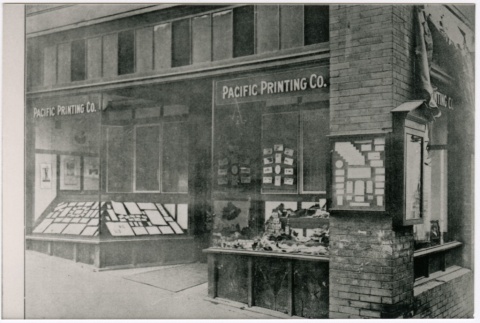
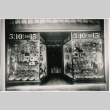
Jiro Kaneko's Pacific Printing Company (ddr-densho-353-87)
The Pacific Printing Company was located at 611 Main Street.
img
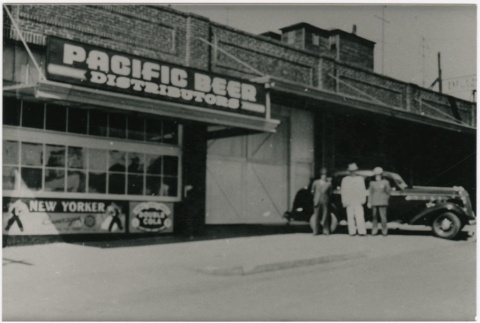
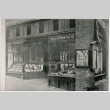
The Pacific Beer distribution plant (ddr-densho-353-143)
Before the plant was located at 7th and Jackson, it was at 206 Main Street in 1906 and 510 Main Street in 1908.
img
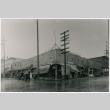
Northeast corner of 6th and King Street (ddr-densho-353-117)
Japanese businesses included the Dreamland Hotel, Komatsu-Zashi, Abe's dry goods store, Tokyo-Wan, Fujii Hotel, Inouye clothing store, New Golden Shoe repair, the Ogata's dry cleaning shop and the Salvation Army mission.