Social and recreational activities

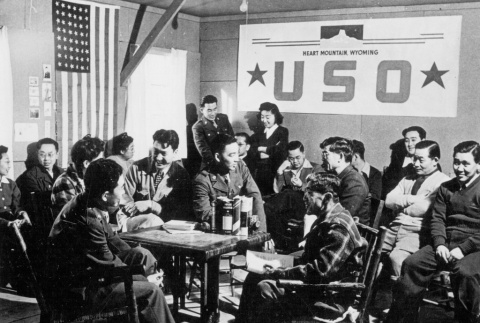
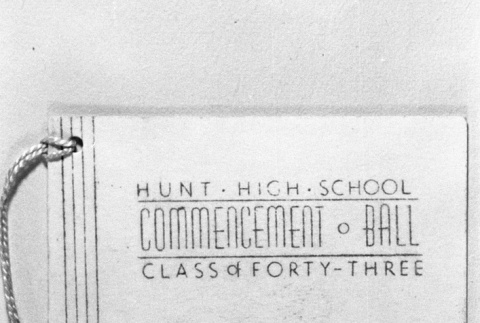
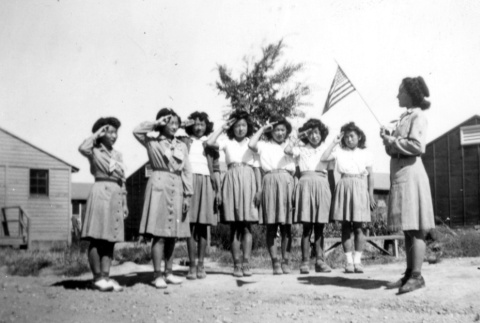
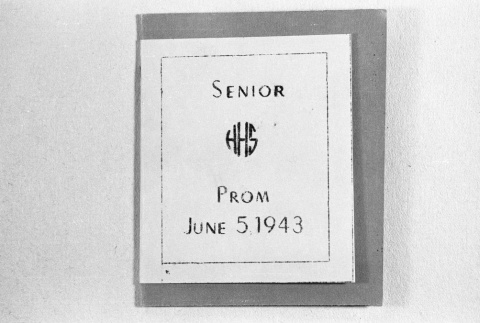
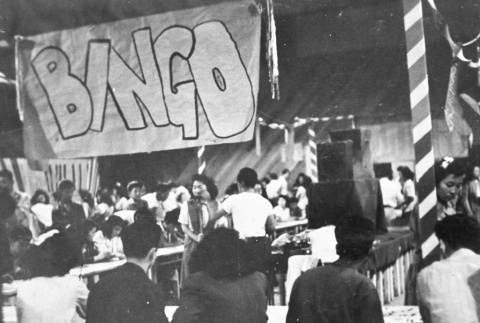
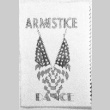
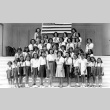
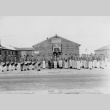
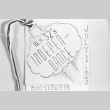
Japanese Americans found ways to fill the long days created by the enforced idleness of camp life. They made jewelry from shells found in the desert, built furniture for their rooms using scrap lumber and renovated the exteriors of their barracks. People also played cards, chess, checkers, mahjongg, and the Japanese games 'go' and 'shogi.' Camp inmates held dances, concerts, plays, and arts and crafts exhibitions. In Minidoka concentration camp, Idaho, they even held a beauty contest to select the "Sweetheart of Minidoka."

World War II (283)
Concentration camps (2078)
Social and recreational activities (1262)

Related articles from the Densho Encyclopedia :
Arts and crafts in camp, Music in camp

Facilities
Format
Genre
Usage

Use <Ctrl> or (⌘) keys to select multiple terms

1262 items
Alan Ladd, Sue Carroll [Carrol], and Bill Kato [with an injured man] (ddr-csujad-56-313)
img Alan Ladd, Sue Carroll [Carrol], and Bill Kato [with an injured man] (ddr-csujad-56-313)
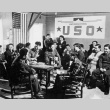
Two injured men, including Bill Kato, play cards, while Alan Ladd and Sue Carol look on. Taken at Fitzsimmons General Hospital. Handwritten text on back of photo reads, "Taken at Fitz. Gen. on Dec. 12, 1944, including Alan Ladd, Sue Carroll and Bill Kato." The original image is housed with the Sonoma County Japanese American Citizens …
Satoshi Kuwamoto interview (ddr-csujad-6-17)
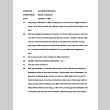
doc Satoshi Kuwamoto interview (ddr-csujad-6-17)
Oral history interview with Satoshi Kuwamoto. See this object in the California State Universities Japanese American Digitization project site: SCRC_KUWAMOTO_SATOSHI
Ruth Okuye Ihara interview (ddr-csujad-6-8)
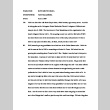
doc Ruth Okuye Ihara interview (ddr-csujad-6-8)
Oral history interview with Ruth Okuye Ihara. See this object in the California State Universities Japanese American Digitization project site: SCRC_IHARA_RUTH
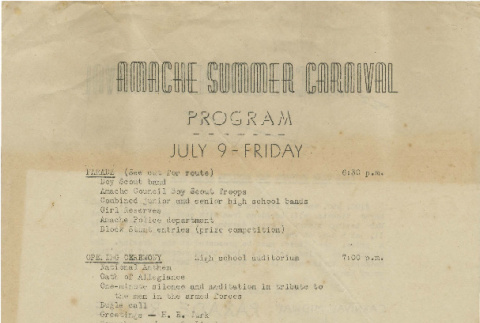
Amache summer carnival program (ddr-csujad-7-18)
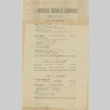
doc Amache summer carnival program (ddr-csujad-7-18)
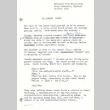
Program listing events and showing locations for a carnival put on by the incarcerees at Amache. See this object in the California State Universities Japanese American Digitization project site: HMLSC_Amache Summer Carnival
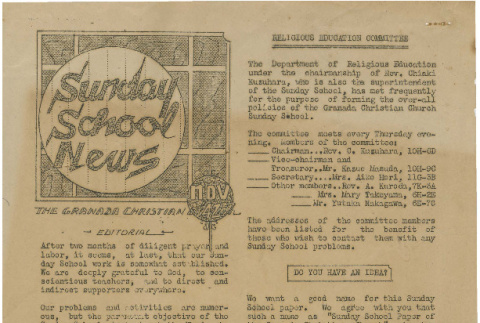
Granada Christian Church Sunday School news, 1942 (ddr-csujad-7-21)
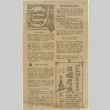
doc Granada Christian Church Sunday School news, 1942 (ddr-csujad-7-21)
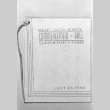
Newsletter put out by the Granada Christian Church for it's congregation. See this object in the California State Universities Japanese American Digitization project site: HMLSC_Granada Christian Church Sunday School News
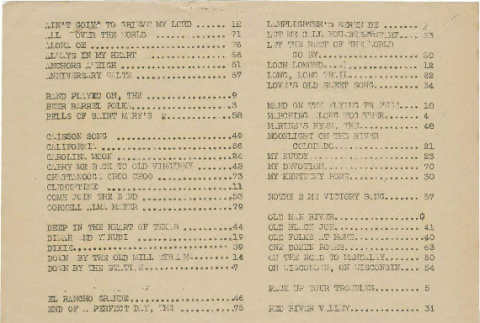
Song lyrics (ddr-csujad-7-31)
doc Song lyrics (ddr-csujad-7-31)
Several pages of well known popular song lyrics from the era. See this object in the California State Universities Japanese American Digitization project site: HMLSC_Song Lyrics
Rhythm show program (ddr-csujad-7-30)
doc Rhythm show program (ddr-csujad-7-30)
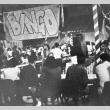
Program for a play/concert put on by high school students at Amache. See this object in the California State Universities Japanese American Digitization project site: HMLSC_Rhythm Show Program
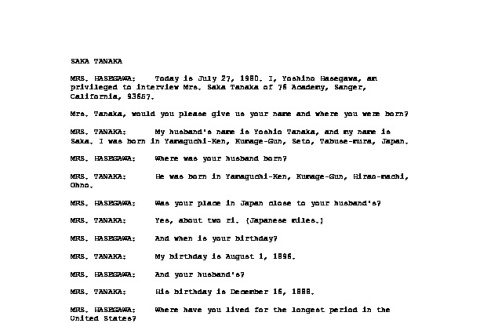
Saka Tanaka (ddr-csujad-8-73)
doc Saka Tanaka (ddr-csujad-8-73)
Oral history interview with Saka Tanaka. Information on the oral history project is found in: csuf_stp_0012A; Glossary in: csuf_stp_0014. See this object in the California State Universities Japanese American Digitization project site: FCPL Tanaka, Saka
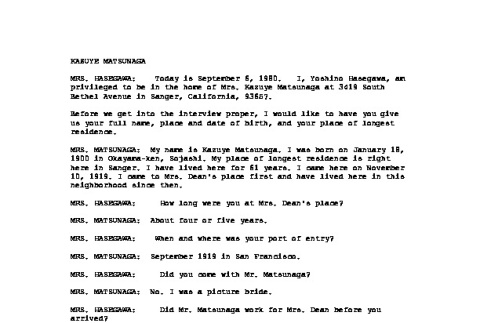
Kazuye Matsunaga (ddr-csujad-8-38)
doc Kazuye Matsunaga (ddr-csujad-8-38)
Oral history interview with Kazuye [Kazue] Matsunaga. Information on the oral history project is found in: csuf_stp_0012A; Glossary in: csuf_stp_0014. See this object in the California State Universities Japanese American Digitization project site: FCPL Matsunaga, Kazuye
Written piece:
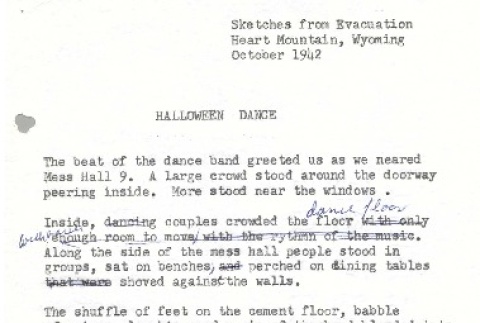
doc Written piece: "Halloween Dance" (ddr-densho-102-29)
This piece was written by Kara Kondo, and is part of a series titled "Sketches from Evacuation."
Recreation department staff (ddr-densho-111-3)
img Recreation department staff (ddr-densho-111-3)
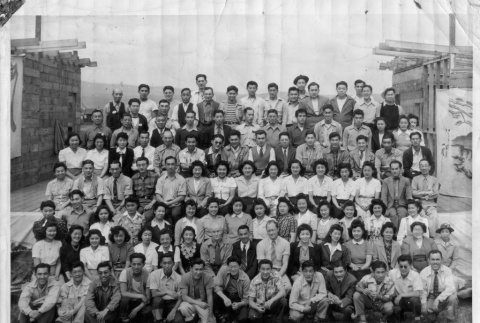
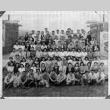
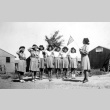
Staff of Tule Lake concentration camp's recreation department. They are sitting on a stage platform which was built in a firebreak, and used for various performances. Second row from front, ninth from left is Harry Mayeda, the Recreation Department Director. Elaine Ishikawa Hayes is in the third row, sixth from left.
Japanese Americans playing horseshoes (ddr-densho-15-54)
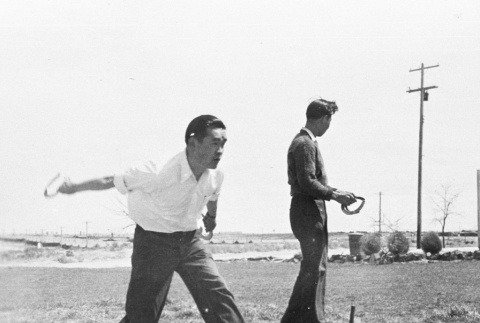
img Japanese Americans playing horseshoes (ddr-densho-15-54)
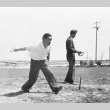
Norio Mitsuoka (left) and (first name unknown) Hikida playing a game of horseshoes.
Japanese Americans at Shoshone Falls (ddr-densho-15-67)
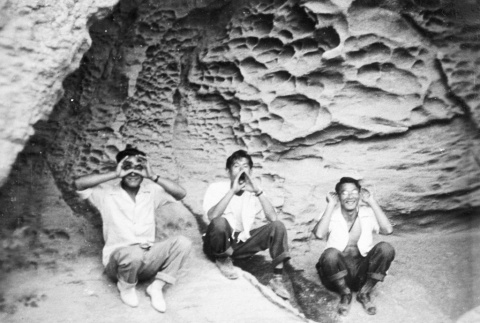
img Japanese Americans at Shoshone Falls (ddr-densho-15-67)
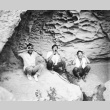
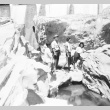
Left to right: Norio Mitsuoka, Tom (last name unknown), and Robert Ikeda at Shoshone Falls, near the Minidoka concentration camp.
Japanese Americans at Shoshone Falls (ddr-densho-15-66)
img Japanese Americans at Shoshone Falls (ddr-densho-15-66)
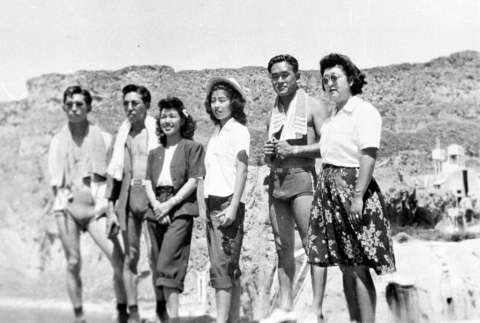
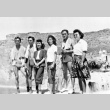
These Japanese Americans enjoying a day at Shoshone Falls near the Minidoka concentration camp were allowed to leave the camp on an approved day pass. Left to right: Tom (last name unknown), Ted Kamada, Yoneko Tanaka, unidentified, Norio Mitsuoka, and Kiyoko (last name unknown).
Japanese Americans at Shoshone Falls (ddr-densho-15-64)
img Japanese Americans at Shoshone Falls (ddr-densho-15-64)
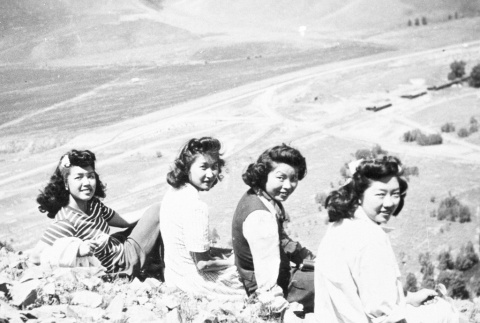
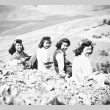
Japanese Americans from the Minidoka concentration camp visit Shoshone Falls. This area was a popular destination for camp inmates on a day pass. Left to right: Yoneko Tanaka, Fusako Shimizu, Ayako (last name unknown), and Lily Hori.
Japanese Americans at Shoshone Falls (ddr-densho-15-68)
img Japanese Americans at Shoshone Falls (ddr-densho-15-68)
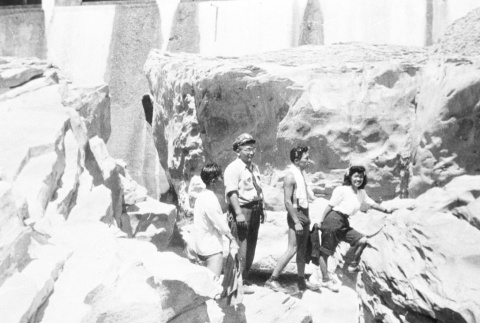
Shoshone Falls was an easy day trip for Japanese Americans from the Minidoka concentration camp. Camp inmates were allowed to leave Minidoka on short excursions with approval from camp administrators. Left to right: unidentified, unidentified, Ted Kamada, and Yoneko Tanaka.
API