
Pre-World War II
Japan
(304)
Pre-World War II
(532)
Related articles from the
Densho Encyclopedia :
Miya Sannomiya Kikuchi,
Joe Kurihara
532 items

532 items
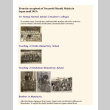
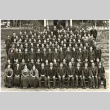
img
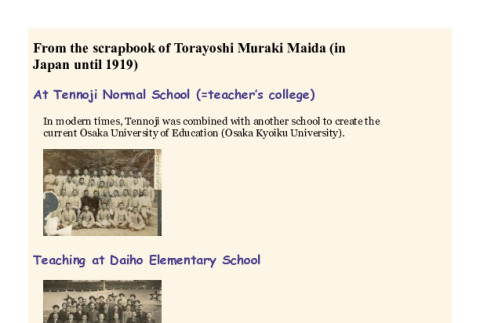
Class photograph from Kokawa Girls High School (ddr-densho-494-5)
Girl on far left center circled in red is Meriko Maida. Caption on webpage: "Kokawa Girls High School, Wakayama Prefecture, 1937-38" and "Meriko said she was allowed certain privileges as a foreigner. For example, she had a permanent, strictly forbidden to native Japanese."
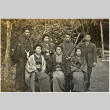
img
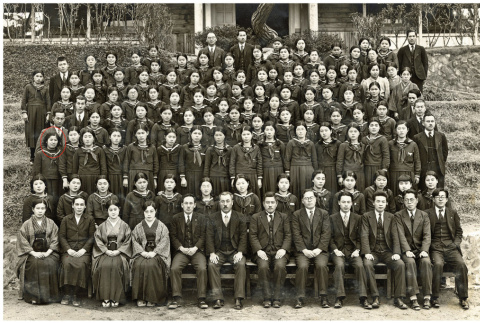
Muraki Family portrait (ddr-densho-494-44)
Back row left to right: Torayoshi (Muraki) Maida, Matsue Uranishi, Tomohei Muraki, and Densaburo (Muraki) Bando. Front row left to right: Hamae Nakagoshi, Katsuno Sumiya, and Kuma Kishida. Caption on website: "Saying goodbye to Japan / After accepting the offer of marriage from the Maida family, Torayoshi spent some time at his family home in Kebara." …
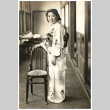
img
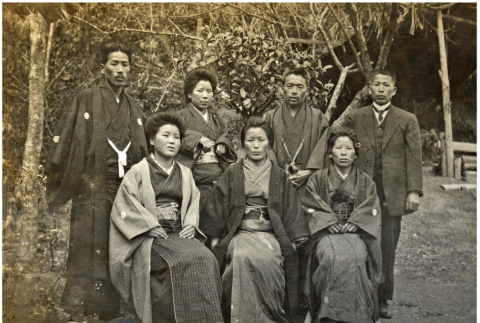
Portrait of Meriko in a kimono (ddr-densho-494-8)
Caption on webpage: "On to Tokyo" and "It is possible that Meriko was shopped around for marriage possibilities, hence the traditional dress."
doc
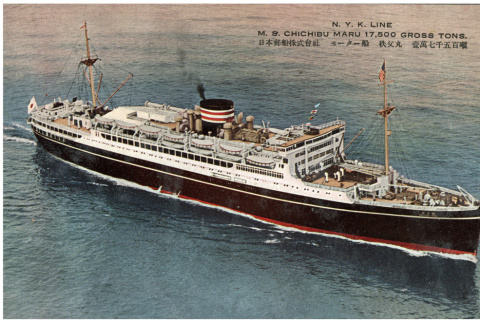
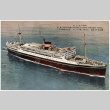
M.S. Chichibu Maru (ddr-densho-494-1)
Postcard of the M.S. Chichibu Maru. Caption reads, "N.Y.K. Line, M.S. Chichibu Maru 17,500 Gross Tons." Caption on webpage: "Leaving San Francisco \ Meriko traveled second class" and "The Chichibu Maru was in service 1930-1943. Was sunk by US forces en route to Singapore."
img
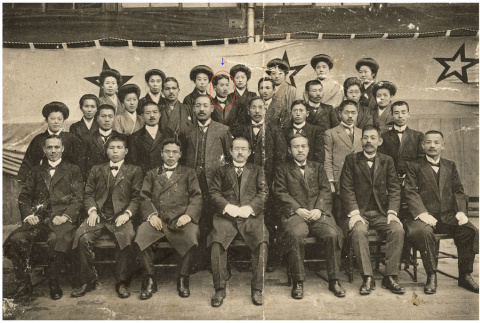
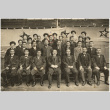
Teaching staff at Daiho Elementary School (ddr-densho-494-37)
Torayoshi (Muraki) Maida is circled in red. Caption on website: "Teaching at Daiho Elementary School" and "Daiho Elementary School ca 1913"
img
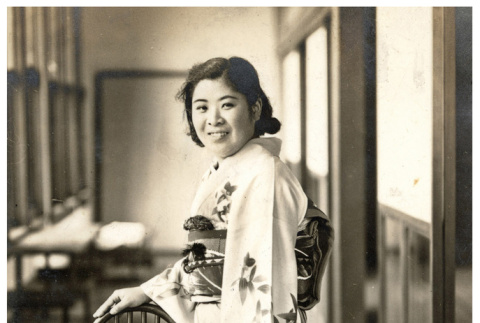
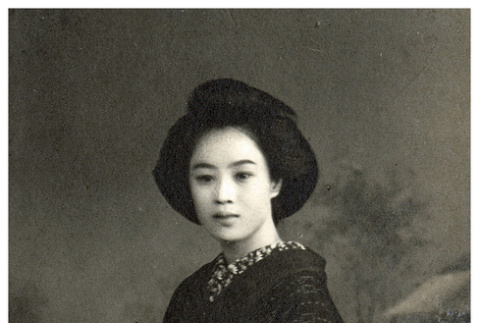
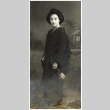
Portrait of a woman in kimono (ddr-densho-494-42)
Caption on website: "Life in Osaka for the new teacher / Torayoshi appears to have had two teaching jobs after graduating from teaching college, both at the elementary level. He lived in a boarding house, and his scrapbook contains a couple pictures of other residents. At least one is labeled 'lover'." and "Girlfriend in Osaka, ca …
img
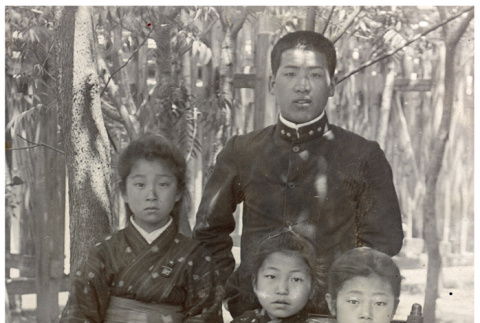
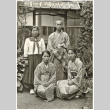
Family portrait (ddr-densho-494-22)
Standing: Meriko Maida (left), and Takahashi (right). Crouched: Miyuki (left) and Ikuko (right). Caption on webpage: "Family matters, 1938" and "Meriko in a school uniform, standing with cousins identified as Takahashi, Miyuki, and Ikuko."
img
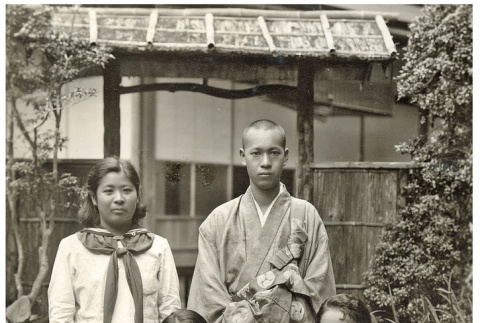
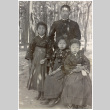
Portrait of four students at Nishinoda Elementary School (ddr-densho-494-39)
Caption on website: "Teaching at Nishinoda Elementary School" and "Teaching at Nishinoda Elementary School, Osaka, ca 1918"
img
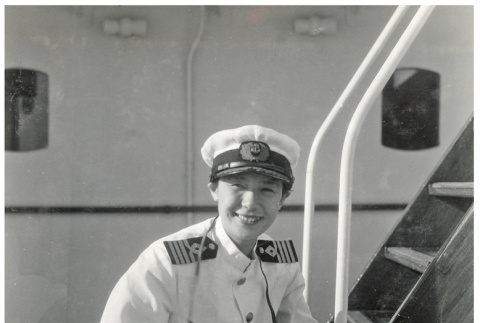
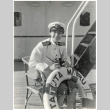
Ship officer with a life preserver and binoculars (ddr-densho-494-19)
Caption on webpage: "Going back home, 1939 \ Meriko's ocean-going conveyance for the return trip was the Tatuta Maru. Evidently, Japan's war preparations already included using female personnel on civilian ships. The subject is identified as 'Tarkie'. The ship was torpedoed by the US Navy in early 1943." and "Meriko identifies this ship officer as 'Tarkie', …
img
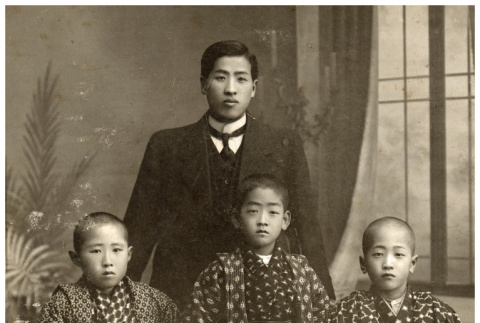
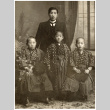
Portrait of one man and three young boys (ddr-densho-494-38)
Torayoshi (Muraki) Maida with three students from Nishinoda Elementary School. Caption on website: "Teaching at Nishinoda Elementary School" and "Teaching at Nishinoda Elementary School, Osaka, ca 1918"

doc
Japanese American Courier Vol. 13, No. 636 (March 23, 1940) (ddr-densho-96-671)
Selected article titles: "NYK Line Helps in Seattle Progress" (p. 1), "Pink Tea" (p. 2), "B Class Title Goes to Cards" (p. 3), "Easter Services of Varied Kinds Set in Churches" (p. 4)
doc
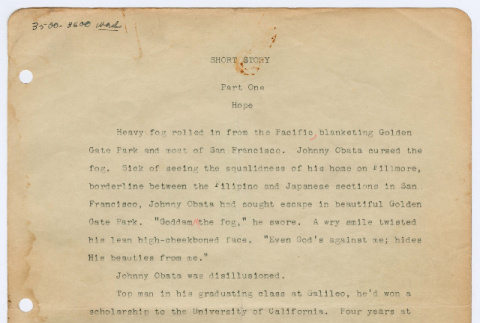
Short story: "Heavy fog rolled in from the Pacific" (ddr-densho-468-75)
Assignment for English 211, Section II. Part 1 ("Hope") is set in 1941 and follows a Japanese American who moved to Yokohama in 1939 and returned to the US disillusioned two years later. The main character, Johnny Obata, then faces anti-Japanese racism and unemployment. Part two ("Faith") follows Johnny's experiences following Pearl Harbor. In Part 3 …
doc
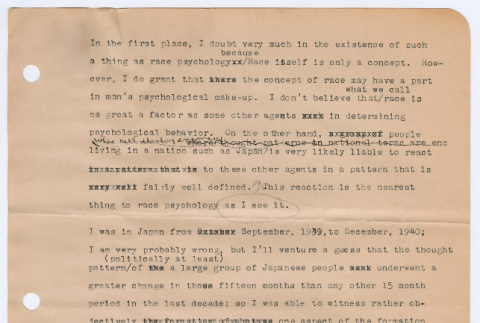
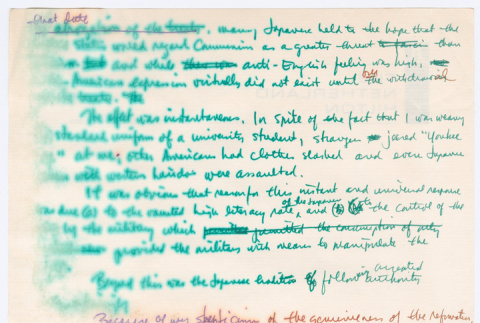
Draft: "Race 4 in Japan" (ddr-densho-468-153)
Essay on race, Japanese ethnicity, and visit to pre-war Japan
img
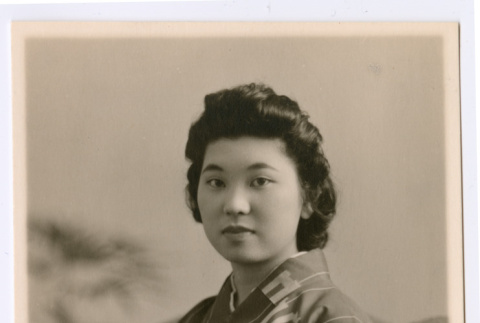
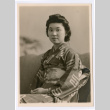
Photo of Ryo Morikawa in kimono (ddr-densho-446-429)
Ryo traveled to Japan with her mother in July 1940 and then stayed to attend Keisen Jogaku-En (two-year program). (circa 1940 or 1941)
doc
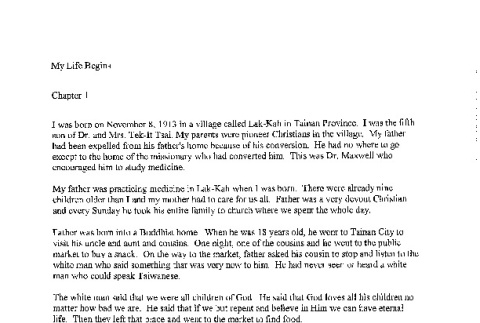
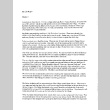
"My Life Begins" (ddr-densho-446-350)
My Life Begins (autobiography): Ai Chih's parents, conversion to Christianity, education in Japan, arrival in US on student visa, U of Chicago, Robert Cashman, Keimer Shou, Japanese Christian Church (Chicago), War, Ordination, Meeting Ryo, Marriage, Navy-Columbia U, War Dept.-D.C., MD, US Strategic Bombing Survey, UNRRA
doc
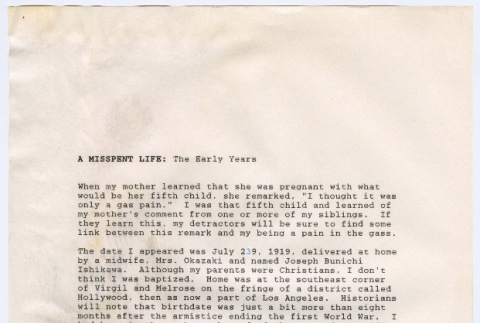
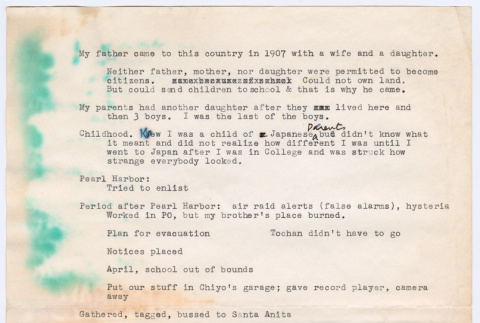
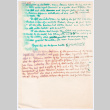
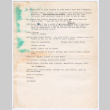
Biographical poem (ddr-densho-468-155)
Typed draft of poem based on Ishikawa's childhood and experiences in World War II
doc
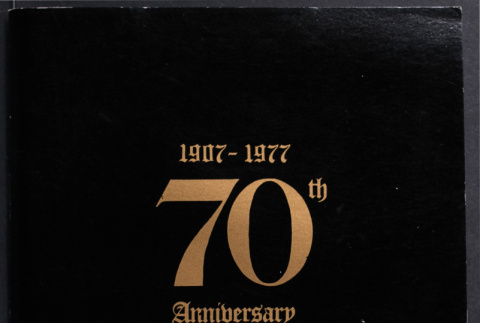
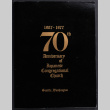
Book of 70th Anniversary of Japanese Congregational Church (ddr-densho-446-455)
The Japanese Congregational Church's 70th Anniversary coincided with the 100th Anniversary of the Japanese Christian Mission in North America. This book traces the history of JCC within the larger setting of national and local events, and some of the photos and narratives may be of interest. Ai Chih Tsai was pastor at JCC from 1948 to …
doc
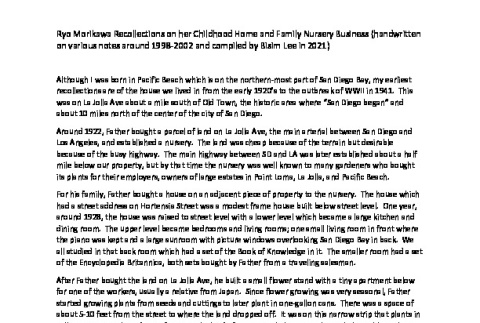
Ryo Morikawa Recollections (ddr-densho-446-349)
Autobiography: Ryo's parents, Life in San Diego, 11 months in Japan, Evacuation, Married Life
img
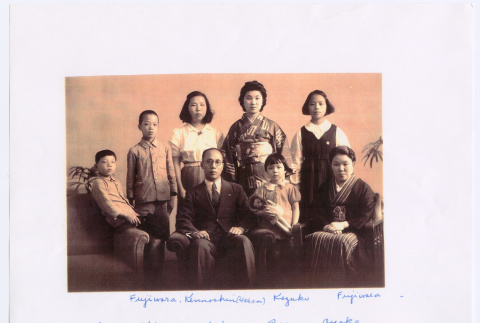
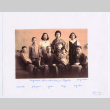
Group Photo of Ryo with Uncle's family (ddr-densho-446-430)
Ryo lived with her Uncle's (Kennoshin Fujiwara) family while attending Keisen. (circa 1940 or 1941)
doc
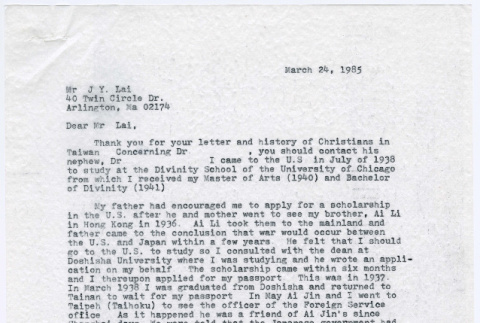
Carbon copy letter from Ai Chih Tsai to J.Y. Lai (ddr-densho-446-414)
Responding to Mr. Lai's letter about the history of Christians in Taiwan. (3 pages)
doc
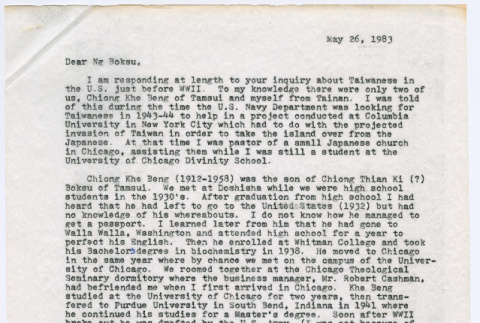
Carbon copy letter from Ai Chih Tsai to Ng Boksu (ddr-densho-446-413)
Responding to Ng Boksu's inquiry about Taiwanese in the U.S. just before WWII. (5 pages)