
2806 items
![Postcard from Fred F. Fujii to Mr. and Mrs. Okine, July 18, 1947 [in Japanese] (ddr-csujad-5-205)](https://ddr.densho.org/media/cache/f0/6e/f06e30f34b28e2c6f193051ade5e2d4a.jpg)
2806 items
![Postcard from Fred F. Fujii to Mr. and Mrs. Okine, July 18, 1947 [in Japanese] (ddr-csujad-5-205)](https://ddr.densho.org/media/cache/0e/b0/0eb017a7a47a58258ab9c97e3a3a3fc7.jpg)
doc
Postcard from Fred F. Fujii to Mr. and Mrs. Okine, July 18, 1947 [in Japanese] (ddr-csujad-5-205)
A postcard from Fred F. Fujii, a former incarceree in the Heart Mountain incarceration camp, Wyoming, to Seiichi and Tomeyo Okine. Fred informs that Masao Okazaki has returned from Seabrook Farms, New Jersey on June 29, 1947. Okazaki was probably incarcerated in the Jerome incarceration camp, Arkansas first and later transferred to the Tule Lake incarceration …
doc
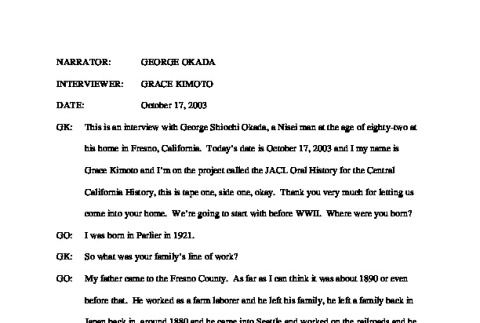
George Okada interview (ddr-csujad-6-28)
Oral history interview with George Okada. See this object in the California State Universities Japanese American Digitization project site: SCRC_OKADA_GEORGE
doc
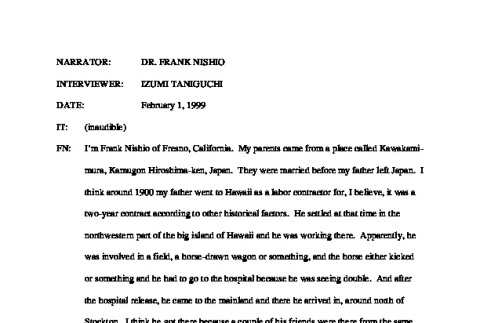
Dr. Frank Nishio interview (ddr-csujad-6-26)
Oral history interview with Dr. Frank Nishio. See this object in the California State Universities Japanese American Digitization project site: SCRC_NISHIO_FRANK
doc
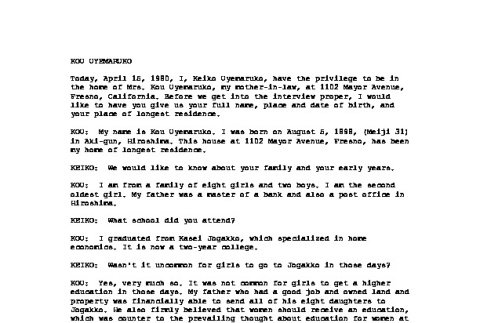
Kou Uyemaruko (ddr-csujad-8-81)
Oral history interview with Kou Uyemaruko [Ko Uemaruko]. Information on the oral history project is found in: csuf_stp_0012A; Glossary in: csuf_stp_0014. See this object in the California State Universities Japanese American Digitization project site: FCPL Uyemaruko, Kou
doc
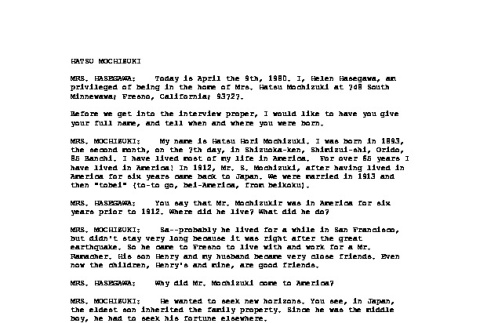
Hatsu Mochizuki (ddr-csujad-8-92)
Oral history interview with Hatsu Mochizuki. Information on the oral history project is found in: csuf_stp_0012A; Glossary in: csuf_stp_0014. See this object in the California State Universities Japanese American Digitization project site: FCPL Mochizuki, Hatsu
img
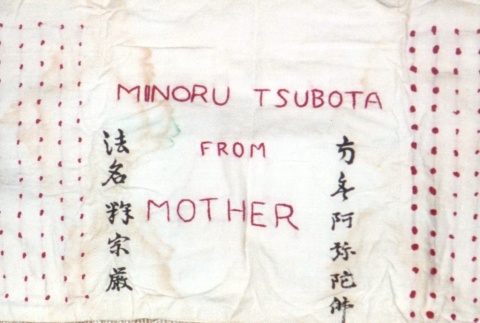
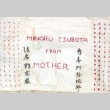
Senninbari, "thousand-stitch belt" (ddr-densho-105-8)
Minoru "Min" Tsubota's mother made this senninbari in Tule Lake. It is known as a thousand-stitch belt, and was created to protect a soldier going into battle. Each of the thousand knots was sewn by a different woman. On the belt is stitched Min's Buddhist name, the traditional Buddhist chant of "Namu Amida Butsu," and a …
img
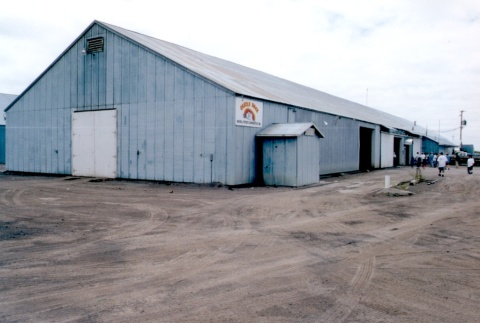
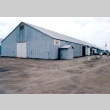
Camp warehouse (ddr-densho-11-5)
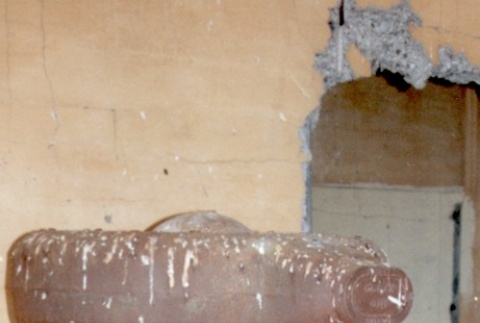
This building, now a potato-processing plant, was formerly a produce-processing and storage facility at the Tule Lake concentration camp.
img
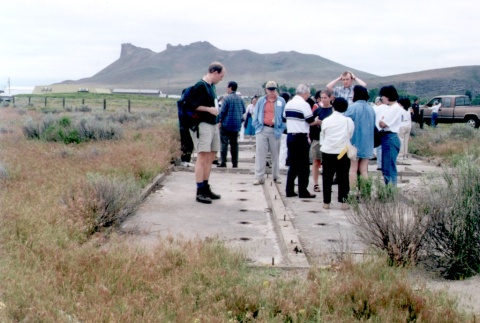
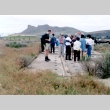
Tule Lake pilgrimage (ddr-densho-11-4)
Pilgrimage attendees examine an old latrine foundation from Block 73. The holes were for toilets, which were situated at each end of the facility. Group showers were in the middle.
img
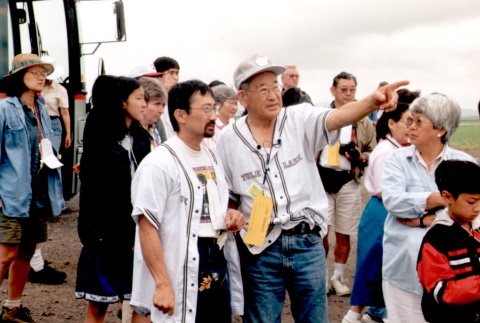
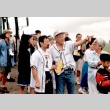
Tule Lake pilgrimage (ddr-densho-11-1)
Jimi Yamaichi (right) pointing out something to Stan Shikuma at the former site of the Tule Lake concentration camp.
img
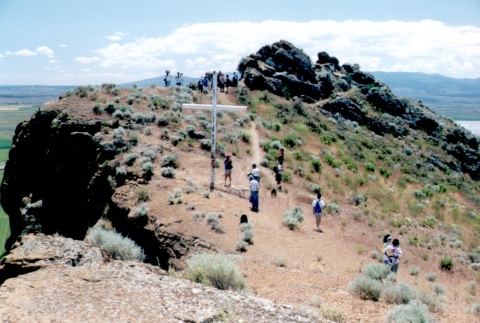
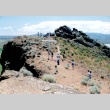
Cross erected by camp inmates (ddr-densho-11-7)
This cross, erected by inmates at the Tule Lake concentration camp, sits on top of a formation called Castle Rock. It is being approached by pilgrimage attendees.
img
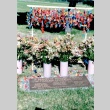
Memorial honoring deceased camp inmates (ddr-densho-11-12)
This memorial honors Japanese Americans who died while incarcerated at the Tule Lake concentration camp. The marker is located at the Linkville cemetery in Klamath Falls, Oregon.
img
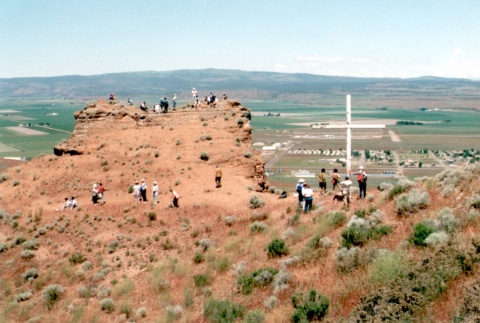
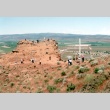
Pilgrimage attendees on Castle Rock (ddr-densho-11-6)
Tule Lake inmates erected this cross on top of a formation called Castle Rock. The area below the cross is the former site of the concentration camp.
img
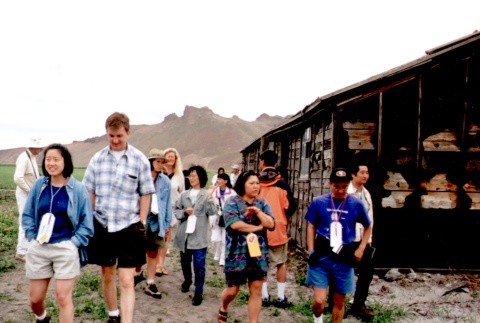
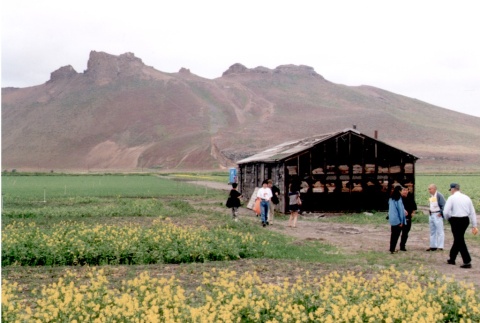
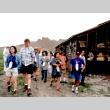
Tule Lake pilgrimage (ddr-densho-11-2)
Pilgrimage attendees barracks located on the property of a local farmer. Castle Rock is in the background.
img
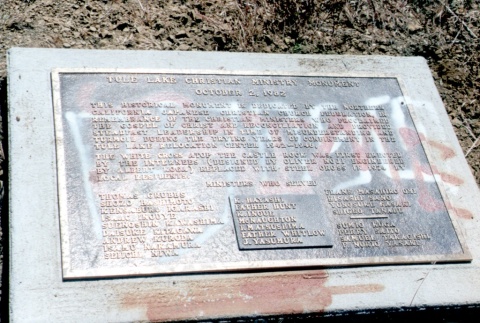
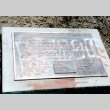
Memorial plaque (ddr-densho-11-11)
This plaque was placed at the base of the cross on Castle Rock on October 2, 1982. The plaque honors Christian ministers who served the inmates at the Tule Lake concentration camp.
img
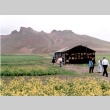
Tule Lake pilgrimage (ddr-densho-11-3)
Pilgrimage attendees barracks located on the property of a local farmer. Castle Rock is in the background.
img
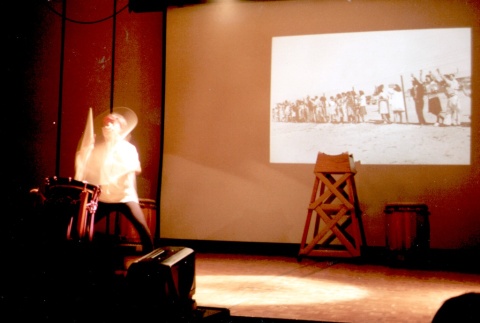
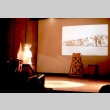
Evening program, Tule Lake pilgrimage (ddr-densho-11-9)
At the Tule Lake pilgrimage, an evening program was held to honor the inmates and remember the incarceration experience. The person shown here is playing a shime taiko drum while slides taken during the incarceration are being shown in the background.
img
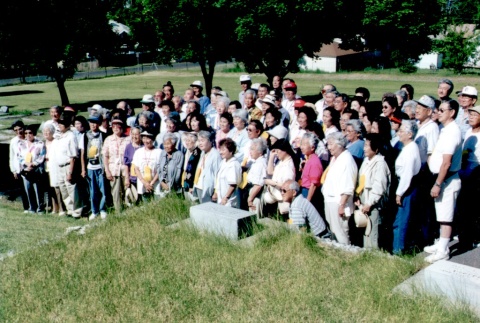
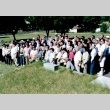
Former camp inmates, Tule Lake pilgrimage (ddr-densho-11-10)
These Japanese Americans were incarcerated at Tule Lake, California. They are at the Linkville cemetery for a service honoring Japanese Americans who died at the camp during World War II. There is a marker at the Linkville cemetery honoring Japanese Americans who died at the Tule Lake concentration camp.
img
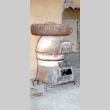
Stockade wood-burning stove (ddr-densho-11-8)
In 1943, Tule Lake concentration camp became a segregation center. A stockade was built to detain those who were considered security risks by the WRA. This wood-burning stove was used to help heat the stockade.
img
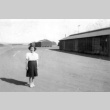
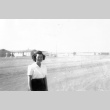
Nisei standing in concentration camp firebreak (ddr-densho-111-1)
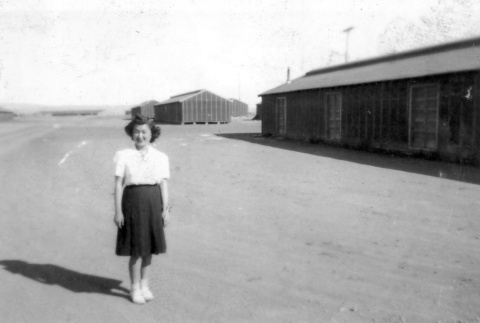
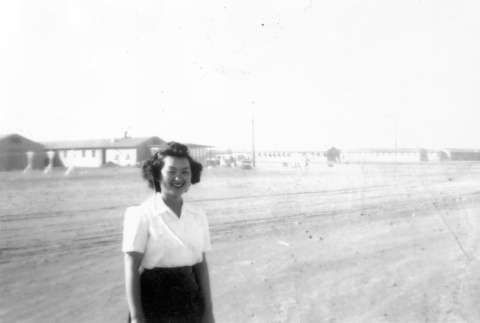
Elaine Ishikawa Hayes was employed by Tule Lake's recreation department. She is pictured here standing in the firebreak near the recreation department barracks.
img
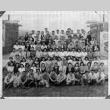
Recreation department staff (ddr-densho-111-3)
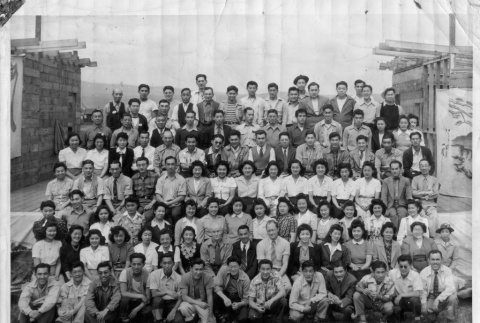
Staff of Tule Lake concentration camp's recreation department. They are sitting on a stage platform which was built in a firebreak, and used for various performances. Second row from front, ninth from left is Harry Mayeda, the Recreation Department Director. Elaine Ishikawa Hayes is in the third row, sixth from left.
img
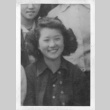
Nisei girl in class photo (ddr-densho-111-7)
Elaine Ishikawa Hayes' sister Jean in a class photo.
doc
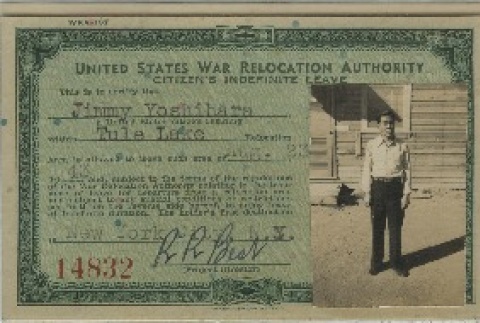
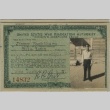
Citizen's indefinite leave card (ddr-densho-126-4)
A card given by the War Relocation Authority (WRA) to Nisei who were allowed to leave the camps indefinitely for work or school.
img
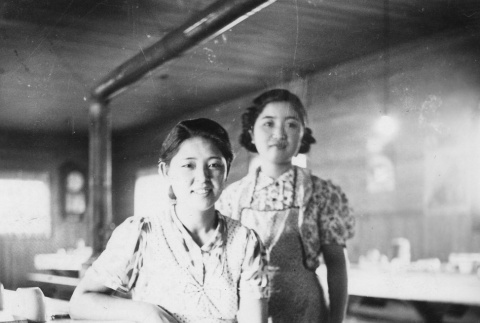
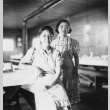
Two Nisei women in a mess hall (ddr-densho-154-4)
Photo donor's mother, Toshiko Nakagawa, on the right with an unidentified friend.