
5022 items


5022 items
doc
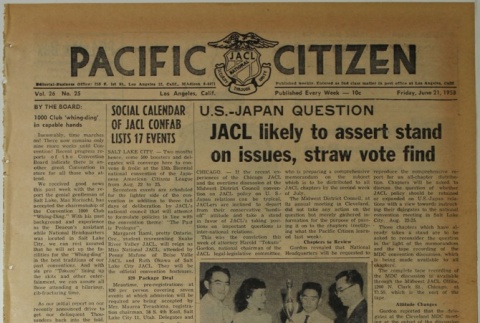
Pacific Citizen, Vol. 46, No.25 (June 21, 1958) (ddr-pc-30-25)
Select article titles: "U.S.-Japan question JACL likely to assert stand on issues, straw vote find" (p.1); "MDC pre-convention rally highlights U.S.-Japan affairs issue, discussion aids nat'l board to assess feelings" (p. 5); "Utah governor cite contribution of Japanese American in welcome message" (p. 8) Starting in No. 13, the volume number in the header changes from …
doc
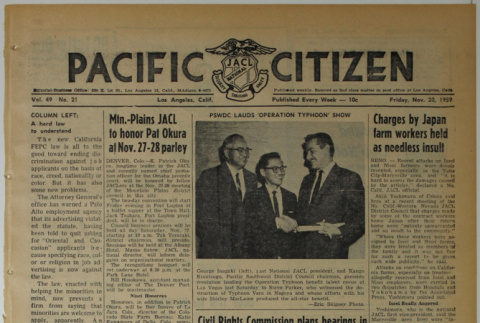
Pacific Citizen, Vol. 49, No. 21 (November 20, 1959) (ddr-pc-31-47)
Selected article titles: "Civil Rights Commission plans hearings in California discrimination against Nisei" (p. 1), "Rep. Inouye raps census work hiring" (p. 1), "Charges by Japan farm workers held as needless insult" (p. 1), "Husband-wife relationship in Japan being changed by young couples, professor says" (p. 3), "Lollipop dries more tears of a frightened tot than …
doc
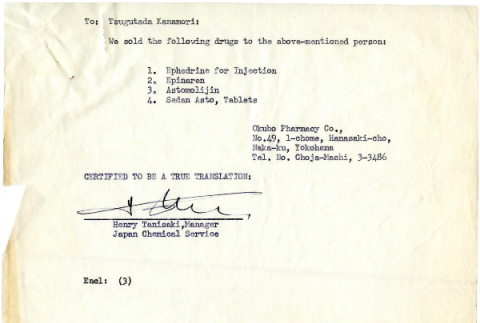
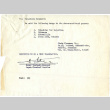
Receipt from Okubo Pharmacy Company, English transration (ddr-csujad-12-18)
This half-sheet of paper certifies that Tsugitada Kanamori was sold four different drugs from the Okubo Pharmany Co., in Yokohama, Japan. Translator is Henry Tanisaki, Manager, Japan Chemical Service. English translation of the original receipt in Japanese is found in item: csudh_tsu_0017. See this object in the California State Universities Japanese American Digitization project site: tsu_01_06_007
img
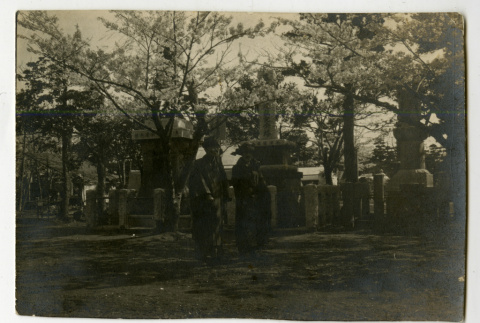
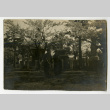
Kawasaki Daishi (ddr-csujad-42-256)
Photographed are probably the Takano family's relatives in Japan, standing against a background of cherry blossoms at the Kawasaki Daishi Heikenji Temple, Kawasaki, Japan. The handwritten note on the back side reads: Kawasaki Daishi, cherry blossoms. [In Japanese]. Title from note. See this object in the California State Universities Japanese American Digitization project site: tak_02_10_017
img
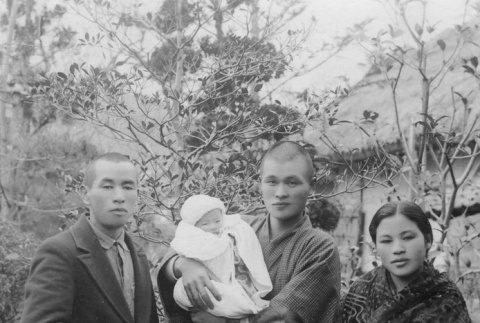
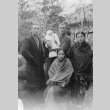
Family photograph (ddr-densho-154-1)
Photo donor's aunt, Masako Nakagawa, pictured with husband Masato, holding their infant daughter Seiko. Also in the photograph are Masako's uncle and aunt, the Yamasakis. Masako was born in Seattle, Washington, but was sent back to Japan at a young age and never returned to the U.S. She died of disease in Hiroshima during World War …
img
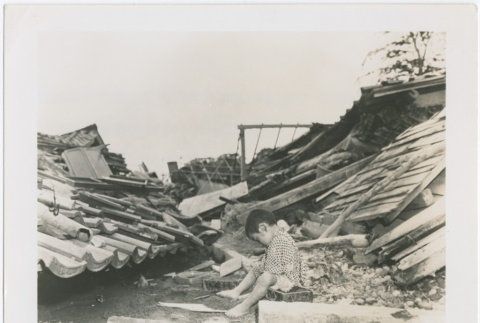
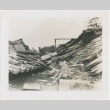
A boy sitting in the rubble of his house after an earthquake (ddr-densho-299-14)
Caption on reverse: "FEC-48-5497. 29 June 48 / Quake rocks southern coast of Japan: / playing with dirt on the spot where his house / once stood this Japanese child, too / young to realize what has happen [sic], is / undisturbed by the horrow which sur- / rounds him. The quake which struck / on …

doc
Red Cross message from Tomio Itabashi to Koichiro Itabahashi (ddr-densho-493-18)
American Red Cross Civilian Message Form with message from Tomio Itabashi to his father Koichiro in Japan. Message reads "We are all well and safe. Do not worry. Our regards to relatives." Back of paper has three lines of Japanese text in reply; underneath, paper is stamped "Examined by 364 - U.S. Censorship" as well as …

vh
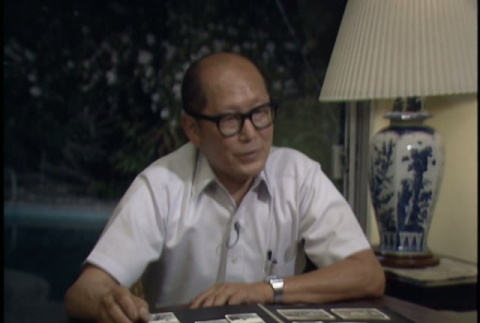
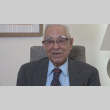
Hiroshi Terry Terakawa Interview (ddr-jamsj-2-12)
Nisei male. Born January 3, 1929, in Kyoto, Japan. Came to United States as a young child with parents. Moved frequently as a child due to father's role as a Buddhist minister, living in places like Walnut Grove and Marysville, California. During World War II, was living in Salt Lake City. Drafted into the army and …
vh
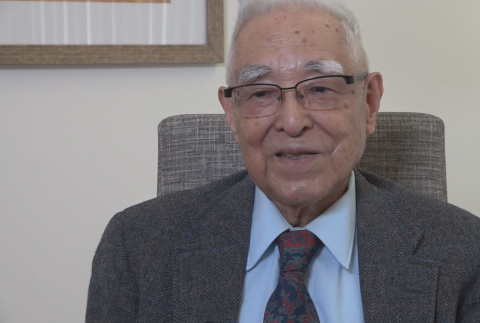
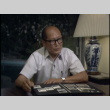
Susumu Nakanishi Interview (ddr-densho-1000-496)
Shin-Issei male. Born September 10, 1926, in Hyogo, Japan. Grew up in Japan, where parents farmed. During World War II, exempted from the draft due to higher education status. Attended Doshisha University in Kyoto, learning English from an influential missionary. Moved to the United States and attended Lehigh University in Pennsylvania, then studied at the University …
av
Interview with Yosh Nakayama, part 4 of 4 (ddr-densho-1007-1588)
Nakayama discusses his experiences with Japanese locals, his worst memories of camp, his difficulty finding a job after the war, his work translating letters in Japan, his time learning judo in camp and in Japan, and his thoughts on why judo is important for Japanese-American youth. Video starts at 0:29. Loni Ding can be heard asking …
doc
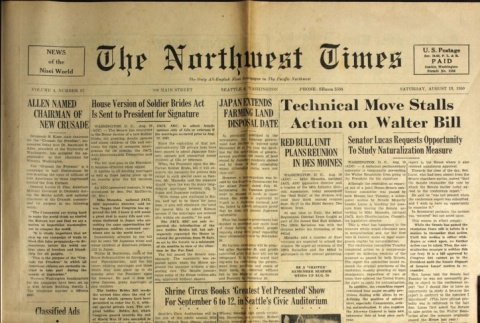
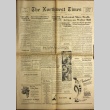
The Northwest Times Vol. 4 No. 67 (August 19, 1950) (ddr-densho-229-236)
"Technical Move Stalls Action on Walter Bill" (p. 1), "House Version of Soldier Brides Act is Sent to President for Signature" (p. 1), "Japan Extends Farming Land Disposal Date" (p. 1).
doc
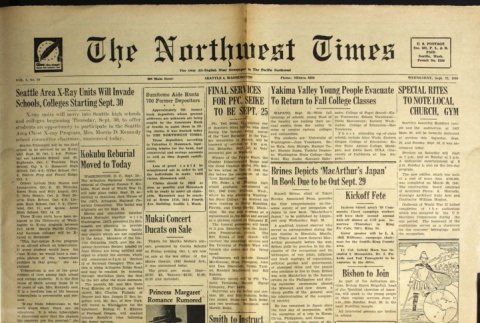
The Northwest Times Vol. 2 No. 79 (September 22, 1948) (ddr-densho-229-141)
"Kokubu Reburial Moved to Today" (p. 1), "Final Services for PFC. Seike to be Sept. 25" (p. 1), "Wyoming School Marm to Teach Youth of Japan Occupational Force Personnel" (p. 2).
img
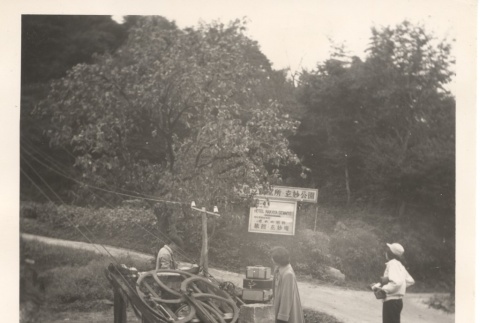
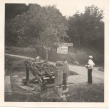
Shiuko Sakai at Ama No Hashidate (ddr-one-2-80)
Black and white photographic print of Shiuko Sakai (center) and two unidentified individuals standing outside next to a pulley at Ama No Hashidate, Japan. Inscribed on back: "AMANOHASHIDATE OCT 49/MA."
img
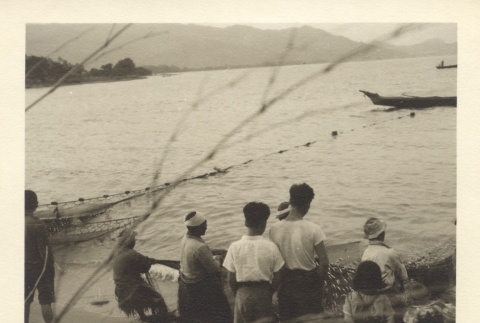
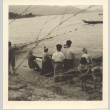
Fishing at Miyazu Village (ddr-one-2-74)
Black and white photographic print of unidentified men standing on a beach and pulling in fishing nets at Miyazu, near Maizuru, Japan. Inscribed on back: "29 MAY 49/MIYAZU (NEAR MAIZURU)."
img
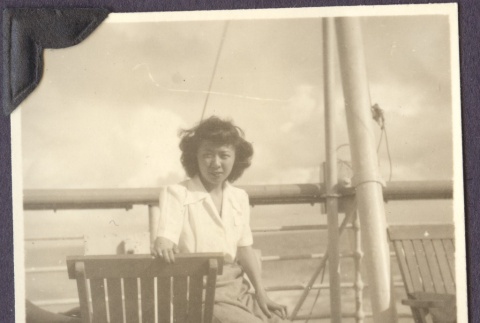
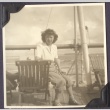
Aboard Acadia (ddr-one-2-294)
Black and white photographic print of a passenger aboard the Acadia en route to Japan. Sitting on deck is Shiuko Sakai wearing pants rolled up to her knee and striped socks.
img
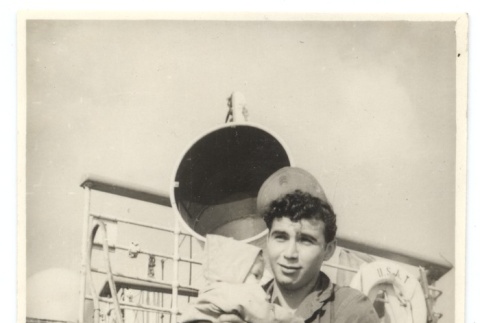
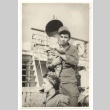
Aboard Acadia (ddr-one-2-289)
Black and white photographic print of passengers aboard Acadia en route to Japan, passengers are unidentified, a man is standing and holding a baby, and a woman is seated in foreground.
img
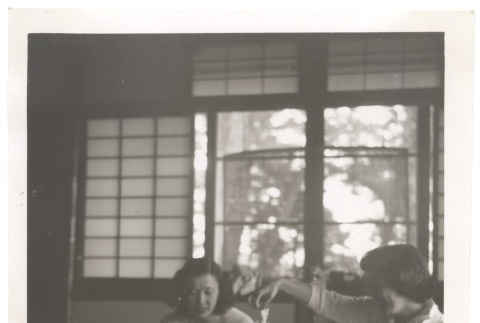
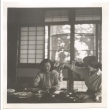
Eating at Ama No Hashidate (ddr-one-2-83)
Black and white photographic print of (from left) Nori and Shiuko Sakai seated at table and holding up their food at Ama No Hashidate, Japan. Inscribed on back: "AMANOHASHIDATE/OCT 49."
img
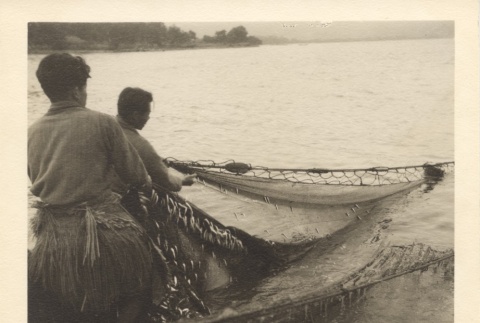
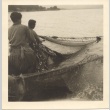
Fishing at Miyazu Village (ddr-one-2-76)
Black and white photographic print of two unidentified men wearing straw skirts and pulling in fishing nets at Miyazu, near Maizuru, Japan. Inscribed on back: "29 MAY 49/MIYAZU (NEAR MAIZURU)."
img
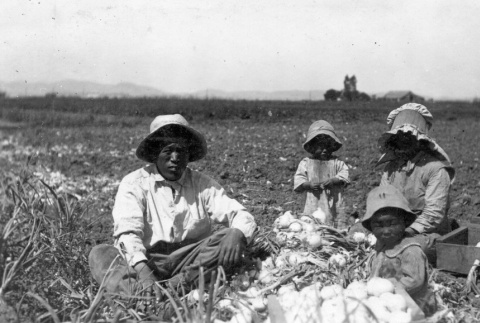
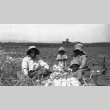
Family harvesting onions (ddr-densho-107-5)
Left to right: Heisaku Nakatani (farm hand who came to the U.S. from the same village as Roy's grandfather, Wakamatsu Matsumoto, in Hiroshima, Japan), Roy, Takeshi, and Roy's mother, Tei Matsumoto.
img
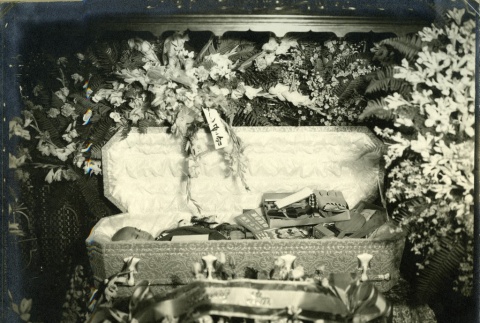
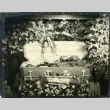
Funeral for a young boy (ddr-densho-113-35)
This funeral is for Tetsumasa Uyeda who contracted tuberculosis while living in Japan. His mother, Ayako, and sister, Fumiko, brought him back to Seattle, but he died a few months later.
img
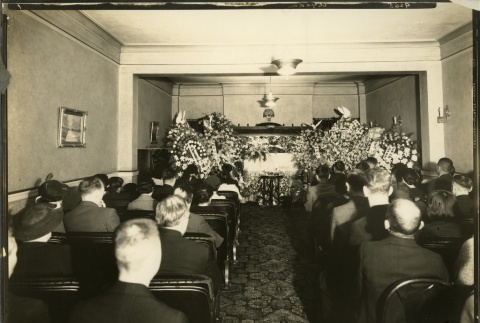
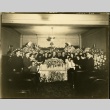
Funeral for a young boy (ddr-densho-113-32)
This funeral is for Tetsumasa Uyeda who caught tuberculosis while living in Japan. His mother, Ayako, and sister, Fumiko, brought him back to Seattle, but he died a few months later.
img
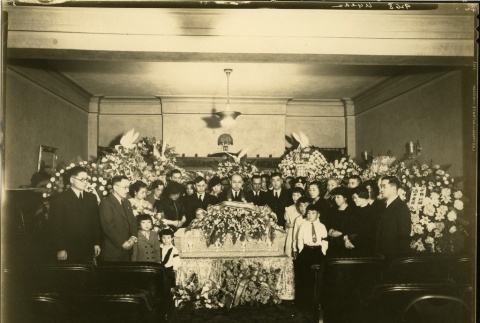
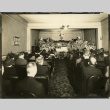
Funeral for a young boy (ddr-densho-113-36)
This funeral is for Tetsumasa Uyeda who contracted tuberculosis while living in Japan. His mother, Ayako, and sister, Fumiko, brought him back to Seattle, but he died a few months later.
doc
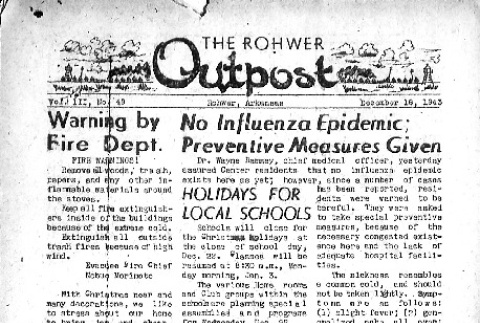
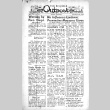
Rohwer Outpost Vol. III No. 49 (December 18, 1943) (ddr-densho-143-126)
Selected article titles: "Warning by Fire Dept." (p. 1), "Visits Made by 3 WRA Officials" (p. 1), "No Influence Epidemic; Preventative Measures Given" (p. 1), "Messages from Japan Listed" (p. 3).
doc
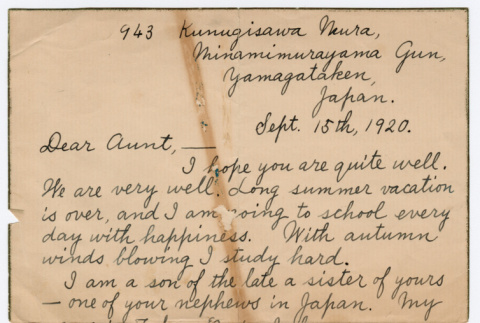
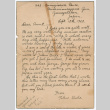
Letter from Takuo Endo to Agnes Rockrise (ddr-densho-335-13)
Takuo Endo, a nephew of Thomas & Agnes Rockrise, writes to Agnes for the first time. He asks after his cousin, George, and invites the family to visit Japan the following year.
img
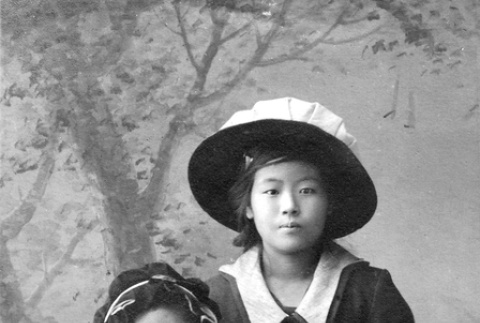
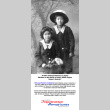
Portrait of two girls (ddr-ajah-6-4)
Caption below photo: At left: Chizuye Kato(w) in Japan / Written on the back in kanji: "Mikie Fujino Keep it forever". Caption includes biographical data on Chizuye Kato and Buichi Nakata