
5022 items

5022 items
img
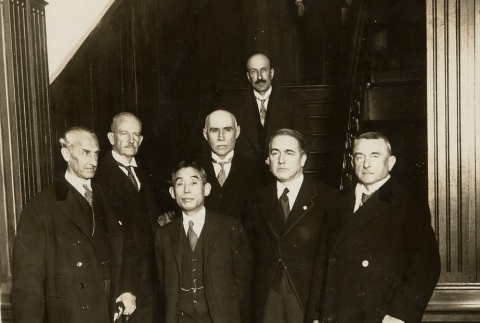
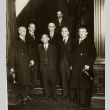
Members of the Lytton Commission (ddr-njpa-1-1211)
Caption on reverse [translation]: "Their Majesties Dine With China Commission of Enquiry -At Homeiden in the Imperial Palace - Lord Lytton (Britain), General Claudel (France), General McCoy (US), Dr. Schnee (Germany), Count Aldrovandi (Italy), and Secretary-General Ark [?] of the League of Nations China Commission of Enquiry which is currently in Japan were received by His …
img
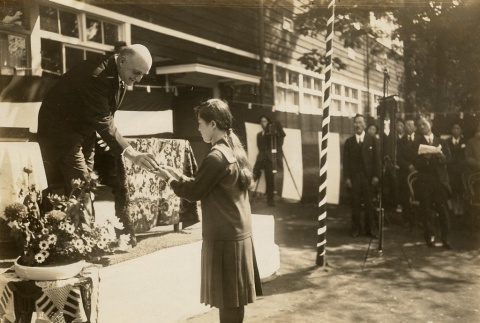
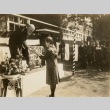
W. Cameron Forbes honoring the Girls World Basketball Free Throw champions (ddr-njpa-1-385)
Caption on reverse [translation]: "Girls World Basketball Free Throw Championship Cup Award Ceremony. The girls team from Shoei Girls' High School in Shibashirokanezaru [?], Tokyo won the World Basketball Free Throw Championship. As the four championship trophies and four gold medals sent to Japanese committee member [illegible] by the committee in Memphis, Tennessee, USA had arrived, …
img
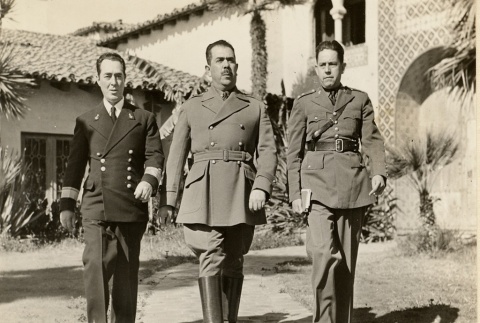
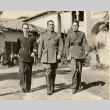
Mexico's military leaders during World War II (ddr-njpa-1-45)
Caption on the reverse: "Mexico Unanimously Votes War Against Germany, Italy, Japan: Another whole-hearted supporter of President Camacho is his predecessor, former President Lazaro Cardenas, to whom is attributed much of Mexico's modern progress. General Cardenas, center, now commander-in-chief of Pacific Coast defenses in cooperation with the U.S., is walking with his chief aides, Commodore R. …
vh
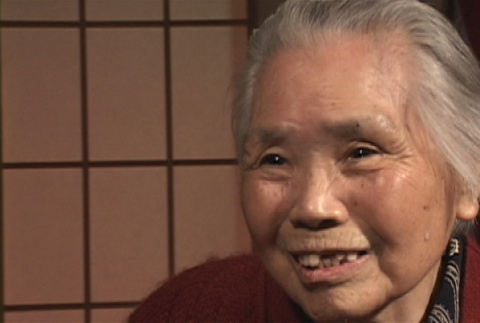
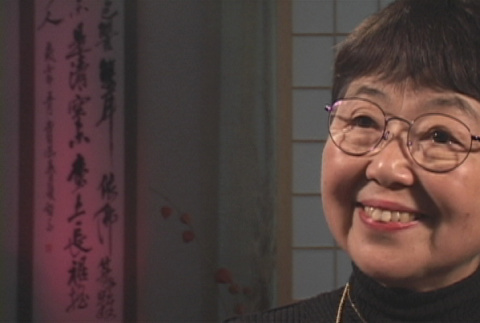
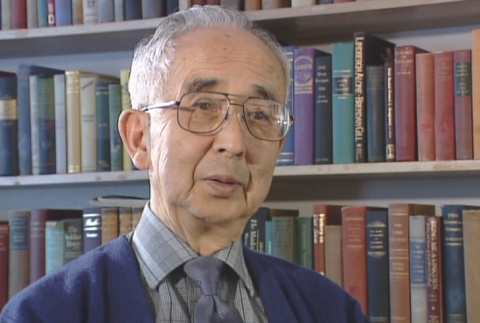
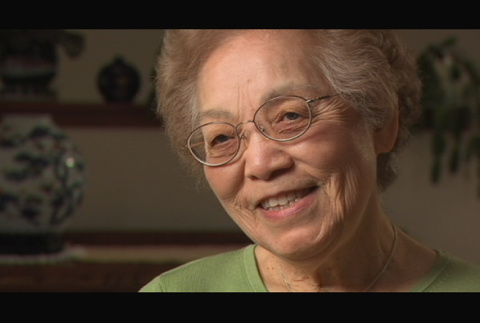
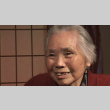
Chiyo Endo Interview (ddr-one-7-10)
Issei female. Born March 14, 1906, in Japan, where family owned and operated a silkworm business. At age fifteen, immigrated to the United States to join father who was already there. Lived in Milwaukie, Oregon, before the war, and married and had six children. Husband passed away before World War II. During the war, removed to …
vh
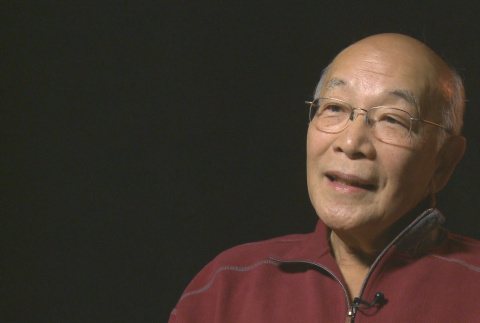
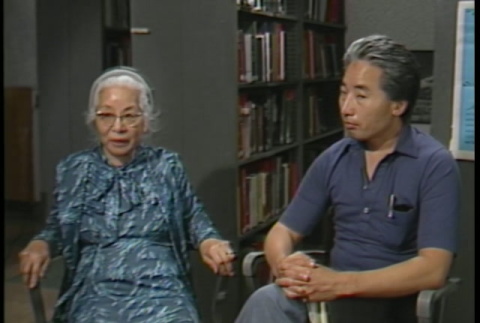
Michiko Kornhauser Interview (ddr-one-7-25)
Shin-Issei female. Born July 21, 1936, in Sasebo, Japan. Was a child in Okayama during World War II. After the war, immigrated to the United States and lived and worked in various places including Honoulu, Hawaii, and Portland, Oregon.
(This material is based upon work assisted by a grant from the Department of the Interior, National …

vh
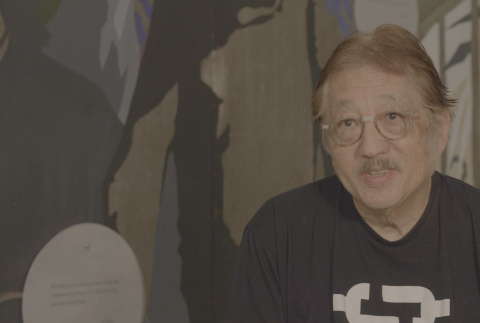
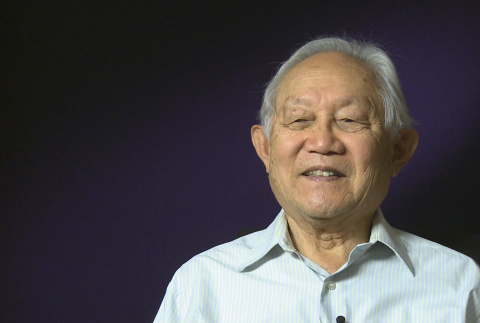
Mike Murase Interview II (ddr-densho-1000-526)
Sansei male. Born January 25, 1947, in Tsuyama, Okayama, Japan. Moved to the U.S. with family at age nine and grew up in Los Angeles, California. Graduated from UCLA and was involved in a number of civil rights movements and organizations. One of the founders of Gidra, the groundbreaking Asian American publication. Worked for both of …

vh
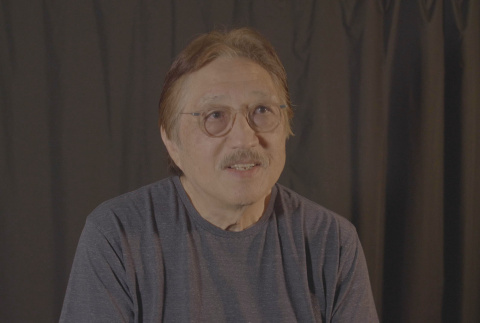
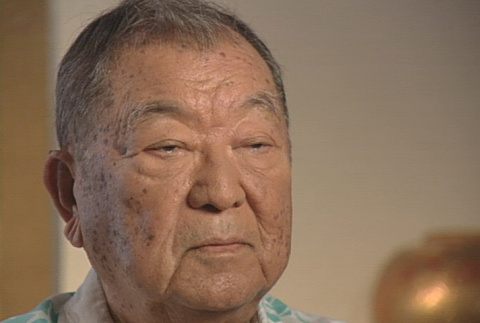
Mike Murase Interview I (ddr-densho-1000-525)
Sansei male. Born January 25, 1947, in Tsuyama, Okayama, Japan. Moved to the U.S. with family at age nine and grew up in Los Angeles, California. Graduated from UCLA and was involved in a number of civil rights movements and organizations. One of the founders of Gidra, the groundbreaking Asian American publication. Worked for both of …
vh
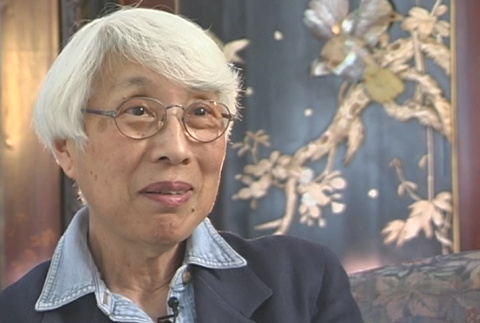
Chizuko Norton Interview (ddr-densho-1000-73)
Nisei female. Born July 3, 1924, in Seattle, Washington. Spent prewar childhood in Japan; Bellevue, Washington; and Kirkland, Washington. Incarcerated at Pinedale Assembly Center, California, and Tule Lake concentration camp, California. Returned to Seattle after the war, obtained master's degree from the University of Washington in the field of social work. Founded Seattle's first alternative school …
vh
Shosuke Sasaki Interview (ddr-densho-1000-78)
Issei male. Born March 26, 1912, in Yamaguchi ken, Japan. Immigrated to United States in 1919. Lived in Pomeroy, Washington, and Seattle, Washington, before World War II. Incarcerated at the Puyallup Assembly Center, Washington and the Minidoka concentration camp, Idaho. Resettled in New York. As a member of the Newspaper Guild, led effort to eliminate pejorative …
vh
Kaz T. Tanemura Interview (ddr-densho-1000-268)
Male, Issei-han. Born April 27, 1928, in Japan. As an infant, came to the U.S. where parents had previously immigrated. Family ran a hotel in Seattle's Pioneer Square neighborhood. After the bombing of Pearl Harbor, removed to the Puyallup Assembly Center, Washington, and the Minidoka concentration camp, Idaho. After the war, returned to Seattle, finished high …
vh
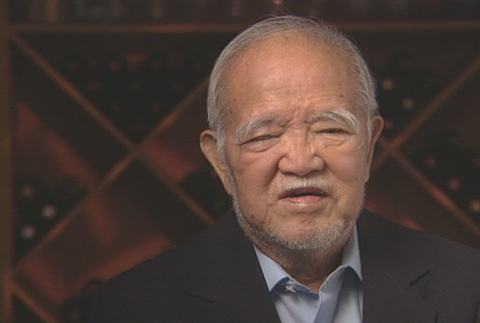
Frank H. Hirata Interview (ddr-densho-1000-271)
Kibei-Nisei male. Born November 19, 1925, in Spokane, Washington. At the age of ten, went to Japan with grandfather. During World War II, was conscripted into the Japanese army, and was still in training when the war ended. After the war, continued education, graduating from Kyoto University with a law degree. Got married in 1957 and …
vh
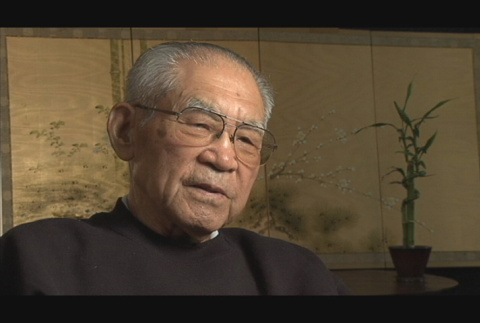
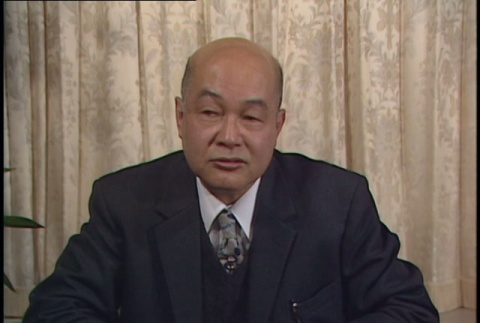
Kan Tagami Interview (ddr-densho-1004-19)
Nisei male. Born February 21, 1918, in Selma, California. Drafted prior to World War II. During the war, served in the Military Intelligence Service with the Mars Task Force in Burma, and as an interpreter for General MacArthur in Japan.
(This material is based upon work assisted by a grant from the Department of the Interior, …
vh
Roy Takai Interview (ddr-densho-1004-5)
Nisei male. Born October 3, 1918, in Sacramento, California. During World War II, was drafted out of the Poston concentration camp, Arizona. Served with the Military Intelligence service as a translator and interpreter in India, Burma and Japan.
(This material is based upon work assisted by a grant from the Department of the Interior, National Park …
vh
Joe Kino Interview (ddr-densho-1001-33)
Nisei male. Spent early years in Japan before returning to Bainbridge Island, Washington. During World War II, removed to the Manzanar concentration camp, California, and the Minidoka concentration camp, Idaho. After leaving camp, lived in Chicago, Illinois, for a time before eventually returning to Bainbridge.
(This material is based upon work assisted by a grant from …
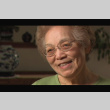
vh
Yukiko Takahashi Interview (ddr-densho-1001-22)
Nisei female. Grew up on Bainbridge Island, Washington. Was working as a maid in Seattle when Japan bombed Pearl Harbor on December 7, 1941. During the war, removed to the Manzanar concentration camp, California, and transferred to the Minidoka concentration camp, Idaho.
(This material is based upon work assisted by a grant from the Department of …

vh
George Oye Interview (ddr-phljacl-1-16)
Kibei male. Born 1915 in Florin, California. From age seven to seventeen, lived in Japan when the family decided to move there. Returned to the United States in 1932 and attended school. Accepted into the California civil services, but was fired after World War II began. During the war, removed to the Fresno Assembly Center, California, …
doc
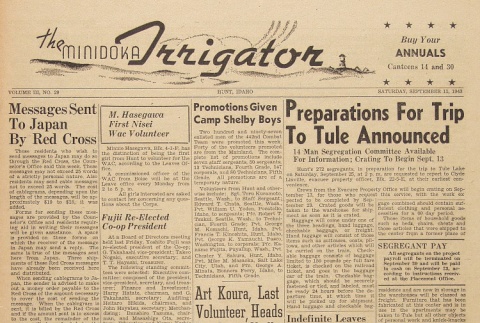
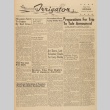
Minidoka Irrigator Vol. III No. 29 (September 11, 1943) (ddr-densho-119-55)
Selected article titles: "Messages Sent to Japan By Red Cross" (p. 1), "Noteworthy: American Federation of Teachers Passes Resolution Backing Nisei" (p. 1), "M. Hasegawa First Nisei Wac Volunteer" (p. 1), "Promotions Given Camp Shelby Boys" (p. 1), "Brother, Take That Hyphen Out of Japanese-American" (p. 1), "Preparations for Trip to Tule Announced. 14 Man Segregation …
doc
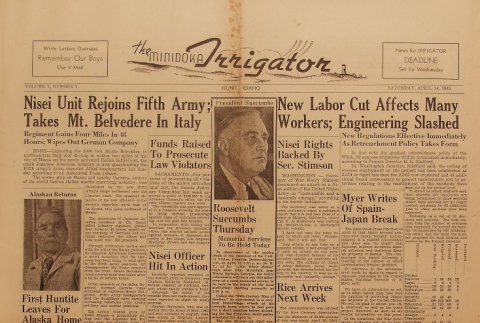
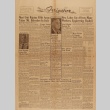
Minidoka Irrigator Vol. V No. 7 (April 14, 1945) (ddr-densho-119-134)
Selected article titles: "Nisei Unit Rejoins Fifth Army; Takes Mt. Belvedere in Italy" (p. 1), "Campaign Held to Keep Nisei Away" (p. 1), "Evacuees Must Apply For Ration Books" (p. 1), "Roosevelt Succumbs Thursday" (p. 1), "University Students Cause Confusion at Anti-Japanese Meet; Say Nazism At Work" (p. 1), "Myer Writes of Spain-Japan Break" (p. 1), …
av
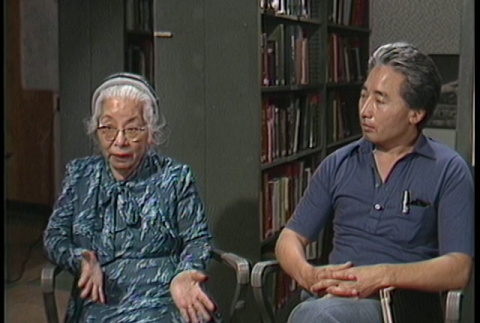
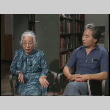
Interview with Gary and Grace Itano, part 5 of 6 (ddr-densho-1007-1747)
Gary discusses the legal efforts to reverse the charges of the DB Boys, his role in the hearings, and the reasons it took so long for the DB Boys to pursue legal action. Grace discusses why she buried her husband in Japan. Video starts at 0:51. Loni Ding can be heard asking questions behind the camera. …
doc
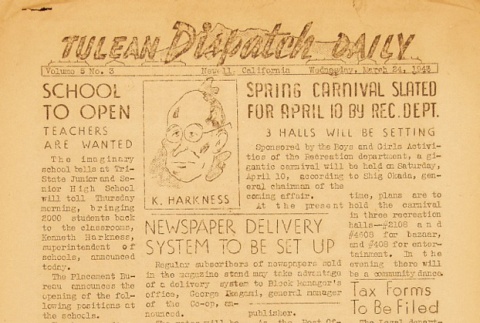
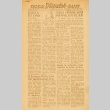
Tulean Dispatch Vol. 5 No. 2 (March 23, 1943) (ddr-densho-65-183)
Selected article titles: "Senator Chandler May Visit Colony: Military Affairs Special Committee Make Inquiries" (p. 1), "Repatriation Open Beginning Thursday" (p. 1), "Project Cleanup Drive to Get Underway Soon" (p. 1), "Doughnut Sale Drive" (p. 1), "An Editorial: Now You Know, Senator" (p. 2), "Married Should Strive to Improve Their Relationship" (p. 2), "Prince Chichibu Feared …
doc
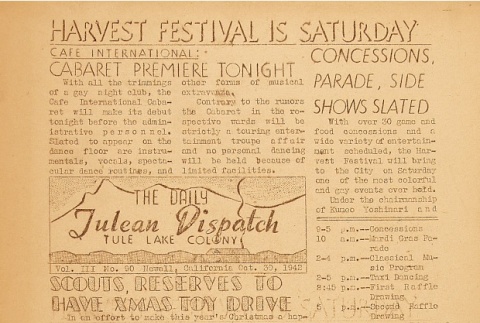
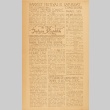
Tulean Dispatch Vol. III No. 90 (October 30, 1942) (ddr-densho-65-86)
Selected article titles: "Harvest Festival is Saturday" (p. 1), "Cafe International: Cabaret Premiere Tonight" (p. 1), "Concessions, Parade, Side Shows Slated" (p. 1), "Scouts, Reserves to Have Xmas Toy Drive" (p. 1), "Two Colonists Violate Law" (p. 1), "False Fire Alarm Ringing is Dangerous" (p. 1), "Helen Topping: 'Cooperative Development in Japan' is Lecture Topic" (p. …
av
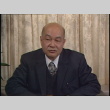
Interview with Hugh Nozawa, part 2 of 3 (ddr-densho-1007-1714)
Nozawa discusses the mistreatment of the Nisei during Roosevelt's visit to Fort Riley, a complaint he wrote to John J. McCloy afterwards, being punished for writing the letter without permission, the differences between Kibei and US-educated Nisei, growing up in Japan, being drafted while in Santa Monica, and being court martialed. Loni Ding can be heard …
av
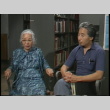
Interview with Gary and Grace Itano, part 3 of 6 (ddr-densho-1007-1807)
Grace discusses moving to Orange County after her husband's death, her impressions of the DB Boys and her relationship with them, Gary discusses learning about the DB Boys, his father's plans for his children, how going to Japan helped broaden his worldview, and his father's philosophy. Interview starts at 0:55. Loni Ding can be heard asking …
doc
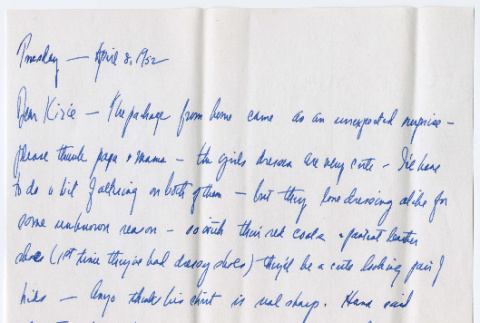
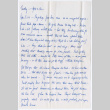
Letter from Sally (Fujii) Domoto to Kimiko Fujii Kitayama (ddr-densho-329-944)
Letter from Sally thanking Kimiko for a package of gifts, mostly clothes for the children. Visiting friends Al and Connie Clempner (?) have moved to the area and Sally is distressed about having to spend time with their badly behaved child. A Japanese architect friend has suggested that they apply for a Ford Foundation grant and …
doc
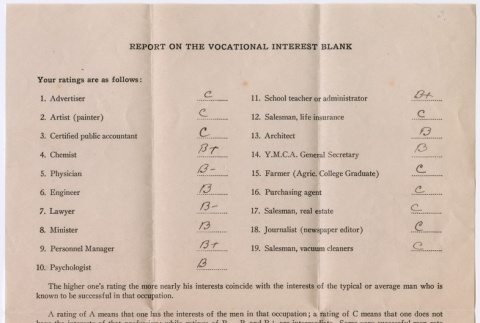
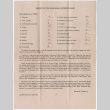
Vocational interest evaluation report (ddr-densho-329-891)
Report from Edward K. Strong, Jr., of Stanford University, on Kaneji's vocational interests as measured by a test. "B" rating, or "intermediate," for his match with the profession of architect. Summary text also states that "Since all the standards in this test are based upon white men it is quite conceivable that they do not apply …