
5022 items

![[ Letter to Mrs. Whitney from Fumiko Fukuda, June 4, 1942 ] (ddr-janm-22-9)](https://ddr.densho.org/media/cache/4b/dc/4bdc574fdad21b60fded158fc068a307.jpg)
5022 items
img
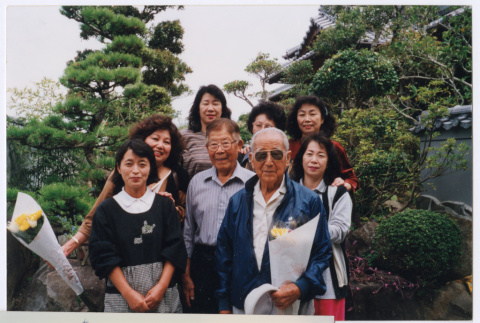
Yoshida Family photograph (ddr-densho-495-50)
Photograph of the Yoshida family visiting Japan. Back row left to right: Mitsuko Yoshida, Reiko Yoshida, and Tamiko Yoshida. Middle row left to right: Carol (Yoshida) Sunahara, Francis Tadashi Yoshida, and Hitomi Yoshida. Front row left to right: Akemi Yoshida, Hitoshi Yoshida. Caption on album page reads: "Mitsuko, Reiko, Tamiko, Carol, Dad, Hitomi, Akemi, Uncle H."
vh
Masahiro Nakajo Interview (ddr-manz-1-117)
Nisei male. Born May 17, 1927, in Moneta, California. Grew up in the Garden Grove area where parents ran a farm. Was taken to Japan to live as a young child until age ten. During World War II, removed to the Manzanar concentration camp, Caliifornia. After leaving camp, served in the military during the Korean War.
vh
Joyce Okazaki Interview I (ddr-manz-1-125)
Sansei female. Grew up in Los Angeles, California, and was a young child when Japan bombed Pearl Harbor in 1941. During World War II, removed with family to the Manzanar concentration camp, California. While in camp, was photographed by renowned photographer Ansel Adams. After leaving camp, lived for a time in Chicago before family eventually returned …
vh
Joyce Okazaki Interview II (ddr-manz-1-146)
Sansei female. Grew up in Los Angeles, California, and was a young child when Japan bombed Pearl Harbor in 1941. During World War II, removed with family to the Manzanar concentration camp, California. While in camp, was photographed by renowned photographer Ansel Adams. After leaving camp, lived for a time in Chicago before family eventually returned …
vh
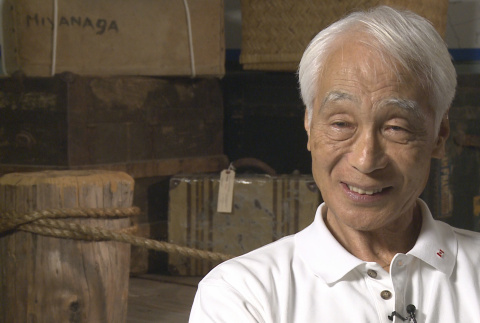
Minoru J. Shibata Interview (ddr-manz-1-148)
Nisei male. Born 1928 in San Francisco, California. Spent most of childhood on Terminal Island, California, where father was a fisherman. After the bombing of Pearl Harbor, father was arrested by the FBI and the rest of the family moved to Ogden, Utah, to farm. Served in the Army Air Corps in Japan during the U.S. …
vh
Isao East Oshima Interview (ddr-densho-1014-7)
Nisei male. Born April 20, 1921, in Berkeley, California. Family moved frequently as a child, and was living in Oakland, California, when Japan bombed Pearl Harbor in 1941. During World War II, removed to the Tanforan Assembly Center, California, and the Topaz concentration camp, Utah. Left camp for Cleveland, Ohio, eventually settling permanently in the Twin …

doc
Japanese American Courier Special Edition (January 1, 1929) (ddr-densho-96-82)
Selected article titles: "Japan's Progress During Course of 60 Years Related" (p. 1), "Character, Trend of Foreign Trade of Japan is Told" (p. 2), "J.S.C. Clubhouse Proves of Value, is Second Home" (p. 3), "Post Mortems [sic]" (p. 4), "Seinen of Spokane See Eventful Year (p. 5) ??Peace? Is Cry of Men Today; Militarism Leads to …
img
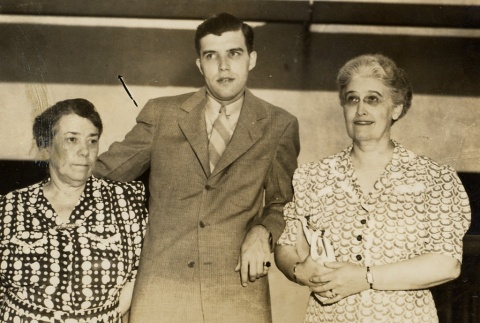
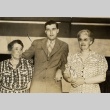
Allie W. Omey, William Whitfield, and Mrs. Thomas J. Whitfield (ddr-njpa-1-2455)
Caption on reverse: "Visiting Nakahama family: Pictured above are Willard Whitfield (center), great grandson of Capt. William H. Whitfield, who rescued Manjiro Nakahama and three other shipwrecked Japanese fishermen, his aunt, Miss Allie W. Omey (left), and his mother, Mrs. Thomas J. Whitfield, as they arrived here this morning enroute to Japan aboard the Nitta Maru. …
vh
Ben Chikaraishi Interview (ddr-chi-1-11)
Nisei male. Born September 10, 1921, in Colusa, California. As a child, family moved to Stockton, California, where parents owned a hotel. Was attending the University of California at Berkeley when Japan bombed Pearl Harbor, and the family was sent to the Rohwer concentration camp, Arkansas. Left camp to live in Chicago, Illinois, where he became …
vh
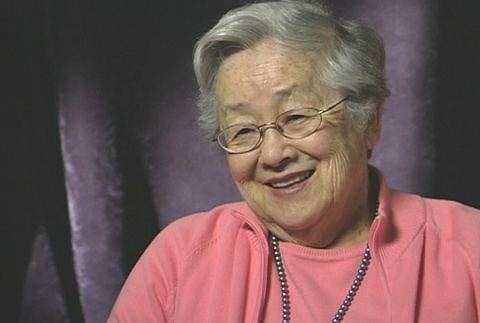
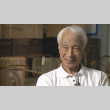
Kajiko Hashisaki Interview (ddr-densho-1000-201)
Nisei female. Born and raised in Seattle, Washington. After the bombing of Pearl Harbor, was removed to the Puyallup Assembly Center, Washington, and the Minidoka concentration camp, Idaho. Left Minidoka in 1943 to attend school in St. Paul, Minnesota. Married in 1945, and lived in Japan for sixteen months before returning to the United States and …
vh
Toru Saito Interview (ddr-densho-1000-307)
Sansei male. Born December 11, 1937, in San Francisco, California. Nearly age four when Japan bombed Pearl Harbor. Removed with family to the Tanforan Assembly Center, California, and the Topaz concentration camp, Utah. In this interview, Mr. Saito discusses many of the harmful psychological effects of the World War II experience on himself and other Japanese …
doc
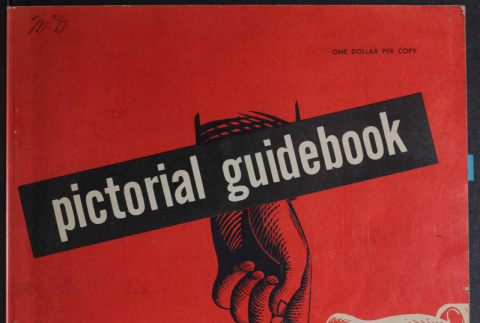
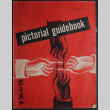
1952 Pictorial Guidebook (ddr-densho-266-78)
Select article titles: "Rare photographs capture beauties of Fuji" (pg 19-34); "The Issei Story" (pg. 35-58); "Pictures: San Francisco, Sacramento, Los Angeles, Twin Cities, New York, Chicago, Seattle, Japan" (pg. 59-112); "Organizations: Bird's-eye view of Nisei groups in the U.S." (pg. 113-138). Removed pages 140-167 from public website to protect personal information.
img
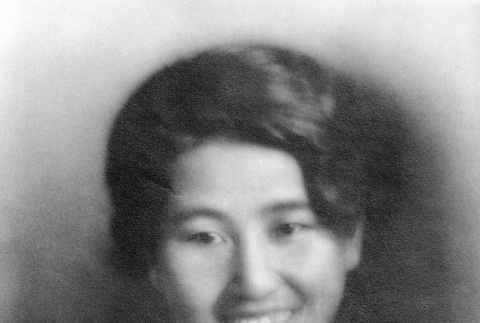
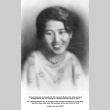
Portrait of Hatsumi (Iwamasa) Mashihara (ddr-ajah-6-26)
Caption below photo: Matusmi Iwamasa of Alameda, CA. She moved to Boston, MA., after marrying Taiji Mashihara. He was working as a dentist and dental surgeon there. Her clothing indicated she is not longer living in Japan, but America, so this photo must have been made after she journeyed across the Pacific in 1920. photo circa …
img
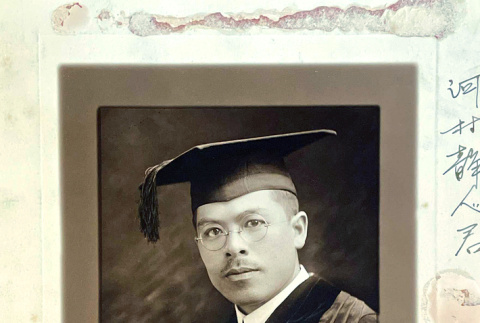
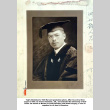
Graduation portrait of Taiji Mashihara from Harvard (ddr-ajah-6-24)
Caption below photo: Taiji Mashihara's 1920 Harvard graduation photo. After his arrival from Japan in 1907, he lived in Alameda., CA., and attended the University of California. He moved to Boston to study dentistry and dental surgery, a rare occupation for an Issei in America. Inscription on front: T. Mashihara 1920. Inscription in Japanese on side …
img
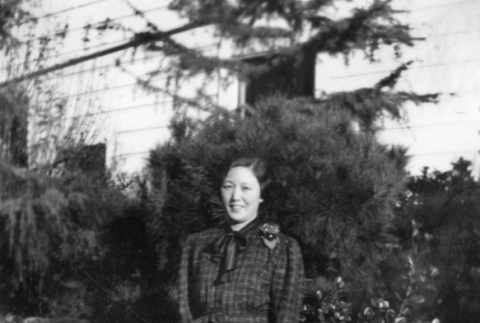
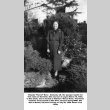
Chiyoko Kono standing in garden (ddr-ajah-6-270)
Caption below photo: Chiyoko "Harriet" Kono - Alameda, CA. Her passport spells her first name as Harriette. She was born in japan March 10, 1903. In this photo, she is married to Hikotaro "Harry" Kono. The Konos would be incarcerated in Gila River, Arizona during WWII. She died in Selma, CA (near Fresno) on July 26, …
doc
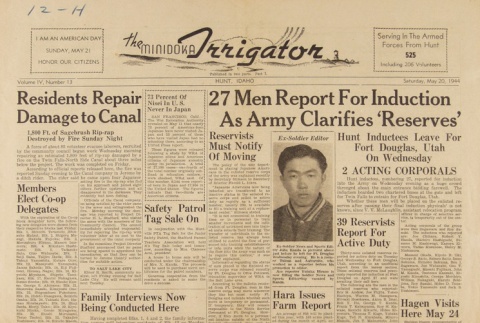
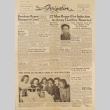
Minidoka Irrigator Vol. IV No. 13 (May 20, 1944) (ddr-densho-119-88)
Selected article titles: "Residents Repair Damage to Canal. 1,800 Ft. of Sagebrush Rip-rap Destroyed by Fire Sunday Night" (p. 1), "Family Interviews Now Being Conducted Here" (p. 1), "73 Percent of Nisei in U.S. Never in Japan" (p. 1), "Reservists Must Notify of Moving" (p. 1), "Seattle Property Must Be Moved" (p. 1), "Americanization Classes Begin" …
img
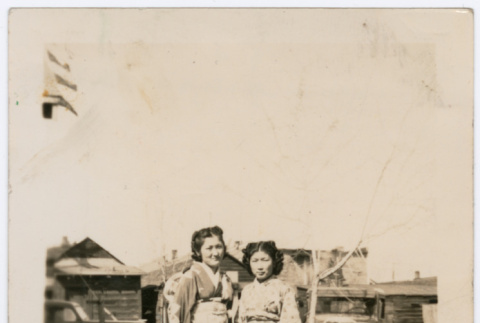
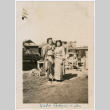
Two women in kimonos (ddr-densho-363-4)
Yeko Sakai (left) and Kimi Kuwahara (right) pose in kimonos. The caption on the bottom of the photograph reads "Yoko Sakai + me". The caption on the back of the photograph reads "1937 Napoto Hana-Matsui".Yeko and Kimi are dressed to celebrate hanamatsui or Buddha's birthday. Napoto may refer to the Napoto Park in Nakagawa, Japan.
![[ Letter to Mrs. Whitney from Fumiko Fukuda, June 4, 1942 ] (ddr-janm-22-9)](https://ddr.densho.org/media/cache/3a/57/3a57e2e03288975b9679cb05360eb669.jpg)
doc
[ Letter to Mrs. Whitney from Fumiko Fukuda, June 4, 1942 ] (ddr-janm-22-9)
3-page handwritten letter written on recto and verso from Fumiko Fukuda to Mrs. Whitney dated June 4, 1942. Fumiko writes on June 4th about the candy that they received and her father being sick in bed, on June 5th, she writes about how it would be better to be in the Poston concentration camp than Japan.
av
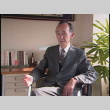
Interview with Sen Nishiyama, part 4 of 5 (ddr-densho-1007-1674)
Nishiyama discusses the progress of civil rights in the US and the resulting impacts on Nisei and Japanese nationals, his experiences with occupation soldiers, the war crimes committed by Japanese soldiers, and the attitudes of Sansei towards Japan. Loni Ding can be heard asking questions behind the camera. Original title: II JA #8, Sen Nishiyama, Fri. …
av
Interview with Moose (John) Fujikawa, part 3 of 4 (ddr-densho-1007-1584)
Fujikawa discusses the Japanese surrender, post-war Japan, returning from the war, and meeting his son upon return. Video starts at 0:29. Loni Ding can be heard asking questions behind the camera. Original title: II LA #11, Fujikawa III, 7-23-85. Interview continues at ddr.densho.org/ddr-densho-1007-1585/
av
Interview with Yosh Nakayama, part 3 of 4 (ddr-densho-1007-1587)
Nakayama discusses his time searching for downed planes with the Graves Registration team in occupied Japan. Video starts at 0:26. Loni Ding can be heard asking questions behind the camera. Original title: II LA #14, Y. Nakayama III, 7-23-85. Interview continues at ddr.densho.org/ddr-densho-1007-1588/
doc
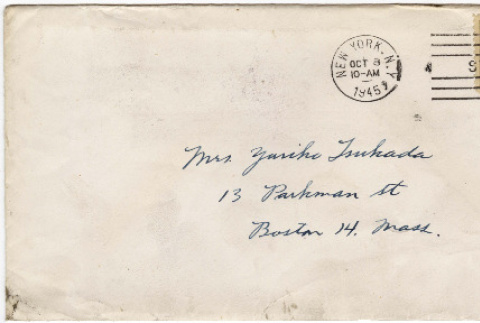
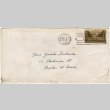
Letter to Yuri Tsukada from Richard Tsukada (ddr-densho-356-533)
Letter to Yuriko Domoto Tsukada from her husband Richard "Dick" Tsukada. Dick writes about how his family is in Japan, his brother visiting over the weekend, his plans to try and transfer his job, and inquires about how Yuri's oral exam went. Item tied together with all objects between ddr-densho-356-457 and ddr-densho-540.
doc
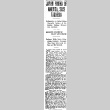
Japan Friend of America, Says Takahira. Ambassador to United States Discredits Rumors of Unfriendly Feelings Between Two Countries. Mikado's Diplomatic Policy Gets Praise. (December 20, 1908) (ddr-densho-56-136)
The Seattle Daily Times, December 20, 1908, p. 28
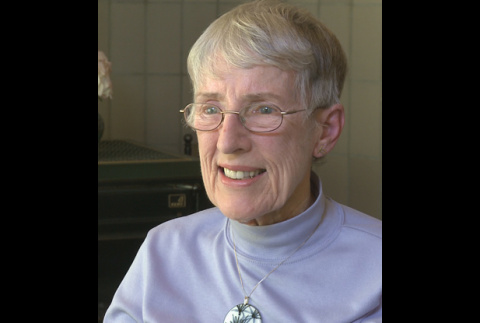
Narrator Maynard Horiuchi
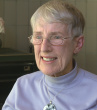
Female. Born August 8, 1925, in Vallejo, California. Due to father's career as a prominent Navy admiral, moved frequently while growing up, living in Hawaii, Cuba, California, China and Japan. Worked as an editor for the military in Washington, D.C., and Japan. While in Japan, met future husband, Lucius Horiuchi.