
555 items




555 items
av
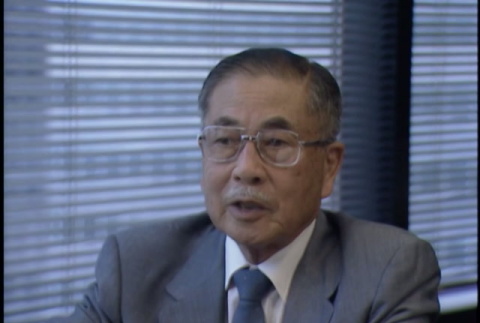
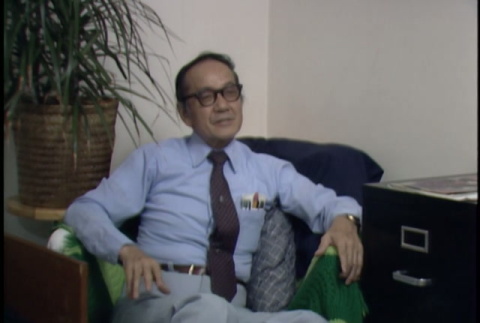
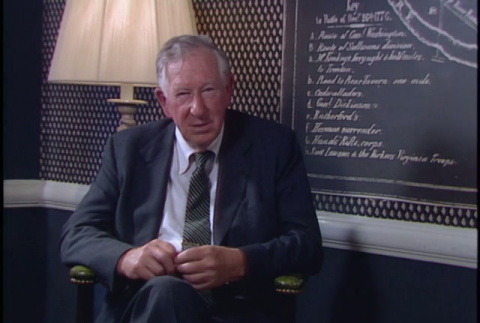
Interview with John Aiso, part 2 of 5 (ddr-densho-1007-1575)
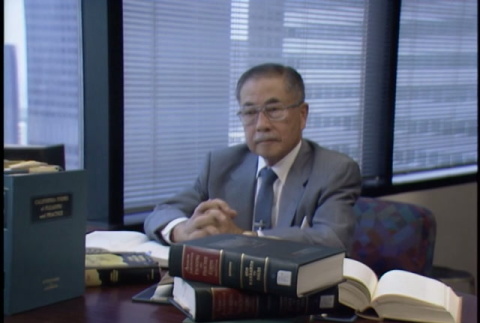
Aiso discusses his feelings about serving the US in WWII, his community's reaction to Pearl Harbor, his high school years, his time as academic director of the MISLS, and the difficulties of living at Camp Savage. Video starts at 0:26. Loni Ding can be heard asking questions behind the camera. Original title: 72, II LA #2, …
av
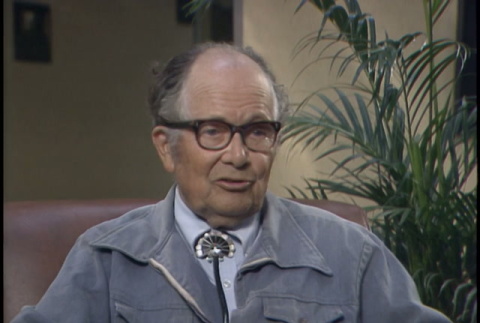
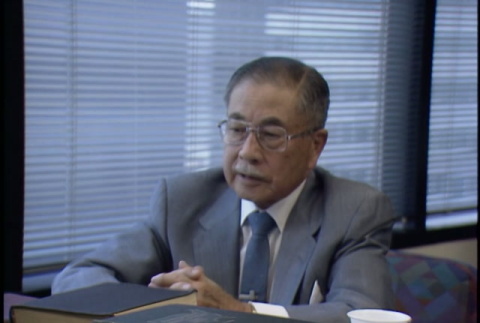
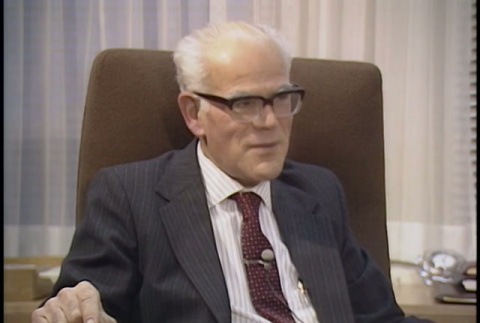
Interview with Monroe Sweetland, part 2 of 3 (ddr-densho-1007-1664)
Sweetland discusses meeting Frank Hachiya's father, Hachiya's father's decision to have Frank buried in Hood River, Frank's funeral, what he knew of Frank's family during the war, Frank's death, and the political climate of Hood River. Loni Ding can be heard asking questions behind the camera. Original title: 148, II MON #16, 9-9-85, Monroe interview, father …
av
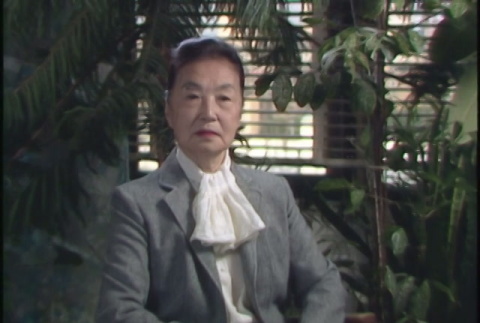
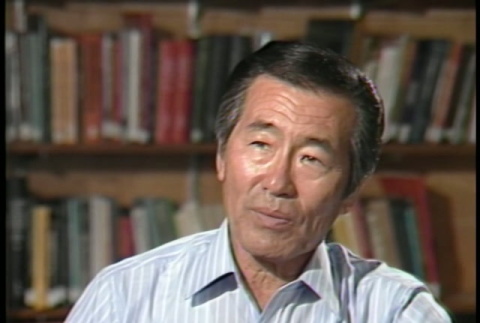
Interview with Hideko Seo, part 1 of 4 (ddr-densho-1007-1535)
Seo discusses her experiences growing up in Portland, moving to Chicago during evacuation, her brother Jimmy's service/camp visits, and her family's time in Minidoka. Also mentions her brother's death during the war. Video starts at 0:52. Loni Ding can be heard asking questions behind the camera. Original title: II NY #19, 6-85, Hideko Seo. Interview continues …
av
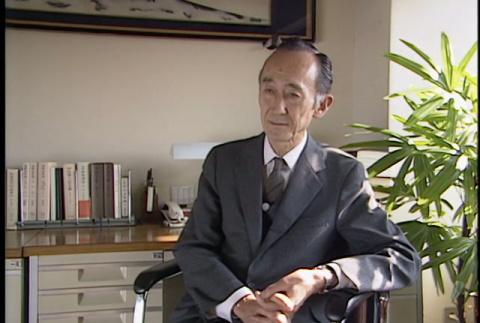
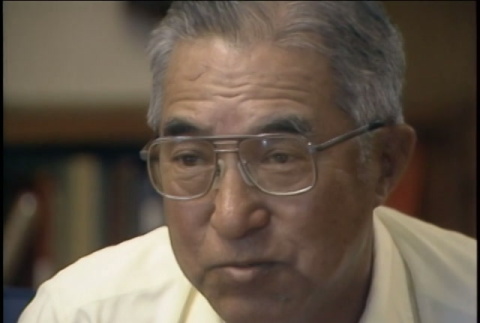
Interview with Sen Nishiyama, part 3 of 5 (ddr-densho-1007-1673)
Nishiyama discusses being in Japan during the war, his and Japan's general reactions to the surrender, the American soldiers that came over during the occupation, and the foundation of the Japanese chapter of the Japanese American Citizens League. Loni Ding can be heard asking questions behind the camera. Original title: II JA #7, Sen Nishiyama, Fri. …

av
Interview with Jacob Herzog, part 1 of 6 (ddr-densho-1007-1539)
Herzog discusses his service in Okinawa, meeting and working with Nisei soldiers. Includes a few stories from the Pacific theater. Video starts at 0:54. Loni Ding can be heard asking questions behind the camera. Original title: II NY #23, Jacob Herzog. Interview continues at ddr.densho.org/ddr-densho-1007-1540/
av
Interview with Clarence Matsumura, part 2 of 5 (ddr-densho-1007-1609)
Matsumura discusses growing up in Wyoming, his mother's cooking, moving to Los Angeles in 1936, getting his radio license, Pearl Harbor, evacuation to Pomona and Heart Mountain, his attempts to join the Navy, Air Force, Coast Guard and Marines, being drafted, his basic training in Fort Hood, TX, his deployment in Europe, and the Hollywood store …
av
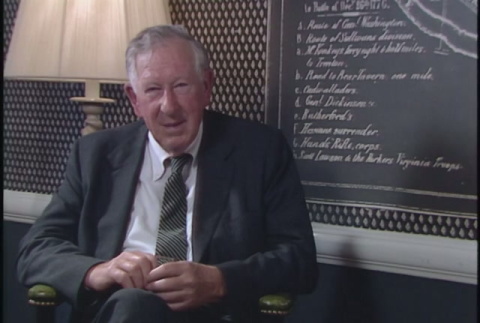
Interview with John Aiso, part 4 of 5 (ddr-densho-1007-1577)
Aiso discusses the difficulty Nisei had becoming commissioned officers, the qualities of Nisei MISLS students, how he himself learned Japanese, his time at Harvard Law School and difficulty finding a job, his time working for the British American Tobacco Company in Manchukuo, being drafted and founding the MISLS, and the role of Nisei soldiers during the …

av
Interview with Jacob Herzog, part 3 of 6 (ddr-densho-1007-1541)
Herzog discusses WWII military intelligence, particularly in the Pacific (Saipan, Okinawa, the Gilbert Islands). Talks about the difficulty of getting Japanese soldiers to surrender. Video starts at 1:00. Loni Ding can be heard asking questions behind the camera. Original title: II NY #25, Jacob Herzog. Interview continues at ddr.densho.org/ddr-densho-1007-1542/

av
Interview with Manny Goldberg, part 2 of 6 (ddr-densho-1007-1563)
Goldberg discusses the different reasons he and the Nisei joined the army and his service in Saipan. Interview is cut short to move location after background noise becomes an issue. Video starts at 0:51. Loni Ding can be heard asking questions behind the camera. Original title: 61, II NY #47, 6-85, Goldberg. Interview continues at ddr.densho.org/ddr-densho-1007-1564/
av
Interview with Frank Emi, part 3 of 6 (ddr-densho-1007-1794)
Emi discusses the racial discrimination he experienced as a child, not speaking up for himself in high school, the impact of racism on Nisei, the lessons he learned from his parents, the Fair Play Committee's case in the 10th Circuit Court of Appeals in Denver, and the charges levied against the Committee. Interview starts at 0:31. …
av
Interview with Shiro Tokuno, part 3 of 4 (ddr-densho-1007-1783)
Tokuno discusses the role of Nisei in the occupation, the attitudes Japanese nationals and American officers had toward Nisei, his service managing agricultural/forestry/fisheries/mining in occupied Japan, the policies he helped implement, moving to Sacramento and farming after the war, deciding to go into military intelligence, his mother's thoughts on him joining the military, and working with …
av
Interview with Sho Nomura, part 2 of 6 (ddr-densho-1007-1611)
Nomura discusses his family's internment at Gila River, volunteering and testing for the MIS language school, and the difficulty his family faced in camp after he volunteered. Video starts at 0:22. Loni Ding can be heard asking questions behind the camera. Original title: 94, II LA #41, 7-25-85, Sho Nomura Interview II. Interview continues at ddr.densho.org/ddr-densho-1007-1612/
av
Interview with Shigeo Yamada, part 1 of 3 (ddr-densho-1007-1707)
Yamada discusses attending Keio University, being drafted into the Japanese navy, serving on the cruiser Yahagi, a "suicide mission" to occupied Okinawa, and learning Japanese in America as a child. Loni Ding can be heard asking questions behind the camera. Original title: II JA #46, Shigeo Yamada, Sun. Feb. 2. Interview continues at ddr.densho.org/ddr-densho-1007-1708/

av
Interview with Yoshio Miwa, part 1 of 4 (ddr-densho-1007-1667)
Miwa, a Japanese national, discusses the end of the war, submitting a protest paper to the occupying Americans, and his role in the Home Ministry during the occupation. Interview conducted mostly in Japanese with the aid of an interpreter. Loni Ding can be heard asking questions behind the camera. Original title: II JA #1, Yoshio Miwa, …
av
Interview with George Nakamura, part 1 of 5 (ddr-densho-1007-1679)
Nakamura discusses moving to Japan in 1955, growing up in Arroyo Grande, CA, evacuation, his time at Tulare and Gila River, volunteering for the military from camp, and camp attitudes toward volunteering. Loni Ding can be heard asking questions behind the camera. Original title: II JA #13, George Nakamura, Fri. Jan. 31. Interview continues at ddr.densho.org/ddr-densho-1007-1680/
av
Interview with Yukio Kawamoto, part 4 of 8 (ddr-densho-1007-1548)
Kawamoto reads through a letter he wrote from the south Pacific to a camp newspaper in Topaz, talks about his service, and tells a few war stories. Also mentions the atomic bombs. Video starts at 0:59. Loni Ding can be heard asking questions behind the camera. Original title: 49, II NY #32, 6-85, Kawamoto. Interview continues …
doc
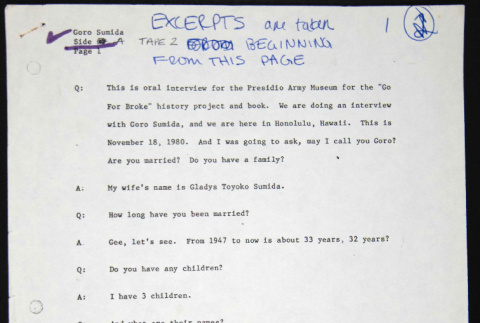
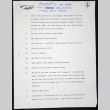
Goro Sumida oral interview transcript (ddr-densho-1007-1043)
Tape 2, side A. Conducted by Eric Saul for the Presidio Army Museum. Sumida served in the 100th Battalion in WWII.
av
Interview with Jacob Herzog, part 6 of 6; b-roll of Herzog (ddr-densho-1007-1544)
Herzog discusses evacuation, which he did not learn about until after the war. Video starts at 0:54, interview ends at 3:16. Loni Ding can be heard asking questions behind the camera. Rest of tape is b-roll: pictures of Herzog, articles. Original title: 46, II NY #28, 6-85, Herzog
av
Interview with Bill Dizer, part 3 of 3 (ddr-densho-1007-1678)
Dizer discusses the differences between Nisei and Japanese nationals, his thoughts on Japanese/Nisei "ethnocentrism", his experience with Japanese work and social life, his advice for his Japanese and American peers, and his views on racial discrimination. Loni Ding can be heard asking questions in the background. Original title: 195, II JA #12, Bill Dizer, Fri. Jan. …
av
Interview with Jacob Herzog, part 4 of 6 (ddr-densho-1007-1542)
Herzog discusses post-war occupation of Okinawa and interrogating Japanese prisoners. Video starts at 0:58. Loni Ding can be heard asking questions behind the camera. Original title: 44, II NY #26, 6-85, Herzog. Interview continues at ddr.densho.org/ddr-densho-1007-1543/
av
Interview with Sho Nomura, part 6 of 6 (ddr-densho-1007-1615)
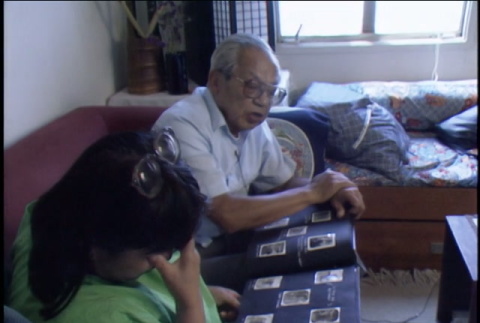
Nomura and Loni Ding look through a photo album of his, with several photos from his service in China. Nomura recounts several stories relating to the documents and photos in the album. Original title: II LA #45, 7-25-85, Sho Nomura Interview VI
av
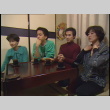
Interview with Akiko, Brian Yamakoshi, Kenny and Chizuko, part 1 of 4 (ddr-densho-1007-1717)
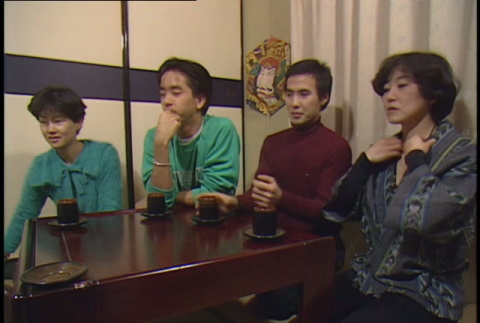
In order of left to right: Akiko, Brian Yamakoshi, Kenny, and Chizuko. Aside from Brian, last names unknown; Kenny and Chizuko are married. This tape focuses mainly on Chizuko, who discusses her relationship with her grandfather, her reasons for coming to Japan, and making Noh masks. Loni Ding can be heard asking questions behind the camera. …
av
Interview with John Aiso, part 3 of 5 (ddr-densho-1007-1576)
Aiso discusses his relationships with students at the MISLS, the background of those enrolled, and the relationships between Nisei and white students. Video starts at 0:30. Loni Ding can be heard asking questions behind the camera. Original title: 73, II LA #3, 7-23-85, Judge Aiso III, Interview in Law Library Cont. Interview continues at ddr.densho.org/ddr-densho-1007-1577/
av
Interview with Hugh Nozawa, part 3 of 3 (ddr-densho-1007-1715)
Nozawa discusses being court-martialed for refusing to serve in the military while the internment camps were operating, the long fight for honorable discharge after the fact, and his reasons for trying to hard to reverse the dishonorable discharge given to Nisei who refused to serve. Original title: 222, II JA #54, Hugh Nozawa, Sun. Feb. 2
av
Interview with Hugh Nozawa, part 1 of 3 (ddr-densho-1007-1713)
Nozawa discusses being born in Santa Monica, attending high school in Japan, being drafted, being court-martialed for refusing to complete training, recently getting honorable discharge, the discrimination he and other Nisei faced in the army, and President Roosevelt's visit to Fort Riley. Loni Ding can be heard asking questions behind the camera. Original title: 220, II …