
77 items


77 items
img
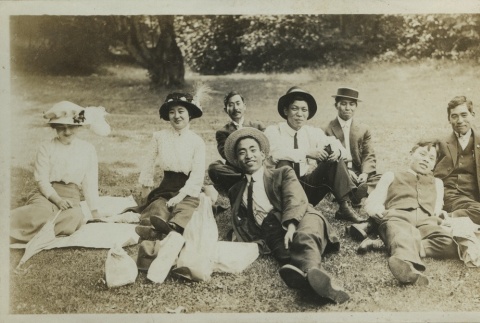
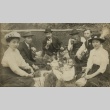
Picnic (ddr-densho-124-1)
Issei friends having a picnic in Washington Park. (L to R): Yamaguchi, Tamura, Yamaguchi, Hino, unidentified, Sakaguchi, Kamioka, Tamura.
img
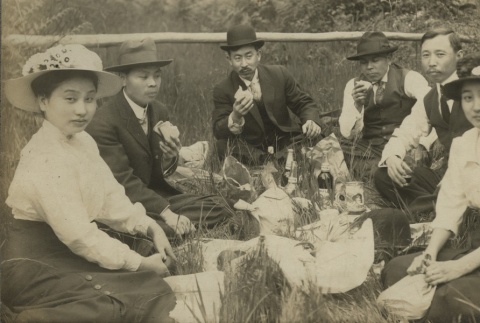
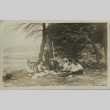
Issei friends at a picnic (ddr-densho-124-12)
These Issei are having a picnic at Alki Point in Seattle. (L to R): Mrs. Yamaguchi, Kamioka (or Ueoka), Yamaguchi, Suzuki, Yamada, Tamura.
img
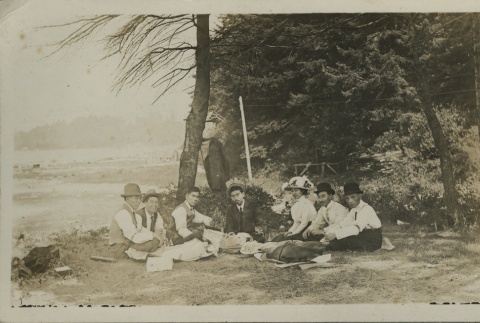
Issei at a picnic (ddr-densho-124-3)
Issei friends having a picnic at Yellowstone Park beach (?). (L to R): unidentified, unidentified, Tamura, Hino, Tamura, Yamaguchi, unidentified.
img
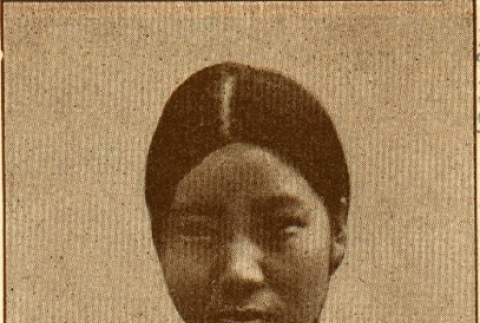
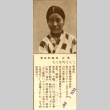
Takako Nakamoto (ddr-njpa-4-1546)
Caption on front [translation]: "Tokyo, Takako Nakamoto. 1. Writer; 2. Kadoshima village, Toyoura, Yamaguchi; 3. November 19, 1903; 4. Yamaguchi Girls' High School; 5. 8-16 __________ Kyobashi, Tokyo; 6. Music, reading; 7. After graduating, she taught at an elementary school in Shimonoseki, Yamaguchi, and she went to Tokyo in 1927. She wrote the short stories 'The …
doc
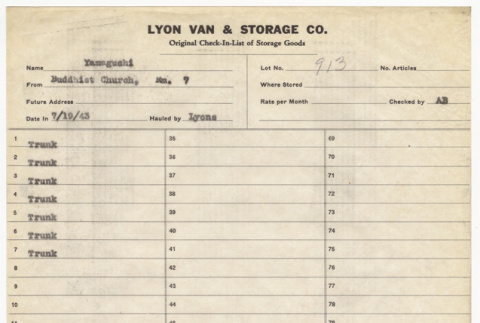
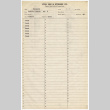
Storage list for Yamaguchi (ddr-sbbt-2-390)
A check-in list for goods belonging to Yamaguchi, moved from the Buddhist Church (Seattle Betsuin Buddhist Temple) to Lyon Van and Storage Company's lot 913.
doc
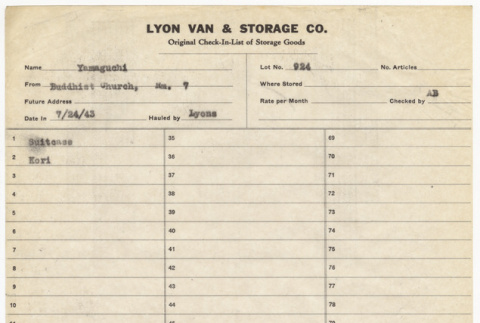
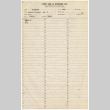
Storage list for Yamaguchi (ddr-sbbt-2-401)
A check-in list for goods belonging to Yamaguchi, moved from the Buddhist Church (Seattle Betsuin Buddhist Temple) to Lyon Van and Storage Company's lot 924.

Narrator Kathy Yamaguchi
Kathy Yamaguchi (pseudonym) was born in 1948 as a Sansei daughter of a homemaker and a gardener, who had met in the incarceration camp in Topaz, Utah. Yamaguchi calls her father an "assimilationist" who mostly associated with non-Asians, and she feels that she, too, did not have a lot of Japanese American friends when she was …
img
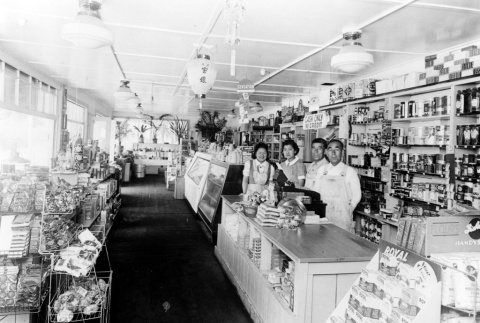
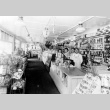
Grocery store at Bainbridge Gardens (ddr-densho-34-11)
Bainbridge Gardens consisted of a general store, nursery, and gas station. Left to right: store clerks Yaeko Yamashita and May Yamaguchi with owners Zenhichi Harui and Zenmatsu Seko.

vh
Kathy Yamaguchi Interview (ddr-densho-1021-1)
Kathy Yamaguchi (pseudonym) was born in 1948 as a Sansei daughter of a homemaker and a gardener, who had met in the incarceration camp in Topaz, Utah. Yamaguchi calls her father an "assimilationist" who mostly associated with non-Asians, and she feels that she, too, did not have a lot of Japanese American friends when she was …
doc
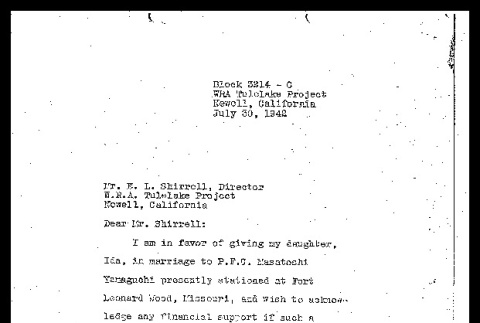
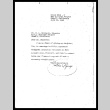
Letter from Jutaro Ryugo to Mr. E. L. Shirrell, Director, WRA Tulelake Project, July 30, 1942 (ddr-csujad-55-2243)
Correspondence from Jutaro Ryugo to E.L. Shirrell regarding marriage between Ida Ryugo and Private Masatoshi Yamaguchi. See this object in the California State Universities Japanese American Digitization project site: sac_jaac_2346
img
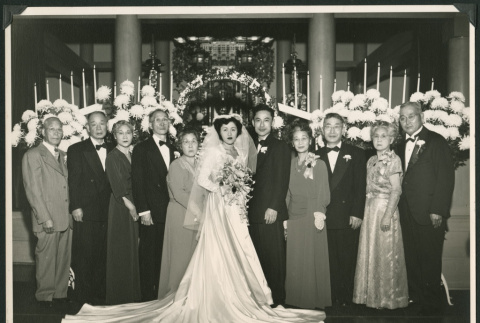
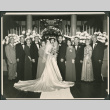
Wedding portrait (ddr-densho-359-476)
Bride and groom, Chiyo and Min Okano pose with their family for a portrait. Min's parents, Haruno and Toshiyuki are on the right, next to Min. Far left, Misao and Tad Yamaguchi. Chiyo's parents, Kishineki and Harira, are left, next to Chiyo.
doc
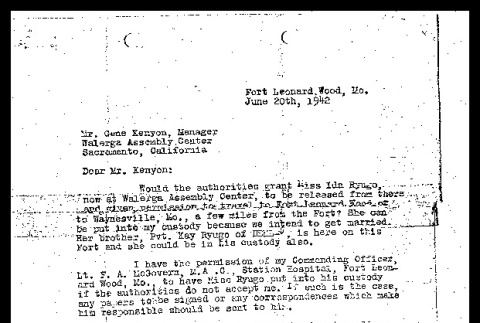
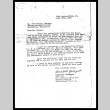
Letter from Masatoshi Yamaguchi, Pvt. Medical Detachment, to Gene Kenyon, Manager, Walerga Assembly Center, June 20, 1942 (ddr-csujad-55-2239)
Correspondence from Masatoshi Yamaguchi to Gene Kenyon regarding the release of Ida Ryugo from Walerga Temporary Assembly Center. See this object in the California State Universities Japanese American Digitization project site: sac_jaac_2342
img
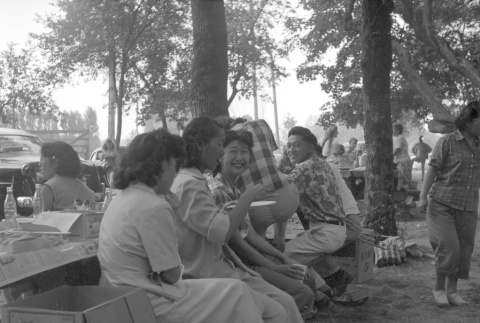
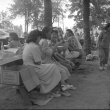
Community Picnic (ddr-one-1-377)
Black and white photographic negative of three women sitting with backs to a picnic table enjoying a plate of food at a community picnic at Viking Park hosted by the Oregon Buddhist Church (now known as the Oregon Buddhist Temple). Third from left is Mary Yamaguchi, fifth from left is Jon Honma.
doc
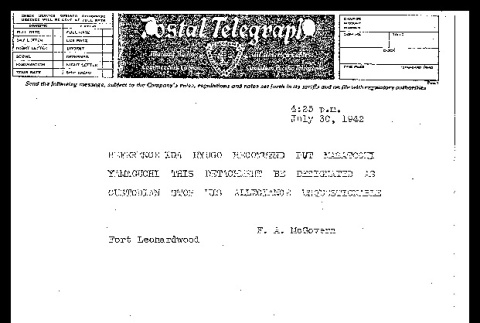
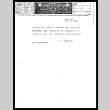
Postal telegraph from F. A. McGovern, July 30, 1942 (ddr-csujad-55-2242)
Telegram from F.A. McGovern regarding the transfer of Ida Ryugo into the custody of Private First Class Masatoshi Yamaguchi. See this object in the California State Universities Japanese American Digitization project site: sac_jaac_2345
img
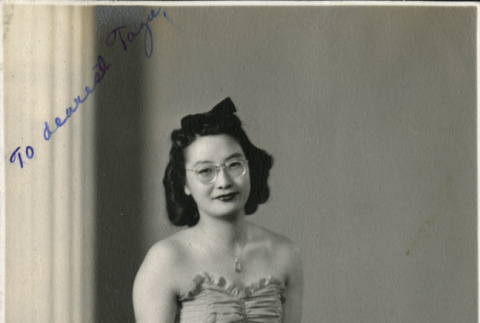
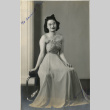
Kay Yamaguchi (ddr-csujad-11-123)
A portrait of Kay Yamaguchi in formal wear. She addresses this photograph to, "Dearest Tazu." From page 46 of: Tazu Kawamoto photo album (csudh_taz_0001). See this object in the California State Universities Japanese American Digitization project site: taz_01_46_001
doc
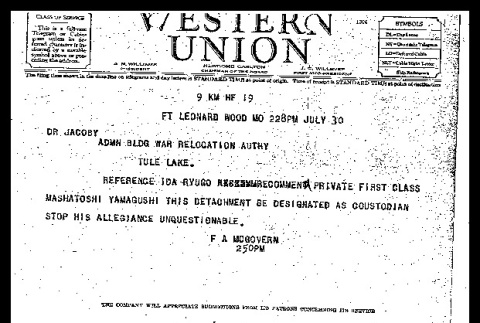
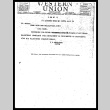
Western Union telegram from F.A. McGovern to Dr. Jacoby, July 30, 1942 (ddr-csujad-55-2241)
Telegram from F.A. McGovern to Dr. Jacoby regarding the transfer of Ida Ryugo into the custody of Private First Class Masatoshi Yamaguchi. See this object in the California State Universities Japanese American Digitization project site: sac_jaac_2344
img
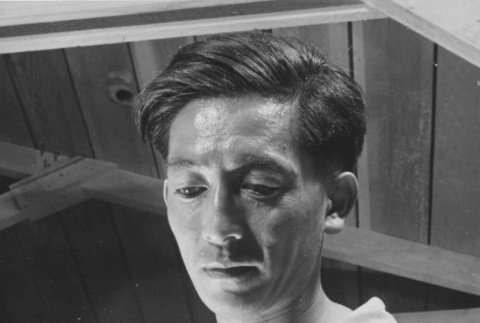
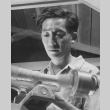
Chic Yamaguchi, former farm worker from Kingsburg, California (ddr-csujad-14-2)
Chic Yamaguchi, former farm worker from Kingsburg, California, turning a section from a model ship on lathe in model ship factory at Gila River incarceration camp. April 27, 1943. Photo by Francis Stewart. See this object in the California State Universities Japanese American Digitization project site: HMLSC_TOMO_002
img
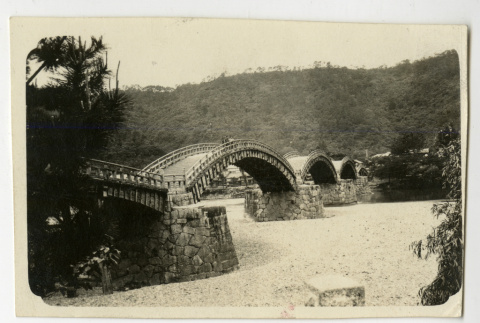
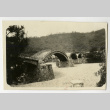
Kintai Bridge (ddr-csujad-42-260)
Photographed is the Kintai Bridge, Yamaguchi Japan. It was probably taken during a trip to Japan after the war. The handwritten note on the back side reads: Kintai Bridge. [In Japanese]. Title from caption. See this object in the California State Universities Japanese American Digitization project site: tak_02_10_021
doc
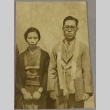
Article about Horyu Asaeda (ddr-njpa-5-281)
Translation of article: Mr. Horyu Asaeda came to Hawaii on the Tatsuta maru ship as a missionary of Daigo Temple on Riliha Street. He is from Iwakuni city in Yamaguchi Prefecture, Japan, and graduated from Koya Mountain Secondary School in 1927. He became chief priest of a Buddhist temple at Konsho-In in Iwakuni. He was born …
img
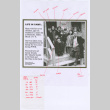
Ichikawa family and friends (ddr-densho-258-203)
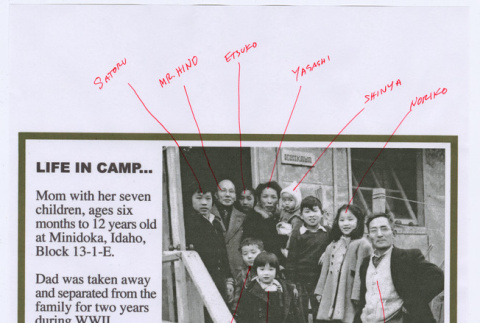
A photograph was taken by Jack Yamaguchi of the Ichikawa family on the steps of their barracks, Block 13-1-E, at Minidoka Concentration Camp. Back row from left to right: Satoru Ichikawa, Mr. Hino, Etsuko Ichikawa, Yasashi Ichikawa, Shinya Ichikawa, Unidentified boy, Noriko Ichikawa, Yahachi Suzuki Front Row left to right: Akira Ichikawa, Hiroko Ichikawa
img
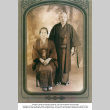
Portrait of Kumagoro and Machi Takagi (ddr-ajah-6-894)
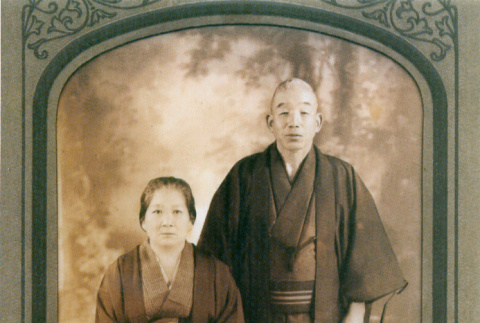
Caption below photo: Kumagoro Takagi and wife Machi Sugimoto. This would be Machi's second marriage. Kumagoro was born in Fukuoka, Japan on September 27, 1863. He was a horseman and archer there. He died in Alameda March 3, 1936. Machi was born in Yamaguchi, Japan on August 3, 1871 and died in Alameda in January 6, …
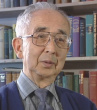
Narrator Shosuke Sasaki
Issei male. Born March 26, 1912, in Yamaguchi-ken, Japan. Immigrated to United States in 1919. Lived in Pomeroy, Washington, and Seattle, Washington, before World War II. Incarcerated at the Puyallup Assembly Center, Washington and the Minidoka concentration camp, Idaho. Resettled in New York. As a member of the Newspaper Guild, led effort to eliminate pejorative use …
doc
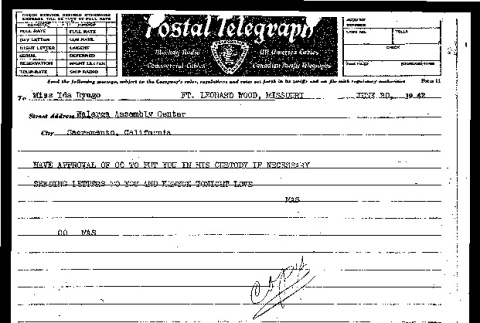
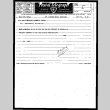
Postal telegraph from Masatoshi Yamaguchi to Ida Ryugo, June 20, 1942 (ddr-csujad-55-2238)
Telegraph from Mas [Masatoshi Yamaguchi] to Ida Ryugo at Walerga Assembly Center. Telegraph reads, "Have approval of CO to put you in his custody if necessary. Sending letters to you and Kenyon tonight." See this object in the California State Universities Japanese American Digitization project site: sac_jaac_2341
img
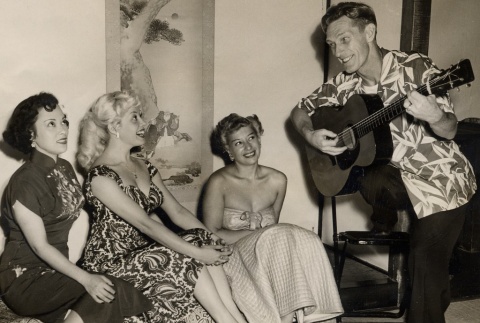
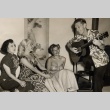
Eddie Peabody playing guitar at a carnival (ddr-njpa-1-1153)
Caption on reverse: "Carnival stars relax at mochizuki: Eddie Peabody, the 'Banjo King,' plays guitar for a change while carnival and movie stars look on with keen interest. Photo was taken at a press and radio party for the stars at the Mochizuki tea garden last evening. Left to right: Shirley Yoshiko Yamaguchi (Rikoran), Jacqueline Fontaine, …
img
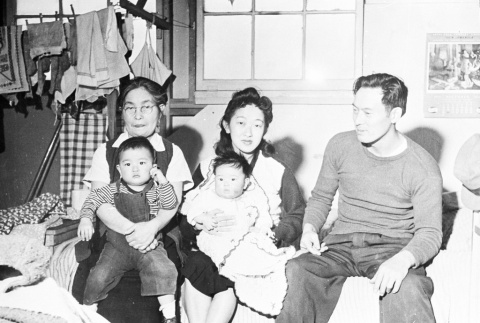
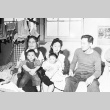
Japanese American family inside barracks (ddr-densho-39-28)
Dorothy and Jack Yamaguchi, pictured in the middle and to the far right, with their children and the children's grandmother, were from Seattle, Washington. The Yamaguchis returned to Seattle after World War II and worked to help preserve Japanese American history. They developed a slide show and accompanying book called This Is Minidoka, which they used …