
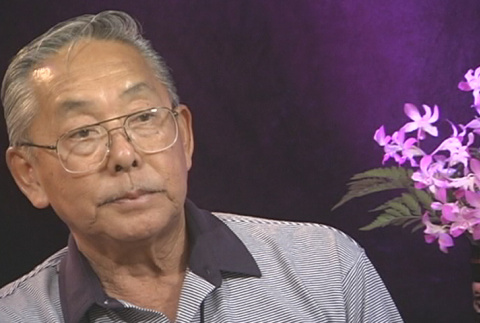
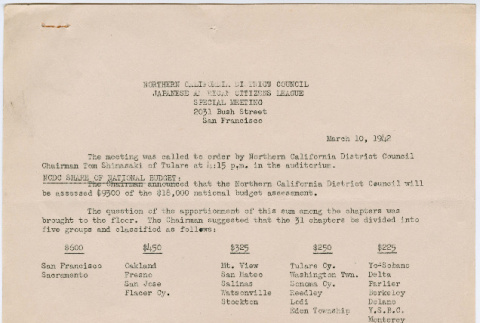

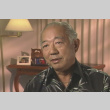
Narrator Henry Bruno Yamada
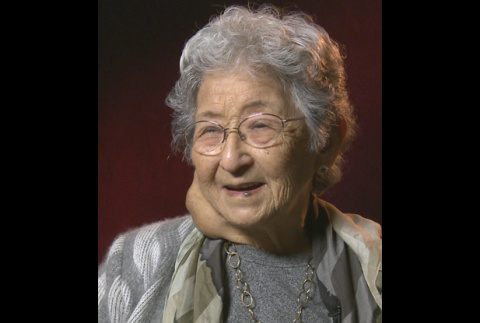
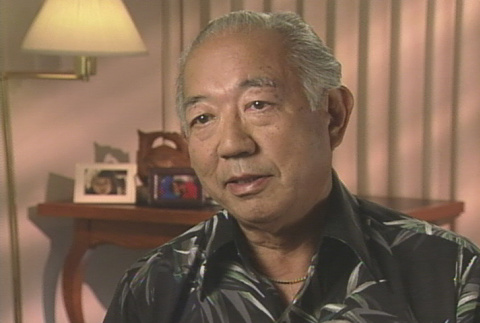
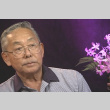
Narrator Mae Iseri Yamada
This interview was conducted at the 1998 Americans of Japanese Ancestry Veterans National Convention, held in Honolulu, Hawaii. Given the full conference schedule, interviews conducted at the reunion were shorter in length than typical Densho interviews and concentrated on a single topic, namely, the individual's military service during …
This interview was conducted at the 1998 Americans of Japanese Ancestry Veterans National Convention, held in Honolulu, Hawaii. Given the full conference schedule, interviews conducted at the reunion were shorter in length than typical Densho interviews and concentrated on a single topic, namely, the individual's military service during World War …
This interview was conducted at the 1998 Americans of Japanese Ancestry Veterans National Convention, held in Honolulu, Hawaii. Given the full conference schedule, interviews conducted at the reunion were shorter in length than typical Densho interviews and concentrated on a single topic, namely, the individual's military service during World War II.
This interview was conducted at the 1998 Americans of Japanese Ancestry Veterans National Convention, held in Honolulu, Hawaii. Given the full conference schedule, interviews conducted at the reunion were shorter in length than typical Densho interviews and concentrated on a single topic, namely, the individual's military service during World War II.
This interview was conducted at the 1998 Americans of Japanese Ancestry Veterans National Convention, held in Honolulu, Hawaii. Given the full conference schedule, interviews conducted at the reunion were shorter in length than typical Densho interviews and concentrated on a single topic, namely, the individual's military service during …
This interview was conducted at the 1998 Americans of Japanese Ancestry Veterans National Convention, held in Honolulu, Hawaii. Given the full conference schedule, interviews conducted at the reunion were shorter in length than typical Densho interviews and concentrated on a single topic, namely, the individual's military service during World War …
This interview was conducted at the 1998 Americans of Japanese Ancestry Veterans National Convention, held in Honolulu, Hawaii. Given the full conference schedule, interviews conducted at the reunion were shorter in length than typical Densho interviews and concentrated on a single topic, namely, the …
This interview was conducted at the 1998 Americans of Japanese Ancestry Veterans National Convention, held in Honolulu, Hawaii. Given the full conference schedule, interviews conducted at the reunion were shorter in length than typical Densho interviews and concentrated on a single topic, namely, the individual's military service during World War II.
This interview was conducted at the 1998 Americans of Japanese Ancestry Veterans National Convention, held in Honolulu, Hawaii. Given the full conference schedule, interviews conducted at the reunion were shorter in length than typical Densho interviews and concentrated on a single topic, namely, the individual's military …
This interview was conducted at the 1998 Americans of Japanese Ancestry Veterans National Convention, held in Honolulu, Hawaii. Given the full conference schedule, interviews conducted at the reunion were shorter in length than typical Densho interviews and concentrated on a single topic, namely, the individual's military service during World …
This interview was conducted at the 1998 Americans of Japanese Ancestry Veterans National Convention, held in Honolulu, Hawaii. Given the full conference schedule, interviews conducted at the reunion were shorter in length than typical Densho interviews and concentrated on a single topic, namely, the individual's military service during World War II.
This interview was conducted at the 1998 Americans of Japanese Ancestry Veterans National Convention, held in Honolulu, Hawaii. Given the full conference schedule, interviews conducted at the reunion were shorter in length than typical Densho interviews and concentrated on a single topic, namely, the individual's military service during …
This material is based upon work assisted by a grant from the Department of the Interior, National Park Service. Any opinions, finding, and conclusions or recommendations expressed in this material are those of the author(s) and do not necessarily reflect the views of the Department of …
This material is based upon work assisted by a grant from the Department of the Interior, National Park Service. Any opinions, finding, and conclusions or recommendations expressed in this material are those of the author(s) and do not necessarily reflect the views of the Department of the Interior.
This material is based upon work assisted by a grant from the Department of the Interior, National Park Service. Any opinions, finding, and conclusions or recommendations expressed in this material are those of the author(s) and do not necessarily reflect the views of the Department of the Interior.
This material is based upon work assisted by a grant from the Department of the Interior, National Park Service. Any opinions, finding, and conclusions or recommendations expressed in this material are those of the author(s) and do not necessarily reflect the views of the Department of …
This material is based upon work assisted by a grant from the Department of the Interior, National Park Service. Any opinions, finding, and conclusions or recommendations expressed in this material are those of the author(s) and do not necessarily reflect the views of the Department of the Interior.
This material is based upon work assisted by a grant from the Department of the Interior, National Park Service. Any opinions, finding, and conclusions or recommendations expressed in this material are those of the author(s) and do not necessarily reflect the views of the Department of the Interior.