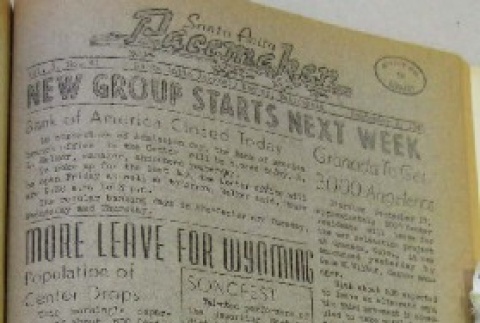
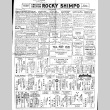
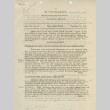
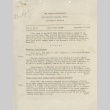
Selected article titles: "New Group Starts Next Week. Granada to Get 3000 Angelenos" (p. 1), "More Leave for Wyoming. Population of Center Drops" (p. 1), "Shoes Must be Claimed" (p. 1), "Friends Write: Train Trip to Heart Mountain" (p. 1), "Cleanliness Stressed" (p. 1), "Library Calls Books Back" (p. 1), "Editorial: Remember We Are Americans" (p. …
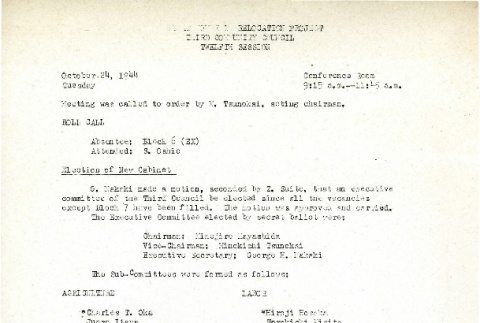
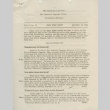
The Heart Mountain Relocation Center was built during the summer of 1942 and received its first contingent of Japanese Americans on August 12, 1942. It is located in Park County, northwestern Wyoming. The collection contains Community Camp Council meeting minutes, camp laws, correspondence, the case of People of Heart Mountain vs. Tom Yamada, and other documents.
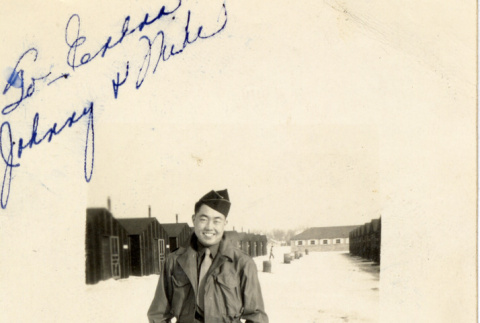
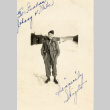
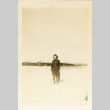
Photograph of a man in a military uniform standing at snow covered Heart Mountain camp, Wyoming. Handwritten note on front of photograph states, "To [Elda] Johnny, and [Nike] Sincerely Shigeto." See this object in the California State Universities Japanese American Digitization project site: mhf_010
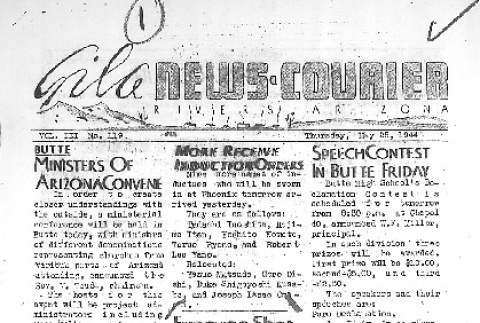
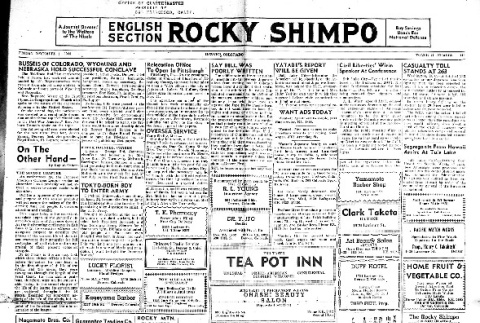
Selected article titles: "Busseis of Colorado, Wyoming and Nebraska Hold Successful Conclave"; "On the Other Hand"; "Tokyo-Born Boy to Enter Army"; "Relocation Office to Open in Pittsburgh"; "Oversea Service"; "Say Bill Was Poorly Written"; "Yatabe's Report Will be Given"; "Want Ads Today"; "Civil Liberties' Wirin Speaker at Conference"; "Casualty Toll Stands at 263"; "Segregants From Hawaii …
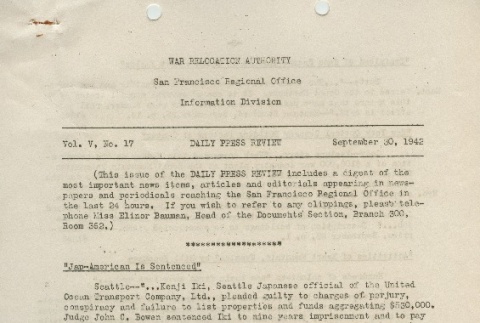
Article titles: "Jap-American is Sentenced"; "Jap Labor Being Recruited"; "Farmers Protest Grog Sales to Jap Evacuees"; "Trainload of Japs Passes Through to State's Beet Fields"; "New York Optical Company Building Factory at Center"; "Activities of Heart Mountain, Wyoming"; by Bill Hosokawa"; "Scott Taggart to Heart Mountain Job"; "Speaker Tells of Jap Camp Near Jerome"; "8,000 More …
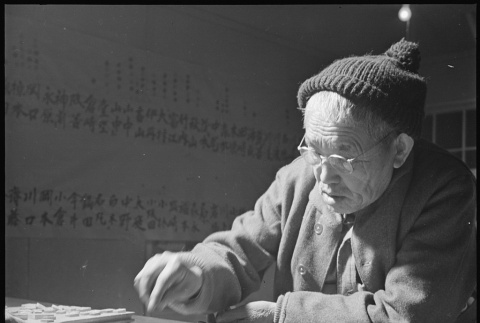
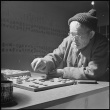
Original WRA caption: Heart Mountain Relocation Center, Heart Mountain, Wyoming. An early immigrant from Japan, now residing at Heart Mountain, after evacuation from West Coast areas, reaches for a pawn in a game of Shogi, similar in characters and playing to chess. Although previously mumbling in Japanese, startled by the camera flas, the old gent let …
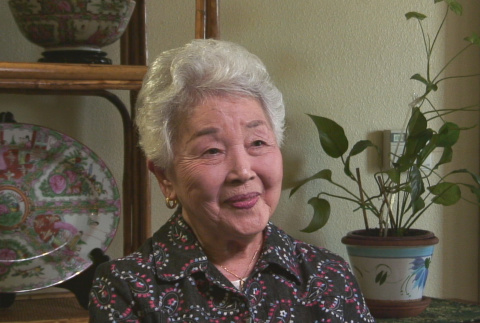
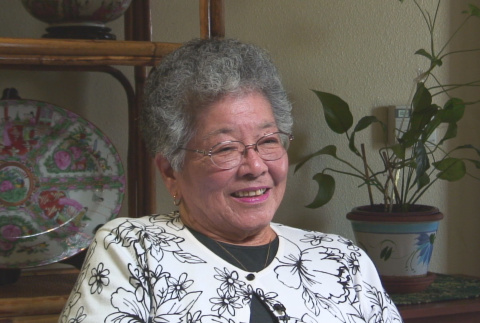
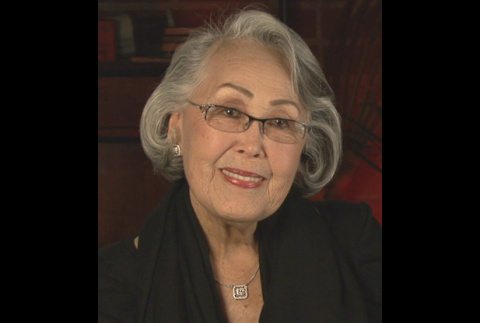
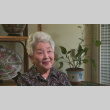
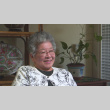
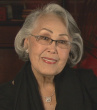
Nisei female. Born January 1, 1920, in Los Angeles, California. Grew up in Covina, California. Worked for the Wartime Civil Control Administration (WCCA). Volunteered to go early to Poston concentration camp, Arizona, to help set up the camp. Eventually transferred to Heart Mountain concentration camp, Wyoming, before leaving for New York. Eventually pursued a career in …
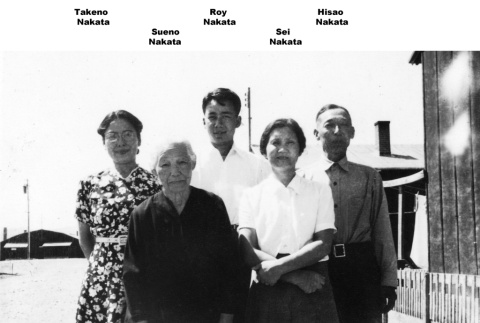
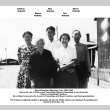
Caption below photo: Heart Mountain, Wyoming, circa 1942-1945. Roy is the son of Takeno and Tomoshige Nakata (Tomoshige is not pictured). Hisao is Tomoshige's brother. Sei is Hisao's second wife. Sueno is Tomoshige and Hisao's mother and Roy's grandmother. The Takata's originally settled in Alameda, CA. By the 1930s, Takeno and husband Tomoshige had moved to …
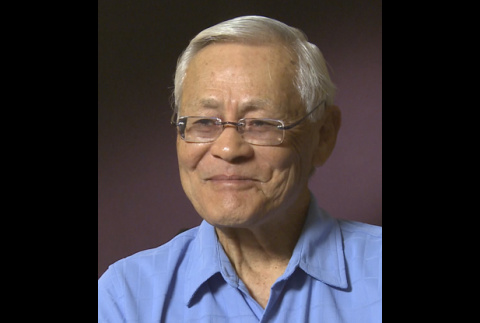
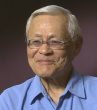
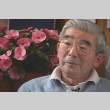
Nisei male. Born June 13, 1932, in San Francisco, California. During World War II, removed to the Pomona Assembly Center, California, and the Heart Mountain concentration camp, Wyoming. While in camp, found an injured magpie bird, named it Maggie, and adopted it as a pet. Following the war, wrote a children's book, Hello, Maggie! and became …
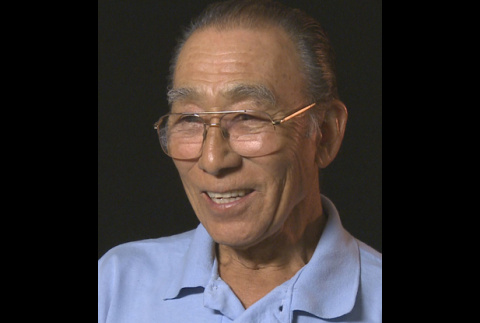
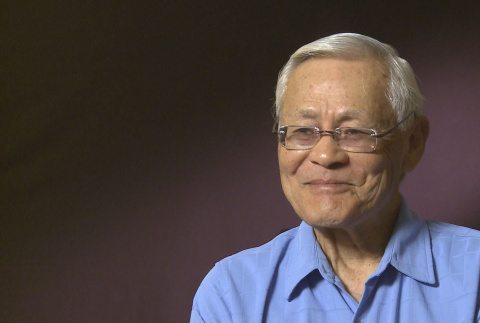
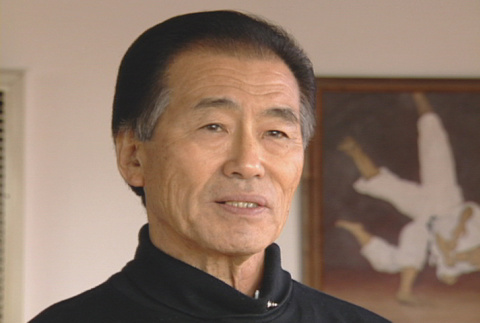
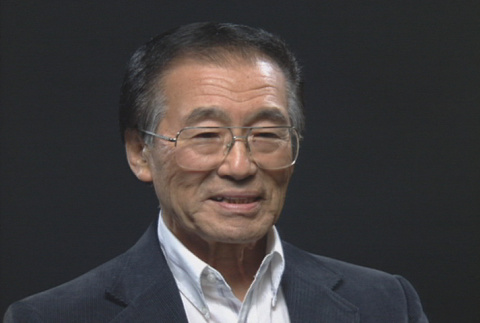
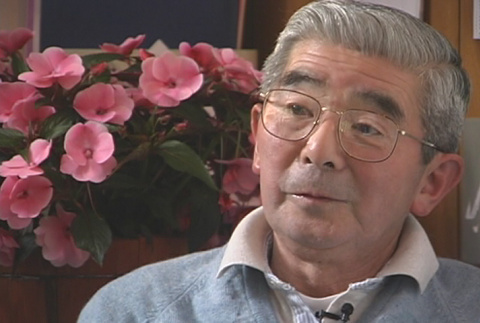
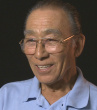
Nisei male. Born August 23, 1929, in El Monte, California. Grew up in El Monte, before being removed with family during World War II to the Pomona Assembly Center, California, and the Heart Mountain concentration camp, Wyoming. Returned to California after leaving camp, and opened a produce market and did gardening work. Active with various Japanese …
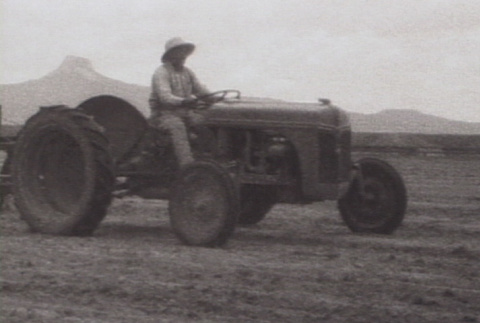
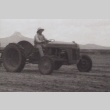
Nisei male. Born January 25, 1912, in San Jose, California. Grew up in San Jose, working on family's extensive farmholdings, and graduating from San Jose Teachers College. After the bombing of Pearl Harbor, was removed to Santa Anita Assembly Center, California, and Heart Mountain concentration camp, Wyoming. While at Heart Mountain, became the agriculture superintendent, and …
Deciding to write a book about pet bird and getting involved with the Heart Mountain Wyoming Foundation
This material is based upon work assisted by a grant from the Department of the Interior, National Park Service. Any opinions, finding, and conclusions or recommendations expressed in this material are those of the author(s) and do not necessarily …
Living and working in the Heart Mountain concentration camp, Wyoming
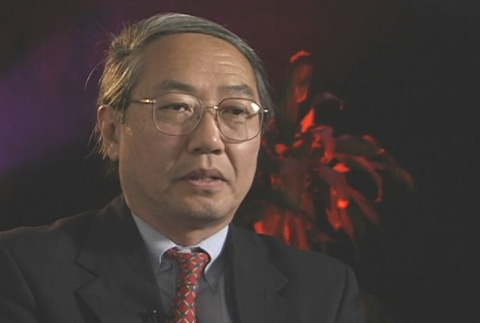
This interview was conducted by filmmaker Frank Abe for his 2000 documentary, Conscience and the Constitution, about the World War II resisters of conscience at the Heart Mountain incarceration camp. As a result, the interviews in this collection are typically not life histories, instead primarily …
Preparing for mass removal; memories of Heart Mountain concentration camp, Wyoming
This interview was conducted by filmmaker Frank Abe for his 2000 documentary, Conscience and the Constitution, about the World War II resisters of conscience at the Heart Mountain incarceration camp. As a result, the interviews in this collection are typically not life histories, instead …
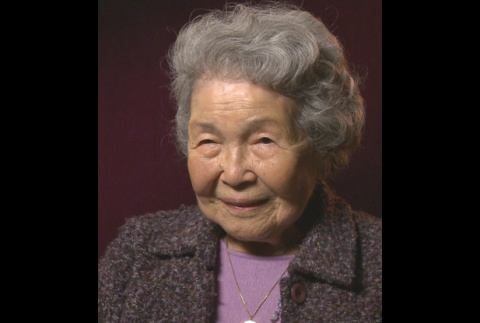
Nisei female. Born February 11, 1913, in Seattle, Washington. Grew up in the Seattle and Bellevue, Washington, areas. In 1928, was involved in a serious ferry accident in which five of her family members, including both of her parents, perished. Married renowned artist Paul Horiuchi and lived in Rock Springs, Wyoming, where Paul worked for a …
Photograph of a woman wearing a winter coat in snow at the Heart Mountain incarceration camp. Barracks pictured behind her. Handwritten note on back of photograph states "Heart Mt. (Mountain) Reloc (Relocation) Cl [Camp] Wyoming." See this object in the California State Universities Japanese American Digitization project site: mhf_005_01
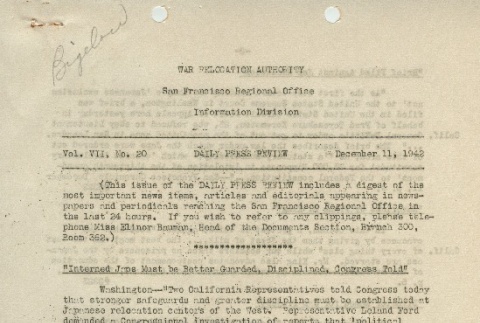
Article titles: "Interned Japs Must be Better Guarded, Disciplined, Congress Told"; "...Japanese Camp Groups Split, Some Jailed"; "Brief Filed Against Jap Exclusion"; "Mavericks by Frank M. King"; "Director Named for Jap Project;"; "Jerome Rotarians Tour Hunt Center"; "Hawaii Japanese Held Loyal to U.S."; "Japanese-Americans Blame 'Military Fascists' for War"; "Hawaii Proposes to Use Japanese to Push …
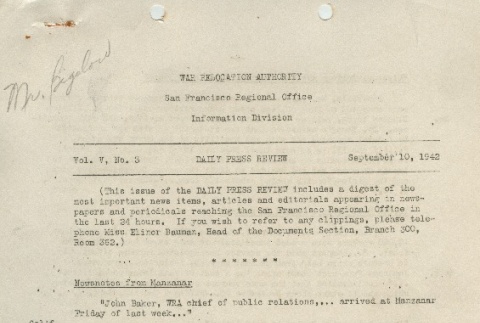
Article titles: "Newsnotes from Manzanar"; "Delta County Beet Growers Agree to Employ Japanese"; "Missouri College Accepts Japanese Despite Protests"; "10,000 Best Workers Needed in Montana"; "Idaho Relocation Center is Half Filled"; "Brandt Urges Farmers Seek Labor Now"; "Inquisitive Cameraman"; "Japanese Center Should Not Cause Any Shortages Here..."; "FBI Seizes Japanese Alien in New York"; "Japanese Center, …
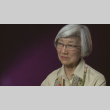
Nisei female. Born May 7, 1928, in Covina, California. At young age, suffered an accident in which she was hit by a car, and was raised by a non-Japanese American family. During World War II, rejoined biological family in the Pomona Assembly Center, California, and Heart Mountain concentration camp, Wyoming. Lived for a time in New …
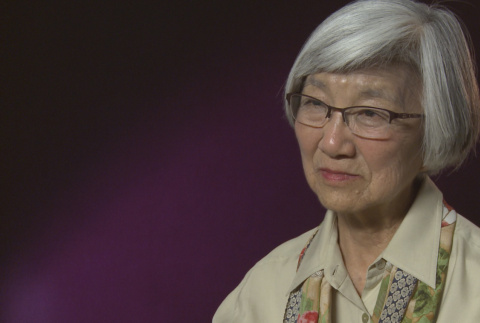
Nisei female. Born July 5, 1935, in Los Angeles, California. Grew up in Los Angeles, where father ran a produce business. During World War II, removed to the Pomona Assembly Center, California, and the Heart Mountain concentration camp, Wyoming. After leaving camp, returned to family home in Los Angeles. Became a social worker, one of the …
Nisei male. Born July 31, 1921, in Seattle, Washington. Raised in Raymond, Washington. Incarcerated at Tule Lake concentration camp, California, and Heart Mountain concentration camp, Wyoming; he worked on the staff of both camp newspapers, the Tulean Dispatch and the Heart Mountain Sentinel, respectively. Resettled in Seattle after the war and entered the greenhouse business. He …
Nisei female. Born in Los Angeles, California. During World War II, removed to the Pomona Assembly Center, California, and the Heart Mountain concentration camp, Wyoming.
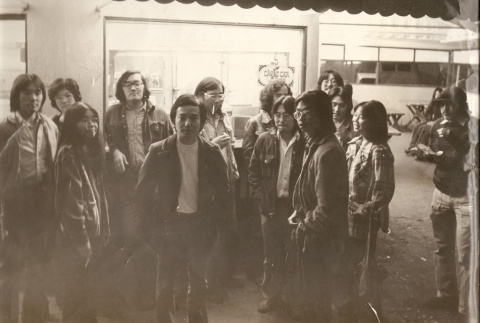
The Jeff Furumura Collection consists of 11 photographs from the family of Jeff Furumura. Interviewed by Densho in 2023, Mr. Furumura shared images of his mother's family prior to World War II, his father while at the Heart Mountain concentration camp, Wyoming, and his uncle who became a navy pilot. He also wrote for Gidra while …
This interview was conducted at the Voices of Japanese American Redress Conference, held on the UCLA campus and sponsored by the UCLA Asian American Studies Center and the UCLA School of Public Policy and Social Research. Because of the full conference schedule, our interviews were limited to one hour. The interviews therefore …