
1643 items

1643 items
img
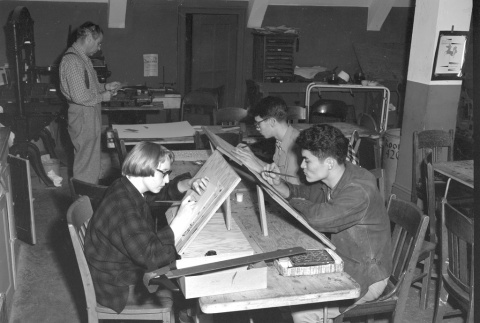
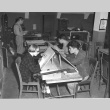
Reed College (ddr-one-1-354)
Black and white photographic negative of Carlos Ogimi and other students sitting at drawing table working on an unknown project. Carlos is the first seated student on the right, everyone else is unidentified. This photographic negative was most likely taken at Reed College where Carlos was a student.
img
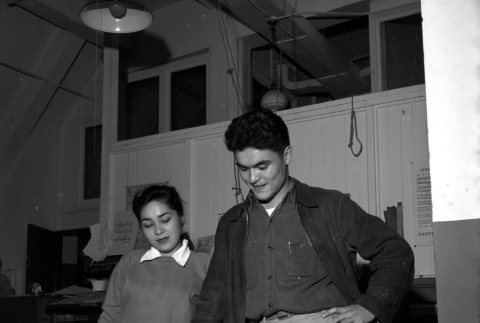
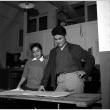
Reed College (ddr-one-1-360)
Black and white photographic negative of Ayame Ogimi and her brother Carlos Ogimi staring at a large document or drawing on a table in front of them. This photograph was taken at Reed College where Ayame and Carlos were both students. Original print ONLC 3176 (ddr-one-1-358).
Collection
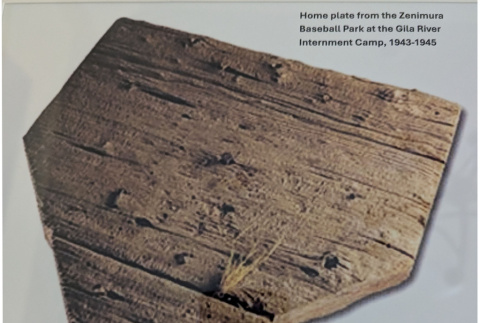
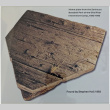
Kawauchi-Hall Family Collection (ddr-densho-553)
Collection contains photographs and written memory of a family pilgrimage to the site of Gila River in 1993 where they discovered a home base plate at the site of the old baseball field. Additionally, it contains letters regarding the display of the home plate at the Ellis-Shackelford House in 1997 and the donation of the plate …
img
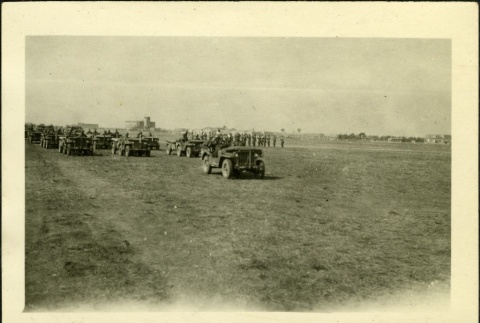
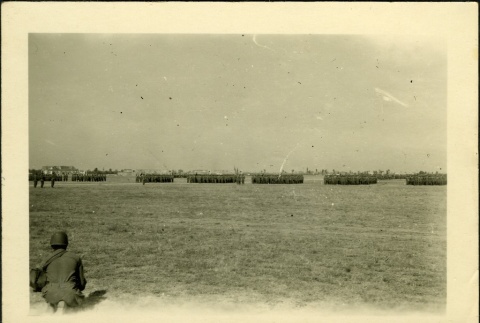
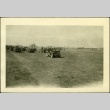
Nisei soldiers in review (ddr-densho-164-87)
Nisei soldier's caption: Vehicles passing in view. Went to Ghedi where we camped out in a bare flat plain and went thru the processing prisoners. Took care of around 80,000 and then our first large batch of original 100th men left us. And also joined by a replacement of some 400.
img
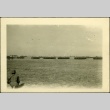
Nisei soldiers in review (ddr-densho-164-86)
Nisei soldier's caption: Review in Ghedi. Went to Ghedi where we camped out in a bare flat plain and went thru the processing prisoners. Took care of around 80,000 and then our first large batch of original 100th men left us. And also joined by a replacement of some 400.
doc
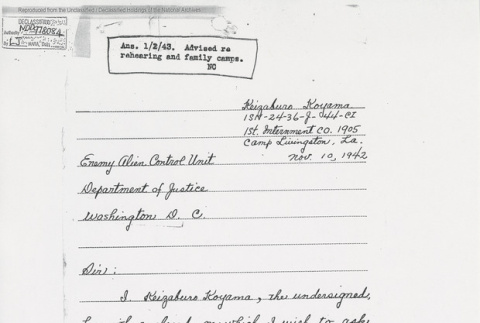
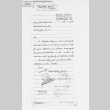
Letter from Keizaburo Koyama to the Department of Justice asking to be reunited with his family. (ddr-one-5-175)
Photocopy of a declassified handwritten letter from Keizaburo Koyama to the Enemy Alien Control Unit of the Department of Justice in Washington, D.C. Koyama asks that he be relocated to the camp where his family is currently being held. At the moment, Koyama is currently being held in Camp Livingston, Louisiana.
doc
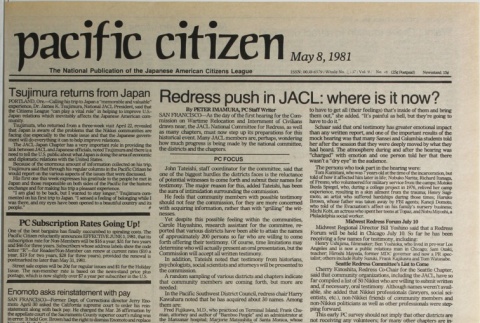
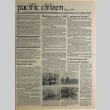
Pacific Citizen, Whole No. 2137, Vol. 92, No. 18 (May 8, 1981) (ddr-pc-53-18)
Selected article titles: "Redress push in JACL: where is it now?" (p. 1), "JA's concerned with illegal alien laws" (p. 1), "Financial losses due to Evacuation Studied" (p. 1), "New foundation formed to push U.S.-Japan ties" (p. 2), "Court sees no sex bias in Japan's nationality law" (p. 8).
doc
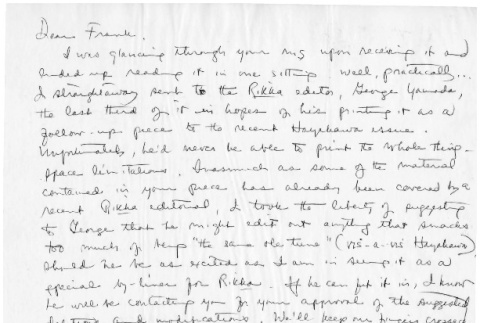
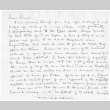
Letter from Michi Weglyn to Frank Chin (ddr-csujad-24-66)
A letter from Michi Weglyn to Frank in which Weglyn offers Chin suggestions about where to publish an article. See this object in the California State Universities Japanese American Digitization project site: chi_04_008
doc
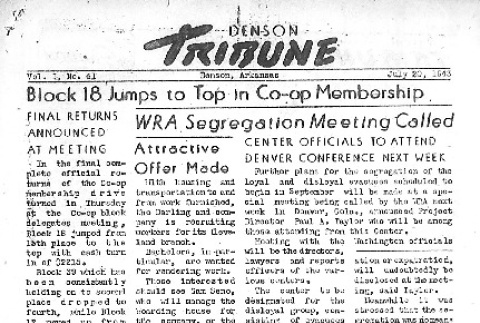
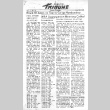
Denson Tribune Vol. I No. 41 (July 20, 1943) (ddr-densho-144-82)
Selected article titles: "WRA Segregation Meeting Called. Center Officials to Attend Denver Conference Next Week" (p. 1), "Repatriation Requests Filed" (p. 1), "Relocation: We Don't Want Pity" (p. 2), "Where Lumber is Cut for Apartments" (p. 3), "'I Am an American'. Tots Show Patriotism" (p. 3), "Explosives Regulation" (p. 4).
doc
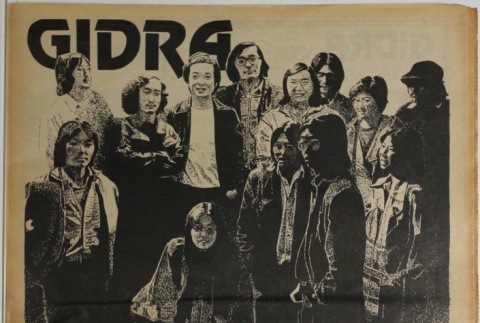
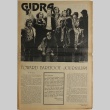
Gidra, Vol. VI, No. 4 (April 1974) (ddr-densho-297-60)
Selected article titles: "Toward Barefoot Journalism" (p. 1), "The Final Venomous Jabberwocky" (p. 5), "Rock: We've Just Begun . . ." (p. 10), "The Four Walls of Tommy Lo" (p. 12), "The Prisons and the Asian American" (p. 13), "Where Do We Go from Here?" (p. 20), "Ain't I A Woman" (p. 22).
img
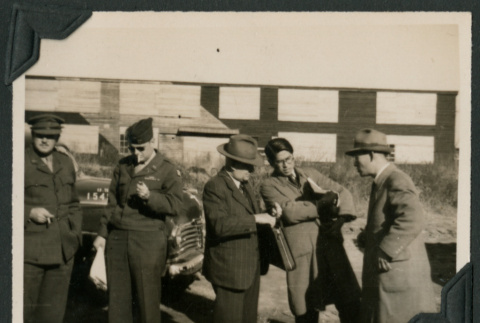
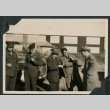
Reparation of machinery (ddr-densho-397-162)
The caption in the photo album reads "Col Allen, Capt. Cross, Dr. Cotner, and two Keio Grads about to enter WHSE [warehouse] where machinery is stored Nov. '46". Takashi Matsui was stationed in Japan with the U.S. military during the Allied occupation of Japan after the end of World War II.
img
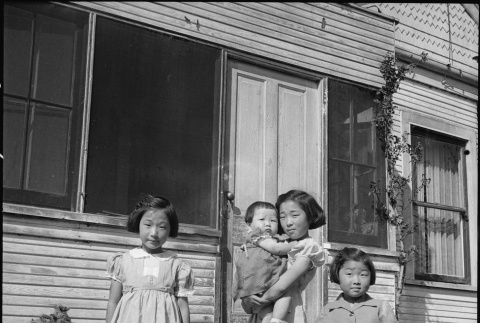
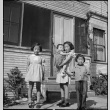
Four sisters in front of home (ddr-densho-151-215)
Original caption: Mountain View, California. Four sisters in the Mitarai family. Their father operated an industrialized farm in Santa Clara County, prior to evacuation. Farmers and other evacuees of Japanese ancestry will be given opportunities to follow their callings in War Relocation Authority centers where they will spend the duration.
vh
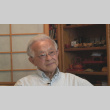
Saburo Masada Interview (ddr-manz-1-157)
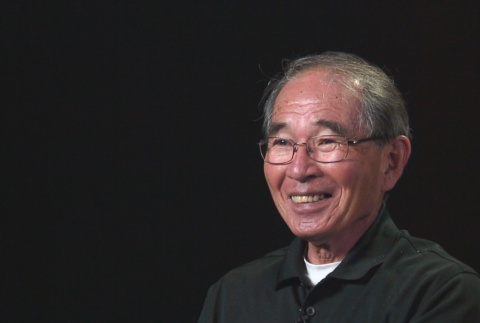
Nisei male. Born April 1, 1930, in Fresno, California. Grew up in Caruthers, California, where parents leased a vineyard. During World War II, sent to the Fresno Assembly Center, California, and the Jerome concentration camp, Arkansas. After leaving camp, lived in Ogden, Utah, and become a minister. Eventually returned to California.
vh
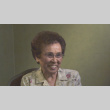
Marian Uyematsu Naito Interview (ddr-manz-1-53)
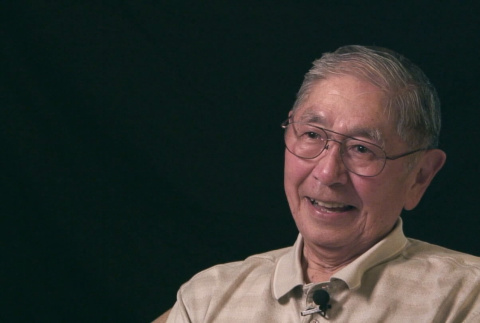
Nisei female. Born November 30, 1927, in Montebello, California. Grew up in Montebello where father ran a wholesale nursery business. During World War II, removed with family to the Pomona Assembly Center and Manzanar concentration camp, California. After leaving camp, attended UCLA before returning to California and establishing a nursery business.
vh
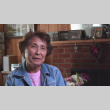
Fumi Hayashi Interview (ddr-manz-1-70)
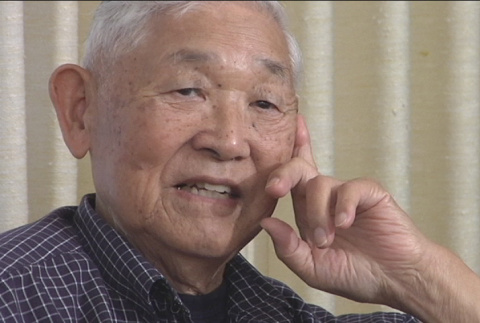
Nisei female. Born January 24, 1925, in Los Angeles, California. Grew up in the Los Angeles area, where parents ran a flower business. During World War II, removed to the Manzanar concentration camp, California. While in camp, held various jobs, including working for the camouflage net factory. Eventually returned to California.
vh
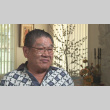
Jun Ogimachi Interview (ddr-manz-1-99)
Nisei male. Born May 26, 1928, in San Fernando, California. Grew up in San Fernando, where father ran a farm. During World War II, removed to the Manzanar concentration camp, California, with family. After leaving camp, lived briefly in Chicago, Illinois, before returning to San Fernando. Served in the U.S. Navy.
vh
Shigeo Kihara Interview (ddr-manz-1-114)
Sansei male. Born January 15, 1935, in Sacramento, California. Grew up in the Florin area where parents ran a farm. During World War II, removed to the Manzanar concentration camp, California. After leaving camp, moved with family to live and work at Seabrook Farms, New Jersey. Eventually returned to Sacramento.
vh
Katsumi Okamoto Interview (ddr-manz-1-24)
Nisei male. Born July 5, 1926, in Seattle, Washington. Grew up in Seattle, where parents owned and operated a grocery store. Following the bombing of Pearl Harbor, removed to Puyallup Assembly Center, Washington, and Minidoka concentration camp, Idaho. Served in Japan with the Military Intelligence Service following World War II.
vh
George Hiromoto Interview (ddr-densho-1010-12)
Nisei male. Born 1921 in Courtland, California. Grew up in the Clarksburg area, where parents ran a farm. During World War II, removed to Turlock Assembly Center, California, and the Gila River concentration camp, Arizona. Served with the Military Intelligence Service in Japan. Eventually returned to Clarksburg and reestablished farm.
img
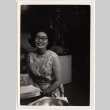
Tomoye Takahashi seated at desk (ddr-densho-426-106)
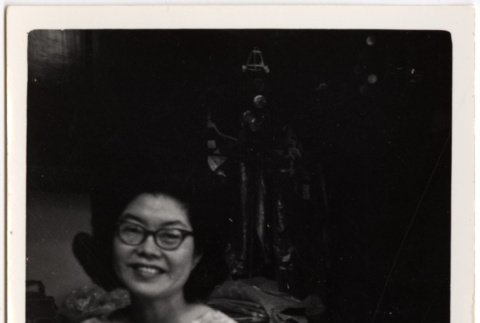
Caption on back: Sue Burl's Office / Suite 1415 Central Bldg HK, behind the Mandarin Hotel / The Olympus Pen EE is demonstrated, & has to be "tried out" by Sue's assistant in the Lee and Sue Office where the light was most ideal for photography and room cooler in rear / Oct 1965

vh
Rose Ito Tsunekawa Interview (ddr-jamsj-2-13)
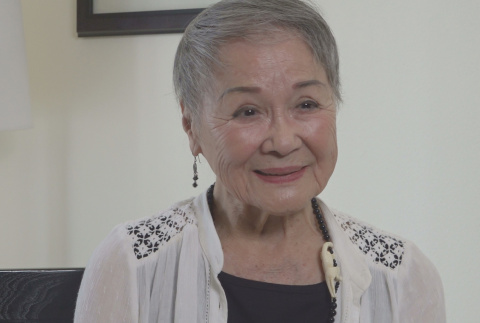
Nisei female. Born July 9, 1930, in Salinas, California. Grew up in Salinas, where father ran a successful farm. In 1941, moved with family to Japan. Remained in Japan during World War II and worked as an interpreter. After the war, returned to the United States and presently lives in California.
vh
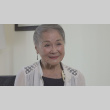
Takae Tanino Walts Interview (ddr-densho-1000-508)
Nisei female. Born August 4, 1930, in Bellevue, Washington. Grew up in Bellevue, where parents ran a farm. During World War II, removed to the Pinedale Assembly Center and Tule Lake concentration camp, California. After leaving camp, returned to Seattle, Washington, and eventually established a career as a flight attendant.
img
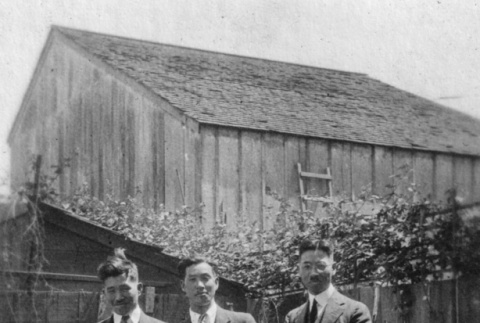
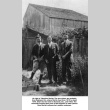
Three men standing in yard (ddr-ajah-6-622)
Caption below photo: At right is Takuritsu Morita. The two other are probably from Oakland, CA., where Morita lived from 1915 to about 1919. After that he lived in Alameda, CA., until 1933. The unusually dressed Issei man at left appears in other photos from Morita's albums but remains unknown.
img
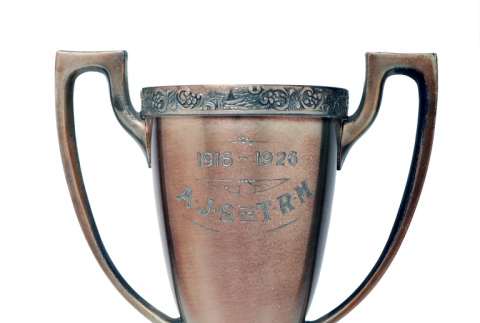
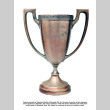
Trophy given to Takuritsu Morita (ddr-ajah-6-604)
Caption below photo: Trophy received by Takuritsu Morita of Alameda, CA, for 10 years of service to the Japanese school (gakuen) in Alameda. The school opening in 1916. He lived in Alameda until 1933, then moved south to Mountain View, CA, where he continued to teach at a similar school.
img
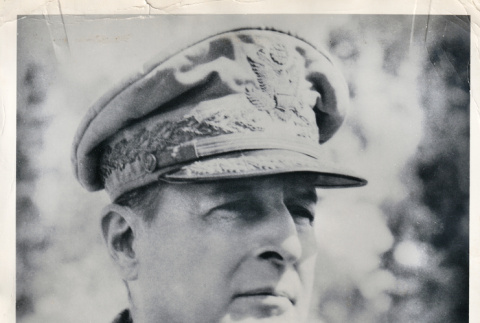
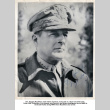
Portrait of Douglas MacArthur, autographed on front (ddr-ajah-2-826)
Caption: Gen. Douglas MacArthur, hand written signature, in blue ink on a black and white print. Tokyo 1945. Collection of Joe Iwataki, who served in the Military Intelligence Service (MIS) in the South Pacific during WWII where MacArthur also served. Supplemental scan of ddr-ajah-2-742 with additional notes