
363 items

363 items
doc
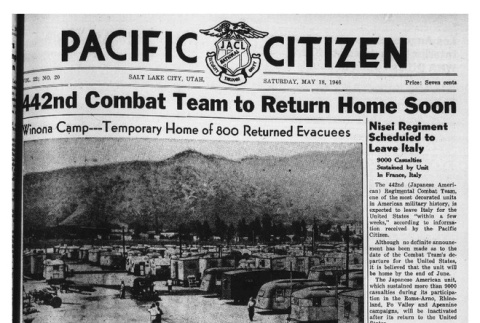
The Pacific Citizen, Vol. 22 No. 20 (May 18, 1946) (ddr-pc-18-20)
Selected article titles: "442nd Combat Team to Return Home Soon. Nisei Regiment Scheduled to Leave Italy. 9000 Casualties Sustained by Unit in France, Italy" (p. 1), "800 Moved to Winona Camp Find Facilities Incomplete. Los Angeles County Sets Up Emergency Kitchens to Feed Distressed Evacuee Group" (p. 1), "Army Assigns Nisei to War Crimes Trial" (p. …
doc
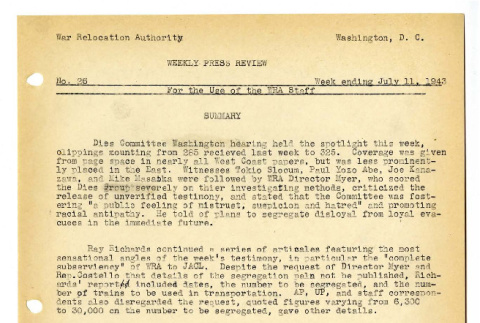
Weekly Press Review, No. 26, July 11, 1943 (ddr-csujad-19-69)
Survey by the War Relocation Authority "for use of the WRA Staff" of press activity, including stories published; clippings received and the work of clipping services; reporting from visits to "relocation centers"; summaries of editorial opinion and of "public attitudes" as reflected the work of columnists and in articles, letters to the editor, and reports during …
vh
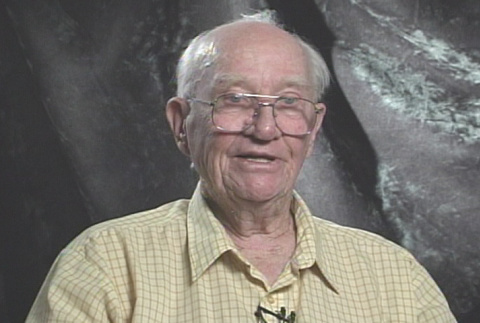
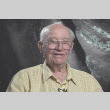
Charles Olds Interview (ddr-densho-1000-121)
White male. Born 1913 in Karuizawa, Japan, to missionary parents. Attended Canadian school in Kobe, Japan, before coming to the United States with his older brother. He attended the University of Chicago School of Social Work, then volunteered to work for the War Relocation Authority (WRA). He later worked as a relocation officer in the concentration …
doc
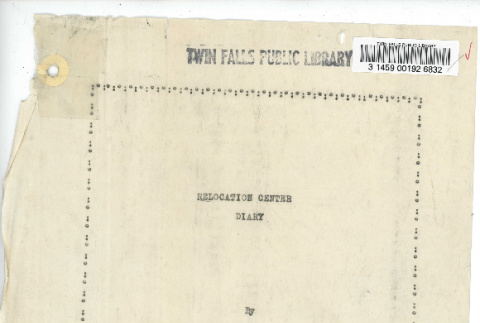
Relocation Center Diary (ddr-fom-2-1)
From September 26, 1942, until February 9, 1946, War Relocation Authority (WRA) employee Arthur Kleinkopf recorded his day-to-day experience at the Minidoka concentration camp in Southern Idaho. His diary begins with his first day at Minidoka and the challenges of establishing a school system. Kleinkopf discusses social tension between Japanese American incarcerees and WRA staff, racist …
doc
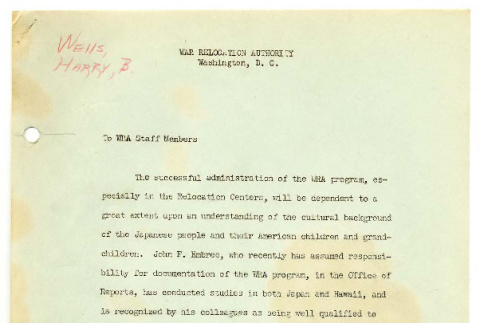
Dealing with Japanese-Americans by John F. Embree, Documents Section, Office of Reports (ddr-csujad-48-131)
Short report from WRA Documents Section leader John F. Embree on recommended attitudes, suggestions, and practices while interacting with incarcerated Japanese Americans. According to Embree, race is hereditary while culture is acquired, and Caucasians should refrain from making stereotypical images of "Japanese types." Embree describes the differences in culture and attitudes including questions of loyalty between …
doc
Co-op movement in Tule Lake (ddr-csujad-26-6)
Chronological report of the organization and initial leadership of the co-op movement at Tule Lake as decided by the War Relocation Authority (WRA). Includes details of the process, advisory council meetings, incarceree participation, and establishment proceedings. Report compiled as a portion of the Japanese American Evacuation and Resettlement Study (JERS). See this object in the California …
doc
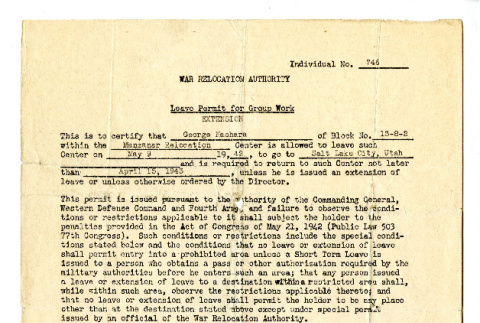
Leave permit for group work, George Naohara (ddr-csujad-38-555)
A leave permit for group work extension issued by Henry Harris Jr., Relocation Officer, War Relocation Authority, the U.S. Department of the Interior. It certifies that George Nobuo Naohara is allowed to leave the Manzanar camp in California on May 9, 1942 for Salt Lake City, Utah until April 15, 1943. Special conditions are noted in …
doc
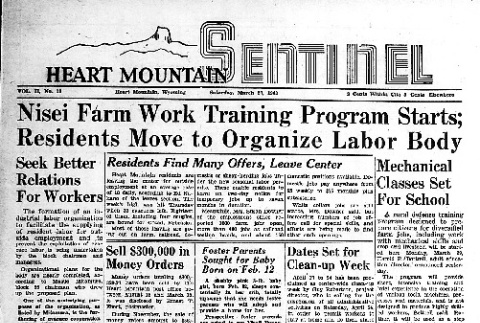
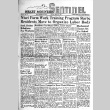
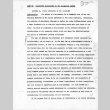
Heart Mountain Sentinel Vol. II No. 13 (March 27, 1943) (ddr-densho-97-121)
Selected article titles: "Nisei Farm Work Training Program Starts; Residents Move to Organize Labor Body. Seek Better Relations for Workers" (p. 1), "Residents Find Many Offers, Leave Center" (p. 1), "Dissolution of WCCA Told" (p. 1), "Meal Hours Changed to Boost Work Efficiently" (p. 1), "Plan Release of Kodaks, Radios" (p. 1), "Hiking Permit Procedure for …
doc
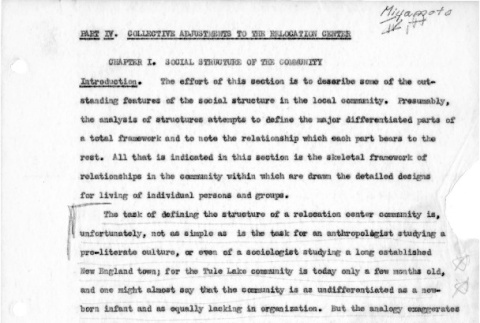
Part IV. Collective adjustments to the relocation center, chapter I: social structure of the community (ddr-csujad-26-5)
Description of camp social structures including "Caucasian-Japanese relations" highlighting tension and hostility by three groups that most directly involve Japanese Americans and the incarceration: The War Relocation Authority (WRA), the US Army and the American public. Using case - studies, the manuscript examines these relationships and discusses the circumstances of incarceration contributing to differences in social …
img
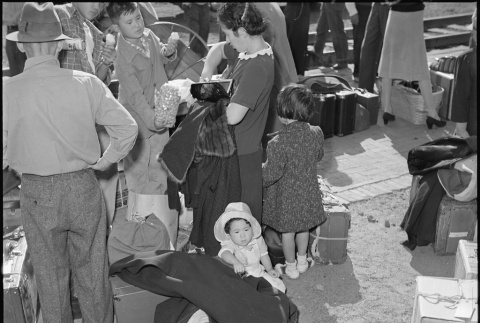
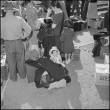
Families leaving camp (ddr-densho-37-771)
Original WRA caption: Granada Relocation Center, Amache, Colorado. Shown here is a young miss, dressed in her Sunday best, waiting with the family possessions while her mother makes final arrangements for boarding the train. Scenes at the Atchison, Topeka and Santa Fe railroad depot, Granada, Colorado, as 170 evacuees from the Amache Center entrain for their …
img
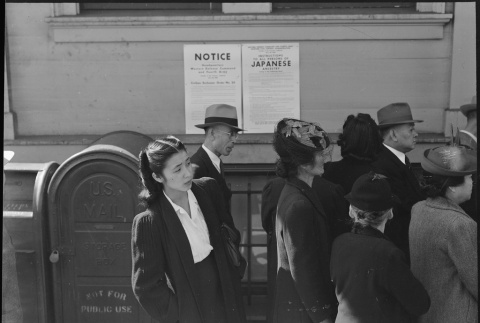
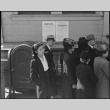
Japanese Americans registering for mass removal (ddr-densho-151-61)
Original WRA caption: Residents of Japanese ancestry appear for registration prior to evacuation. Evacuees will be housed in War Relocation Authority centers for the duration. Updated Library of Congress summary: "Photograph shows Shizuko Ina standing behind others waiting to be assigned a "family number" before being removed from their homes and incarcerated in a detention facility …

av
Bitter Memories: Tule Lake (ddr-densho-1024-12)
Early film that provides an overview of the wartime forced removal and incarceration of Japanese Americans on the West Coast produced by the University of California, Berkeley in 1975. Bitter Memory tells the story through narration and interviews with former inmates accompanied by archival footage from Office of War Information/War Relocation Authority (WRA) films and WRA …
Collection
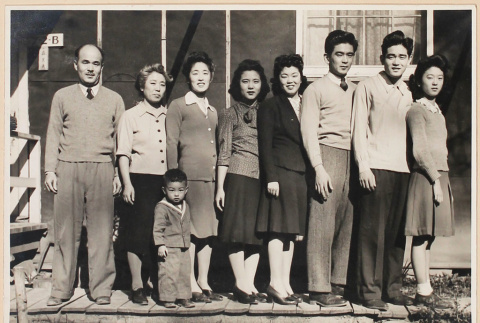
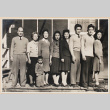
Sumida Family Collection (ddr-densho-379)
The Sumida Family Collection contains material about Chimata and Masako Murakami Sumida and their six children, Alice Yuriko Endo, Grace Rayko Nagai, Emmy Ito, Marshall Masaru Sumida, Theodore Tetsuro Sumida, Marjorie Yohko Matsumoto, and their families. Before World War II, Chimata Sumida owned a music store located in Los Angeles’ Japanese Town that sold music, instruments, …