
Topics
Facilities
Format
Genre
Usage

Use <Ctrl> or (⌘) keys to select multiple terms

874 items

Narrator Sam Ogo

Nisei male. Born September 1, 1919, in Millwood, Washington, where father worked for SP&S railroad. After serious injury, father quit the railroad and moved family to Spokane, Washington, where they operated numerous hotels. Sent to Japan with siblings in 1933 to attend school. Was only one in the family to return to the U.S. three years …

Narrator George Kazuharu Naganuma

Born August 20, 1938, in Lima, Peru. Parents ran a laundry business and father was a prominent community leader. During World War II, the FBI arrested George's father and the entire family was placed on a ship and sent to the Department of Justice camp at Crystal City, Texas. After leaving camp, the family was not …
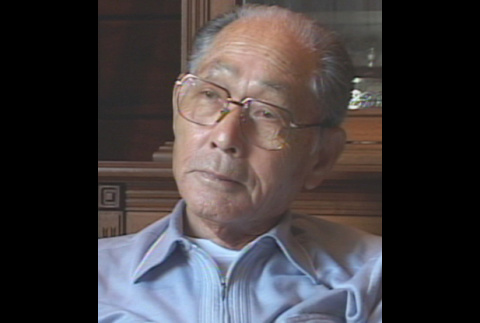
Richard Kosaki Interview Segment 17 (ddr-janm-13-1-17)
vh Richard Kosaki Interview Segment 17 (ddr-janm-13-1-17)
Discussion of differences between Hawaii and the mainland U.S. during World War II, and the Hawaiian spirit of aloha

This material is based upon work assisted by a grant from the Department of the Interior, National Park Service. Any opinions, finding, and conclusions or recommendations expressed in this material are those of the author(s) and do …

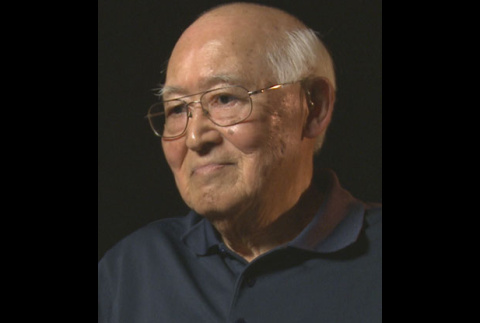
Richard Kosaki Interview Segment 12 (ddr-janm-13-1-12)
vh Richard Kosaki Interview Segment 12 (ddr-janm-13-1-12)
Feelings about the onset of World War II: "Our loyalties were clear. We're Americans, and we'd try to do our best"

This material is based upon work assisted by a grant from the Department of the Interior, National Park Service. Any opinions, finding, and conclusions or recommendations expressed in this material are those of the author(s) …
Atami Ueno Interview Segment 5 (ddr-one-7-17-5)
vh Atami Ueno Interview Segment 5 (ddr-one-7-17-5)
Having to work in a factory to support the war effort: "it was devastating, but everybody had no choice"

This material is based upon work assisted by a grant from the Department of the Interior, National Park Service. Any opinions, finding, and conclusions or recommendations expressed in this material are those of the author(s) and do …
Narrator Minoru "Min" Tsubota

Nisei male. Born December 1, 1918, in Kent, Washington. Became interested in music in junior high school, and played in various music groups. Upon graduating from high school, worked for a manufacturing plant, and then volunteered for the army. Separated from unit along with other Japanese Americans after the bombing of Pearl Harbor, and eventually served …

Narrator Yasashi Ichikawa

Issei female. Born 1907 in Shimonoseki, Japan. Attended school in Japan, and was encouraged by father to study English. Married a Buddhist minister and immigrated to the United States. Lived in Fresno, California, then returned to Japan for two years. Moved to Seattle, Washington, where husband was a minister at the Seattle Buddhist Temple. During World …
Arthur Ogami - Kimi Ogami Interview (ddr-manz-1-109)
vh Arthur Ogami - Kimi Ogami Interview (ddr-manz-1-109)
Arthur Ogami: Nisei male. Born April 10, 1922 in Whittier, California. Spent childhood in California, before being removed to Manzanar concentration camp in 1942. Left Manzanar several times to work as a beet topper for local farmers. Decided to expatriate to Japan because of mother's wishes, and was transferred to Tule Lake concentration camp. In 1945, …
Tokio Yamane Interview Segment 14 (ddr-densho-1000-432-14)
vh Tokio Yamane Interview Segment 14 (ddr-densho-1000-432-14)
Injuries sustained during the beating by War Relocation Authority officials (Japanese language)

This interview was conducted in Japanese. The transcript is a translation of the original interview. This material is based upon work assisted by a grant from the Department of the Interior, National Park Service. Any opinions, finding, and conclusions or recommendations expressed in this …

Tokio Yamane Interview Segment 33 (ddr-densho-1000-432-33)
vh Tokio Yamane Interview Segment 33 (ddr-densho-1000-432-33)
Sister's decision to return to the United States after the war (Japanese language)

This interview was conducted in Japanese. The transcript is a translation of the original interview. This material is based upon work assisted by a grant from the Department of the Interior, National Park Service. Any opinions, finding, and conclusions or recommendations expressed in …
Tokio Yamane Interview Segment 6 (ddr-densho-1000-432-6)
vh Tokio Yamane Interview Segment 6 (ddr-densho-1000-432-6)
Being beaten up by War Relocation Authority personnel in Tule Lake (Japanese language)

This interview was conducted in Japanese. The transcript is a translation of the original interview. This material is based upon work assisted by a grant from the Department of the Interior, National Park Service. Any opinions, finding, and conclusions or recommendations expressed in …

Iino Family Collection (ddr-densho-368)
Collection Iino Family Collection (ddr-densho-368)
Accession 1: This collection contains selections from two photo albums. One album of photographs and other materials associated with Corporal William Iino's military service with the 442nd Regimental Combat Team in Italy and France between 1944 and 1945. The second album contains photographs and other materials associated with the 50th reunion of the 442nd RCT in …
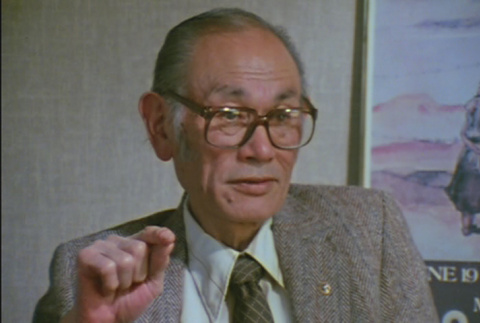
Fred Korematsu Interview (ddr-densho-1012-1)
vh Fred Korematsu Interview (ddr-densho-1012-1)
Nisei male. Born January 30, 1919, in Oakland, California. Mr. Korematsu was working as a welder in San Francisco when Japan bombed Pearl Harbor on December 7, 1941. After Executive Order 9066 was issued in 1942, he decided to resist the evacuation orders, and was not removed with his family. He was arrested in May of …
Tokio Yamane Interview Segment 2 (ddr-densho-1000-432-2)
vh Tokio Yamane Interview Segment 2 (ddr-densho-1000-432-2)
Looking back on the World War II experience: blaming individuals, not the U.S. government (Japanese language)

This interview was conducted in Japanese. The transcript is a translation of the original interview. This material is based upon work assisted by a grant from the Department of the Interior, National Park Service. Any opinions, finding, and conclusions or …

Tokio Yamane Interview Segment 1 (ddr-densho-1000-432-1)
vh Tokio Yamane Interview Segment 1 (ddr-densho-1000-432-1)
Perspectives on why Americans of Japanese ancestry were incarcerated during World War II (Japanese language)

This interview was conducted in Japanese. The transcript is a translation of the original interview. This material is based upon work assisted by a grant from the Department of the Interior, National Park Service. Any opinions, finding, and conclusions or recommendations …
Chizuko Iyama - Ernie Iyama Interview Segment 8 (ddr-densho-1012-5-8)
vh Chizuko Iyama - Ernie Iyama Interview Segment 8 (ddr-densho-1012-5-8)
Rebuilding lives after the war (audio only)

This interview is audio-only. It contains raw footage used by Steven Okazaki in his 1985 film Unfinished Business.

This material is based upon work assisted by a grant from the Department of the Interior, National Park Service. Any opinions, finding, and conclusions or recommendations expressed in this material …
Narrator Tom Matsuoka
Kibei male. Born August 1, 1903, in Sprecklesville, Maui, Hawaii. Taken to Japan in 1905 and raised by grandparents. Returned to the United States in 1919, joining father at Barneston sawmill in Washington. Married and farmed in Bellevue, Washington. Founded Bellevue Seinenkai and managed the Bellevue Vegetable Growers Association prior to World War II. Was picked …

Narrator Tad Sato

Nisei male. Born May 9, 1922, in Portland, Oregon. Moved to Seattle with father after parents divorced. Grew up in Seattle's Nihonmachi where father ran a secondhand store. Disinterested in college after seeing a lack of employment opportunities for graduating Japanese Americans. Went to work for Great Northern Railway, laying and maintaining tracks on the West …
Roger Daniels Interview Segment 18 (ddr-densho-1012-17-18)
vh Roger Daniels Interview Segment 18 (ddr-densho-1012-17-18)
Thoughts on whether the World War II incarceration can happen again (audio only)

This interview is audio-only. It contains raw footage used by Steven Okazaki in his 1985 film Unfinished Business.

This material is based upon work assisted by a grant from the Department of the Interior, National Park Service. Any opinions, finding, and conclusions …

Sharon Yuen Interview Segment 2 (ddr-densho-1012-18-2)
vh Sharon Yuen Interview Segment 2 (ddr-densho-1012-18-2)
First hearing about father Gordon Hirabayashi's actions during World War II (audio only)

This interview is audio-only. It contains raw footage used by Steven Okazaki in his 1985 film Unfinished Business.

This material is based upon work assisted by a grant from the Department of the Interior, National Park Service. Any opinions, finding, and conclusions …
Janice Sakamoto - Beth Shironaka Interview Segment 2 (ddr-densho-1012-11-2)
vh Janice Sakamoto - Beth Shironaka Interview Segment 2 (ddr-densho-1012-11-2)
First learning about the World War II incarceration experience (audio only)

This interview is audio-only. It contains raw footage used by Steven Okazaki in his 1985 film Unfinished Business.

This material is based upon work assisted by a grant from the Department of the Interior, National Park Service. Any opinions, finding, and conclusions or recommendations …
Redress: An Oral History of the Office of Redress Administration (ddr-densho-1020-13)
av Redress: An Oral History of the Office of Redress Administration (ddr-densho-1020-13)
In 1988, Congress passed and President Ronald Reagan signed the Civil Liberties Act, a historic piece of legislation that sought, for the first time, to provide a measure of justice to Japanese Americans nearly 40 years after their incarceration during World War II. The Japanese American Redress program that resulted is a little-known success story of …

Narrator Ronald Ikejiri

Sansei male. Born December 3, 1948, in Los Angeles, California. During World War II, parents had been incarcerated at the Tule Lake concentration camp, California. Father signed 'no-no' on the so-called 'loyalty questionnaire', renounced U.S. citizenship, and was sent to the Department of Justice camp at Bismarck, North Dakota. Family did not end up expatriating to …

Narrator Tokio Yamane

Kibei male. Born Born September 2, 1922, in Hawaii. Moved with family to Hiroshima at age three, then returned to the Fresno area of the U.S. for high school. During World War II, was sent to the Fresno Assembly Center, California, and the Jerome concentration camp, Arkansas. While at Jerome, refused to answer the so-called "loyalty …
Shosuke Sasaki Interview Segment 13 (ddr-densho-1002-2-13)
vh Shosuke Sasaki Interview Segment 13 (ddr-densho-1002-2-13)
Working in the Minidoka fire department

This interview was conducted by sisters Emiko and Chizuko Omori for their 1999 documentary, Rabbit in the Moon, about the Japanese American resisters of conscience in the World War II incarceration camps. As a result, the interviews in this collection are typically not life histories, instead primarily focusing on …

API