
2184 items

2184 items
doc
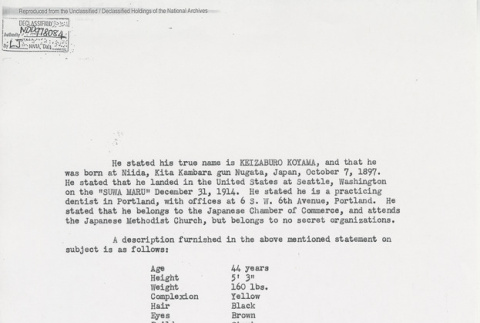
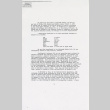
Case file for Keizaburo Koyama from the Federal Bureau of Investigation. Page 5 of 6. (ddr-one-5-102)
Photocopy of a declassified report on Keizaburo Koyama's sworn statement to Inspector Clarence J. Wise. The report states Koyama's biographical history and physical measurements. It lists his entry date to the United States as December 31, 1914. He states that he is a member of the Portland Chamber of Commerce and the Japanese Methodist Church, but …
doc
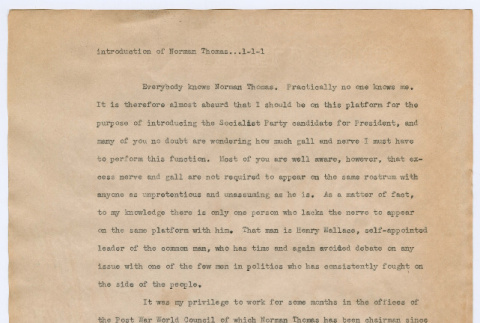
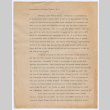
Introduction of Norman Thomas (ddr-densho-468-221)
Transcript of speech introducing Norman Thomas at convention
img
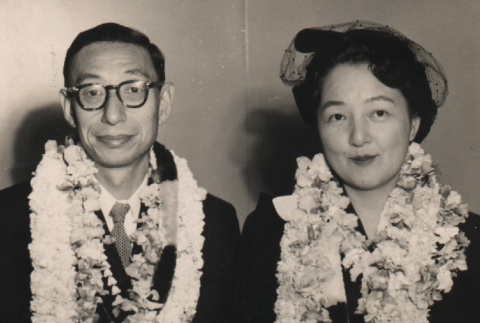
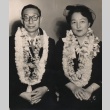
Kocho Otani and his wife wearing leis (ddr-njpa-4-1895)
Caption on reverse: "ARCHBISHOP OTANI HERE: Archbishop Kocho Otani of the Otani-ha Higashi Hongwanji and Lady Otani arrived in Honolulu this morning at 9 aboard the Matson liner Lurline from Los Angeles for a 10-day stay in the islands before resuming their trip back to Japan on the APL liner President Wilson on Mar. 7. They …
doc
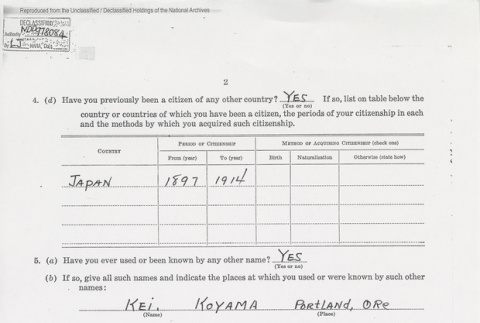
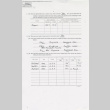
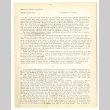
U.S. Department of Justice Alien Enemy Questionnaire page 2 of 26. (ddr-one-5-121)
Photocopy of a declassified questionnaire used to determine if the person named is to be considered an enemy alien. This page covers questions 4 - 6a of 111. Dr. Koyama lists his names as "Kei, Koyama," Ken Koyäma," "Ken Keizaburo Koyama," and "Dr. Kei Koyama." He lists his time in the United States as living in …
doc
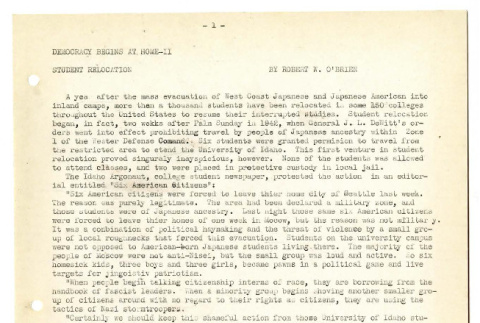
Student Relocation (ddr-csujad-19-72)
This article by Robert W. O'Brien discusses about the relocation of thousands of students in colleges throughout the United States to resume their studies, "a year after the mass evacuation of the West Coast Japanese American people into inland camps." See this object in the California State Universities Japanese American Digitization project site: WRA_02-23_02
img
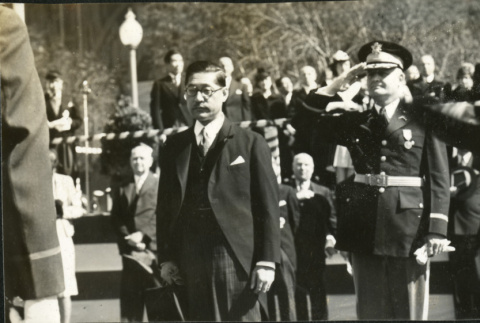
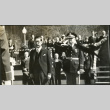
Ambassador Horinouchi (ddr-csujad-11-4)
A photo of Ambassador Horinouchi along with guards. Receiving Ambassador Horinouchi at the World's Fair held on San Francisco's Treasure Island. Ambassador Kensuke Horinouchi was the Japanese Ambassador to the United States from 1939-1940. From page 2 of: Tazu Kawamoto photo album (csudh_taz_0001). See this object in the California State Universities Japanese American Digitization project site: …
doc
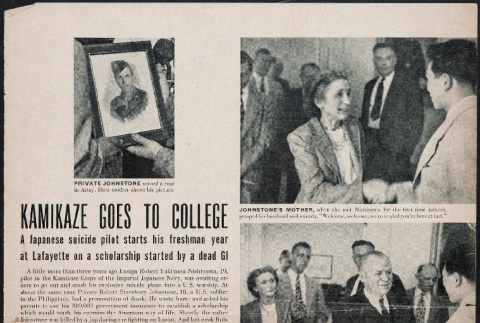
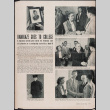
Kamikaze goes to college: a Japanese suicide pilot starts his freshman year at Lafayette on a scholarship started by a dead GI (ddr-csujad-49-263)
Article, titled "Kamikaze Goes to College," that is about Robert Yukimasa Nishiyama, a former pilot in the Imperial Japanese military who later attended college in the United States. An item from: page 130 and the inner back cover of the Sue Kato scrapbook (gfb_skc_001). See this object in the California State Universities Japanese American Digitization project …
doc
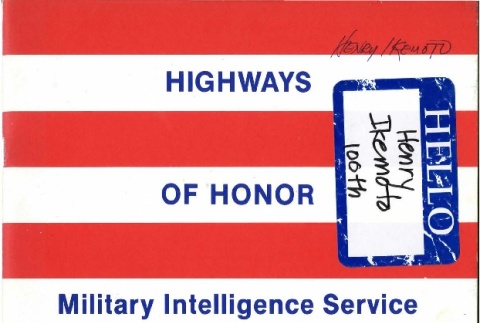
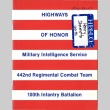
Highways of honor, Military Intelligence Service, 442nd Regimental Combat Team, 100th Infantry Battalion (ddr-csujad-1-185)
A booklet of California memorial highways to honor three entities of the United States Army, 100th Infantry Battalion, 442nd Regimental Combat Team, and Military Intelligence Service. Includes an article, "The Nisei soldiers of U.S. Intelligence: America's superb secret weapon of World War II" by Dan Nakatsu. Images and map during the Pacific War are included. See …
doc
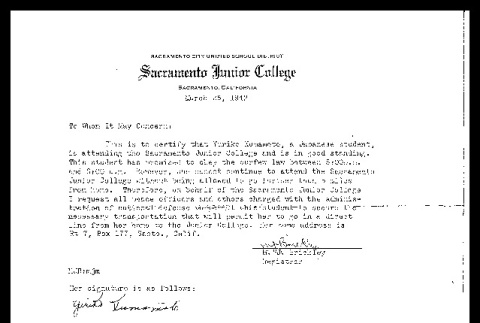
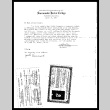
Letter from M.J. Brickley, Registrar, Sacramento Junior College, to whom it may concern, March 26, 1942 (ddr-csujad-55-1302)
Correspondence from M.J. Brickley to Whom it May Concern requesting permission for Yuriko Kumamoto to travel between her home and Sacramento Junior College. Includes copies of Kumamoto's Citizen's Indefinite Leave card and her membership card for the United States Cadet Nurse Corps. See this object in the California State Universities Japanese American Digitization project site: sac_jaac_1304

vh
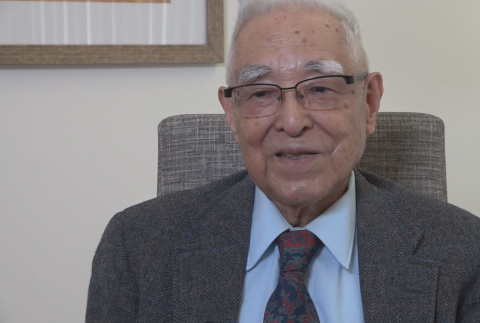
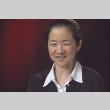
Hiroshi Terry Terakawa Interview (ddr-jamsj-2-12)
Nisei male. Born January 3, 1929, in Kyoto, Japan. Came to United States as a young child with parents. Moved frequently as a child due to father's role as a Buddhist minister, living in places like Walnut Grove and Marysville, California. During World War II, was living in Salt Lake City. Drafted into the army and …
vh
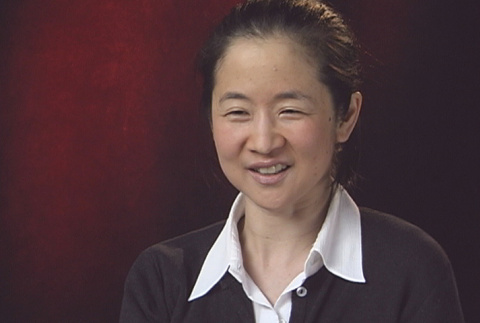
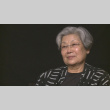
Julie Otsuka Interview (ddr-densho-1000-176)
Sansei female. Born May 15, 1962, in Palo Alto, California. Mother was a Nisei who was incarcerated during World War II, and father was a Japanese immigrant who came to the United States in 1950. Grew up in Palo Alto, California, before studing art at Yale University. Later moved to New York, giving up art and …
vh
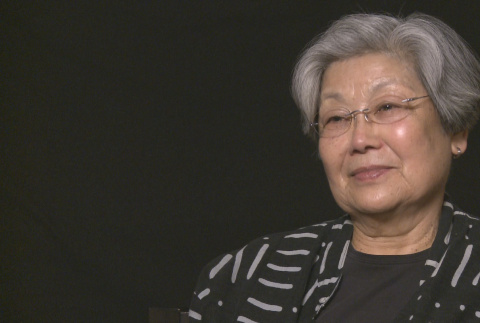
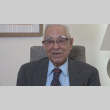
Ruth Y. Okimoto Interview (ddr-densho-1000-331)
Nisei female. Born April 15, 1936, in Tokyo, Japan. Brought to the United States with parents at the age of one, and grew up in San Diego, California, where father was a minister. During World War II, removed to the Santa Anita Assembly Center, California, and the Poston concentration camp, Arizona. After the war, forged connections …
vh
Susumu Nakanishi Interview (ddr-densho-1000-496)
Shin-Issei male. Born September 10, 1926, in Hyogo, Japan. Grew up in Japan, where parents farmed. During World War II, exempted from the draft due to higher education status. Attended Doshisha University in Kyoto, learning English from an influential missionary. Moved to the United States and attended Lehigh University in Pennsylvania, then studied at the University …
doc
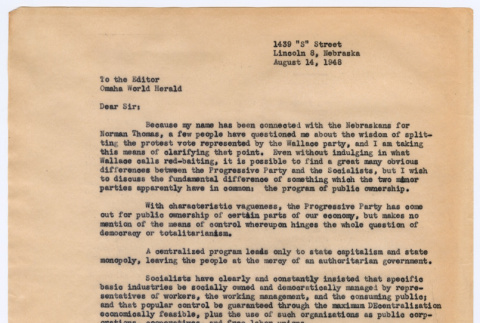
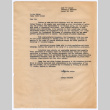
Letter to the Editor of the Omaha World Herald from Joseph Ishikawa (ddr-densho-468-223)
Clarification of Socialist Party platform for newspaper readers
doc
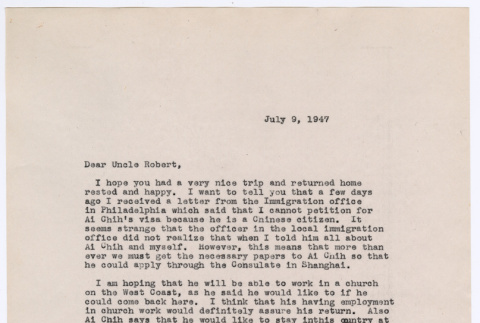
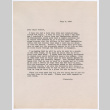
Letter from Ryo Tsai to Robert Cashman (ddr-densho-446-291)
Ryo (Morikawa) Tsai received letter from Immigration and Naturalization Service office in Philadelphia saying that she cannot petition for Ai Chih Tsai's return since he is a Chinese citizen. Applying for immigration is the only route. Ai Chih Tsai will stay in US at least 5 years and wants to work in a West Coast church.
vh
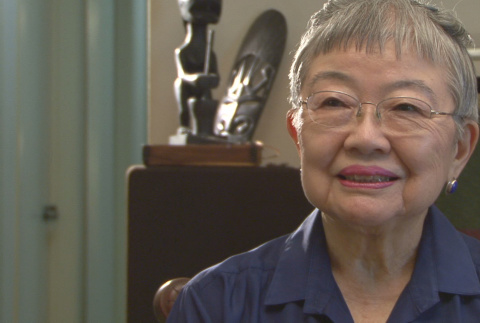
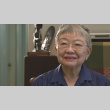
Toshi Nagamori Ito Interview Segment 2 (ddr-densho-1000-309-2)
Mother's immigration to the United States: becoming director of a shelter for "picture brides"
This material is based upon work assisted by a grant from the Department of the Interior, National Park Service. Any opinions, finding, and conclusions or recommendations expressed in this material are those of the author(s) and do not necessarily reflect the views …
vh
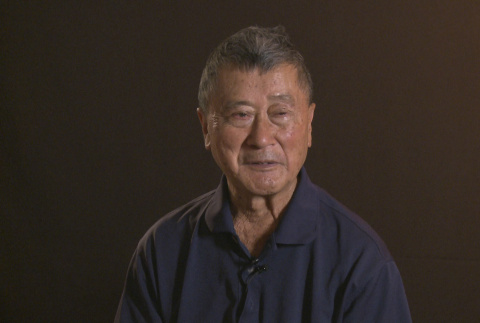
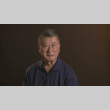
Jack Dairiki Interview Segment 7 (ddr-densho-1000-325-7)
Having to stay in Japan because of the impending war with the United States; attending school
This material is based upon work assisted by a grant from the Department of the Interior, National Park Service. Any opinions, finding, and conclusions or recommendations expressed in this material are those of the author(s) and do not necessarily reflect …
doc
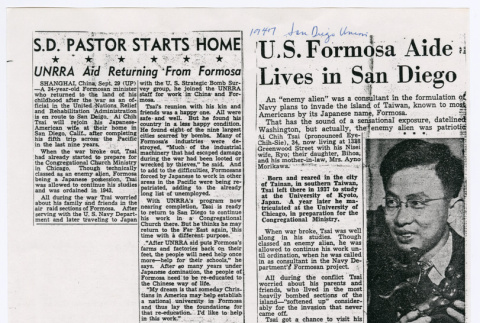
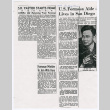
Three newspaper articles (ddr-densho-446-408)
Photocopy of three news articles on Ai Chih Tsai's return to US. Headlines: San Diego Union 1947, U.S. Formosa Aide Lives in San Diego;S.D. Pastor Starts Home - UNRRA Aid Returning from Formosa; Formosan Minister to Join Wife Here
doc
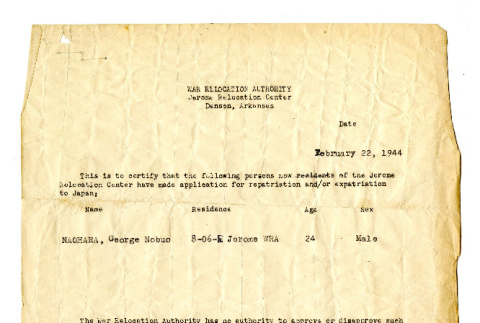
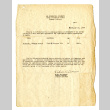
Letter from Robert A. Allison, Project Director, Jerome Relocation Center, War Relocation Authority, February 22, 1944 (ddr-csujad-38-562)
A letter from Robert A. Allison, Project Director of the Jerome camp in Arkansas. It certifies that George Nobuo Naohara has made an application for repatriation/expatriation. It also states that WRA is not authorized to approve or disapprove his application. See this object in the California State Universities Japanese American Digitization project site: nao_05_13_014
doc
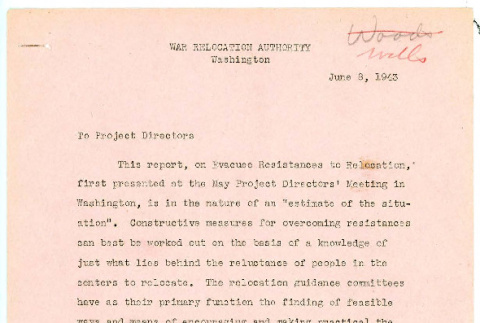
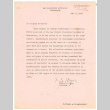
Letter from Dillon S. Myer, Director, War Relocation Authority, to Project Directors, June 8, 1943; Community analysis report, no. 5 (June 1943) (ddr-csujad-48-57)
Letter from Dillon S. Myer to Project Directors on June 8, 1943. Report on "Evacuee Resistances to Relocation" (or, leaving the incarceration camps). Evacuee resistance to relocation. Presents three "fundamental reasons" for the "relocation program" designed to encourage people to move out of the incarceration camps, then describes the "ideal relocation program," which would see "every …
doc
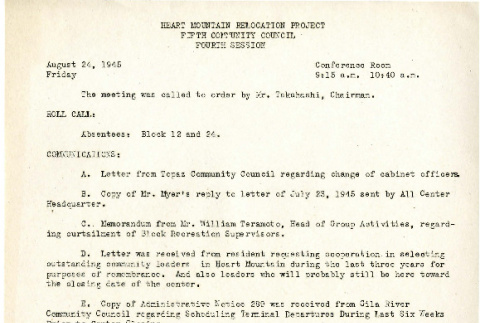
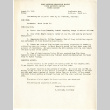
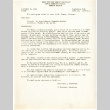
Heart Mountain Relocation Project Fifth Community Council, 4th session (August 24, 1945) (ddr-csujad-45-55)
The council minutes feature the report on WRA freight rules for leaving for the East Coast. See this object in the California State Universities Japanese American Digitization project site: HMRC_01-01_084
doc
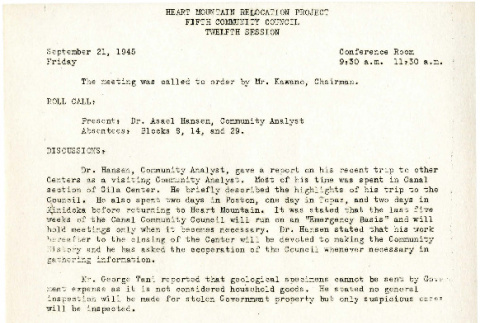
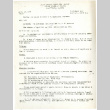
Heart Mountain Relocation Project Fifth Community Council, 12th session (September 21, 1945) (ddr-csujad-45-63)
The council minutes feature a discussion on Dr. Hansen trip to other camps. See this object in the California State Universities Japanese American Digitization project site: HMRC_01-01_092
doc
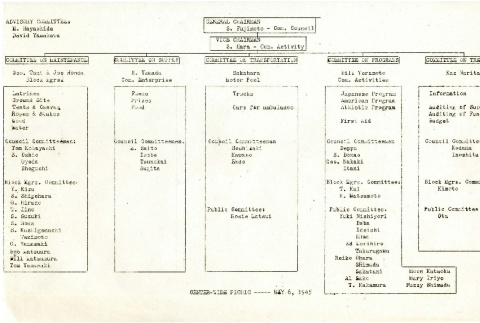
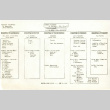
Center-wide picnic (ddr-csujad-45-75)
A list of the committee members for the camp wide picnic. See this object in the California State Universities Japanese American Digitization project site: HMRC_01-02_008
doc
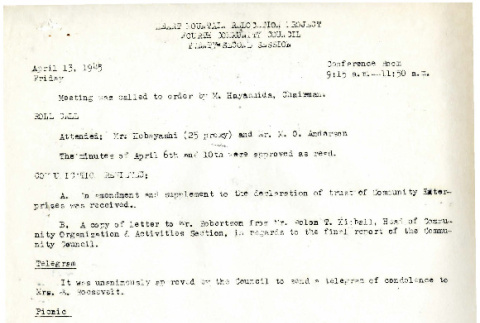
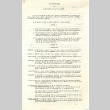
Heart Mountain Relocation Project Fourth Community Council, 22nd session (April 13, 1945) (ddr-csujad-45-24)
The council minutes feature the a report on the plans for the camp wide picnic. See this object in the California State Universities Japanese American Digitization project site: HMRC_01-01_053
doc
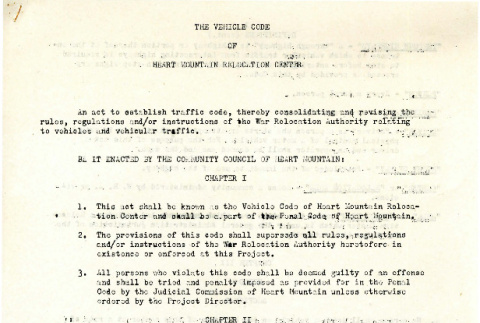
Vehicle code of Heart Mountain Relocation Center (ddr-csujad-45-86)
The rules and regulations for driving a vehicle inside the camp. See this object in the California State Universities Japanese American Digitization project site: HMRC_01-05_001