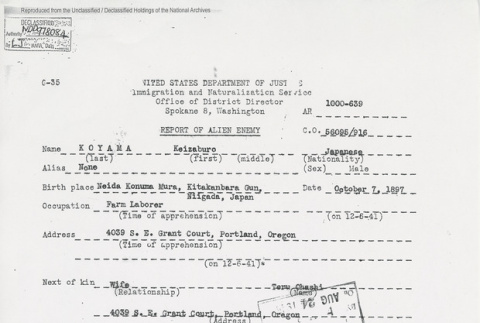
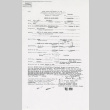
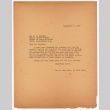
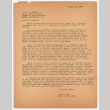
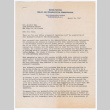
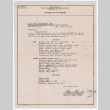
Photocopy of a declassified report on the status of Keizaburo Koyama. In the remarks section, it states that Koyama is relocating back to Portland, Oregon, on indefinite leave from the Minidoka Relocation Project. The form does list Koyama's occupation at the time of his arrest as "Farm Laborer."
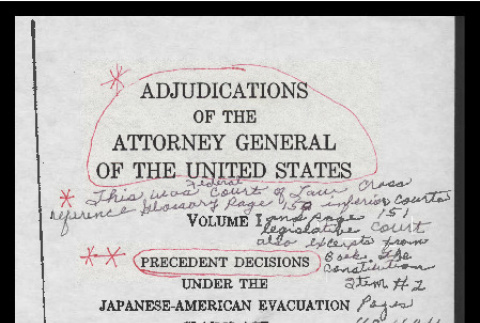
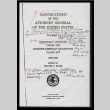
Document on findings from the Japanese-American evacuation claims act. Table of contents includes: officials during period covered by this volume, foreword, table of adjudications reported and cited, table of statutes cited, table of court cases cited, precedent adjudications, and index. Covers claim of Julius Downs with underlined sections and handwritten notes. See this object in the …
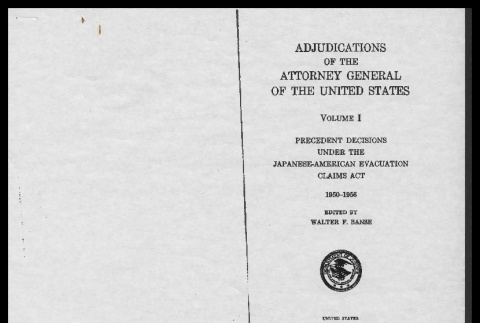
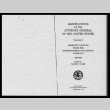
Document on findings from the Japanese-American evacuation claims act. Table of contents includes: officials during period covered by this volume, foreword, table of adjudications reported and cited, table of statutes cited, table of court cases cited, precedent adjudications, and index. Covers claims of Toshi Shimomaye and Julius Downs. See this object in the California State Universities …
This material is based upon work assisted by a grant from the Department of the Interior, National Park Service. Any opinions, finding, and conclusions or recommendations expressed in this material are those of the author(s) and do not necessarily reflect the views of the Department of the Interior.
This material is based upon work assisted by a grant from the Department of the Interior, National Park Service. Any opinions, finding, and conclusions or recommendations expressed in this material are those of the author(s) and do not necessarily reflect the views of the Department of the Interior.
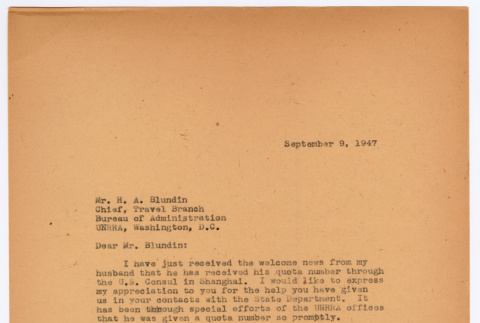
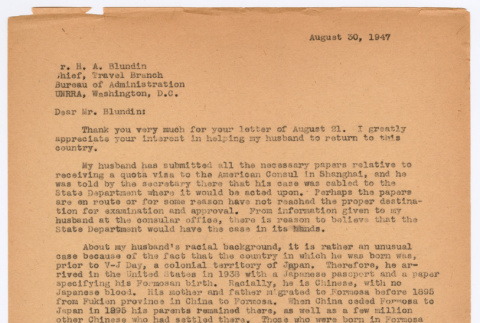
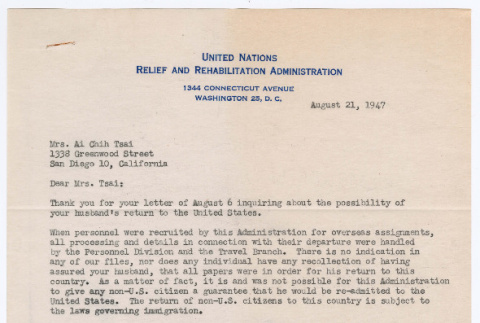
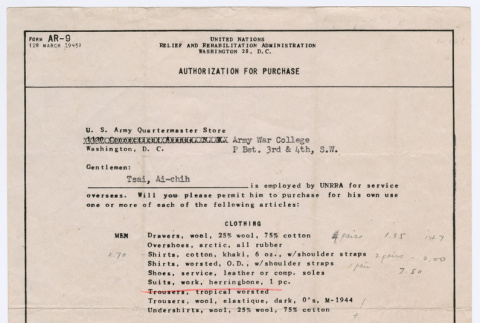
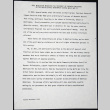
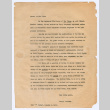
Thank you for letter. Ai Chih Tsai has submitted his necessary paperwork to the American Consul in Shanghai and that his case would be forwarded to the State Department. Ai Chih Tsai's parents are both Formosans of Chinese descent but remained in Formosa after 1895. After V-J Day (Aug 15, 1945), Formosa reverted to China, and …
Clarification of situation. Ai Chih Tsai has to use quota system as a Chinese citizen wanting to immigrate to US. There is quota availability at this time. UNRRA is in contact with Shanghai and will do all it can.
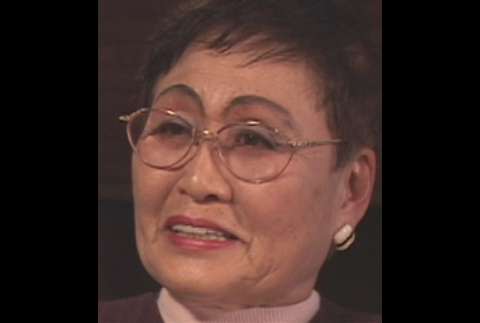
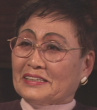
Japanese female. Born 1922 in Kagoshima, Japan. During World War II, served as a nurse with the Japanese army in Jakarta and Japan. After the war, moved to the United States and lived in San Francisco before eventually settling in Portland, Oregon.
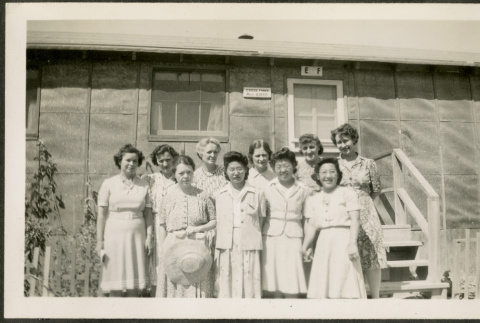
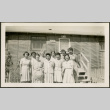
The Minidoka Incarceration Camp Photograph Album is a photograph album featuring images from the Minidoka incarceration camp. It may have been compiled by Lona Haug, vice-principal of the Blk 10 school at Minidoka in 1943. The album features a photograph of Ben Kuroki, a Japanese American who served in the United States Army Force during World …
Oath of allegiance to the United States signed by Tomio Itabashi, of the Valley Civic League chapter of the Japanese American Citizens League. Text reads: "Text reads: "I, the undersigned, do solemnly swear (or affirm) that I will support and defend the Constitution of the United States of America against all enemies, foreign and domestic; that …
Returning to the United States through Angel Island
This material is based upon work assisted by a grant from the Department of the Interior, National Park Service. Any opinions, finding, and conclusions or recommendations expressed in this material are those of the author(s) and do not necessarily reflect the views of the Department of the Interior.
Returning to the United States and continuing military service
This material is based upon work assisted by a grant from the Department of the Interior, National Park Service. Any opinions, finding, and conclusions or recommendations expressed in this material are those of the author(s) and do not necessarily reflect the views of the Department of the …
This material is based upon work assisted by a grant from the Department of the Interior, National Park Service. Any opinions, finding, and conclusions or recommendations expressed in this material are those of the author(s) and do not necessarily reflect the views of the Department of the Interior.
This material is based upon work assisted by a grant from the Department of the Interior, National Park Service. Any opinions, finding, and conclusions or recommendations expressed in this material are those of the author(s) and do not necessarily reflect the views of the Department of the Interior.
Reuniting with father on ship to the United States
This material is based upon work assisted by a grant from the Department of the Interior, National Park Service. Any opinions, finding, and conclusions or recommendations expressed in this material are those of the author(s) and do not necessarily reflect the views of the Department of the …
This material is based upon work assisted by a grant from the Department of the Interior, National Park Service. Any opinions, finding, and conclusions or recommendations expressed in this material are those of the author(s) and do not necessarily reflect the views of the Department of the Interior.
Returning to the United States at request of mother
Although Mr. Matsumoto does not identify himself as a Kibei (American-born person of Japanese ancestry sent to Japan for formal education and socialization when young and later returned to the U.S.), some of his life experiences are similar to those who do identify themselves as such.
This material is based upon work assisted by a grant from the Department of the Interior, National Park Service. Any opinions, finding, and conclusions or recommendations expressed in this material are those of the author(s) and do not necessarily reflect the views of the Department of the Interior.
Father's family background and immigration to the United States
This material is based upon work assisted by a grant from the Department of the Interior, National Park Service. Any opinions, finding, and conclusions or recommendations expressed in this material are those of the author(s) and do not necessarily reflect the views of the Department of the …
Brother Hideo visits from Japan but is trapped in the United States due to the onset of World War II
During this interview, Mrs. Kurosu alternately speaks in both English and Japanese. As a result, the English translation of the transcript contains [Jpn.] and [Eng.], which indicate whether the original dialogue was spoken in Japanese or …
This material is based upon work assisted by a grant from the Department of the Interior, National Park Service. Any opinions, finding, and conclusions or recommendations expressed in this material are those of the author(s) and do not necessarily reflect the views of the Department of the Interior.