
261 items


261 items
img
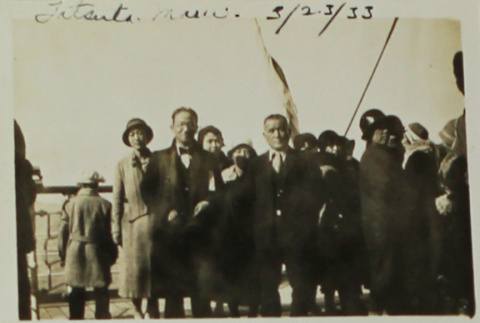
Tatsuta Maru (ddr-densho-357-726)
Handwritten caption: "Hiroko and Hanako leaving for Japan on Tatsuta Maru, March 23, 1933." Hiroko Terakawa and Hanako Terakawa are not easily visible, but Tansai Terakawa stands in the front of the group (to the left of center). The Tatsuta Maru was a Japanese ocean liner that consistently made the Trans-Pacific crossing between the countries of …
vh
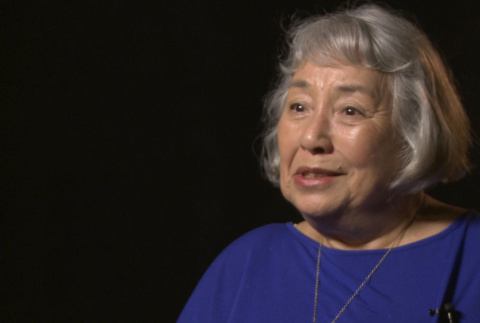
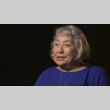
Tsuchino Forrester Interview (ddr-densho-1000-439)
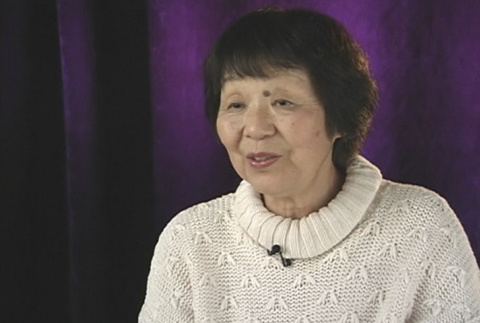
Shin-Issei female. Born March 30, 1931, in Kasuga, Fukuoka, Japan. Grew up in Kasuga where parents ran a farm. Graduated from a girl's high school during the U.S. occupation of Japan. Met future husband, a U.S. serviceman, and immigrated to the United States as a "war bride."
(This interview was conducted in Japanese. The transcript provided …
img
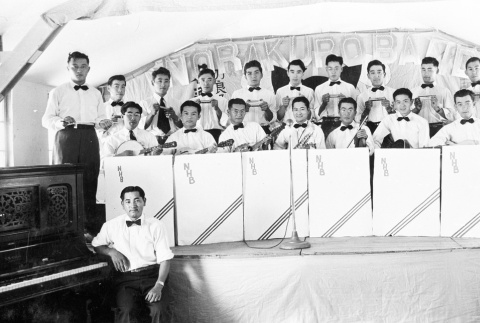
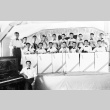
Norakuro Harmonica Band (ddr-densho-39-45)
The Norakuro Harmonica Band played instruments in addition to the harmonica. At camp dances the group performed both American and Japanese music as well as American music with Japanese lyrics. Many of its members were Kibei, Nisei who were born in the United States but educated in Japan.
doc
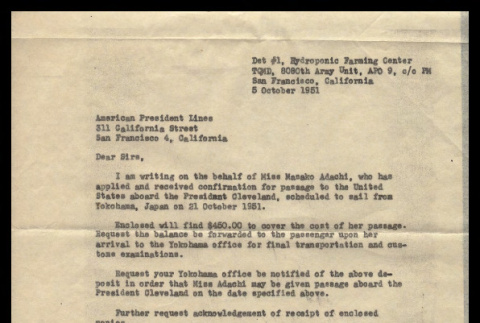
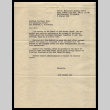
Letter from Akio Adachi to American President Lines, October 5, 1951 (ddr-csujad-55-2247)
Correspondence from Akio Adachi to American President Lines regarding Masako Adachi's travel from Japan to the United States. See this object in the California State Universities Japanese American Digitization project site: sac_jaac_2350
vh
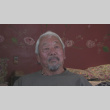
Kenji Ogawa Interview (ddr-manz-1-170)
Sansei male. Born April 16, 1942, in Manzanar, California. In 1943, parents signed "no-no" on the so-called "loyalty questionnaire" and were transferred to the Tule Lake segregation center, California. Moved with family to Japan, and returned to the United States in the 1950s to attend high school.
doc
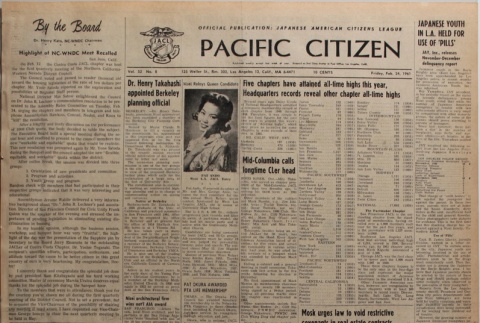
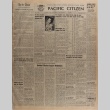
Pacific Citizen, Vol. 52, No. 8 (February 24, 1961) (ddr-pc-33-8)
Selected article titles: "Japanese Youth in L.A. Held for Use of 'Pills': Jay Inc., Releases November-December Delinquency Report" (p. 1), "Washington Newsletter: United States-Japan Relations" (p. 1), and "Night Before Chuman Appeared at State Assembly Rules Comm. Hearing to Object to Lechner Resolutions, He Was Nervous..." (p. 2).
img
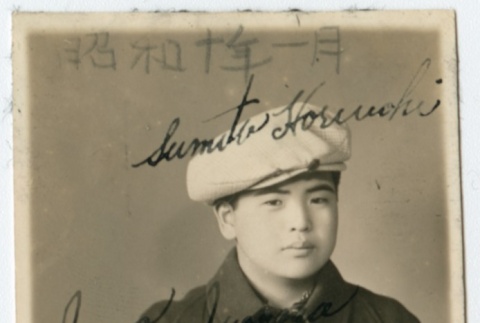
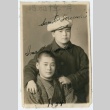
Portrait of Japanese boys (ddr-densho-325-191)
The names of each boy was written on the photograph sitting is Imao [illegible] and standing is Sumito Horiuchi. At the top of the picture is a line of Japanese text.
Sumito Horiuchi studied in Japan from the ages 4 to 16 then finished high school in the United States.
Narrator Maria Sato
Nisei female. Born November 19, 1930, in Trujillo, Peru, where father ran a construction company. After the bombing of Pearl Harbor, father was arrested by the FBI and taken to the United States. The family joined him in Crystal City, Texas, then went to Japan after the war. Maria lived and worked in Japan until the …
doc
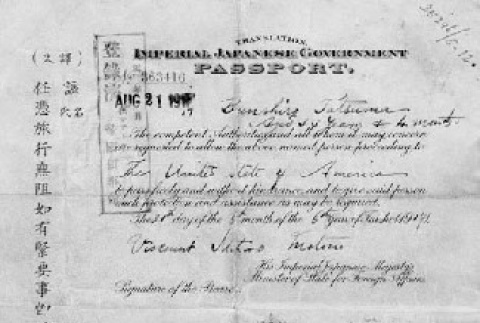
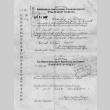
Japanese passport (ddr-densho-23-5)
English and French translations of the Japanese passport belonging to Bunshiro Tazuma. The Issei, mostly young Japanese males, began immigrating to the United States in the late 1800s. Many were farmers or students with dreams of returning to Japan after making their fortunes in America. The vast majority never realized this dream.
img
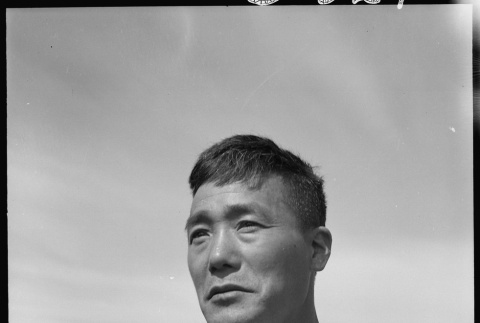
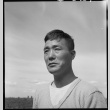
Issei father (ddr-densho-151-310)
Original caption: Near Florin, California. This Issei, the father of seven children, came to the United States from Japan when he was a boy. Formerly he was in the wholesale grocery business in Los Angeles and came to Florin, California just before the freezing order came through for all persons of Japanese ancestry.
vh
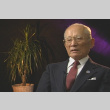
Takashi Matsui Interview (ddr-densho-1000-45)
Kibei male. Born January 20, 1917, in Hood River, Oregon. Lived in Seattle, Washington, before being taken to Japan by mother at the age of three. Completed elementary through high school in Japan. Returned to Seattle at seventeen years of age. Continued education in United States. Drafted in 1942 and was an instructor for the Military …

Collection
Tsutomu and Ruth (Yamada) Matsumoto Collection (ddr-densho-432)
The Tsutomu and Ruth (Yamada) Matsumoto Collection contains letters written between Ruth Yamada Matsumoto and Matsuye Koike when they were in Santa Anita Assembly Center, Rohwer concentration camp, Fort Bismarck and Fort Missoula. There are also two of Ruth's photograph albums that record life in Japan and the United States.
doc
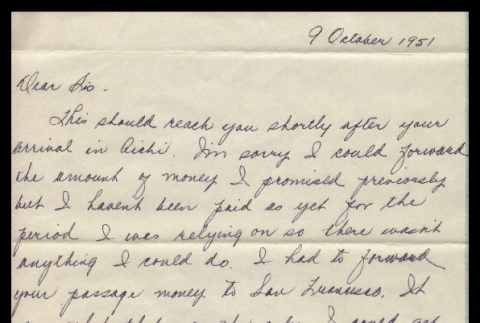
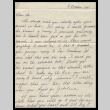
Letter from Akio Adachi to Sio, October 9, 1951 (ddr-csujad-55-2248)
Correspondence from Aki [Akio Adachi] to Sio [Masako Adachi?] regarding her travel from Japan to the United States, family affairs, and Akio's work. See this object in the California State Universities Japanese American Digitization project site: sac_jaac_2351
doc
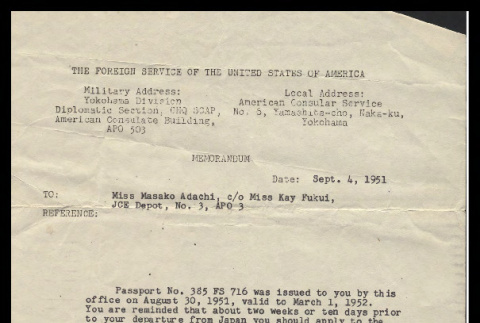
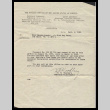
Memo from the Foreign Service of the United States of America to Masako Adachi, September 4, 1951 (ddr-csujad-55-2309)
Memorandum of understanding from the Foreign Service of the United States to Masako Adachi regarding her passport and notification of departure from Japan. See this object in the California State Universities Japanese American Digitization project site: sac_jaac_2414
img
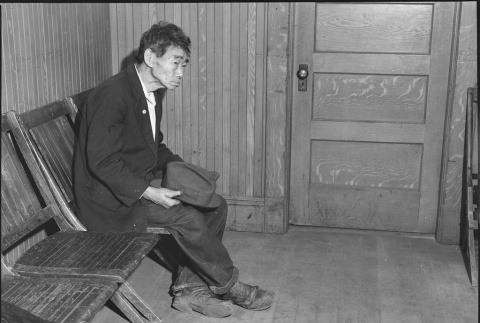
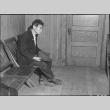
Issei man waiting to register for mass removal (ddr-densho-151-238)
Original caption: Byron, California. Toshi Mizoguchi waiting at the Wartime Civil Control Administration station to register for evacuation. Mr. Mizoguchi came to the United States from Japan in 1892 and has been a farm laborer on California ranches since that time. He is unmarried. He is seen wearing an American flag on a celluloid button.
img
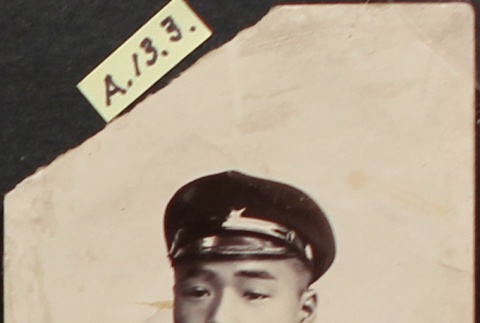
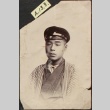
School portrait of a boy in Japan (ddr-densho-259-58)
Caption by Homer Yasui: "This is a schoolboy portrait of [Masuo Yasui] in Japan around [age] 14 or 15. He attended Kojokwan High School, which was located in Nishi (west) Ibara [He] didn't graduate from high school because he emigrated to the United States before then. At best, he may have been the equivalent of an …
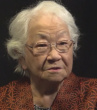
Narrator Kikuno Goi
Kibei Nisei couple. Kikuno was born in the United States, then moved to Japan with her family after her father passed away. In the lead up to World War II, her uncle sent Kikuno and her brother back to the United States, where they were raised in foster care in northern California. During World War II, …
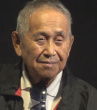
Narrator Mitsuo Goi
Kibei Nisei couple. Kikuno was born in the United States, then moved to Japan with her family after her father passed away. In the lead up to World War II, her uncle sent Kikuno and her brother back to the United States, where they were raised in foster care in northern California. During World War II, …
vh
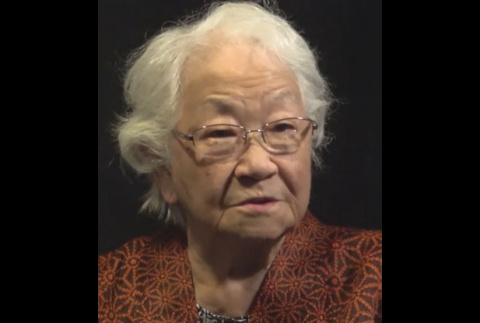
Hiroko Nakashima Interview (ddr-densho-1000-69)
Kibei female. Born 1927 in Spokane, Washington. Went to Japan at the age of twelve with her mother and sister to visit relatives and gain a "Japanese education." Was in Japan when World War II broke out, remaining there for the duration of the war. Returned to the United States soon after the war ended, married …
doc
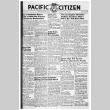
The Pacific Citizen, Vol. 34 No. 18 (May 3, 1952) (ddr-pc-24-18)
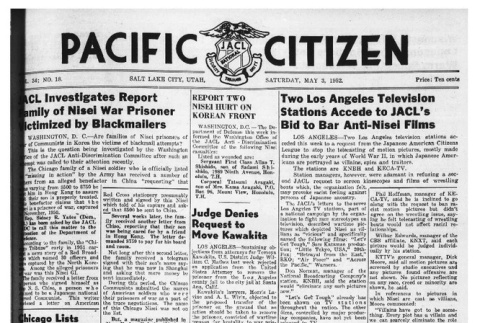
Selected article titles: "JACL Investigates Report Family of Nisei War Prisoner Victimized by Blackmailers" (p. 1), "Two Los Angeles Television Stations Accede to JACL's Bid to Bar Anti-Nisei Films" (p. 1), "Japan Peace Treaty Ends 'Enemy Alien' Status for Issei in United States" (p. 2), "JACL ADC Official Cautions Against Premature Optimism On Issei Citizenship Issue" …
doc
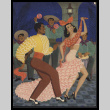
Menu from the S.S. President Cleveland (ddr-csujad-55-2253)
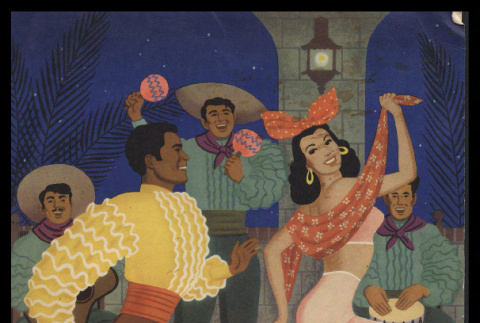
Dinner menu served on board the S.S. President Cleveland sailing from Japan to the United States. Cover includes an illustration of Spanish dancers and musicians. See this object in the California State Universities Japanese American Digitization project site: sac_jaac_2356
vh
Kajiko Hashisaki Interview (ddr-densho-1000-201)
Nisei female. Born and raised in Seattle, Washington. After the bombing of Pearl Harbor, was removed to the Puyallup Assembly Center, Washington, and the Minidoka concentration camp, Idaho. Left Minidoka in 1943 to attend school in St. Paul, Minnesota. Married in 1945, and lived in Japan for sixteen months before returning to the United States and …

vh
Hiroshi Terry Terakawa Interview (ddr-jamsj-2-12)
Nisei male. Born January 3, 1929, in Kyoto, Japan. Came to United States as a young child with parents. Moved frequently as a child due to father's role as a Buddhist minister, living in places like Walnut Grove and Marysville, California. During World War II, was living in Salt Lake City. Drafted into the army and …
vh
Susumu Nakanishi Interview (ddr-densho-1000-496)
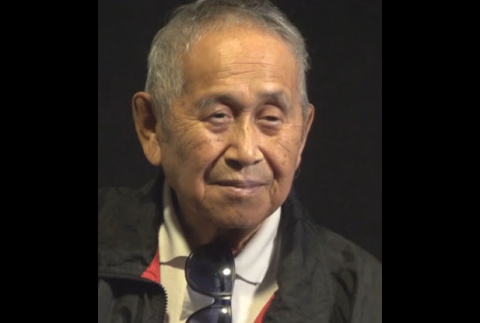
Shin-Issei male. Born September 10, 1926, in Hyogo, Japan. Grew up in Japan, where parents farmed. During World War II, exempted from the draft due to higher education status. Attended Doshisha University in Kyoto, learning English from an influential missionary. Moved to the United States and attended Lehigh University in Pennsylvania, then studied at the University …
doc
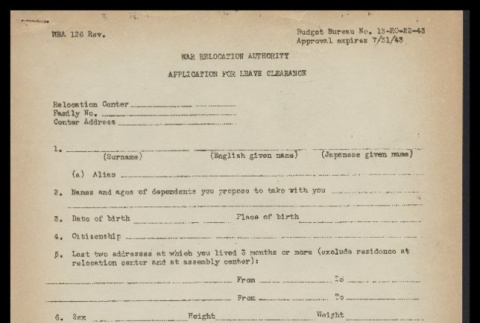
Application for leave clearance, Form WRA 126 rev. (ddr-csujad-55-187)
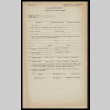
Questionnaire distributed to adult female U.S. citizens of Japanese ancestry and aliens. Individuals were required to supply information regarding place of birth, date of birth, citizenship, places of residence, height, weight, hair color, eye color, voter status, marital status and citizenship of spouse, the names and addresses of all relatives living in the United States, the …