
1098 items






1098 items

av
An oral history with Elva Wallace (ddr-csujad-29-46)
An oral interview with Elva Wallace, a child civilian at the Tule Lake incarceration camp. The interview was conducted for the Japanese American Oral History Project by California State University, Fullerton. Transcript is found in item: csufccop_jaoh_0148. See this object in the California State Universities Japanese American Digitization project site: 2654_T01

av
An oral history with Austin Christensen (ddr-csujad-29-47)
An oral interview with Austin Christensen, a child civilian at the Tule Lake incarceration camp. The interview was conducted for the Japanese American Oral History Project by California State University, Fullerton. Transcript is found in item: csufccop_jaoh_0150. See this object in the California State Universities Japanese American Digitization project site: 2655_T01

av
An oral history with Alpharetta Matthews (ddr-csujad-29-48)
An oral interview with Alpharetta Matthews, a child civilian at the Tule Lake incarceration camp. The interview was conducted for the Japanese American Oral History Project by California State University, Fullerton. Transcript is found in item: csufccop_jaoh_0152. See this object in the California State Universities Japanese American Digitization project site: 2656_T01

av
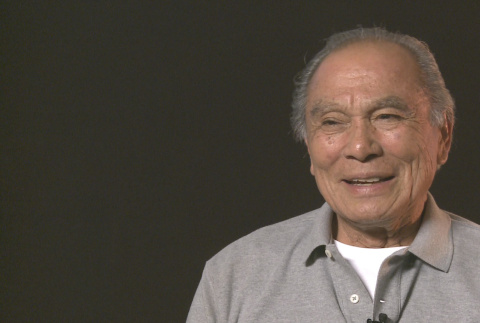
An oral history with Fred Tomiyoshi (ddr-csujad-29-51)
An oral interview with Fred Tomiyoshi, incarceree at the Pinedale Assembly Center and the Tule Lake incarceration camp. The interview was conducted for the Japanese American Oral History Project by California State University, Fullerton. Transcript is found in item: csufccop_jaoh_0158. See this object in the California State Universities Japanese American Digitization project site: 2986_T01

doc
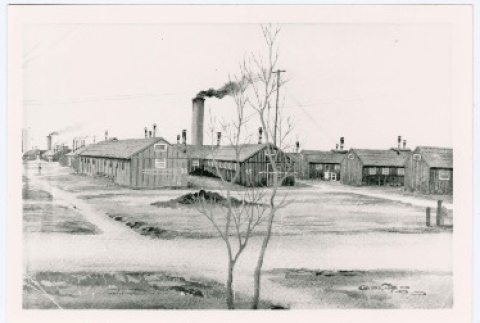
Souvenir of Southern Oregon and Shasta Cascade Wonderland from Wataru Hishikawa (ddr-csujad-38-344)
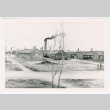
A collection of pictures of Southern Oregon and Shasta Cascade Wonderland, which is a souvenir from Wataru Hishikawa to Mitzi Masukawa Naohara. Wataru sent it from the Tule Lake camp in California, where he was transferred from the Poston camp in Arizona, to Mitzi, who was an incarceree remained in the Poston camp. It appears that …
vh
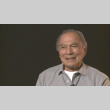
Richard E. Yamashiro Interview (ddr-densho-1000-333)
Nisei male. Born February 13, 1929, in Seattle, Washington. Grew up in Hollywood, California, and was living there when Japan bombed Pearl Harbor in 1941. Removed to the Manzanar concentration camp, California. Parents signed "no-no" on the so-called "loyalty questionnaire" and the family was transferred to the Tule Lake concentration camp, California, then designated as a …


img
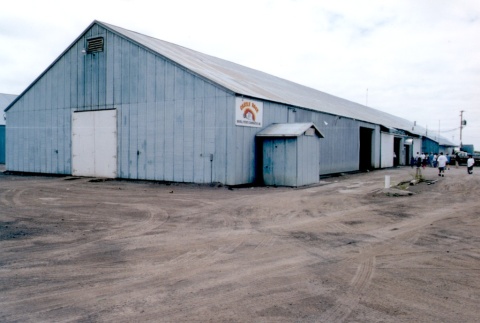
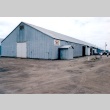
Camp warehouse (ddr-densho-11-5)
This building, now a potato-processing plant, was formerly a produce-processing and storage facility at the Tule Lake concentration camp.
img
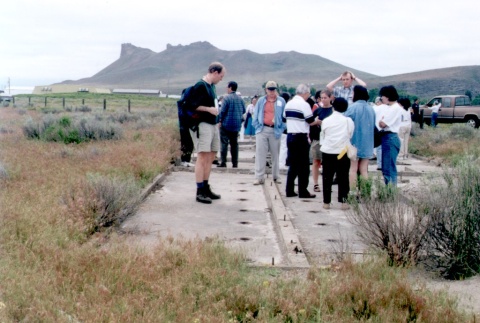
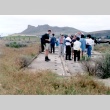
Tule Lake pilgrimage (ddr-densho-11-4)
Pilgrimage attendees examine an old latrine foundation from Block 73. The holes were for toilets, which were situated at each end of the facility. Group showers were in the middle.
img
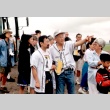
Tule Lake pilgrimage (ddr-densho-11-1)
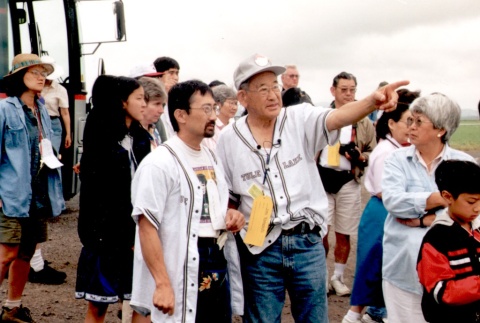
Jimi Yamaichi (right) pointing out something to Stan Shikuma at the former site of the Tule Lake concentration camp.
img
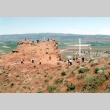
Pilgrimage attendees on Castle Rock (ddr-densho-11-6)
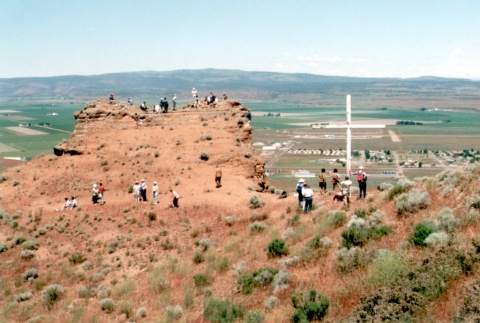
Tule Lake inmates erected this cross on top of a formation called Castle Rock. The area below the cross is the former site of the concentration camp.
img
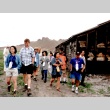
Tule Lake pilgrimage (ddr-densho-11-2)
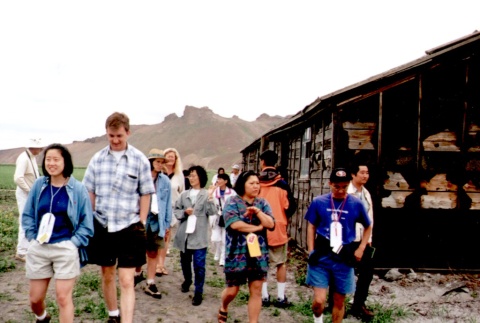
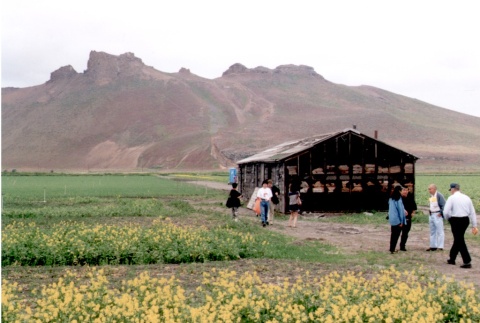
Pilgrimage attendees barracks located on the property of a local farmer. Castle Rock is in the background.
img
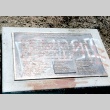
Memorial plaque (ddr-densho-11-11)
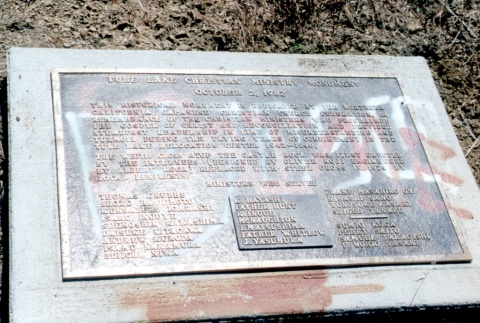
This plaque was placed at the base of the cross on Castle Rock on October 2, 1982. The plaque honors Christian ministers who served the inmates at the Tule Lake concentration camp.
img
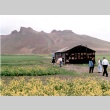
Tule Lake pilgrimage (ddr-densho-11-3)
Pilgrimage attendees barracks located on the property of a local farmer. Castle Rock is in the background.
img
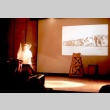
Evening program, Tule Lake pilgrimage (ddr-densho-11-9)
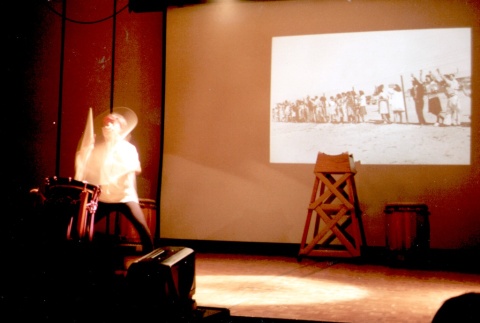
At the Tule Lake pilgrimage, an evening program was held to honor the inmates and remember the incarceration experience. The person shown here is playing a shime taiko drum while slides taken during the incarceration are being shown in the background.
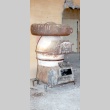
img
Stockade wood-burning stove (ddr-densho-11-8)
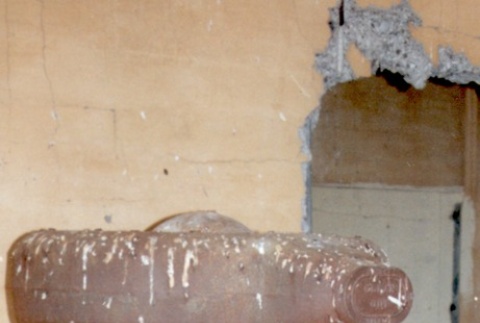
In 1943, Tule Lake concentration camp became a segregation center. A stockade was built to detain those who were considered security risks by the WRA. This wood-burning stove was used to help heat the stockade.


img
Exterior of barracks and Castle Rock (ddr-densho-35-4)
These barracks are now on the property of a Tule Lake farmer. A rock formation that the Japanese Americans called "Castle Rock" can be seen in the background. After obtaining permission to go through the gates, camp inmates could climb to the top of the formation.

img
Exterior of barracks (ddr-densho-35-15)
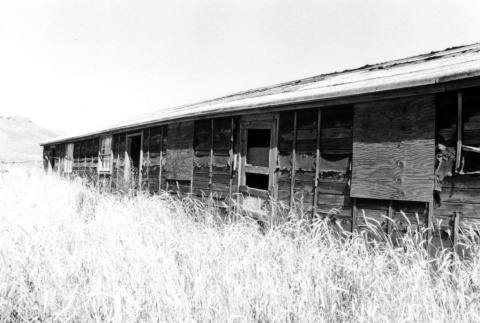
These barracks are one of two owned by a local farmer. The exterior has not been renovated.

img
Artifacts, Tule Lake concentration camp (ddr-densho-35-38)
The Tule Lake Museum, located on the fairgrounds, displays artifacts from the Tule Lake concentration camp. Shown here are parts of a wooden crate that presumably held items belonging to a camp inmate. The 27213 designation was probably the owner's family number.

img
Coal-burning heater (ddr-densho-35-25)
The Tule Lake museum, located on the town's fairgrounds, contains artifacts from the Tule Lake concentration camp. Coal-burning heaters such as the one shown here were the primary source of heat for the camp inmates.

img
Washroom foundation (ddr-densho-35-19)
This is a foundation from an old washroom. The Japanese Americans in camp did not have private washrooms, showers, toilets, or laundries. Each block, made up of approximately twelve barracks, shared such facilities.
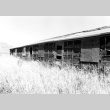
img
Exterior of barracks (ddr-densho-35-6)
Local farmers now own a few barracks from the Tule Lake concentration camp. The buildings are used for storage, have been made into homes and garages, or are abandoned, like this one. The exterior of the barracks have remained almost untouched since World War II.