This collection consists of a diverse set of interviews conducted by Densho starting in 1996. The interviews focus on many aspects of Japanese American history, from early U.S. immigration to present-day issues. The collection also includes interviews with non-Japanese American individuals who have in some way been involved in or impacted by the Japanese American experience. …
Redefining Community: The Evolution of Sawtelle Japantown is an animated documentary about the history of Japanese Americans in the Sawtelle Japantown area of Los Angeles. Narration of the documentary comes directly from over 20 oral history interviews of people who resided in Sawtelle before and after World War II. The film covers the initial formation of …
A booklet published to "commemorate the observance of the 50th Golden Anniversary of the 442nd Regimental Combat Team (RCT), and attempts to highlight the Go for Broke tradition of the men of the 442nd." Articles record accounts of Nisei veterans from various military companies. The articles cover the time from the formation of the 442nd Regimental …
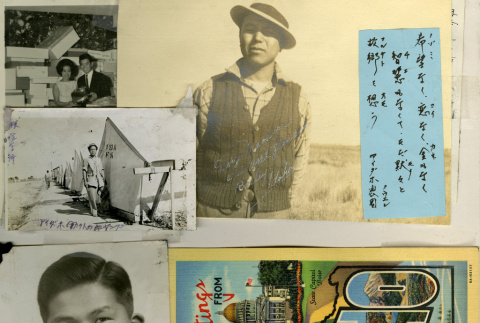
A photo album compiled by George Nobuo Naohara, a Kibei Nisei, who was incarcerated at Manzanar, Jerome, and Tule Lake incarceration camps during World War II. Included are photographs taken during/after World War II, depicting his farm labor experience in Idaho and Utah, incarceration in the Jerome incarceration camp, and Army language school training. See this …
Reflections on incarceration experience: feeling angry
This interview was conducted by sisters Emiko and Chizuko Omori for their 1999 documentary, Rabbit in the Moon, about the Japanese American resisters of conscience in the World War II incarceration camps. As a result, the interviews in this collection are typically not life histories, instead primarily focusing on …
This collection consists of interviews conducted and processed in partnership with Japanese American Museum of Oregon, whose mission is to preserve and honor the history and culture of Japanese Americans in the Pacific Northwest, to educate the public about the Japanese American experience during World War II, and to advocate for the protection of civil rights …
Description of play written about the camp experience and the loyalty issue
This interview was conducted by sisters Emiko and Chizuko Omori for their 1999 documentary, Rabbit in the Moon, about the Japanese American resisters of conscience in the World War II incarceration camps. As a result, the interviews in this collection are typically not …
Reflections on the camp experience: happy at first, but the registration "changed everything"
This interview was conducted by sisters Emiko and Chizuko Omori for their 1999 documentary, Rabbit in the Moon, about the Japanese American resisters of conscience in the World War II incarceration camps. As a result, the interviews in this collection are typically …
Many years after World War II, becoming inspired to research the camp experience
This interview was conducted by sisters Emiko and Chizuko Omori for their 1999 documentary, Rabbit in the Moon, about the Japanese American resisters of conscience in the World War II incarceration camps. As a result, the interviews in this collection are typically …
A 1997 documentary film that uses the motif of games to examine how the World War II incarceration of Japanese Americans affected the lives of two "ordinary" people, the filmmaker's Sansei uncles Norm and Stan. Described as "all American" guys who lived in the Amache concentration camp as children, they don't believe that the experience affected …
Memories of childhood: mother's telling of a ghost story, and a frightening experience
This interview was conducted by sisters Emiko and Chizuko Omori for their 1999 documentary, Rabbit in the Moon, about the Japanese American resisters of conscience in the World War II incarceration camps. As a result, the interviews in this collection are typically …
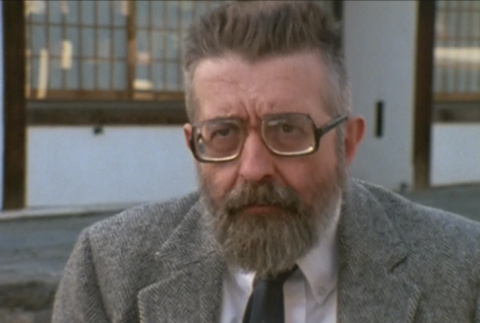
White male. Born December 1, 1927, in New York City, New York. Charles Phelps Taft Professor Emeritus of History, University of Cincinnati. Served as a consultant to the Commission on Wartime Relocation and Internment of Civilians from 1981 to 1983. Has researched and written numerous books about the Japanese American experience, including Prisoners Without Trial: Japanese …
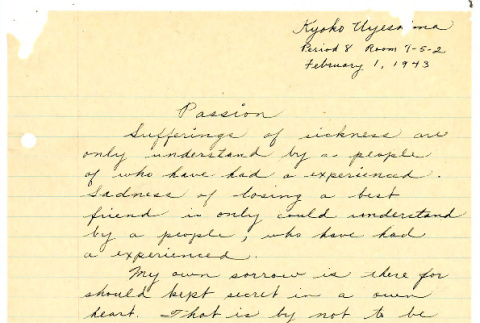
Assignment by Kyoko Uyeshima for period 8 class taught by Mr. Harry Bentley Wells, a teacher at Manzanar High School. Kyoko describes how suffering and sickness can only be understood by those who have had a similar experience, and should only be shared with those that understand it. Transcription is found in item: ecm_wells_9026. See this …
Shifting roles of the Issei and Nisei as a result of the incarceration experience
This interview was conducted by sisters Emiko and Chizuko Omori for their 1999 documentary, Rabbit in the Moon, about the Japanese American resisters of conscience in the World War II incarceration camps. As a result, the interviews in this collection are …
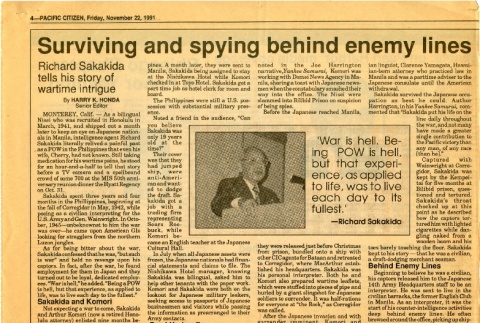
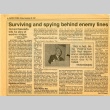
Newspaper clippings from "Pacific citizen" published on November 22, 1991. Includes two articles collecting Nisei Military Intelligent Service's experience. "Surviving and spying behind enemy lines" written by Harry K. Honda, Senior editor, Pacific Citizen, describes Sakakida's story of wartime intrigue, which was delivered at the MIS 50th anniversary reunion dinner on October 31, 1991. "Anecdotes by …
Brian Yamakoshi discusses his reasons for playing koto, his feelings on the art form, and his approach to the instrument. Kenny discusses his experience playing taiko, his first time hearing Japanese drums, his time on an indigenous American reservation, growing up in La Habra, CA, and how time spent at a pueblo encouraged him to learn …
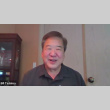
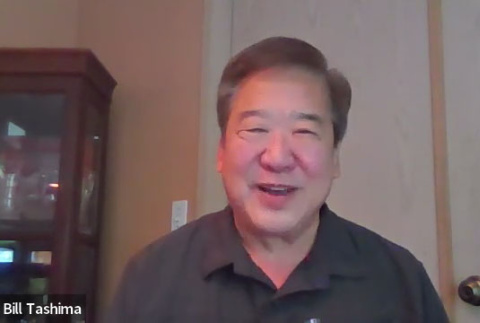
In this interview, Ana Tanaka led a conversation with Bill Tashima. Bill spoke of his growing up in Cleveland, Ohio, his early involvement with JACL as a youth participant, and his coming to the Pacific Northwest in the 1980's. Bill has extensive experience with Seattle JACL's advocacy, community outreach, civil rights and for ensuring the continuation …
Discussion of the Japanese American immigrant experience (audio only)
This interview is audio-only. It contains raw footage used by Steven Okazaki in his 1985 film Unfinished Business.
This material is based upon work assisted by a grant from the Department of the Interior, National Park Service. Any opinions, finding, and conclusions or recommendations expressed in …
Caucasian male. Born December 1, 1927, in New York City, New York. Charles Phelps Taft Professor Emeritus of History, University of Cincinnati. Served as a consultant to the Commission on Wartime Relocation and Internment of Civilians from 1981 to 1983. Has researched and written numerous books about the Japanese American experience, including Prisoners Without Trial: Japanese …
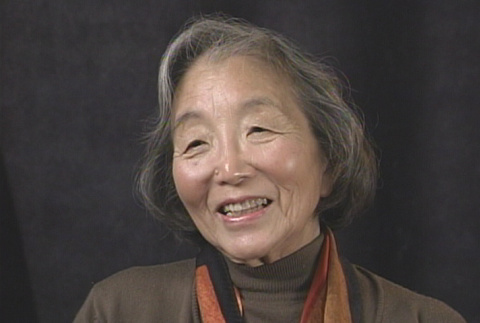
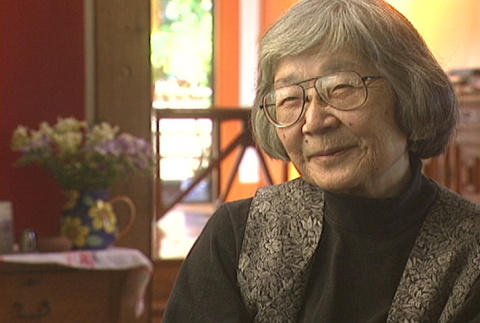
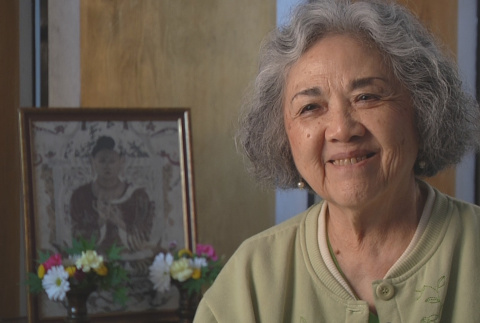
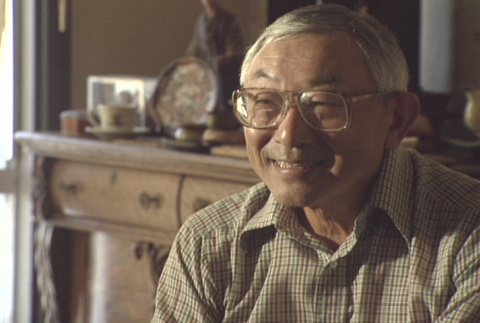
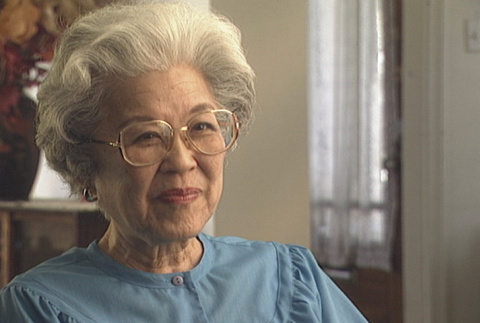
Photograph of a former Heart Mountain incarceree and oral history narrator discussing Estelle Ishigo, a Caucasian woman and artist who went into camp with her Japanese American husband, Arthur Ishigo, when he was forcibly removed from Los Angeles. Ishigo also worked for the War Relocation Authority while at Heart Mountain. "Lone Heart Mountain" tells the story …
Documentary film on the wartime experience of Japanese Americans from the San Diego area, including their exclusion and subsequent incarceration at Santa Anita Assembly Center and Poston , as well as their return home. The story is told through the eyes of former inmates Ruth Takahashi Voorhies (born 1923) and Ben Segawa (born 1930), along with …
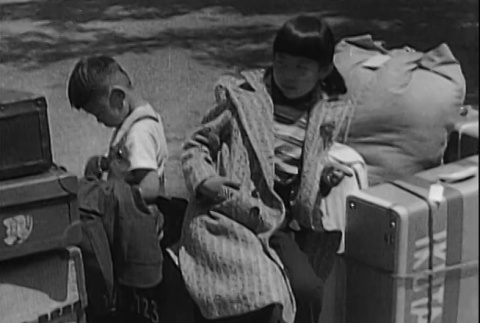
Documentary film that provides an overview of the Japanese American World War II incarceration experience with a focus on the two camps in Arkansas, Jerome and Rohwer. Time of Fear tells its story using archival still and moving images—including home movie footage of Jerome taken by Akira and Yoshio Hayashi—along with recreations and interviews with Japanese …
In this interview, Ana Tanaka led a conversation with Bill Tashima. Bill spoke of his growing up in Cleveland, Ohio, his early involvement with JACL as a youth participant, and his coming to the Pacific Northwest in the 1980's. Bill has extensive experience with Seattle JACL's advocacy, community outreach, civil rights and for ensuring the continuation …
Short film that tells the story of Japanese Americans on Big Island of Hawai'i who were interned during World War II using a combination of contemporary interviews, historical photographs and footage, and historical reenactments. It is one of a series of four films produced by the Japanese Cultural Center of Hawai'i about the internment experience in …
Short film that tells the story of Japanese Americans on O'ahu who were interned during World War II using a combination of contemporary interviews, historical photographs and footage, and historical reenactments. It is one of a series of four films produced by the Japanese Cultural Center of Hawai'i about the internment experience in each of the …


![[Woman discussing Estelle Ishigo] (ddr-csujad-29-244)](https://ddr.densho.org/media/cache/f6/9a/f69a2ce243fac3d34e24c6a73d5ef159.jpg)



![[Woman discussing Estelle Ishigo] (ddr-csujad-29-244)](https://ddr.densho.org/media/cache/56/20/56201697fe03bab3d244eec1b5cdec3f.jpg)